
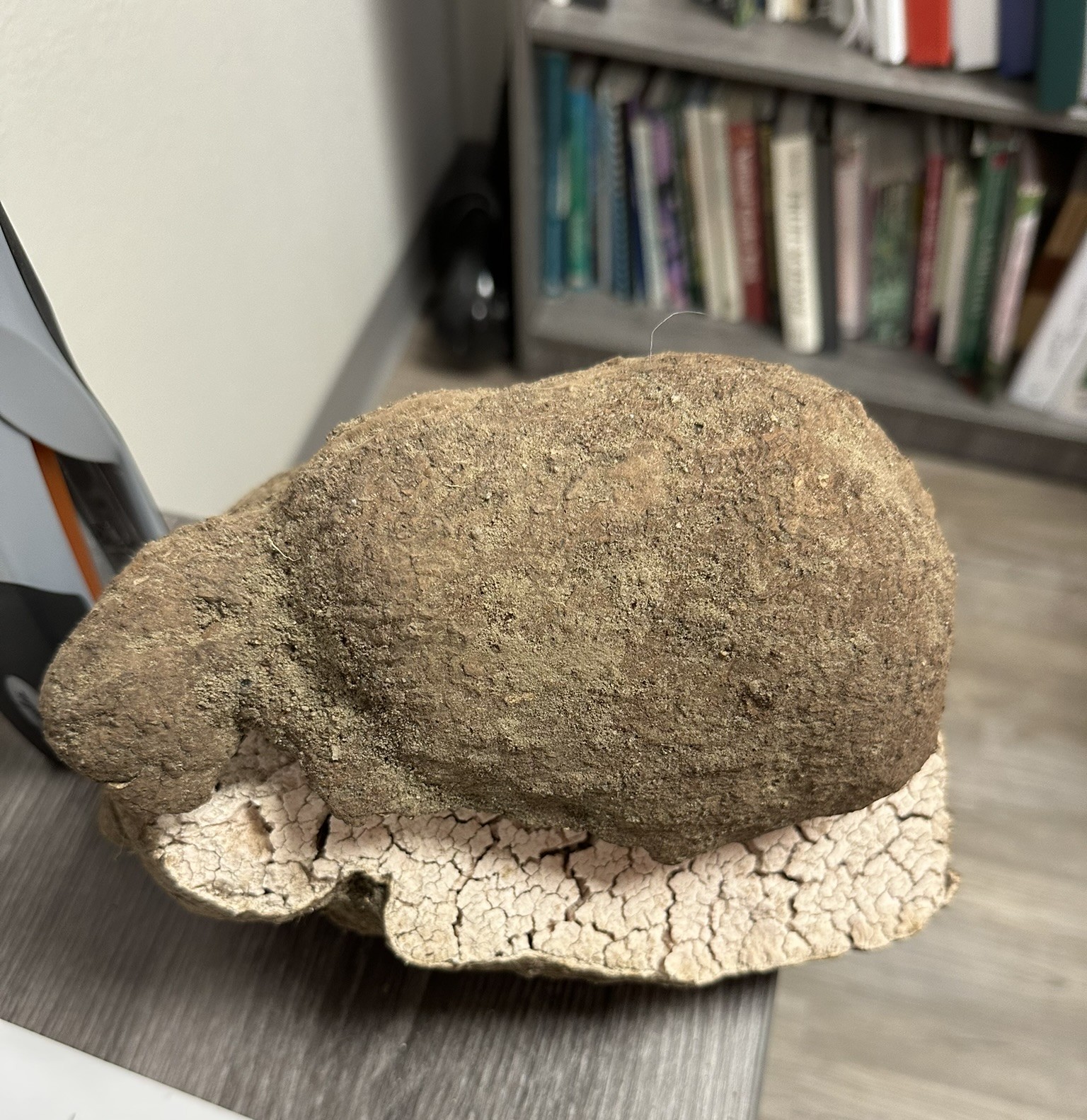
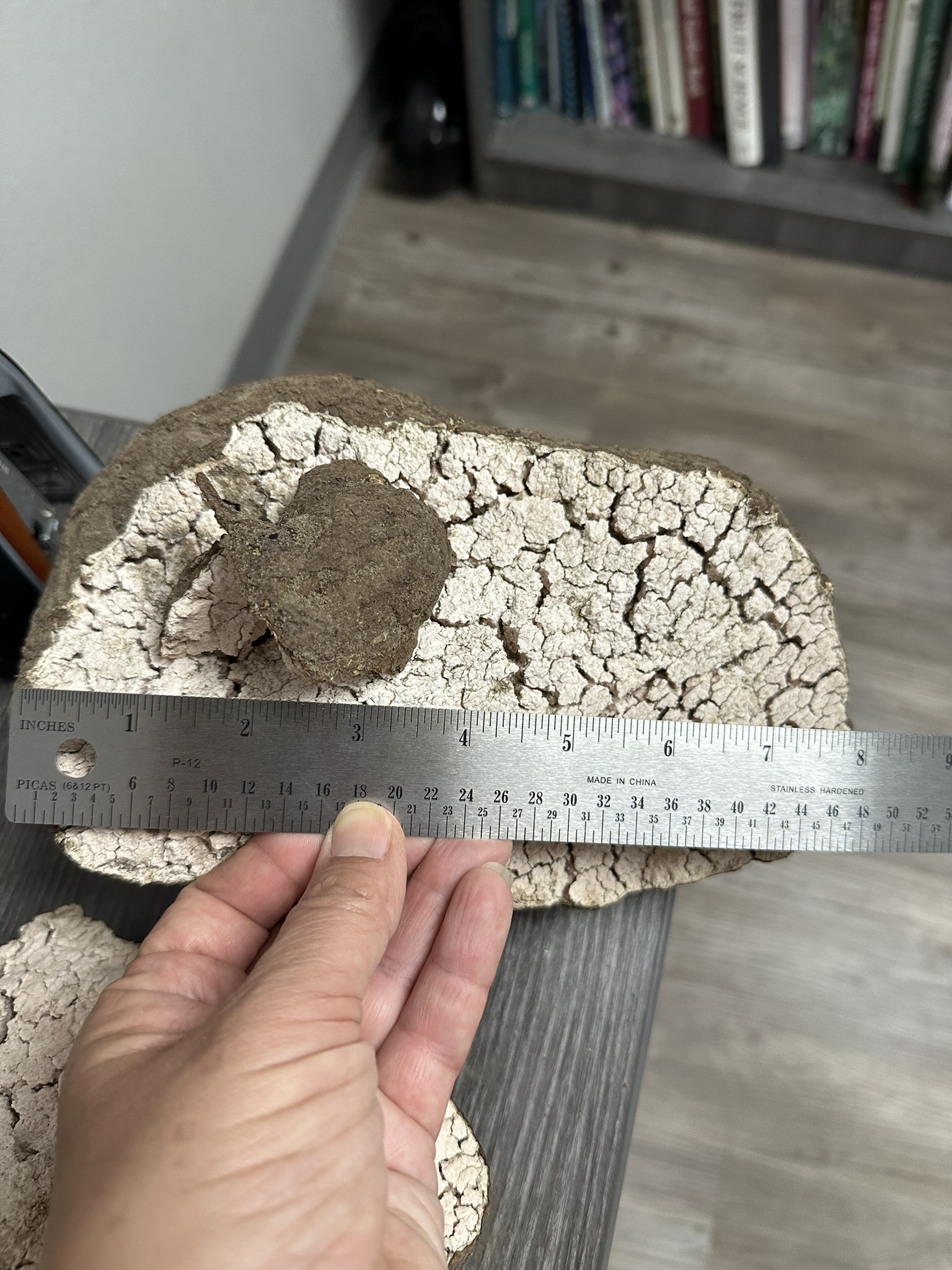
“Tuckahoe” sclerotium of Wolfiporia extensa, which is a wood-decay fungus with subterranean growth. Credit: Julie McConnell, UF/IFAS
Agents at UF/IFAS Extension offices are routinely asked to identify plants and animals or work out problems in the field. Sometimes we know the answer with as little as a verbal description or a quick photo preview on a cell phone; but sometimes we get something so unusual we must reach beyond our local resources for help, and we get to learn something right alongside our client. An example of this occurred earlier this year when I arrived back at the office after being out of town and found a large brown object that resembled a misshapen coconut sitting on my desk with a note requesting identification.
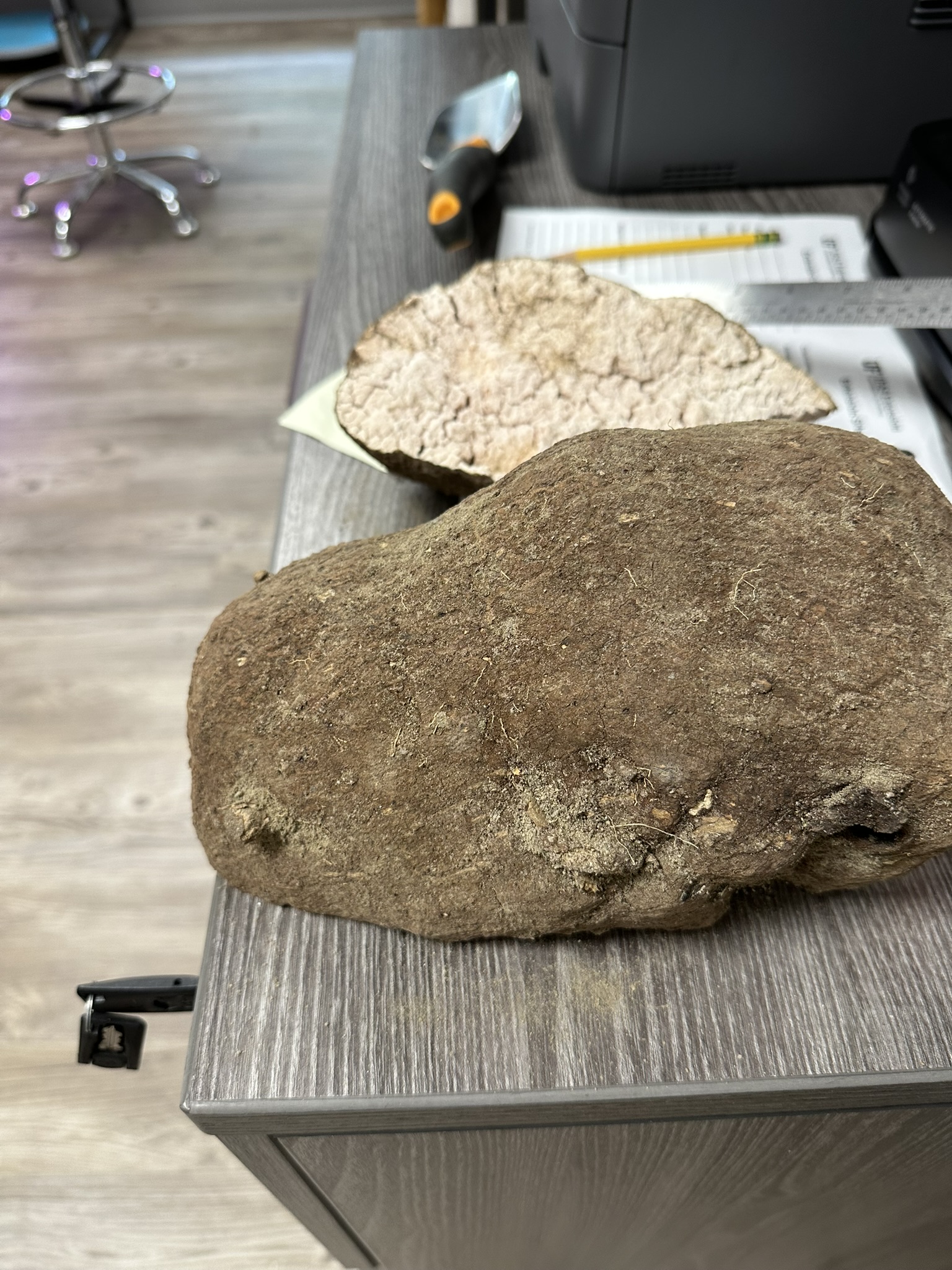
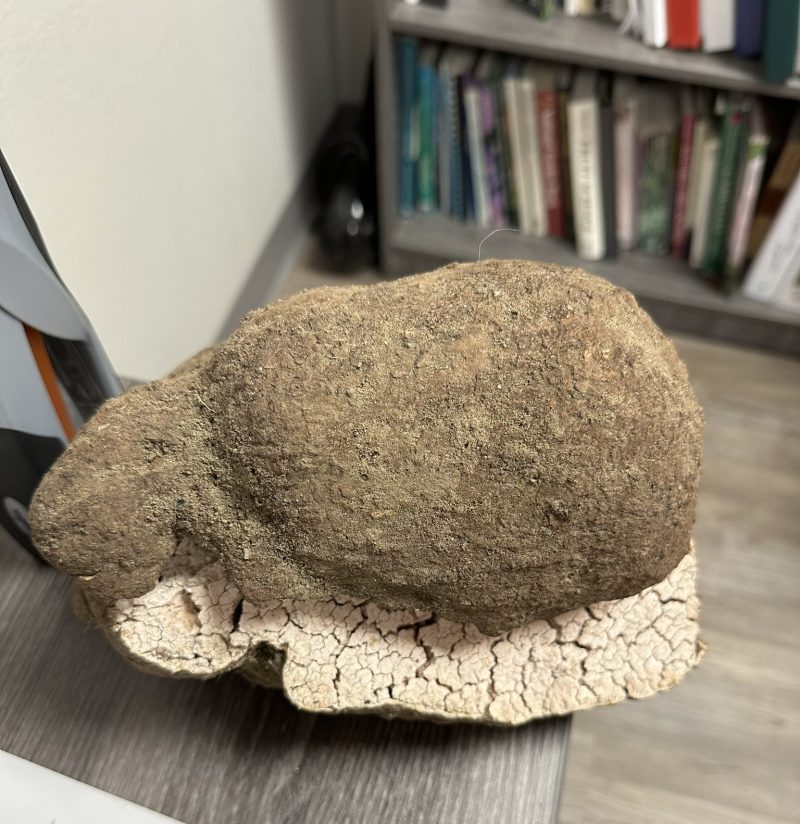
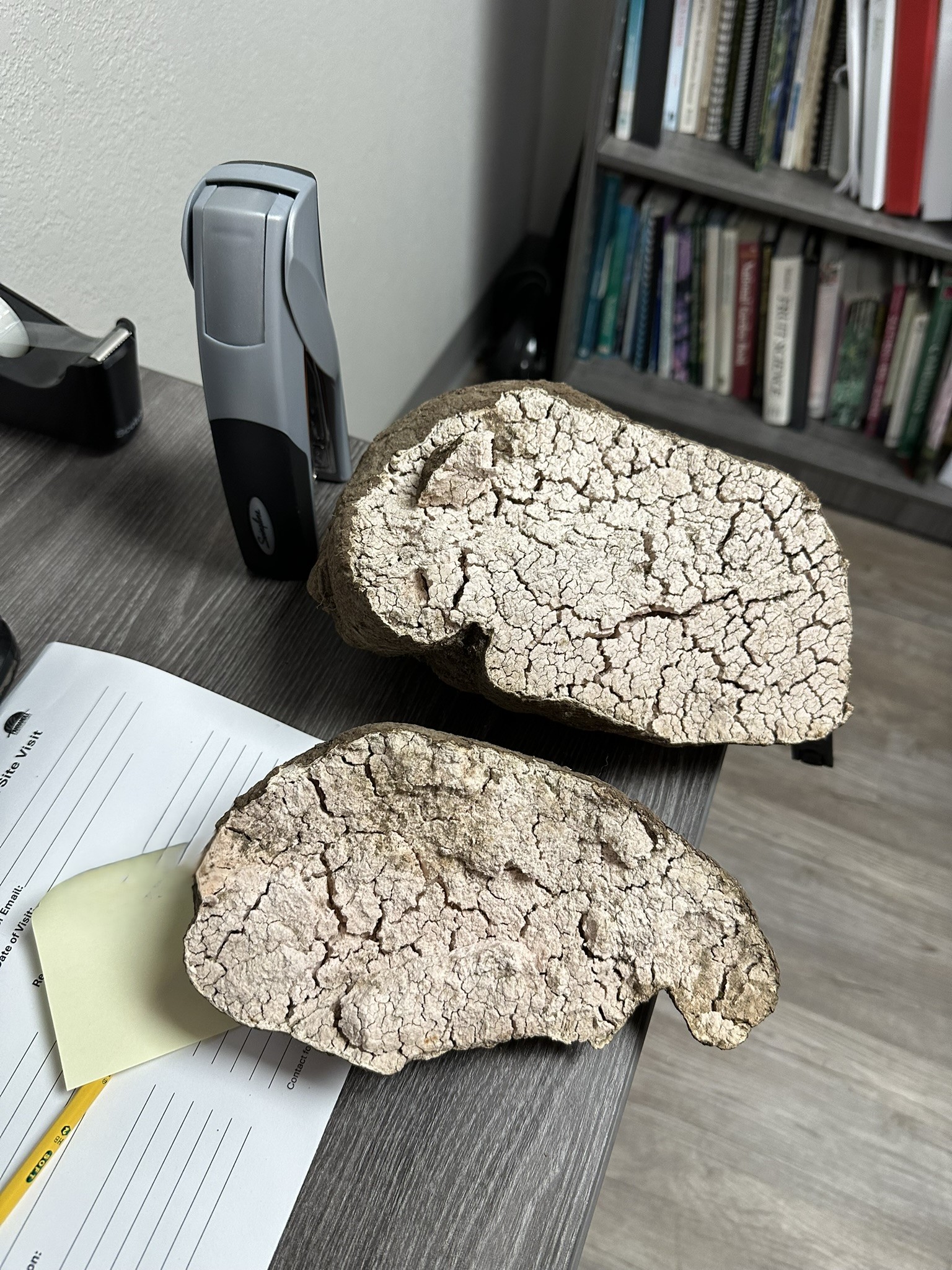
The specimen had a dusty, corky dark brown exterior and a dense fissured interior that looked like a dried-up brain. It had been broken but originally it was approximately 8” x 6” x 6” and weighed about 6-7 pounds. Initially I thought it might be a tuber of a plant, but something wasn’t quite right.
I knew I needed more information about the source of the mystery mass, so I called the landowner who dropped it off and obtained more details. They were plowing a portion of their property where volunteer pines had grown and described the area as non-irrigated, dusty sand. This lumpy object was turned up from the soil and piqued their curiosity. They broke it open and the interior was a light pinkish tan and somewhat grainy in texture.
As helpful as her information was, it still did not trigger any ideas on identification, so I started taking photos and sent an email to our Extension Botanist at the University of Florida Herbarium in Gainesville hoping he would recognize it. By the time I returned to the office the next morning I had a flurry of emails from botanists and a mycologist with the answer I never could have come up with on my own, the mystery object was a sclerotium of the fungus Wolfiporia extensa (previously recorded as Wolfiporia cocos or Poria cocos). A fungal sclerotium is a mass of hyphal threads that can remain dormant for extended periods until conditions are conducive to growth. When I think of sclerotia I typically think of the ones I’ve seen in a plant pathology lab that are the size of a chia seed, not the size of a human head.
There are several common names for Wolfiporia extensa including tuckahoe, fu-ling, Indian bread, or China root. Wolfiporia extensa is a brown decay fungus that grows on the roots of many trees including oaks, pines, magnolia, eucalyptus, firs, and cedars. It is edible and was reportedly an emergency food source for Native Americans and is a staple in traditional Chinese herbal medicine, with records indicating medicinal use for over 2,000 years!
The mycologist (scientist who studies fungi) was quite excited by the find and requested that we send it to Gainesville so he could use it when teaching his students. The landowner was happy to contribute this specimen to enhance the learning experience of students at the University of Florida!
-
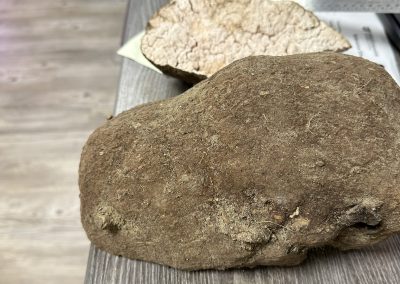
"Tuckahoe" sclerotium of Wolfiporia extensa
-
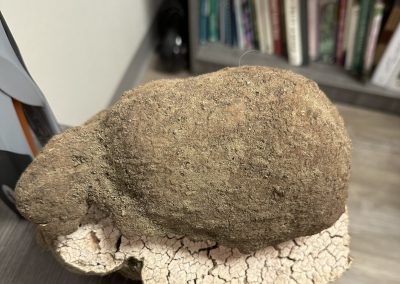
"Tuckahoe" sclerotium of Wolfiporia extensa
-
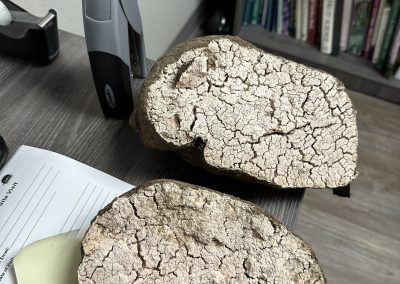
"Tuckahoe" sclerotium of Wolfiporia extensa interior after drying for several days.
-
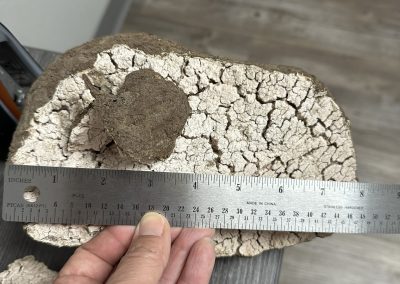
"Tuckahoe" sclerotium of Wolfiporia extensa
- What Lies Beneath: The Surprising Find on a Florida Farm - December 5, 2025
- Post-Harvest Practices to Preserve Watermelon Quality - June 6, 2025