
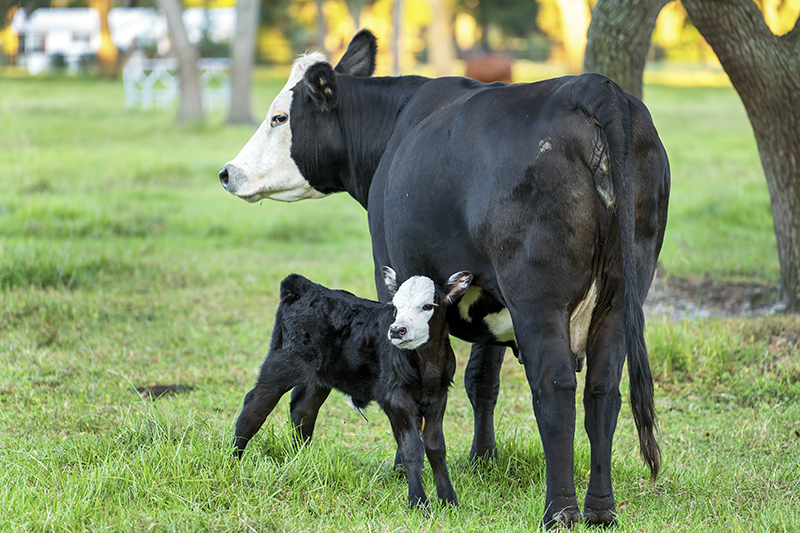
Managing a productive cow-calf operation requires intentional management of genetics, vaccinations, nutrition, and record keeping. Credit: Adobe Stock
There is a lot that goes into managing a cow herd. Selecting the right genetics, developing a nutrition program, maintaining the health of the herd, and keeping records are just a few of the many steps taken in working towards having a successful and profitable operation. Each of these factors require intentional planning and implementation in order to be successful. One tool that can be helpful in achieving the goal of intentional and effective management is utilizing Beef Quality Assurance (BQA) practices. The program serves as a guide; instructing how and why certain practices should be implemented to help in achieving the goal of a healthy herd and a safe, desirable beef product for consumers. This article discusses the economic incentive behind a few of the recommended practices – vaccination protocols, nutrition, and record-keeping.
–
Vaccination Protocols
Compared to other input costs, vaccines, on a per head basis, vaccines are one of the least expensive inputs for a cow herd. However, if vaccines are not effective, those per head costs can quickly escalate. As I have heard said many times, “vaccination is not immunization.” If a vaccine is given but is not effective, the vaccine will not serve its purpose in building the calf’s immune system. For example, let’s say we invest in a vaccination protocol that we established with our veterinarian. The per head cost of the protocol is $7.20/head. But we stored the vaccines incorrectly or, if using a modified live vaccine (MLV), it was mixed too early, or something of this nature caused the vaccine to lose effectiveness. We have now invested $7.20 into a calf that we or a future buyer may have to doctor later, further increasing the drug costs. Table 1 illustrates some scenarios where drug costs can increase substantially, if that initial vaccines are ineffective.
This is not to say that vaccinations will prevent all future illness that require medication. However, if the investment is being made to try and prevent sickness and disease, all efforts should be made to make sure the vaccines do their job in reducing the chances of having sick cattle. Drug costs not only increase, but the time and labor required for doctoring that calf also increase. Proper handling and administration of vaccines is vital to maintaining the costs of a health program and the health of the cow herd.
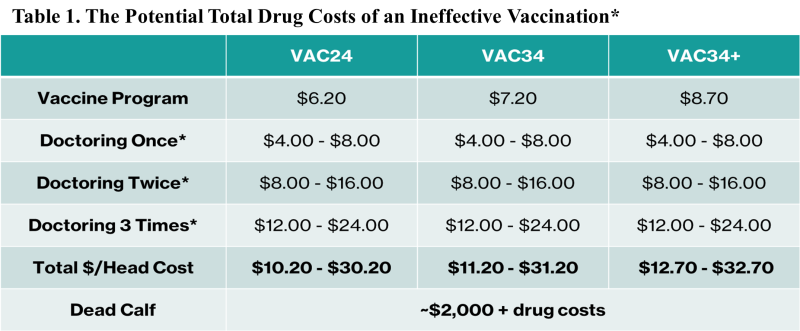
*You don’t have to adopt a specific “value-added program,” but you should work with your veterinarian to establish the best program for your operation. The costs and programs are based on Superior Livestock’s value-added programs and average drug costs from various companies.
–
Nutrition
A proper nutrition program is one of the most important, if not the most important, plans to have in place when managing a cow herd. If nutritional requirements are not met, production will be affected. In relation to reproduction, we have all heard the statement, “the best genetics in the world cannot overcome a bad nutrition program.” The cow cannot fully express her genetic potential if she is not getting what she needs. And when she does not get what she needs, she cannot give us what we need: a healthy, productive calf. The same statement can be applied to herd health – the best vaccination program in the world will not be effective, or as effective, if nutritional requirements are not being met. If cows and calves are not well fed, their ability to build a strong immune system will be limited regardless of vaccinations. This puts us back at Table 1 where we may have to spend more later on drugs if the initial vaccinations don’t work. Investing in a proper forage management, supplementation, and mineral program will also be beneficial to the vaccination program and overall health of the herd.
–
Record-Keeping
We cannot manage what we don’t measure, and we cannot justify what we spend on the herd, if we do not know how much we are spending. Keeping production records aids in knowing what investments work and which ones do not. There is a big difference between a necessary investment and an unnecessary expense. For example, investing in a year-round mineral program may be a necessary investment to improve reproductive efficiency in a herd. Records can help in knowing if this investment was effective by analyzing pregnancy rates, calving intervals, weaning rates, and weaning weights. Record-keeping is an effective tool in tracking the efficiency of a cow herd and highlighting areas of success and those that need improvement.
Adopting a record-keeping system is an economical practice because the things that need to be recorded (pregnancy rates, weaning rates/weights, vaccination protocols, nutrition program effectiveness, etc.) affect the money coming in and going out of an operation. Knowing why investments are being made can aid in managing input costs and improving product quality and quantity.
 –
–
The goal of every cattle operation should be to produce a high-quality beef product for consumers, who have shown they are willing to pay high prices for high-quality beef. Achieving that goal starts with adopting high-quality management practices and intentionally implementing them. How a herd is managed influences the production and profitability of an operation. For more information about Beef Quality Assurance, visit https://www.bqa.org/ or reach out to your local county extension agent for more information on what management practices would be most effective for your operation.

(863) 374-7051
- The Economic Influence of Intentional Management of Your Cow Herd - December 19, 2025
- December 2025 Florida Cattle Market Update - December 19, 2025
- October 2025 Florida Cattle Market Update - November 7, 2025