
As home to approximately 80% of State’s forested lands the Panhandle of Florida is a significant timber region. Forested lands cover millions of acres in the region. These lands play a critical role not only in wood production, but also in sustaining the state’s diverse wildlife. Known as “working forests” these lands can provide high-quality habitat for game and nongame species while remaining economically productive using principles such as forest structure, prescribe fire and timber harvest strategies.
Florida timberlands are valuable habitat. They support a wide range of wildlife, including white-tailed deer, wild turkey, northern bobwhite quail, gopher tortoise, black bear, and countless songbirds, reptiles, and pollinators. These lands often comprise some of the largest remaining tracts of upland habitat, making them especially important for species that require space and connectivity. Well managed forests can provide food, cover, nesting sites, and travel corridors. The key is maintaining habitat diversity across the landscape and over time.
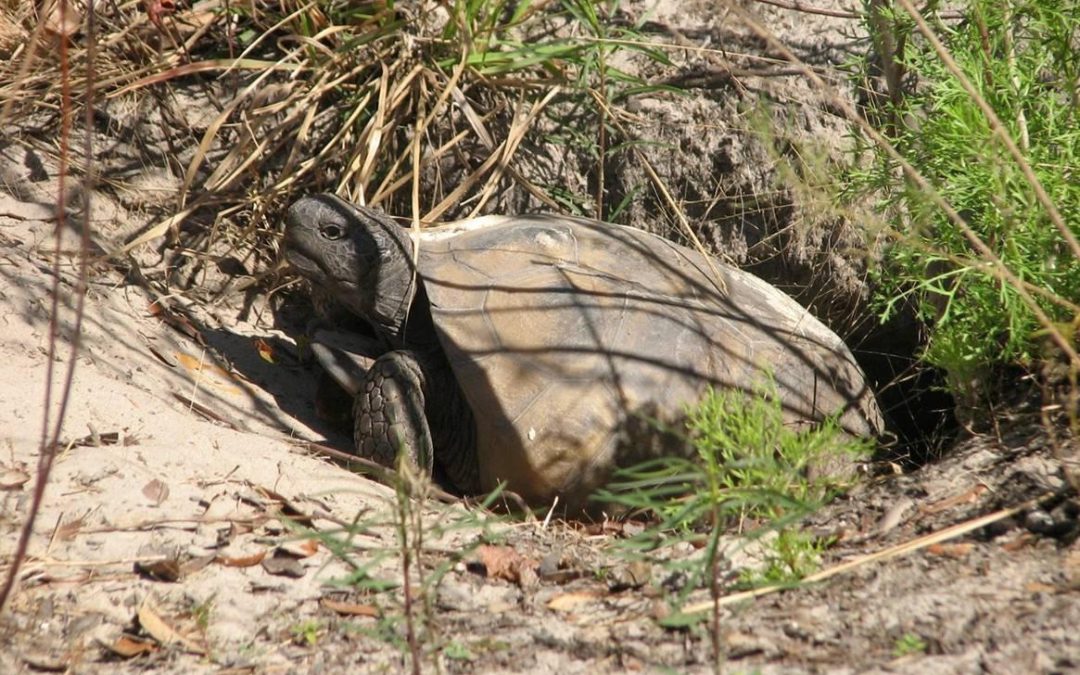
Gopher tortoises are long-lived, protected by their thick shells and deep burrows. Credit: Carrie Stevenson, UF IFAS Extension.
–
Wildlife responds strongly to forest structure. Different species use different layers of the forest, from grasses and shrubs, midstory vegetation and mature canopy trees. There are three types of forest structure habitats that are considered when managing for wildlife. Early successional habitat characterized by grasses, wildflowers, and low shrubs, supports quail, turkey poults, deer, rabbits and pollinators. Open pine stands are comprised of a grassy understory benefit species such as gopher tortoises, fox squirrels and many ground-nesting birds. Mature forests are perfect for nesting cavities and are cover for species like owls, woodpeckers, and bats. An integrated management approach would include a mix of stand ages and structures which would meet the needs of a wide variety of wildlife.
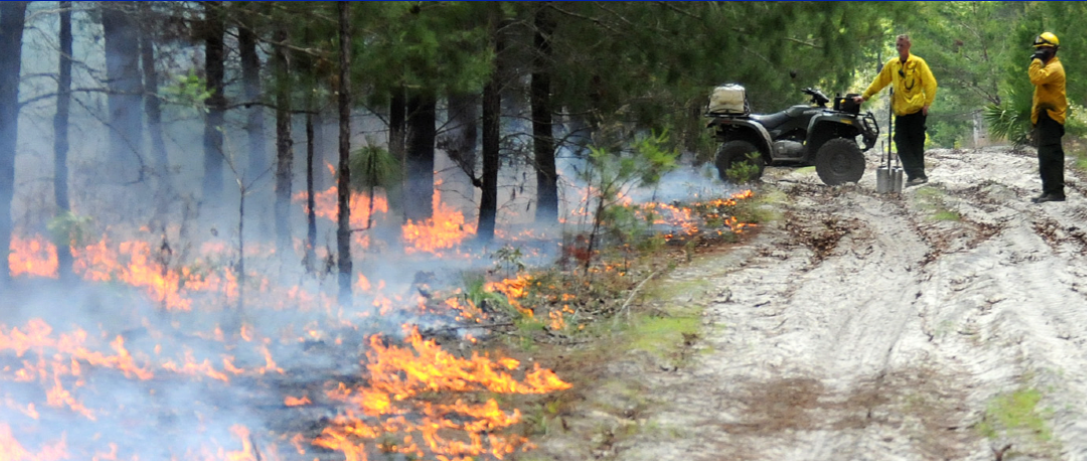
Prescribe Burn. Credit: UF School of Forest, Fisheries and Geomatics Sciences.
–
The role of prescribed fire is one of the most important tools for wildlife management in Florida forests. Regular burning of forest lands can bolster forest health in a number of ways. Burning can help maintain open understories and reduces hardwood encroachment, along with promoting and reinvigorating native grasses, legumes and forbs that provide forage and seed. Burning can also improve visibility and movement for wildlife while enhancing habitat for fire dependent species such as gopher tortoises and red cockaded woodpeckers. Burn intervals of two to three years are often ideal for pine dominated systems and with timing and frequency matching specific management goals. Please reach out to your area FDACS – Florida Forest Service Forester for planning guidance and available cost share programs.
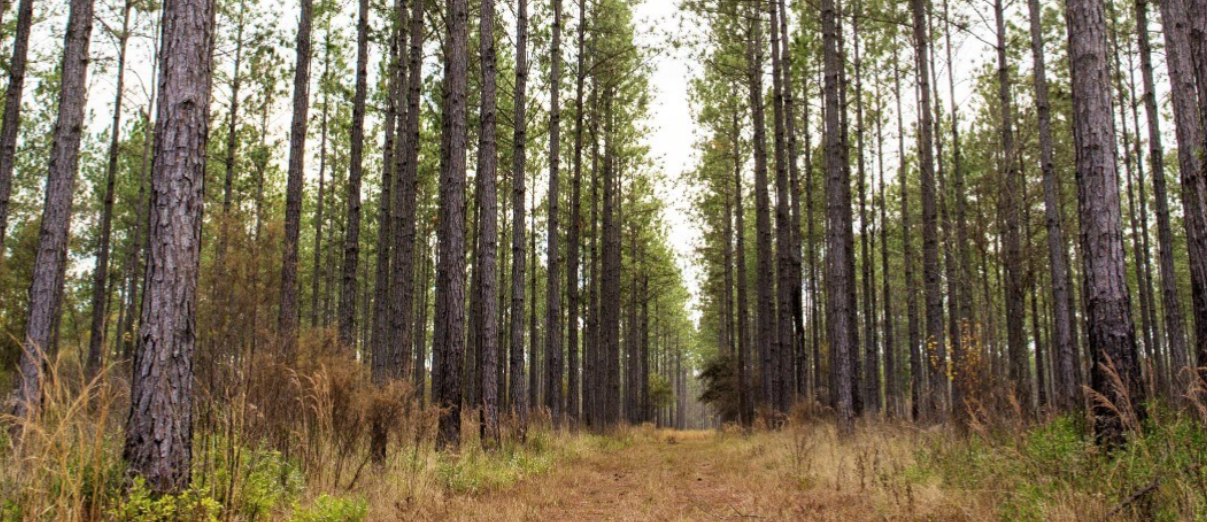
Timber Management. Credit: UF School of Forest, Fisheries and Geomatics Sciences.
–
Timber harvests can also benefit wildlife when planned carefully. Thinning operations allow more sunlight to reach the forest floor, stimulating herbaceous growth that provides food and cover. Regeneration cuts create early successional habitat that is often limited in modern landscapes. Some of these best management practices include retaining scattered mast producing hardwoods such as oaks and leaving snags and downed woody debris for cavity-nesters and small mammals. Other practices include using irregular edges and buffers to increase habitat diversity and protecting wetland or water body corridors.
–
What are some practical strategies that even small-scale landowners can do?
Establishing wildlife openings and food plots for both warm and cool seasons will encourage population growth. Maintaining forest roads and firebreaks with native vegetation and controlling invasive plant species ensure a healthy habitat. The management of wetlands areas is also critical. A natural measure to help conserve the wildlife ecosystem where pockets of cypress, tupelo and water oak thrive is to provide artificial nest boxes for species, such as wood ducks.
A balanced approach, such as working forests for wildlife does have an economic benefit. In many cases, wildlife friendly practices such as thinning, prescribed fire and longer rotation ages can improve timber quality while also enhancing habitat. Additionally, recreational opportunities like hunting leases and wildlife viewing can provide a significant return on investment. FDACS Forest Service and federal programs through USDA NRCS may also offer technical assistance or cost share incentives to support wildlife conservation on private lands.
By incorporating wildlife considerations into forest management, landowners can create productive timber operations that sustain both economic returns and healthy wildlife populations. Contact your local county extension office for more information.
- A Balanced Approach to Managing Florida Panhandle Forested Lands for Wildlife - January 16, 2026
- Challenges Using Oxalic Acid Against Summer Varroa Mite Infestations for Panhandle Beekeepers - July 11, 2025
- Managing Pine Stands for Straw Production - January 10, 2025