
Once you close the furrow, many agronomic decisions have been finalized so it is important to carefully consider all you option before you plant. The first decision that needs to be considered is what crop to plant. I’m not an economist, so I’ll let you research that one on your own. Once you decide what crop, you’ll need to select a variety. I have an agronomy background, so I’m more comfortable helping with this decision.
Important things to consider with variety selection are yield potential, disease resistance, pest resistance, crop maturity timing, herbicide tolerance, and weed pressure. Yield is important but not the only thing to look at when selecting varieties. Group 4 soybeans yielded well in our trials in Jay, but group 4 soybeans need to be harvested in a timely manner to yield well. If you are busy harvesting peanuts when the soybeans are ready, then you will lose yield. Pest resistance is also very important to consider when looking at varieties. Nematode resistant cultivars provide excellent control of these pests without pesticide use. This is an economic benefit, as well as an environmental benefit.
The yield potential should be evaluated over multiple years in several sites near your farm. This will provide a more accurate picture of varieties that consistently perform well vs selecting varieties that perform well for just one year.
The West Florida Research and Education Center (WFREC), near Jay has performed variety comparison tests on Corn, Cotton, and Soybeans since 2023. The results have been published online at WFREC Variety Testing. For 2025 crops, we’ll give a quick recap of these results. Full reports can be found at the previous link.
–
Corn
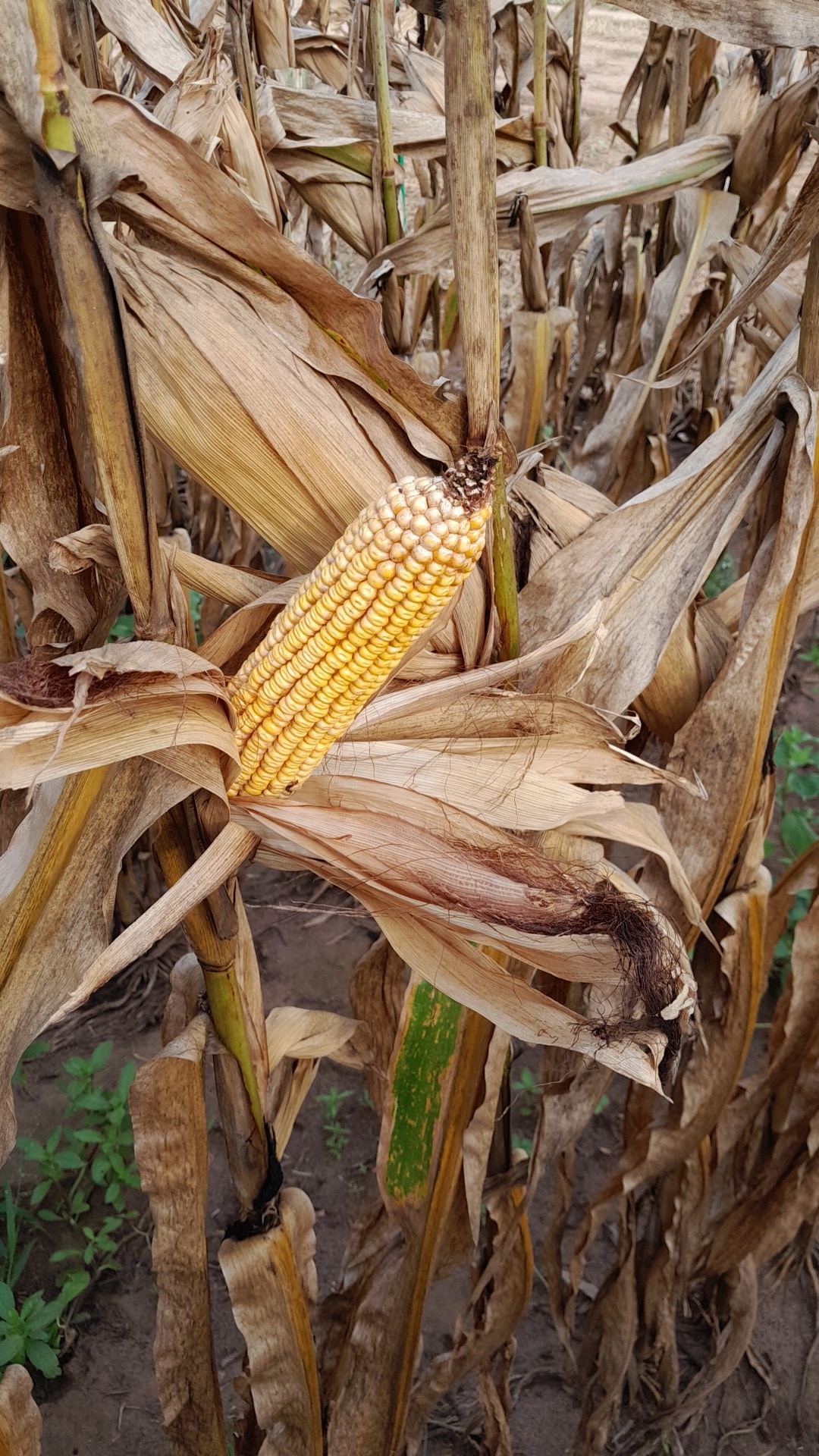
Corn Variety at WFREC
The 2025 field corn large plot demonstration trial at West Florida Research and Education Center, Jay, Florida was planted on March 28, with 17 varieties planted. The plots were harvest at the end of August. The yields ranged from 184 to 226 bu/A. The top 3 varieties were DKC111-62, DKC117-78vt2p, DKC70-45vt2p. All 3 of these varieties yielded over 210 bu/A.
–
Cotton
In May, 17 varieties were planted in a large demonstration plot. The plots were defoliated in October and harvested on November 3. Cotton yields were lower than usual, due to higher-than-average rainfall during June and July at that location. Yields ranged from 726 lb/A to 1,245 lb/A seed cotton. The top varieties were DP2127 B3XF, PHY415 W3FE, PHY475 W3FE, and NG4507 B3TXF.
–
Soybean
In May, 11 varieties of soybeans were planted. These ranged in maturity from 4.8 to 7.1. Five varieties were harvested October 23, due to crop maturity. The other varieties were sprayed with a pre-harvest desiccant on October 31. These varieties were harvested November 4. Rainfall was above average in June and July. The top 5 varieties that yielded over 65 bu/A: P48Z73E, A63-F16, AG69XF0, AG66XF2, and AG58XF3. These varieties were harvested early and yielded in the top 5: P48Z73E and A63-F16.
These results are from one year at this location. Results should be considered over several years at different locations before conclusions are valid.
–
Other links to variety testing data:
–
Alabama 2026 Variety Test Summaries
–
UF/IFAS Irrigated Corn Variety Trials Summary
–
Georgia Variety Trial Summaries
- Choosing The Right Crop Variety in 2026 - January 30, 2026
- Field Days are for Education– Recap of the WFREC 2025 Corn & Soybean Field Day - July 25, 2025
- Spray Drone Regulations - July 16, 2024