
Kenny Burdine, Southern Ag Today – December 29, 2025
While I have heard discussions around the topic, I have never been one to believe that an “optimal” cow size exists. Every farm is unique and operates in a different production and market environment. Whenever this question comes up, I simply reply that I don’t really care what cows weigh, as long as they are weaning enough pounds of calf each year to be profitable. But even that is a fluid discussion as it is impacted by the market. For example, a cow does not have to wean as large a calf to be profitable in 2025 as she would have in 2022. The reality is that producers make culling decisions each year based on the best information they have at the time.
While record keeping has never been high on the list of things that cow-calf operations enjoy, it is extremely important and should be used to drive these decisions. Well managed cow-calf operations track weaning weights on individual calves and tie each calf back to its dam. By doing that, productivity can be measured for each individual cow. On the other hand, it is nearly impossible to track production costs on an individual cow basis. Producers with good financial records should have a solid understanding of what it costs them to maintain the average cow in their herds.
This distinction is important when one considers how to use production records to make culling decisions. Larger cows tend to wean larger calves, but they are also more expensive to own. While it is not easy to observe, they will consume more hay, feed, pasture, and mineral as they maintain their larger bodies and one can make a case that vet / medicine, yardage, transportation and other expenses will be higher for larger cows too. The simple point being that if one is making culling decisions based on calf weaning weights alone, they are likely to be disproportionately culling more of their smaller cows. By doing this over time, the average size of their cows increases, and their costs trend upward.
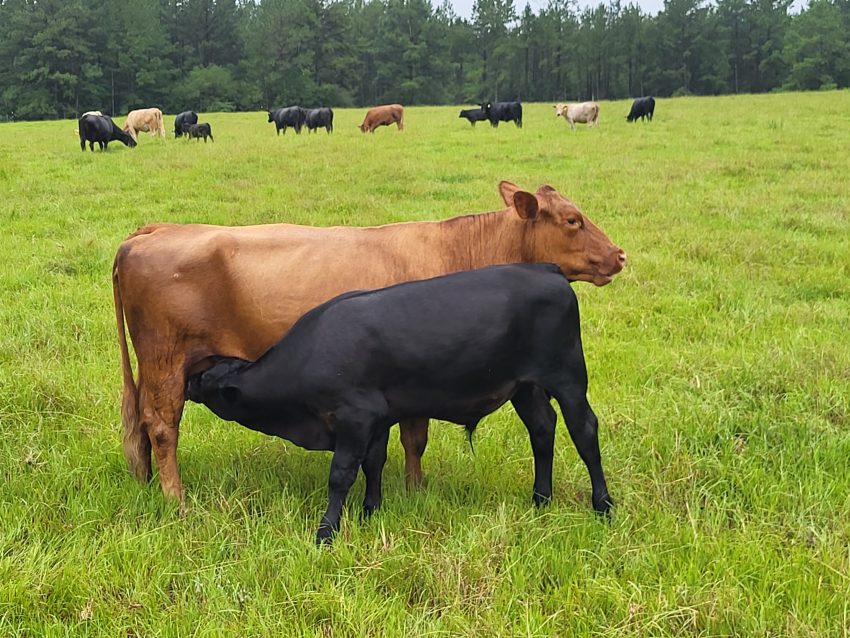
If you annually cull cows from the herd based solely on lighter than average weaning weights, you be may be disproportionately culling more of your smaller cows. Credit: Mark Mauldin, UF/IFAS
–
Several years ago, I put together an extension presentation aimed at illustrating this point and encouraging producers to consider cow size in their culling decisions. I used a simple budget approach and estimated cost adjustments for various sized cows. I even included a higher cull value on those larger cows, which is relevant to the discussion. Using this approach, it appeared that an operation needed to wean about 50 more lbs of calf for every additional 100 lbs of mature cow they were maintaining.
While I am not suggesting this approach is perfect, I do think it does a good job illustrating the concept. Basing culling decisions solely on weaning weight can be misleading – especially when the herd has cows of varying size. While I don’t think there is an “optimal” sized cow, I know those larger cows must wean larger calves to earn their keep. And the only way to evaluate that is to consider calf weaning weights in relation to the weight of their mother.
- Surprise!January WASDE Report Moves Corn and Soybeans Lower – Cotton Flat - January 16, 2026
- Don’t Ignore Cow Size When Comparing Calf Weaning Weights - January 9, 2026
- Federal Estate Tax and Gift Tax Limits Announced For 2026 - December 19, 2025