by Larry Williams | Dec 18, 2025
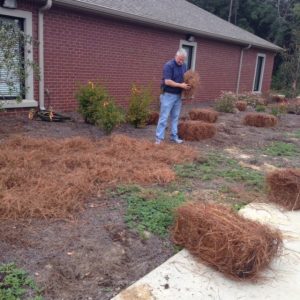
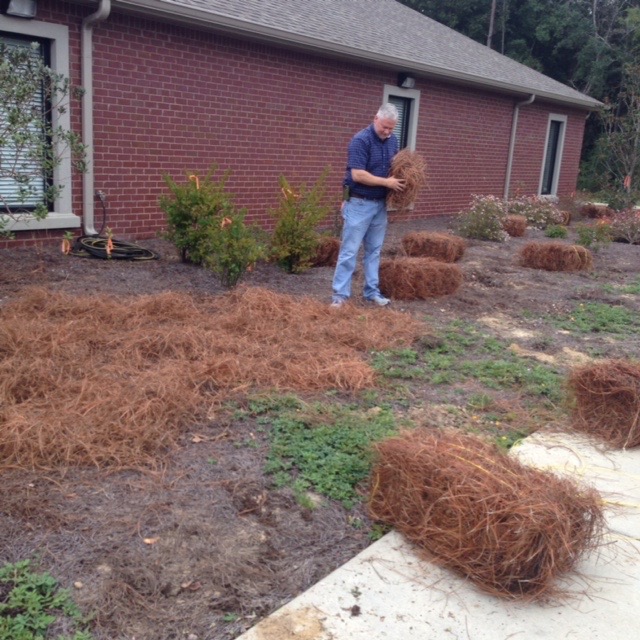
Pine straw being used as mulch in plant bed. Credit: Larry Williams
There is a difference between mulching and amending the soil. Mulching involves placing material such as pine straw, leaves or pine bark on top of the soil. Amending the soil is the incorporation of the material into the soil (in the root area).
Soil amendments and mulch can be organic or inorganic. Most soil amendments are organic (coming from a living organism) such as pine straw or peat moss. A few inorganic (non-living) soil amendments include sand, perlite and vermiculite.
Many common organic soil amendments don’t last long in our soils and climate. Materials such as peat moss decompose rapidly in our sandy soils, under our warm, moist conditions. Microorganisms break the “stuff” down rapidly, once it is in the soil. As a result, the benefits from the additional organic matter are quickly lost unless additional organic matter is repeatedly incorporated within the soil.
Slower decomposing materials such as sawdust or other wood products will last longer. But microorganisms that help decompose wood within the soil use or tie up some of the available plant nutrients such as nitrogen during the decomposition process. So additional nitrogen may need to be added to meet the nitrogen requirements for plants that are growing in the amended soil when wood is used as a soil amendment. Additional nitrogen may be needed until the wood is thoroughly decomposed. This may take months to years based on how well rotted the wood was when incorporated. It’s best to use well-rotted sawdust as a soil amendment. Nitrogen deficiency results in a general light green to yellow color in plant leaves.
Mushroom compost contains a high degree of lime. As a result, it will raise the soil pH, making the soil more alkaline or less acidic. It has its place as a soil amendment but should not be used where “acid loving” plants are to be grown. This would include plants such as centipedegrass, blueberries, azaleas, camellias and gardenias. It’s best to know the soil pH before using mushroom compost to avoid ending up with soil that’s too alkaline for the plants you intend to grow.
There needs to be a reason to amend the soil. Is the soil too heavy and poorly drained such as is the case with clay or muck type soils? Then, you may need to add something such as perlite or sand to “open” the soil to improve drainage. Is the soil sandy with a low pH? Then, you may want to use mushroom compost.
Amending soil for no good reason can be a time consuming and costly mistake.
by Larry Williams | Oct 30, 2025
Over time, landscapes change and our needs change. Lawns, shrubs and trees are living and respond to their environment, growing and declining with time. Many older landscapes eventually need renovation and improvements. Older plants outgrow their space. Others decline. Large, open lawns for play may not be needed any longer as children become older and eventually move away.
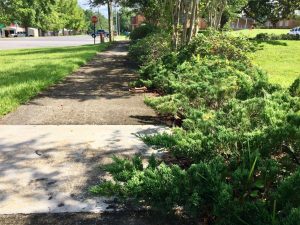
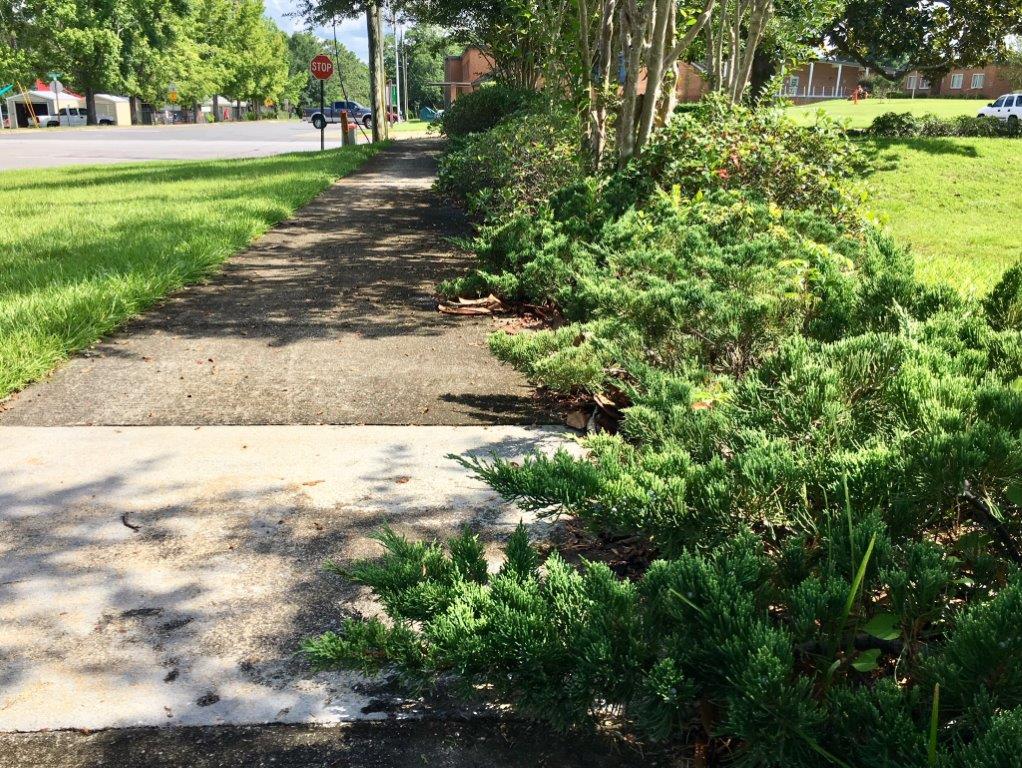
Consider removing spreading junipers growing over sidewalk with too much shade. Credit: Larry Williams
There are plants that are best removed from the landscape. They may become overgrown or become less than aesthetically pleasing. That’s a nice way to say they are ugly. The area may look better after removing old, declining, overgrown plants. Consider removing plants that require too much maintenance or that are pest prone.
Late summer through fall is a good time to do a walk-through of your landscape. Make notes if necessary as you visually inspect the plants. You get to see the plants that did great, the plants that didn’t do so great. You can make decisions on which plants to do away with, which to keep and which plants were more trouble than they were worth from a maintenance standpoint.
As you inspect your landscape, ask yourself questions. You can easily identify problem areas in the lawn. As you identify problem areas in the lawn, attempt to determine why those areas aren’t doing so well. Begin formulating plans for correcting those areas. Decide if renovating and replanting with grass is your best option. Or something other than grass may be the best option, particularly if there is a history of problems with grass in a specific location.
As a rule, when there is less than sixty percent coverage of the desirable lawn grass left, reestablishment should be considered. With time, the original lawn grass simply may have died out, leaving a mix of weeds, some of the original lawn grass, a volunteer grass in the mix and some bare ground. In the process of starting over, decide where lawn grass is needed or where it serves a purpose and consider other options in areas where grass may not be needed or where grass does not historically grow well.
It may be time to replace an older, declining plant with something new. There may be a plant that hasn’t performed up to par but that would do better if moved to a more appropriate location. Fall through early winter is a good time to relocate plants. Now is a good time to take a soil sample and possibly take the guesswork out of liming or fertilizing. The UF/IFAS Extension Office in your County can provide information on how to collect and submit a soil sample.
by Larry Williams | Aug 23, 2025
Hot, summer months are not the time to be using most lawn herbicides.
One issue is the heat of summer. Most lawn herbicide labels include statements such as the following. “Do not apply when temperature exceeds 90°F.” “Do not broadcast apply this product when air temperatures are above 90°F (85°F for St. Augustinegrass) unless temporary turf injury can be tolerated.”
Every year lawns are injured or killed because of lawn herbicides being applied when temperatures are too hot.
Summer is usually a rainy and windy time of the year. Many lawn herbicide labels include statements such as the following. “Allow 12 hours after application before watering lawn for maximum effectives on listed weeds.” “Apply only when wind is no more than 10 mph.” “Applying this product in calm weather when rain is not predicted for the next 24 hours will help to ensure that wind or rain does not blow or wash pesticide off the treatment area.”
It is critical to read and follow the label directions and precautions for any pesticide you use. Pesticide labels, including herbicides, include the following statements. “To the extent consistent with applicable law, the buyer assumes all risks of use, storage or handling of this product not in accordance with label directions.” “It is a violation of Federal law to use this product in a manner inconsistent with its labeling.”
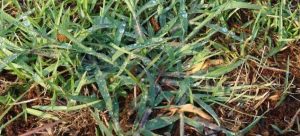
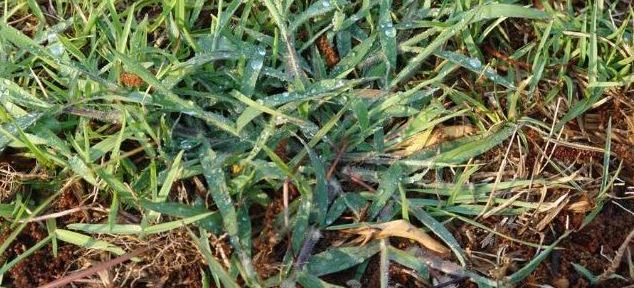
Crabgrass growing in centipedegrass lawn. Photo credit: UF/IFAS Extension
By the time summer arrives, many of the lawn weeds are mature, which means they are well established with extensive root systems. These mature, well-established weeds are more difficult to control. The same weeds are more susceptible to herbicides when they are small, young and not well established. Also, these mature weeds have produced countless numbers of seeds by summer. Most weeds are prolific seed producers.
A single crabgrass plant (a common summer lawn weed) can produce 150,000 seeds!
Applying a preemergence lawn herbicide in February to help prevent summer annual weeds such as crabgrass or applying a postemergence lawn herbicide during spring while the temperature is mild and before the weeds are out of control simply makes more sense than waiting until summer.
The best options now with lawn weed control involve continuing to follow good mowing practices, maybe hand removal of some weeds and just simply waiting for next February and spring to use lawn herbicides.
In the meantime, you may want to read the following UF/IFAS Extension publication on lawn weed control. https://edis.ifas.ufl.edu/pdf/EP/EP14100.pdf
by Larry Williams | Jun 26, 2025
If you’ve been outside this spring, you’ve probably been bothered by gnats. These tiny flies relentlessly congregate near the face getting into the eyes, nose, mouth and ears.
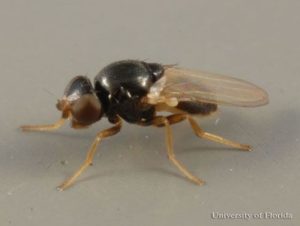
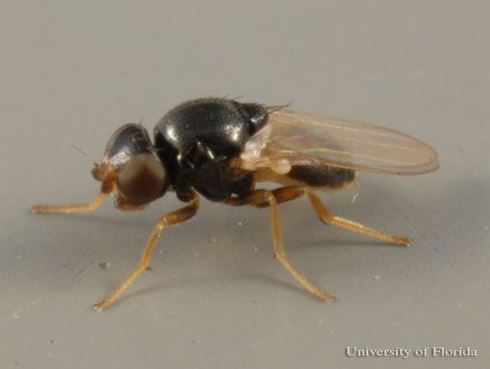
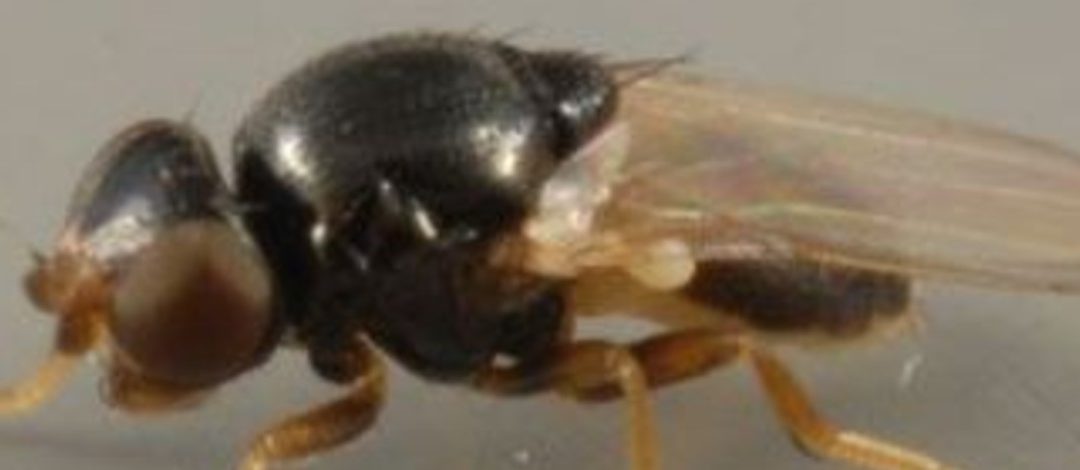
Eye gnat. Credit: Lyle Buss, UF/IFAS
Eye gnats come right up to the faces of people and animals because they feed on fluids secreted by the eyes, nose and ears. Even though eye gnats are considered mostly a nuisance, they have been connected to transmission of diseases such as pink eye.
Eye gnats are true flies. At about one-sixteenth of an inch in length, they are among the smallest fly species in Florida. They are known as eye gnats, eye flies, frit flies and grass flies. The name grass flies is somewhat descriptive as open grass areas such as pastures, hay fields, roadsides and lawns provide breeding sites for these gnats. They also breed in areas of freshly disturbed soil with adequate organic matter such as livestock farms.
Even though these gnats can be found in much of North and South America, they prefer areas with warm, wet weather and sandy soils. Sounds like Florida.
An early spring and plenty of rain are the more likely reasons why these gnats are such a problem in our area this year. Without having the typical last killing frost around mid-March and with early warm weather and rains, the gnats got off to an early start.
Short of constantly swatting them away from your face or just not going outdoors, what can be done about these irritating little flies? I grew up in an area of Georgia where gnats are common. I’ll let you in on a secret, folks who live in Georgia are known to be overly friendly because they are always waving at people who are just passing through. More than likely, these “friendly” folks are busy swatting at gnats, not waving at others who happen to be driving by. Swatting is a quick swinging action with hand as if waving.
Because of their lifecycle, extremely high reproductive numbers in the soil and because insecticides breakdown quickly, area-wide chemical control efforts don’t work well in combating this insect.
The use of the following where gnats are common can be helpful.
- Correct use of insect repellents, particularly those containing DEET
- Screens on windows to prevent the entry of gnats into homes
- Face-hugging sunglasses or other protective eyewear
- Face masks
We may have to put up with these annoying gnats until cold weather arrives and be thankful that they don’t bite.
Additional info on eye gnats is available online at https://edis.ifas.ufl.edu/in884 or from the UF/IFAS Extension Office in your County.
by Larry Williams | May 15, 2025
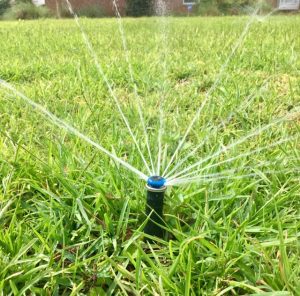
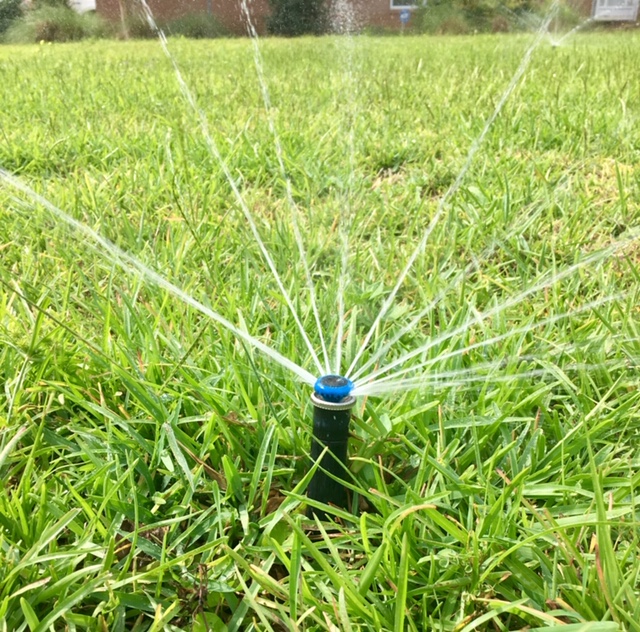
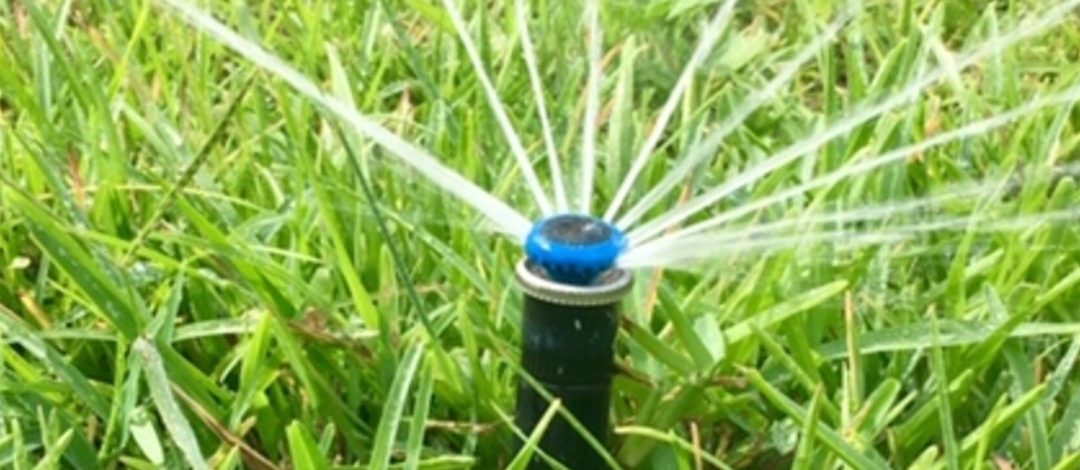
Lawn irrigation spray head running. Credit: Larry Williams
When watering to establish a new lawn or when renovating areas within an older lawn, 2-3 “mists” throughout the day for the first 7-10 days until roots get established is recommended. These are 10-minute bursts. Then back off to once a day for about ½ hour for 7-10 days. Then go to 2-3 times a week for about 7 days. By then your lawn should be established.
Irrigation is not needed when we are getting adequate rainfall. Rain counts. In the absence of sufficient rain, you’ll need to provide enough water at the correct time to allow your new sod to root, hence the above directions.
A well designed and correctly installed irrigation system with a controller, operated correctly, helps to achieve uniform establishment. It can be difficult or impossible and inconvenient and time consuming to uniformly provide sufficient water to establish a lawn with hose-end sprinklers, especially with a sizeable lawn and during dry weather. Most people are not going to do the necessary job of pulling hoses around on a regular basis to result in a well-established lawn.
Too much water will result in rot, diseased roots and failure. Too little water will result in the sod, seedlings, sprigs or plugs drying excessively and failure to establish. The end result, will be a poorly established, sparse lawn with weeds, or complete failure.
There is no substitute or remedy for incorrect irrigation when establishing a new lawn or when renovating an older lawn.
It is risky to invest the required time and money if the new lawn cannot be irrigated correctly. Taking the gamble that adequate (not too much, not too little) rainfall will occur when needed to result in a beautiful, healthy, lush lawn is exactly that, a gamble.
An irrigation system is a good tool to supplement rainfall. As much as possible, learn to operate the irrigation controller using the “Manual” setting. It also is wise and is State law to have a rain shutoff device installed and operating correctly. The rain shutoff device overrides the controller when it is raining or when sufficient rainfall has occurred. A rain shutoff device is inexpensive and easily installed. Also, a rain gauge can be an inexpensive tool to help monitor how much rain you’ve received. Rain counts.
The above schedule should help when planting a lawn from seed, sprigs, plugs or sod.
Once the lawn is rooted, your goal change from establishing a root system to developing a deep, strong rooted lawn. To do this, irrigate to provide ½ to ¾ inch of water on an as needed basis. Here are links to a UF/IFAS video and publication with more info on how to do this: https://www.youtube.com/watch?v=W_wn-hwLNtg, https://edis.ifas.ufl.edu/publication/LH025.