
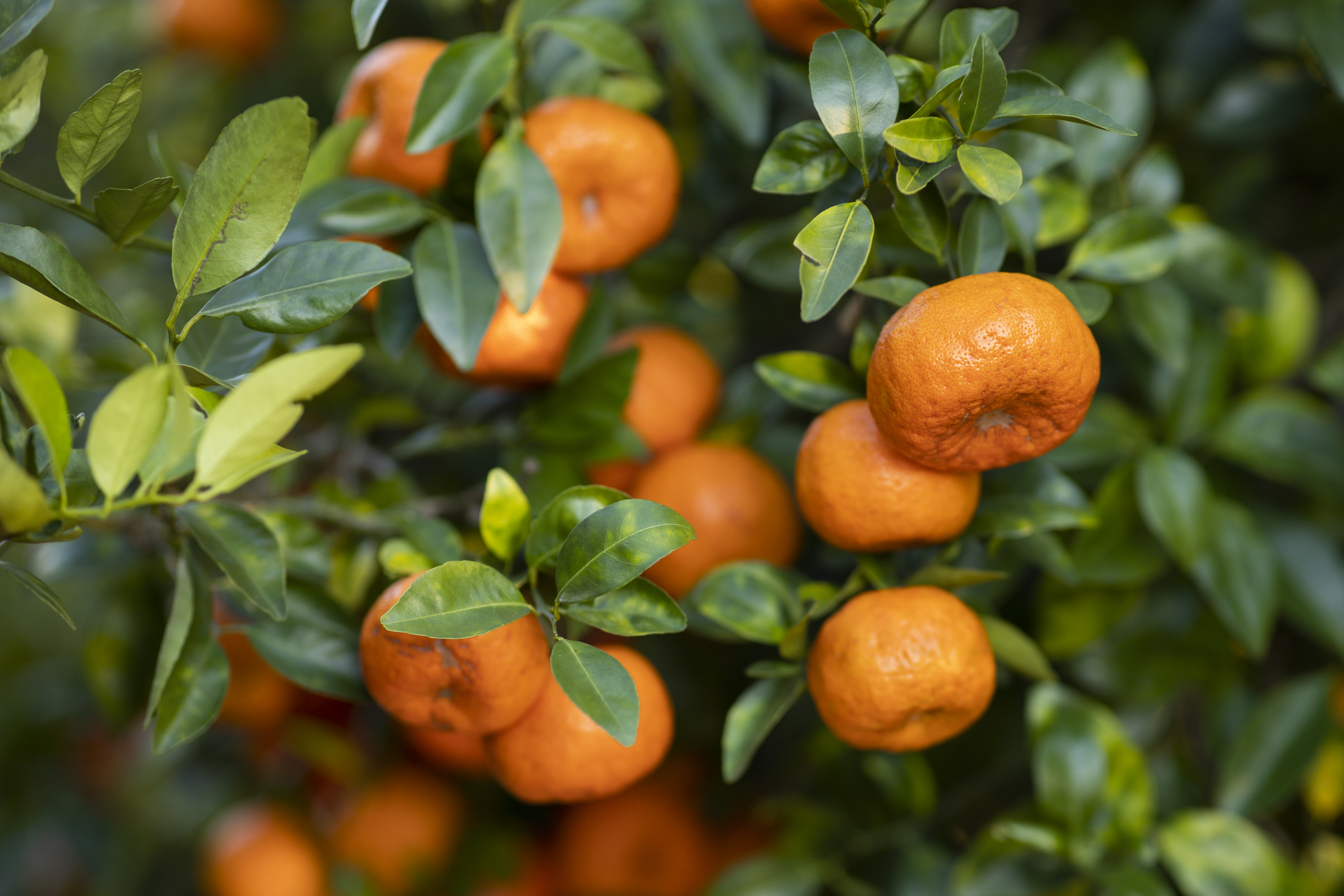
Cold hardy citrus are a treat for north Florida gardeners. Credit: Tyler Jones, UF/IFAS
Growing citrus in the backyard is definitely a gardening perk for those living in north Florida. However, our frequent cold snaps are also a source of anxiety for many backyard citrus growers. With weather forecasters excited to highlight dips in temperature, many folks call their local extension office, or head to social media, fretting over what they should do with their citrus. This article is intended to walk you through what to consider when deciding how cold it needs to get before worrying.
First of all, you can really help yourself out by selecting and planting varieties that are known to be cold hardy. In addition to Myer lemon, calamondins, kumquats, grapefruit, and pummelo, other cold hardy citrus varieties include:
- mandarins – satsuma, shiranui, Sugar Belle, Tango and Bingo
- oranges – navel, Hamlin, Minneola Honeybell, and Valencia
Again, the above varieties are known to be hardy, as trees, down to at least temperatures in the mid-20s. Young trees are more susceptible to these temperatures, but once mature, you shouldn’t worry about having to cover them down to the mid-20s. Remember, when covering plants for cold protection, you want the material – whether it be fancy frost cloth or just a simple blanket – to completely cover the tree and drape on the ground. It is the heat leaving the soil that you are trying to capture to keep the tree protected.
When it comes to the fruit, temperatures reaching 26 to 28 degrees for more than two hours may begin to freeze and cause damage. Satsumas, navels, and Meyer lemon fruit have thinner skins compared to grapefruit and so are more likely to freeze. Ripe citrus fruit is more cold-tolerant than unripe fruit due to their sugar content. Unfortunately, if you have unripe fruit, remember that citrus does not ripen off the tree. If you notice frozen fruit after a freeze, salvage any fruit as soon as possible, mostly for juicing, or dispose of in the compost pile.
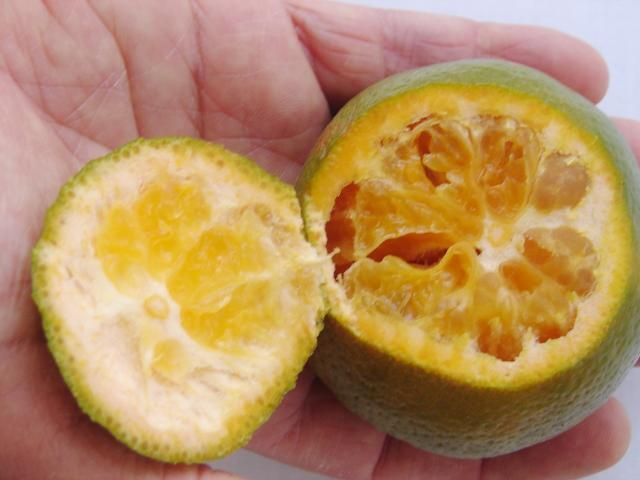
Citrus fruit showing damage after a freeze. Credit: Mongi Zekri, UF/IFAS
Now, back to the forecasters. They seem to get excited every time we begin to reach anywhere near 32 degrees and begin issuing frost and/or freeze warnings. These are important to consider, but as we now know, just because we’re getting frost or freeze temperatures, it doesn’t mean we’ll lose our citrus. According to the National Weather Service, here’s what all of these advisories mean:
- Frost Advisory – minimum temperature is forecast to be 33 to 36 degrees on clear and calm nights during the growing season
- Freeze Watch – issued when there is a potential for significant, widespread freezing temperatures (32 degrees and below) within the next 24-36 hours.
- Freeze Warning – issued when significant, widespread freezing temperatures (32 degrees and below) are expected.
So, if you hear there is a frost advisory, not much need to worry. If we get all the way to a freeze warning, now we need to pay attention to what the minimum low temperature is forecasted to be. If it’s 28 or below, now we begin to worry about any fruit on the tree. It does have to hold at these low temperatures for several hours before damage occurs, so maybe we’ll be okay. Once we get to the lower 20s, we should probably go ahead pick all of the ripe fruit and hope for the best on any unripe fruit. At these sub-freezing temperatures, we also need to start implementing measures to protect the tree, especially the graft union where the top of the tree has been united with the rootstock, typically indicated by a thickened or swollen like area at the base of the tree. This includes tree covers and soil banking – mounding soil over the graft union through the sub-freezing temperatures.
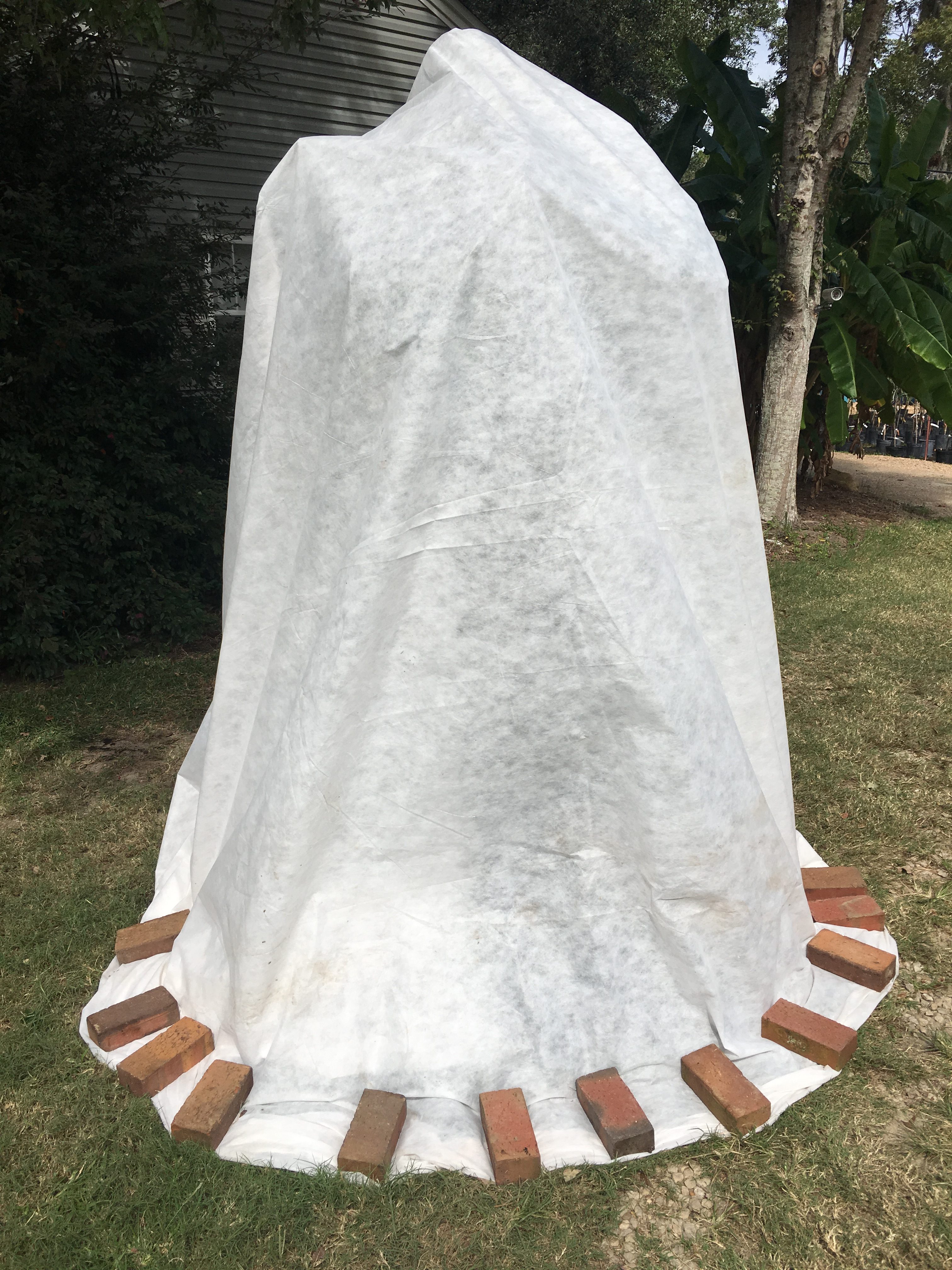
When covering a tree for cold protection, be sure to drape the cover all the way to the ground. Credit: Jonathan Burns.
Hopefully, this information can help you sleep better during a north Florida cold snap. For more information about citrus and cold damage, there are some great UF/IFAS resources available online. As always, you can also contact your local Extension Office.
- When to Worry About Your Citrus During Cold Weather - December 18, 2025
- A Tale of Two Hoses - November 13, 2025
- Anthracnose and Aster Yellowing Diseases Recently Diagnosed - August 28, 2025