
Flowers are a beautiful addition to any landscape, but have you ever wondered why some plants bloom in the spring while others show off in the summer?
Let’s start with why plants produce flowers. Simply put, flowers are the sexual reproductive structures a plant uses to increase genetic diversity by incorporating DNA from male and female flower parts into seed produced as a result of pollination and successful fertilization. For a plant to produce flowers it must be sexually mature which might be determined by triggers such as how many leaves and nodes the plant has produced or the amount of time that has passed.
Maturity
A plant grown from seed must reach the markers required for that species to become mature, however, a plant that is propagated vegetatively (cuttings, division, grafting, etc.) is the same stage of maturity as the parent plant so if the parent plant is mature then the vegetative “offspring” will also be mature and able to bloom.
But if we only went by plant maturity then a mature plant would flower continuously, but even the novice gardener knows that is not accurate. So, what else needs to happen to induce flowering? There are two other important factors that play a role: photoperiods and temperature.
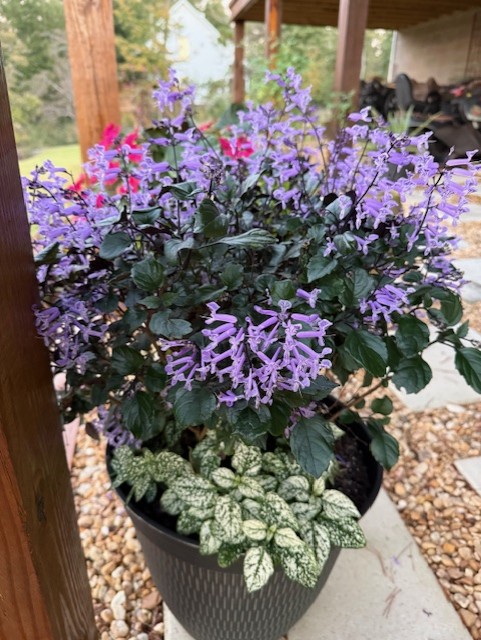
Mona Lavender Plectranthus bloomed sporadically through the summer but as the days got shorter it burst into bloom. Photo: J_McConnell, UF/IFAS
Photoperiod
Photoperiod is the number of hours of daylight in a 24-hour period. Flowering plants are separated into three main groups: short-day plants (SDP), long-day plants (LDP), and day-neutral plants (DNP. But wait, it gets a touch more complicated – the plants are not technically sensitive to the hours of daylight rather it is the hours of uninterrupted darkness. Think of short-day plants as long-night plants, long-day plants as short-night, and day neutral plants do not have a preference.
Have you ever seen the recommendation to put a Christmas cactus in a dark cabinet for a few weeks to induce flowering? It works because Christmas cactus requires short days (long nights) to initiate flower bud development. If the plant is exposed to lights in normal household settings or you keep opening the cabinet and allowing light in this can delay flower bud development.
Temperature
The last factor that affects flower production is temperature. Plants have ideal temperatures where they thrive, for example tomatoes grow well when temperatures are warm and are damaged by freezes. But did you know that even a heat-loving tomato also has a heat limit? When day temperatures are above 90 degrees and nights are above 70 degrees tomatoes stop producing flowers and fruit. Along these same lines, perennial plants may require a designated number of hours below approximately 50 degrees to initiate flower buds. If you have grown fruiting trees and shrubs, you may be familiar with the concept of chill hours which is the number of accumulated hours between 32-45 degrees needed by a plant to flower.
Practical Application
Why does any of this matter? If you are planning a flower garden and want to maximize your seed/plant budget, understanding the bloom requirements of the plant will help you make better choices. It also may help explain why plants seem to behave differently depending on the time of year, such as when you are successive planting flowers.
- Example 1: A long-day plant seeded in May has time to reach full vegetative size before the days are long enough to trigger flowering. The same seed planted in late July flowers on a shorter vegetative plant because the daylength hours have been met triggering earlier flowering (fewer days from seed to bloom).
- Example 2: A bedding plant you purchased in March that looked great in the spring, stopped blooming in summer, then started blooming heavily in the fall was triggered by photoperiod and/or temperature.
Plant breeding can affect bloom triggers even within the same species, so it is difficult to compile a list of true short-day, long-day, and day-neutral plant lists, but now you know this is a feature to look for during your garden planning!
- How do flowers know when to bloom? - January 8, 2026
- Thinking of Starting a Cut Flower Business? Don’t miss out on Cut Flower 101! - October 30, 2025
- 2025 Gardening in the Panhandle LIVE! Great Southeast Pollinator Census – Bee a Citizen Scientist! Wrap Up - September 18, 2025