
Whelp, the new year has come and gone. We find ourselves facing the beginning of a new gardening year. This naturally brings out the question of what can even be planted this time of year with all the cold that has set in over the last week? Luckily for you, IFAS has an answer with our North Florida Gardening Calendar. In this document, you’ll find several cool-season vegetables for planting, none the least of which is the humble potato (Solanum tuberosum).
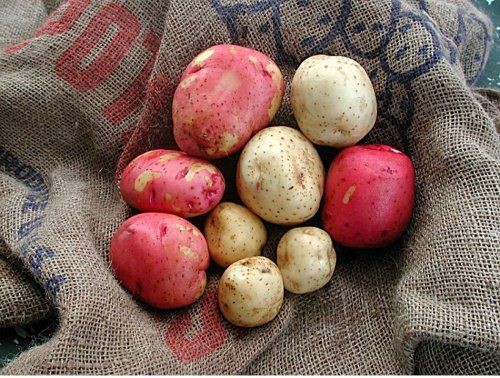
UF/IFAS Photo: C. Hutchinson
A Brief History
Potatoes were originally domesticated in South America, specifically along the Andean mountain range. They were brought to Europe by Spanish explorers, where they were largely relegated to ornamental and livestock feed due to an association with the family Solanaceae.
This changed as European royals began to promote the crop widely. Most notably here are Fredrick the Great’s assigning guards to potato fields and Marie Antoinette’s use of potato flowers in fashion. The commoners noticed, and not long after, potatoes were seen on tables across the continent.
Due to its high nutritive value and ability to grow in poor soil, the potato supported population growth and quickly became a staple crop across Europe. In some areas, such as Ireland, this became a detriment as a single blight nearly destroyed the entire country.
Time for Local Growth
Potatoes have a rich history worldwide, but this small starchy crop can be grown even here in Northwest Florida.
Soil
Soil preparation is likely to be minimal in the Panhandle. Our soils are usually naturally acidic, which is perfect for your spuds. You will want to ensure that the soil is well-drained, and adding organic matter will likely provide some nutritional benefits. As always, the best way to determine fertilization is through testing. Potatoes are heavy feeders, and you’ll likely need multiple applications of nitrogen and potassium. Call your Extension Office for advice on both soil testing and fertilizer application.
Seed
Begin in January by selecting seed potatoes. You’ll likely see videos online of people using grocery-store potatoes as seed stock, but this isn’t advisable, as they may harbor more pathogens. Leave the seed potatoes in a lit room for a few days to break their natural post-harvest dormancy. At this point, some of the “eyes” may begin to sprout. Whether sprouted or not, the seeds may be cut into roughly egg-sized pieces. Ensure each piece has at least one eye. Allow them to dry out for a few days before planting.
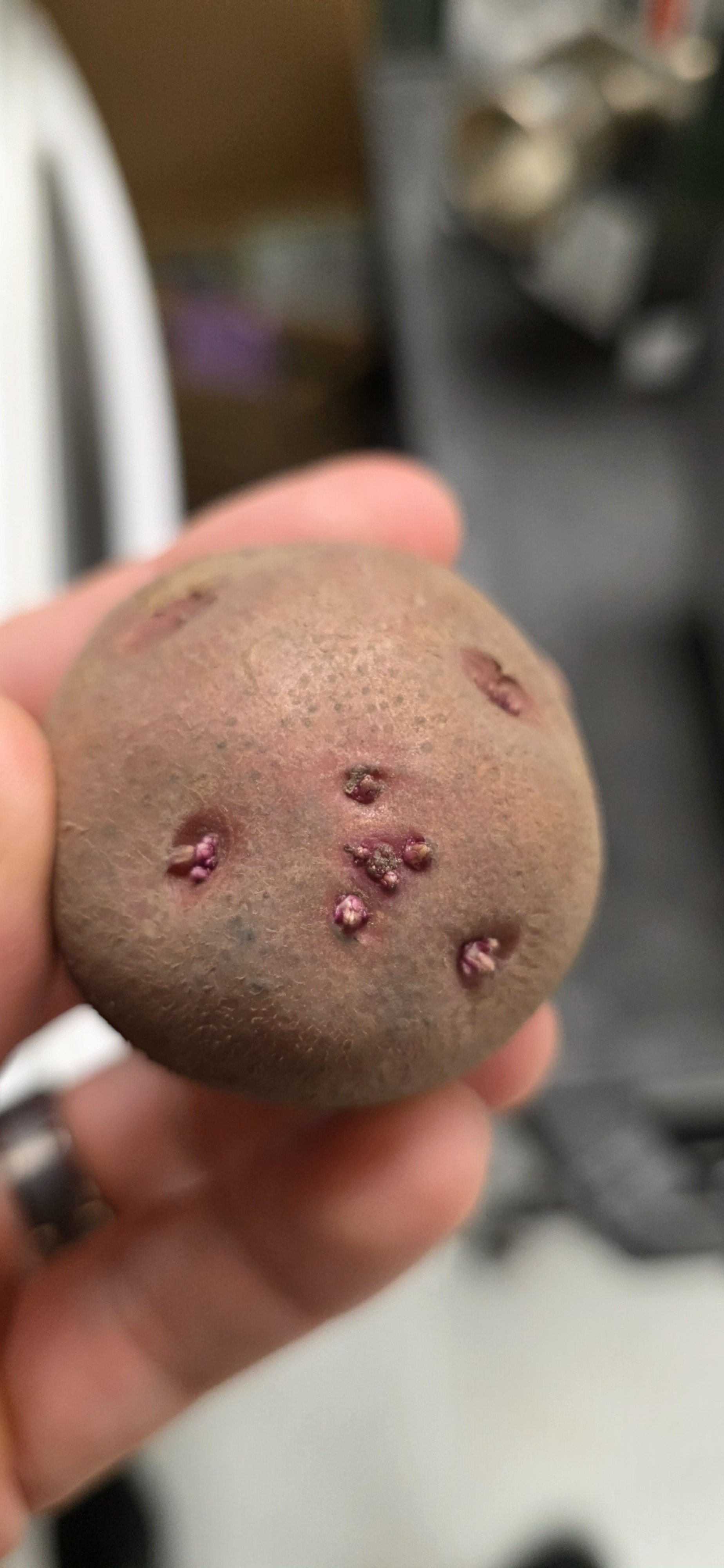
Potato beginning to sprout photo: J. Criss
How To Grow and Harvest
Space the pieces around 6-8 inches apart, roughly 4 inches below the soil surface. When you see the sprout emerge from the surface, add a few inches of soil, a process known as hilling. Maintain adequate soil moisture and scout regularly for insect and pathogen signs.
Vines will begin to show signs of dieback around 80-115 days after planting. Allow the tubers to remain in the soil for another 2-3 weeks after this die-off. Discard any green potatoes and any remaining seed pieces. Dig the potatoes, and store them in a cool, dry place for an additional two weeks. After this, store them as you would store-bought potatoes, and they should be good for up to 6 months.
To Sum Up
Potatoes can certainly be a challenge for those who’ve never tackled them before, but mastering their growth is something for which every gardener should strive. For more information on this topic, consult this document. For any questions about this or any other horticultural concern, contact your local Extension Office.
- Time for Taters - January 29, 2026
- Consider Chestnuts for Your Landscape - December 26, 2025
- Cold Protection for North Florida - November 6, 2025