
Owners of lawns and landscapes occasionally find that something has dug holes in their turf or plant beds. Sometimes this is the work of squirrels, but another common resident of our area can be much more of a digging pest. The nine-banded armadillo, in its search for food, can do a lot of damage in a short period of time.
Nine-banded armadillos are not native to our neck of the woods. Considered an invasive species, they migrated to North America in the 1850s from Mexico. They have spread ever since, ranging now throughout the Southeast, with populations as far north as Kansas in the western part of their range and South Carolina to the east.
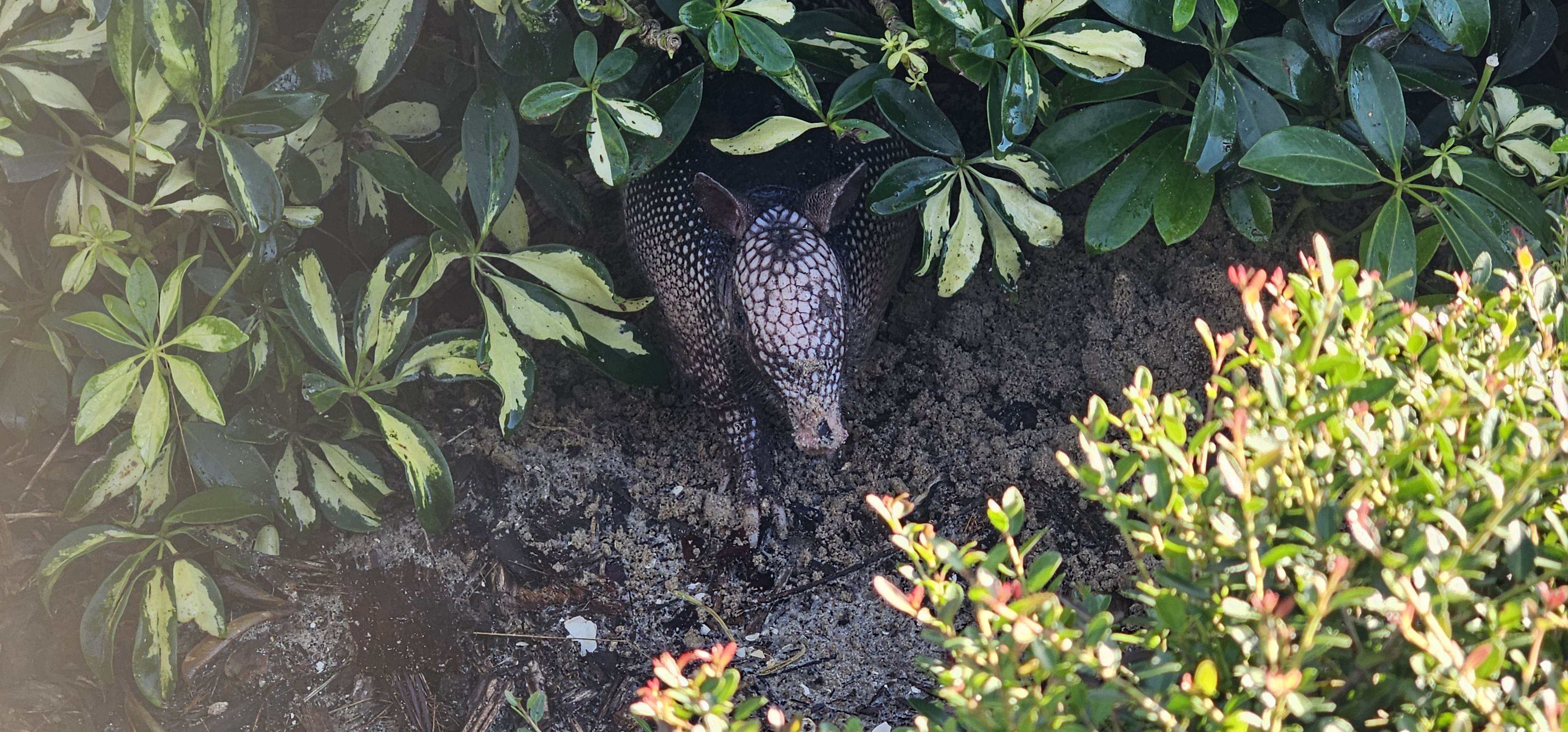
An armadillo foraging in a landscaping bed.
As far as meals go, armadillos prefer to snack on insects, but will supplement their diet with seeds, fruit, or other food. They are very good diggers, looking for grubs and worms in the soil; when landscaping gets in the way, they unfortunately do not hesitate to dig it up. They are in turn predated upon by larger animals, though their hard shells give them a measure of protection against this. They are usually active at night time, though cool weather may see them active during the warmer parts of the day.
Beyond digging for food, armadillos also construct burrows for shelter, which can reach depths of up to seven feet and lengths of twenty feet. This is not a problem out in wooded areas, but can become an issue when the burrow is located near a structure or beneath a walking path. Another potential concern with the presence of armadillos is that they are able to become infected with the bacteria that causes leprosy.
If armadillos are becoming a problem in your landscape, there are a few steps to take that can help discourage them from staying around. Use proper cultural practices for plants, including turfgrass, and treat for grubs if necessary. This helps to remove sources of food. Fencing an area can help stop armadillos from accessing it, but remember that they can dig and fences need to be buried about a foot and a half deep. Armadillos can be trapped, though they may be difficult to bait, so placing traps where they are more likely to wander into them (such as near burrows) can help. For more information on armadillos in general, see our fact sheet here: https://edis.ifas.ufl.edu/publication/UW456
For more information on using baits for armadillos, see this fact sheet: https://edis.ifas.ufl.edu/publication/UW362
- The Nine-Banded Armadillo - February 5, 2026
- Quercus Geminata, the Sand Live Oak - November 20, 2025
- Snakes of the Panhandle - October 10, 2025