This Heat Really Makes You Appreciate a Shade Tree
If there is anything that is more refreshing than the cool shade of a tree on a hot August afternoon, I cannot quite think of it. Here on the Gulf Coast, the thought of the heat in the “Dog Days of Summer” conjures up images of the dogs lying by their owners’ rocking chairs on the veranda – shaded of course by the majestic live oaks out front. If you ever observe older homes in our region, they usually have large established shade trees to shade the house most of the day. In the days before air conditioning, I imagine a world without shade would be intolerable, nigh unlivable. If you have ever had to work on an asphalt parking lot or roof on a 100+ degree August day with no shade, you fully understand the term “heat island”. The steam rising off the same parking lot later after a passing shower or thunderstorm reinforces how hot that surface is.
These past few weeks the oppressive heat has made anything outside unbearable, especially in the heat of the afternoon. You can quickly understand why old farmers in our area worked from sunup to about 10 a.m. or so, then did lighter work in shaded areas or inside. They would go back out and work hard in the cool of the evening too, but you seldom saw anyone out in the open fields during the mid-day heat if it were avoidable. A shade tree in the pasture or up at the house was a welcomed oasis and favorite lunch spot. Going back in the air conditioning just caused you to have more trouble acclimating to the heat and could even cause medical problems if you we very hot and suddenly went into very cool air conditioning. I remember these summer patterns well growing up on the Gulf Coast, and still follow them when doing forestry field work. Being under a closed forest canopy was like being in air conditioning compared to the open sun of a logging deck or pasture. The shade of a tree or a forest canopy offered an amazing relief from the blazing August heat and humidity.
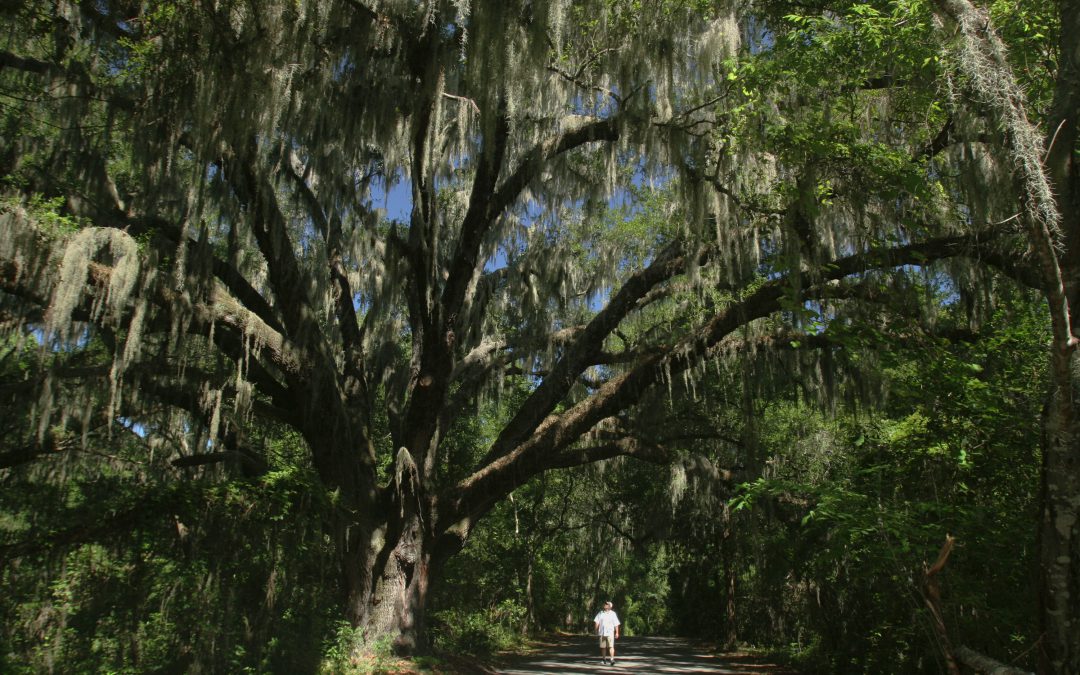
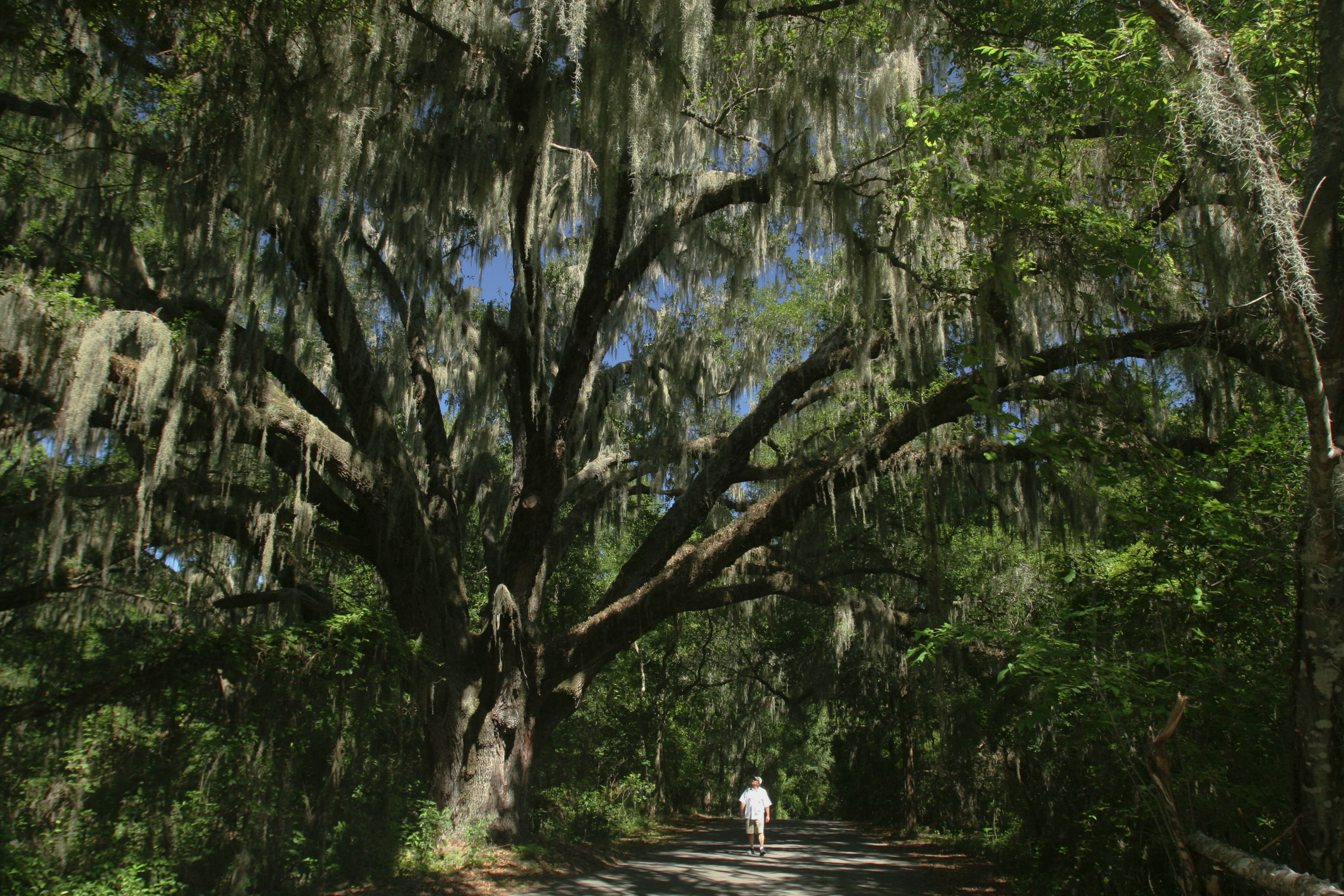
It is impossible to stress enough the importance of individual shade trees and tree cover to our urban areas. Imagine our towns and cities devoid of trees! Imagine Tallahassee without its canopy roads, themselves sort of an early cooling effort for travelers. Without these trees it would make these heat waves, as oppressive as they are already, downright scorching and close to unlivable. If you are doing any gardening or other outdoor activity during these hot days, it is highly likely you seek out a shady area to be in. As that shade moves with the sun through the day it is equally likely that you relocate and follow it as it moves. If you have a neighbor that has no tree cover and shade on their house, and you are on good and friendly terms, ask to compare power bills with them. Odds are their power bill is noticeably higher because they do not have the shade of trees. With all the important features our urban forest provides, we must realize that our trees and the urban forest they form are critical to our urban ecosystem we live in. Yes, I said urban ecosystem; we must remember that we are part of nature too and even though we have altered it to our needs, our urban environment is part of our ecosystem. Trees are the backbone of that here on the Gulf Coast and our cities show it. Gulf Coast cities generally have extensive tree cover, despite our disturbances from Hurricanes.
So, what do these shade trees and urban forests really do for us in terms of actual measurable data? We know from just walking under a tree on a 100+ degree day we can feel the difference but what does it equate to. A study published in the Journal of Forestry in 2018 found that an estimated 5.5 billion urban trees provided an estimated $5.4 billion in energy reduction alone (Nowak and Greenfield 2018). This same study found that Florida was the state with the highest annual urban forestry value with an estimated annual value of $1.9 billion. Those are some impressive numbers and help put the value of urban forests into some monetary terms, but this is just one study. Professionals studying urban forests and their benefits are constantly finding out more on just how valuable our urban tree cover is. A UF-IFAS EDIS publication in 2020 helped to further characterize our urban forests across the state. Urban areas in the Northern part of the state had the highest percentage of canopy cover, with our local Okaloosa-Fort Walton-Destin area being the highest at 74.4% (McLean et al. 2020). Our local Panhandle metropolitan areas all had high canopy cover in the 50% or higher range. That is good news for Panhandle urban areas as this tree cover helps improve quality of life in these areas.
The benefits provided by urban forest cover are not just confined to shade, cooling, and reduced energy use. We get other major benefits from our urban forest and tree cover. The same 2020 UF-IFAS study found that in Florida’s urban areas, trees remove 600,000 tons of air pollutants through their canopies, which results in $605 million in health care savings related to air pollution. Urban tree cover also prevents stormwater runoff into our waterbodies. The study found that Florida’s urban forest cover prevents 50 billion gallons of stormwater runoff, which results in a $451 million saving from avoided stormwater treatment. Those benefits would not be possible without our urban trees. Once you see the numbers, it is clear how our urban forest provides us with so many benefits we rarely see or consider.
When you walk under the shade of a tree or under a forest canopy on these scorching summer days you get an instant reminder of the benefit of that tree cover. The cool relief from the sun and heat is just one of the many benefits our trees and urban forests provide. Trees are one of our favorite parts of the landscape for many reasons and studies that quantify these benefits put in real term just how critical our urban forests are to us. Our tree cover helps clean our air and capture stormwater in our summer downpours. As our communities grow and expand, we need to be sure to preserve the trees we have and plant new ones as the need arises. By keeping our urban forest cover intact, we can enjoy the cool shade and all the other benefits our urban trees provide.
References and further reading:
Nowak, David J; Greenfield, Eric J. 2018. US Urban Forest Statistics, Values, and Projections. Journal of Forestry. 116(2): 164-177.
McLean, Drew C., Andrew Koeser, Deborah R. Hilbert, Shawn Landry, Amr Abd-Elrahman, Katie Britt, Mary Lusk, Michael Andreu, and Robert Northrop. 2020. “Florida’s Urban Forest: A Valuation of Benefits: ENH1331/EP595, 11/2020”. EDIS 2020 (6). https://doi.org/10.32473/edis-ep595-2020. ENH1331/EP595: Florida’s Urban Forest: A Valuation of Benefits (ufl.edu)