
Most folks are familiar with the concept of supply and demand and how it affects cost. The more numerous a product, the lower the cost. The cost also reflects value, so the more abundant something is, typically the lower the value. This idea of abundance being tied to little value can also be applied to the amazing world of nature around us. Water, for instance, is usually valued little in areas where it is abundant compared to areas where it is scarce. Unfortunately, when it comes to common native plant species found in our local ecosystems, their sheer abundance leads many to consider them not too valuable. However, sometimes, if we step back and learn about these species, we find that many may be locally abundant, but globally very special. Hopefully, this new found knowledge encourages us to value them a little more!
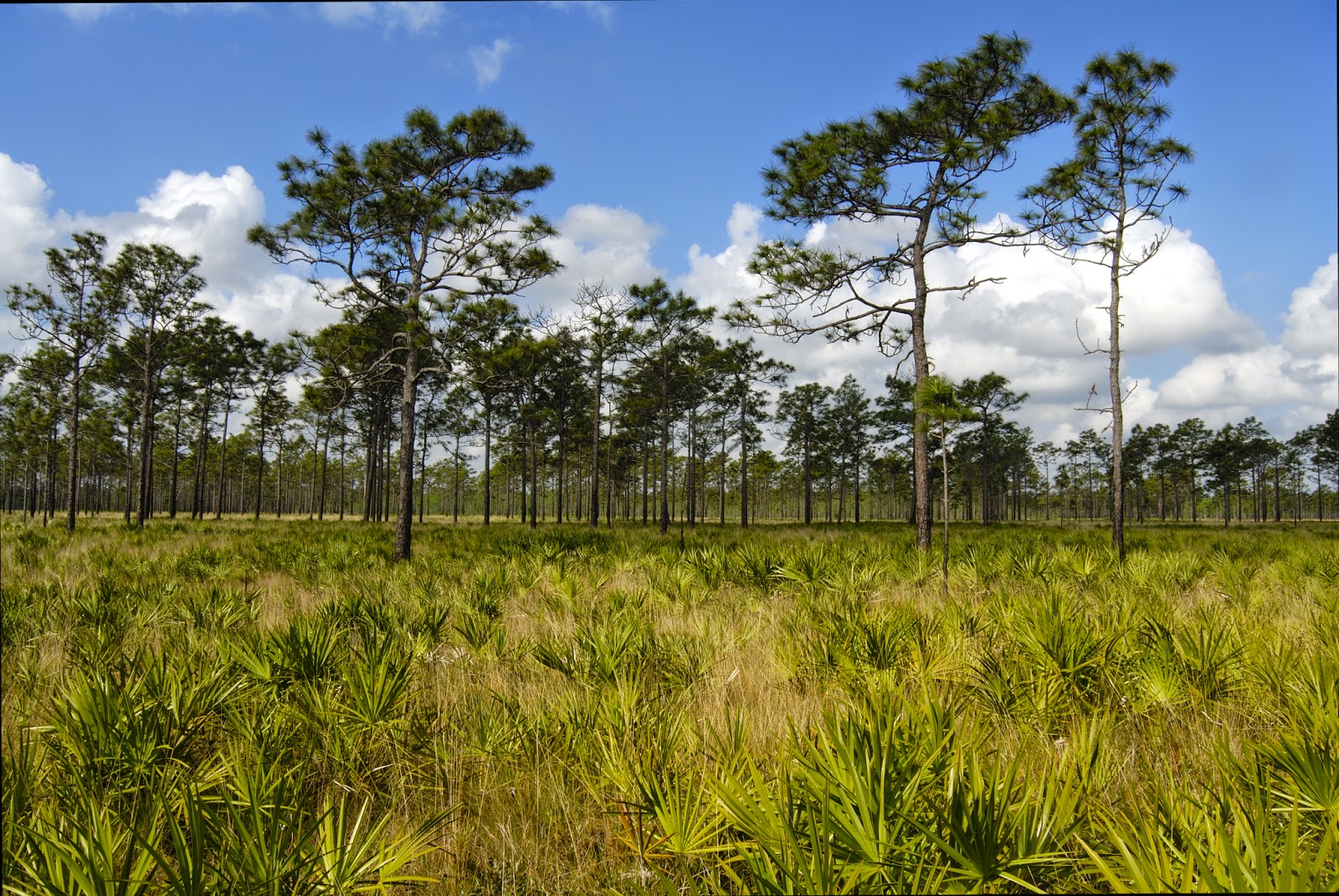
Saw palmetto is common element of many Florida ecosystems. Credit: Gary Knight, Florida Natural Areas Inventory.
One such example is our very common saw palmetto (Serenoa repens), a plant that is so common in our area that it often goes overlooked and undervalued. How many of you have observed a pine flatwoods loaded with saw palmetto, and gone – “Ehh, it’s so plain and boring?” However, saw palmetto, while locally abundant, is not so plain and boring. Did you know that saw palmetto is found nowhere else on Earth except in our little pocket of the southeastern USA? Its range hugs the Gulf coastal plain from Louisiana to South Carolina, and that’s it.
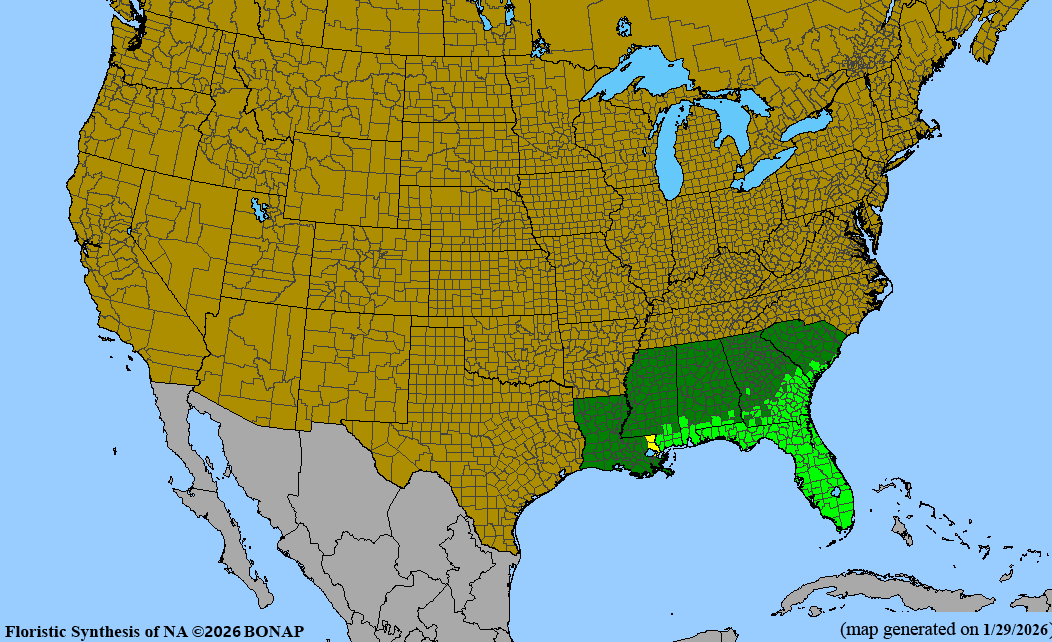
The limited range of saw palmetto. Credit: Kartesz, J.T. 2026. Floristic Synthesis of North America, Version 1.0. Biota of North America Program (BONAP) [website http://bonap.org/] Chapel Hill, N.C
- Saw palmettos are a native, flowering shrub that do well in ornamental landscapes. They provide a tropical look, and the flowers are very attractive to insects and other pollinators. Just be sure to select the right place for them, as they do expand to 4-10 feet wide so it can become a problem near walkways or in tight spaces.
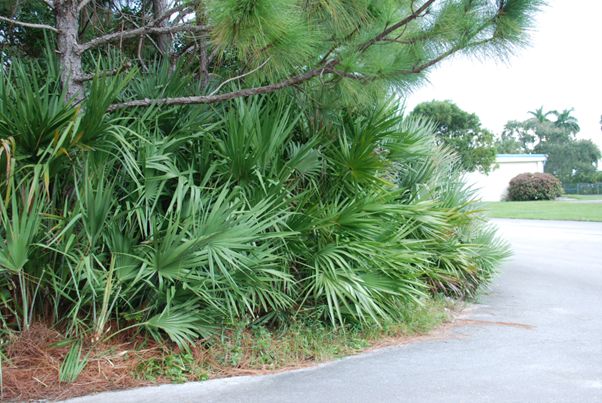
Saw palmetto does spread wide, so give it plenty of space. Credit: Karen Williams, UF/IFAS.
- While saw palmetto fruits are an important food source for birds and other wildlife, humans also have an interest in them. The fruits are harvested by pharmaceutical companies for medicinal purposes, and extracts of saw palmetto fruits are easily found for sale in health food stores and online. The extracts are mainly marketed as a natural remedy for issues related to enlarged prostate or inflammation, though many physicians and medical groups remain skeptical of any benefits.
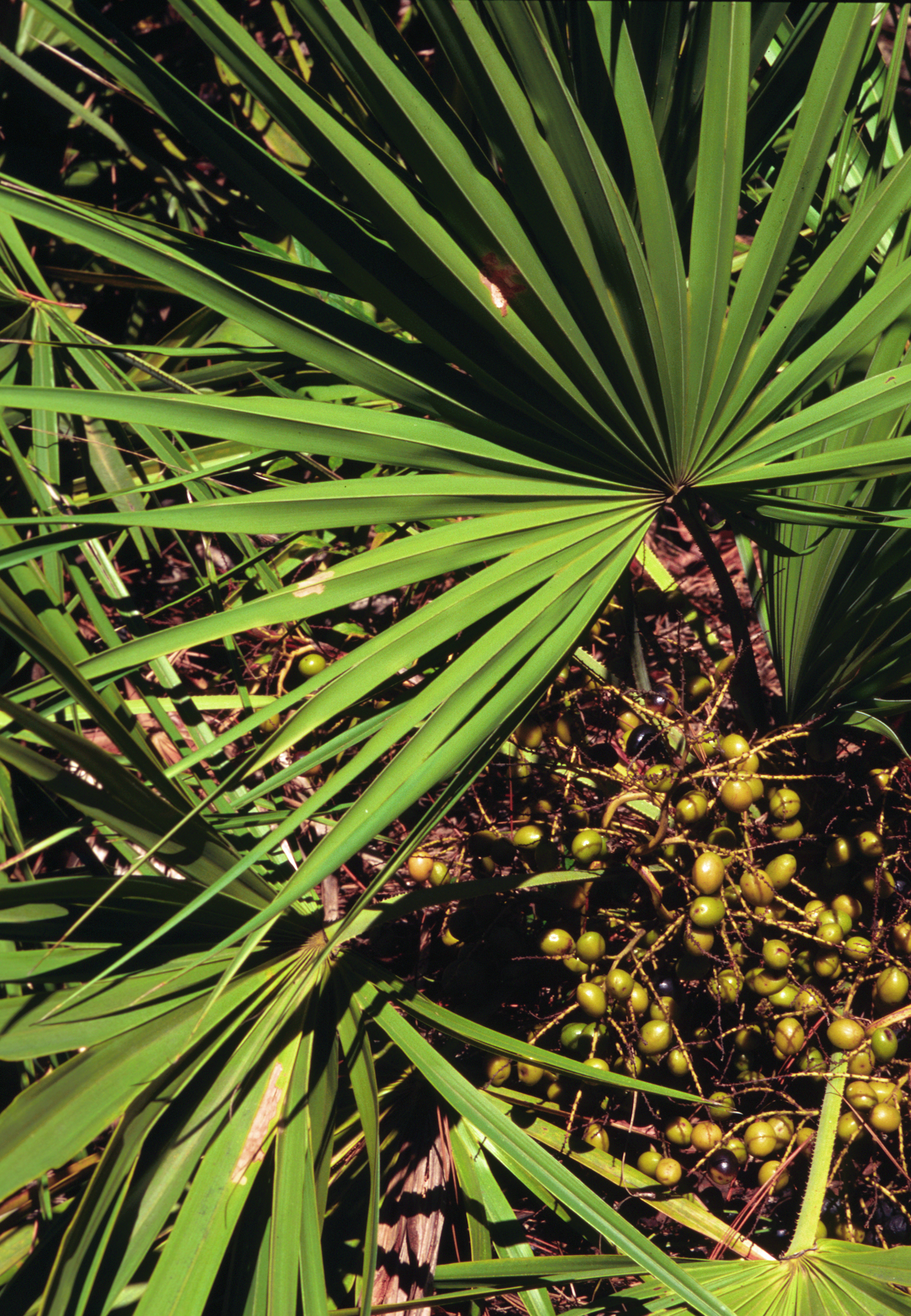
The fruits of saw palmetto are valued by wildlife and humans alike. Credit: USDA.
- Saw palmetto clumps can live a long time! As a clonal shrub species (it spreads from runners), it has long been assumed that each clump could be as much as 500 years old. However, recent genetic work has found that saw palmetto clumps living in the Lake Wales Ridge of Florida are at least 1,000 to 5,000 years old, conservatively. This means that there are likely saw palmettos living in south Florida that were around when Aristotle was tutoring Alexander the Great!
Hopefully, you now value saw palmettos just a little bit more than before you started reading this article. Knowing that such a unique plant is right in our backyard, common as dirt, let’s try to find ways to appreciate it and maybe include it in our landscapes, too. Keep in mind that saw palmetto is just one of many locally abundant, but globally special plants that thrive in our local ecosystems.
If you want to start learning more about the plants all around us, you can start by first identifying the species you observe. iNaturalist is a great, free app for your phone that can get you started. Your local extension office is also a resource. Once you have an identification, the Flora of North America and Biota of North America Program websites can give you detailed descriptions and range maps to help you discover the marvelous elements of our local flora.
- Locally Abundant, Globally Special - January 29, 2026
- When to Worry About Your Citrus During Cold Weather - December 18, 2025
- A Tale of Two Hoses - November 13, 2025