
If your drab dormant lawn is getting you down, you might be tempted to overseed your Centipedegrass with ryegrass next fall and enjoy lush green grass all winter long. The idea of a pretty green lawn breaking up the brown of winter is indeed alluring. There are reasons golf courses and highly visible/trafficked public landscapes overseed in winter – overseeding significantly enhances both the aesthetics and recreational uses of those areas and it absolutely can offer the same benefits to homeowners. However, winter overseeding also has several potential major drawbacks, particularly for residential lawns. Before you make the decision to turn your lawn green in the winter, keep the following factors in mind.
Overseeding Can Cause Centipedegrass Lawn Health Issues
Overseeding ryegrass in winter has two primary problems from warm season grass’ (i.e. Centipedegrass) perspective. First, to look its best, deepest green, ryegrass needs to be fertilized to encourage optimal growth like any other grass. This means applying Nitrogen and other plant nutrients at the exact time when your Centipedegrass is dormant and trying to NOT grow. This excess nitrogen applied to “feed” the ryegrass can absolutely wreck the dormant Centipede (which is very sensitive to nitrogen fertilizer), causing serious disease problems like Centipede Decline and Large Patch. Second, ryegrass is growing at its absolute maximum rate in late spring in the Panhandle, as our weather begins to be consistently warm. This coincides with the exact time Centipedegrass is trying to emerge from winter dormancy. This intense competition with the overseeded ryegrass at greenup can inhibit Centipede’s ability to recover from dormancy, delay emergence, and lead to decline of the summer turfgrass.
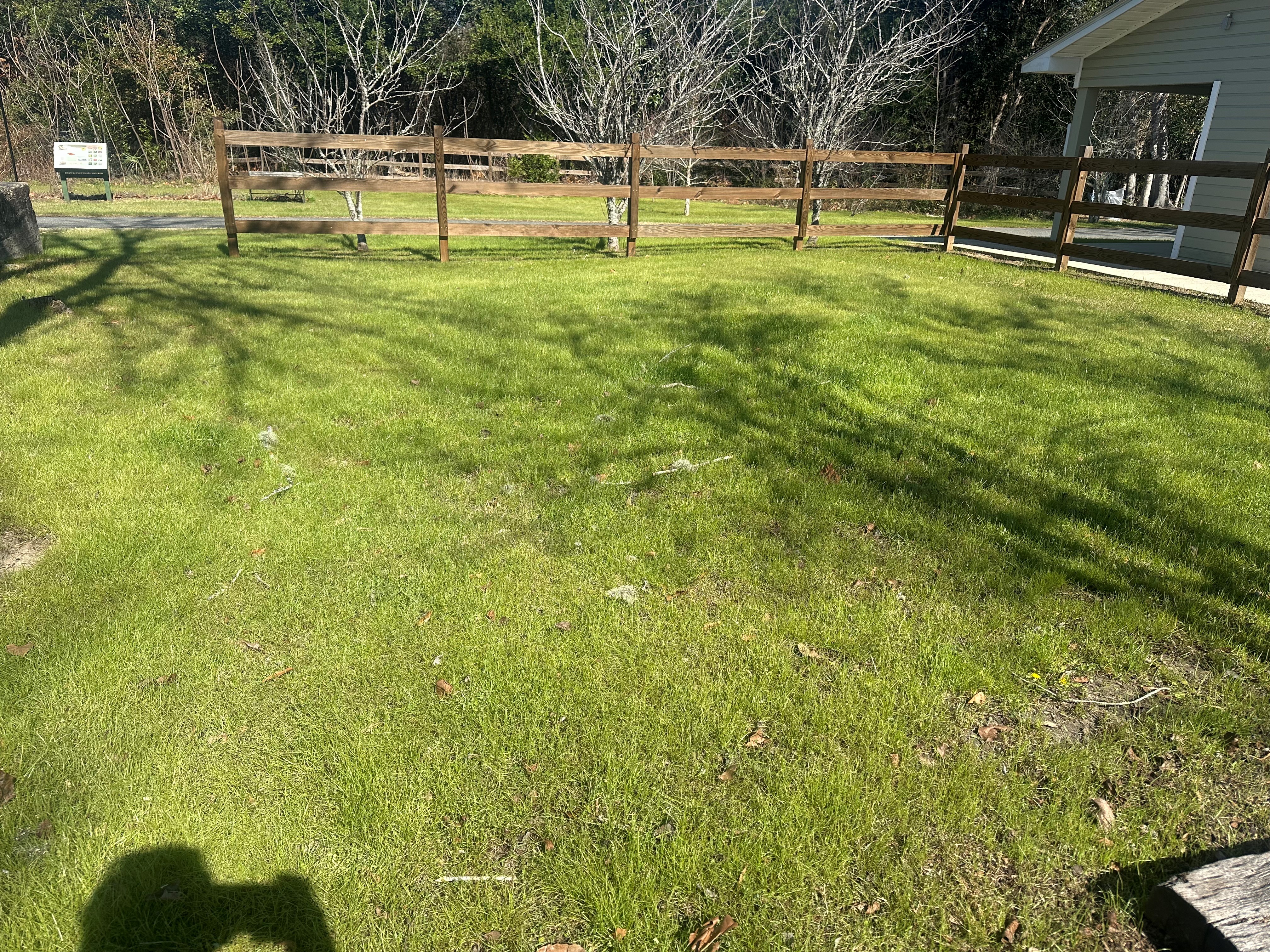
Municipal Centipedegrass turf area overseeded with winter ryegrass. Photo courtesy of Daniel Leonard.
Maintenance Annoyances
As mentioned earlier, ryegrass, though it grows in the cool weather, is still grass and has to be managed as such to look its best. This means frequent mowing, irrigating in droughty winters (like this year), and fertilizing. In my experience, people don’t enjoy or keep up with these tasks nearly as much in winter. There is a reason that the winter months are the slowest, least profitable times for lawn and garden centers – people just don’t spend their time and money on their lawns and landscapes in the winter when the weather is cold and days are short. I can testify that I very much enjoy my November-March break from mowing and maintaining my lawn and the idea of having to mow year-round doesn’t appeal to me in the slightest.
I get it, sometimes overseeding must be done. Like the aforementioned examples, winter golf and other athletic activities are much more enjoyable on lush green ryegrass turf than the normal winter mixture of dormant Bermudagrass and mud, and city parks are much more attractive to tourists and passersby when green, vibrant, and inviting. However, these situations are usually managed by professionals that are willing and able to treat potential disease issues when they arise and/or replace weakened turf as needed, expenses and effort the average homeowner is often not willing or able to incur. Given overseeding’s potential detrimental effects to your warm season turf and the maintenance annoyance of caring for a winter lawn, most homeowners are better off avoiding the temptation to overseed with ryegrass.
For more information on overseeding with ryegrass or any other horticultural topic, contact your local UF/IFAS Extension county office! Happy Gardening.
- Should I Overseed My Lawn with Ryegrass? - February 5, 2026
- Mulch is a Must in Your Landscape - December 4, 2025
- Tis the Season – Why Winter is the Best Time to Plant Trees and Shrubs - November 26, 2025