
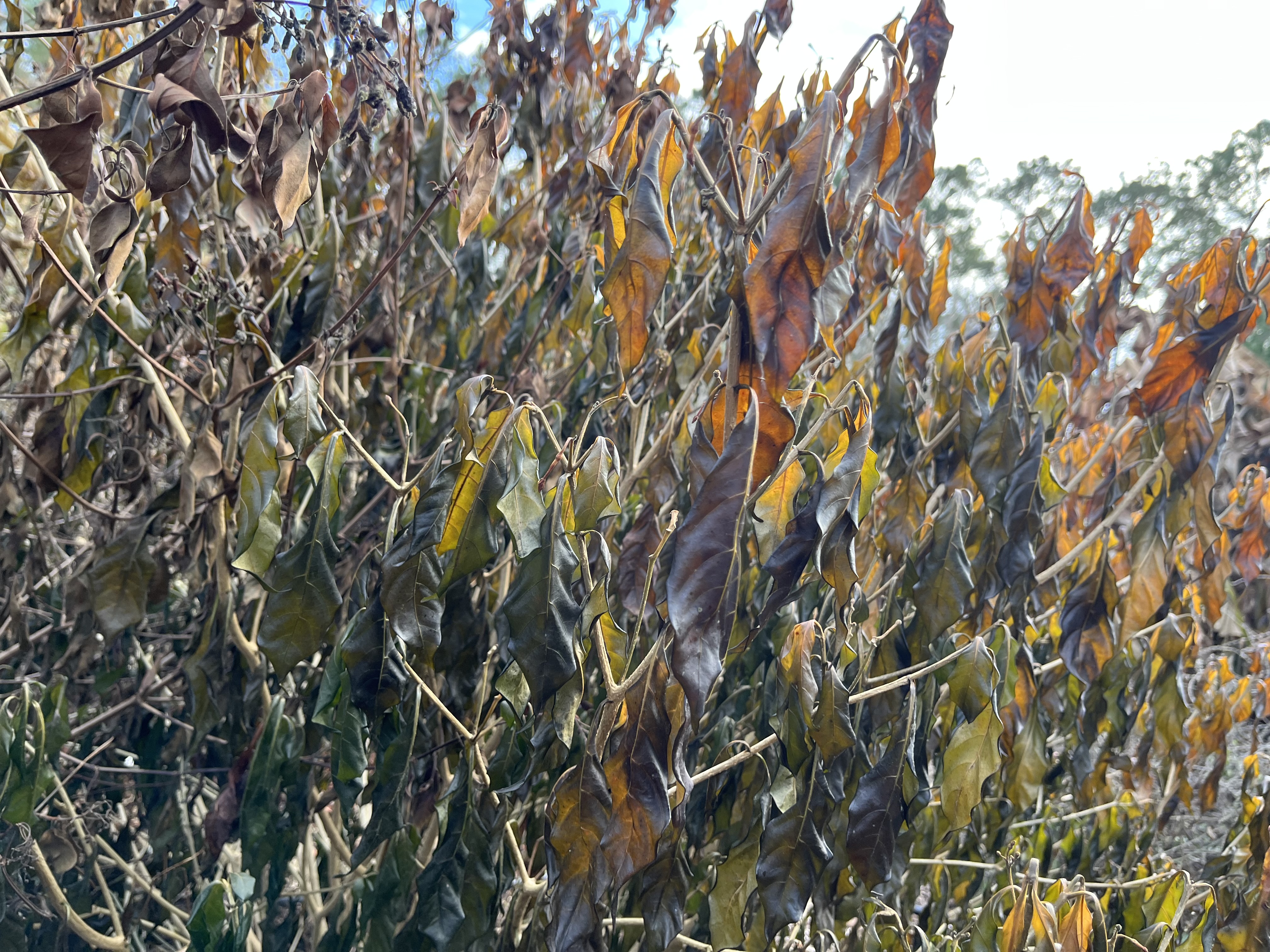
Firebush is often affected by freezing temperatures, but this winter dieback helps protect the plant, which typically resprouts in the spring. Photo by Molly Jameson.
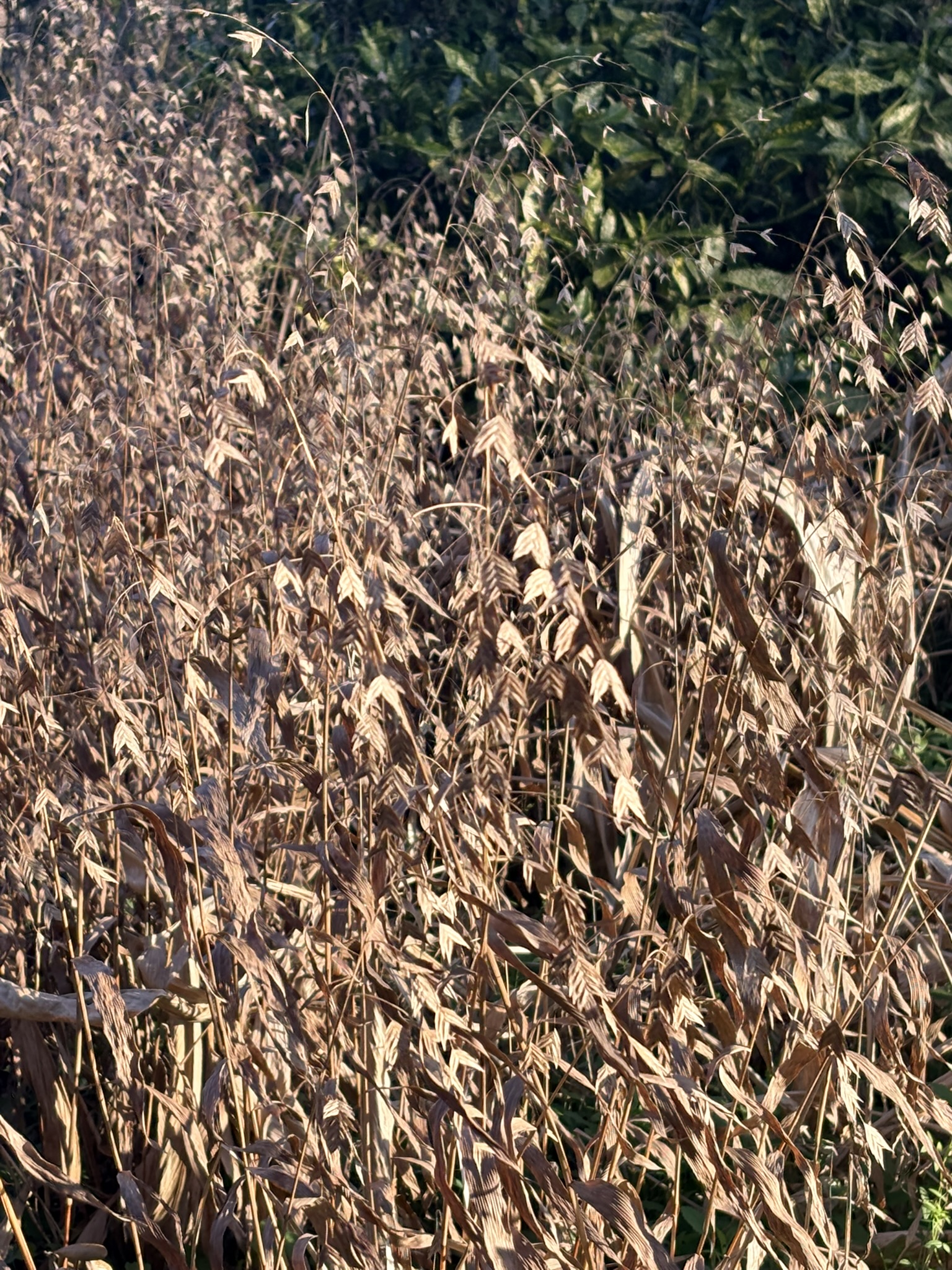
Indian wood oats hold flattened seed heads through winter, adding movement and warm tan tones to the landscape. Photo by Molly Jameson.
As we move through the coldest part of the year, you’ve probably noticed many perennial landscape plants turning brown. Your first instinct might be, yuck – where are my pruners? Those crispy leaves, spent flower stalks, and dark masses look like they need to go.
But take another look.
Consider the protection that foliage provides to the plant’s crown and buds underneath. Consider the habitat it offers overwintering wildlife. And take a closer look at the low-angled sunlight beaming through the leaves – you just might notice shades of amber, cinnamon, terra cotta, burgundy, chocolate, and gold.
Winter landscapes in north Florida don’t look like they do in spring, and they’re not supposed to. Instead of fresh growth and bright blooms, we get texture and layers of seasonal color. Dormant grasses catch the light differently than growing ones. Seed heads sway and rattle in the breeze. Large leaves collapse inward and angle downward, quietly signaling the change underway.
Brown as Built-In Frost Protection
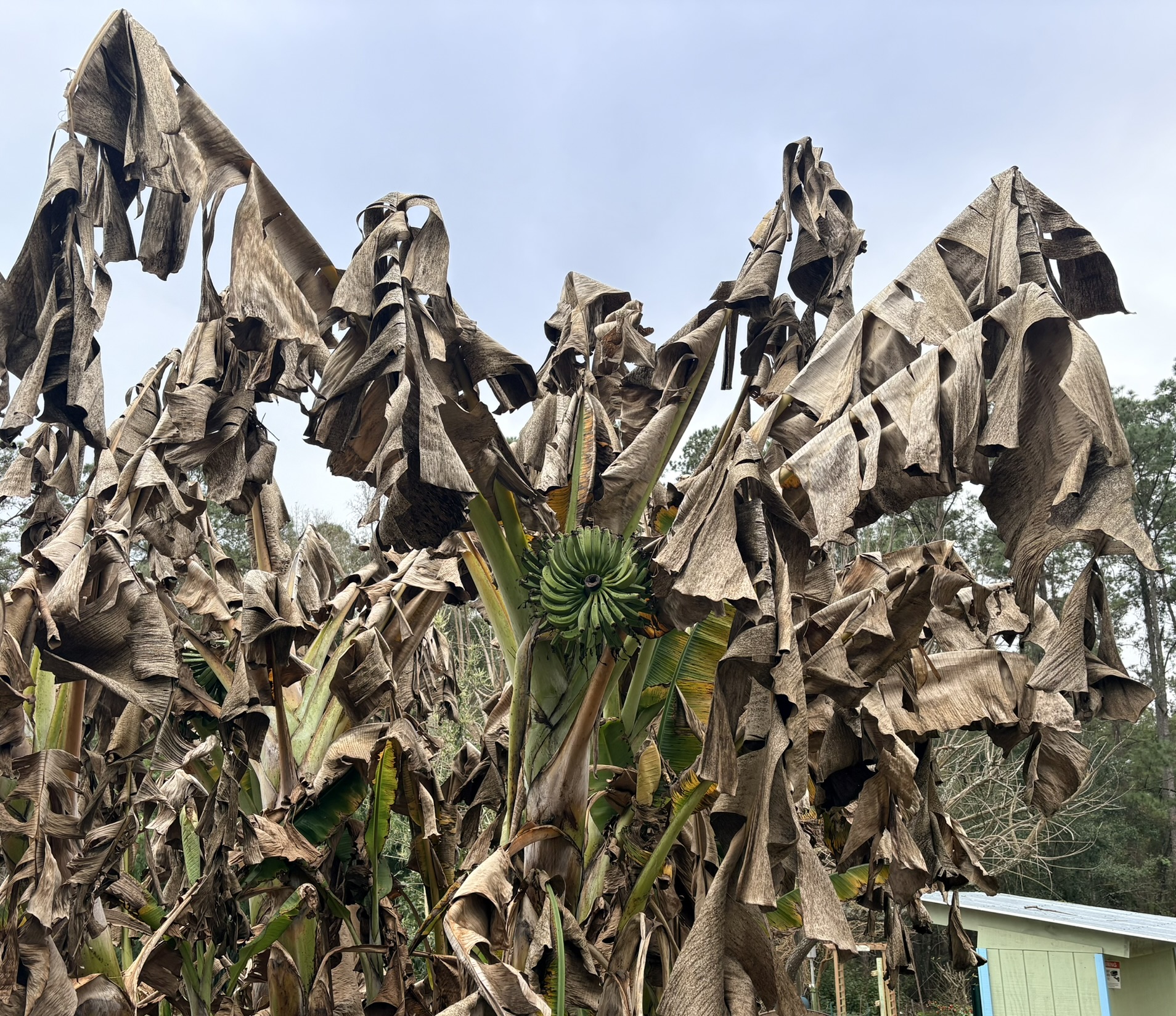
Freeze-damaged banana leaves turn brown and collapse after cold weather, helping protect the trunk and crown when left in place. Photo by Molly Jameson.
Beyond aesthetics, leaving dead or dormant foliage in place serves a very practical purpose – it helps protect plants from cold damage.
When temperatures dip into the 20s – which we experience a few nights most years – dead leaves act like a blanket. They insulate the plant crown, shield tender growing points, and reduce rapid temperature swings. This is especially important for semi cold-hardy plants and anything with a crown close to the soil surface.
Plants like ornamental ginger, firebush, beautyberry, bananas, and many tropical-looking perennials often look rough after a hard freeze. While it’s tempting to clean everything up immediately, the dead leaves are actually helping buffer plants against future cold snaps. Removing them too soon can expose sensitive new growth to damage if we get another freeze – which, in January or February, is always a possibility. In USDA Hardiness Zone 9a, it’s not unusual for the last frost to occur as late as mid-March.
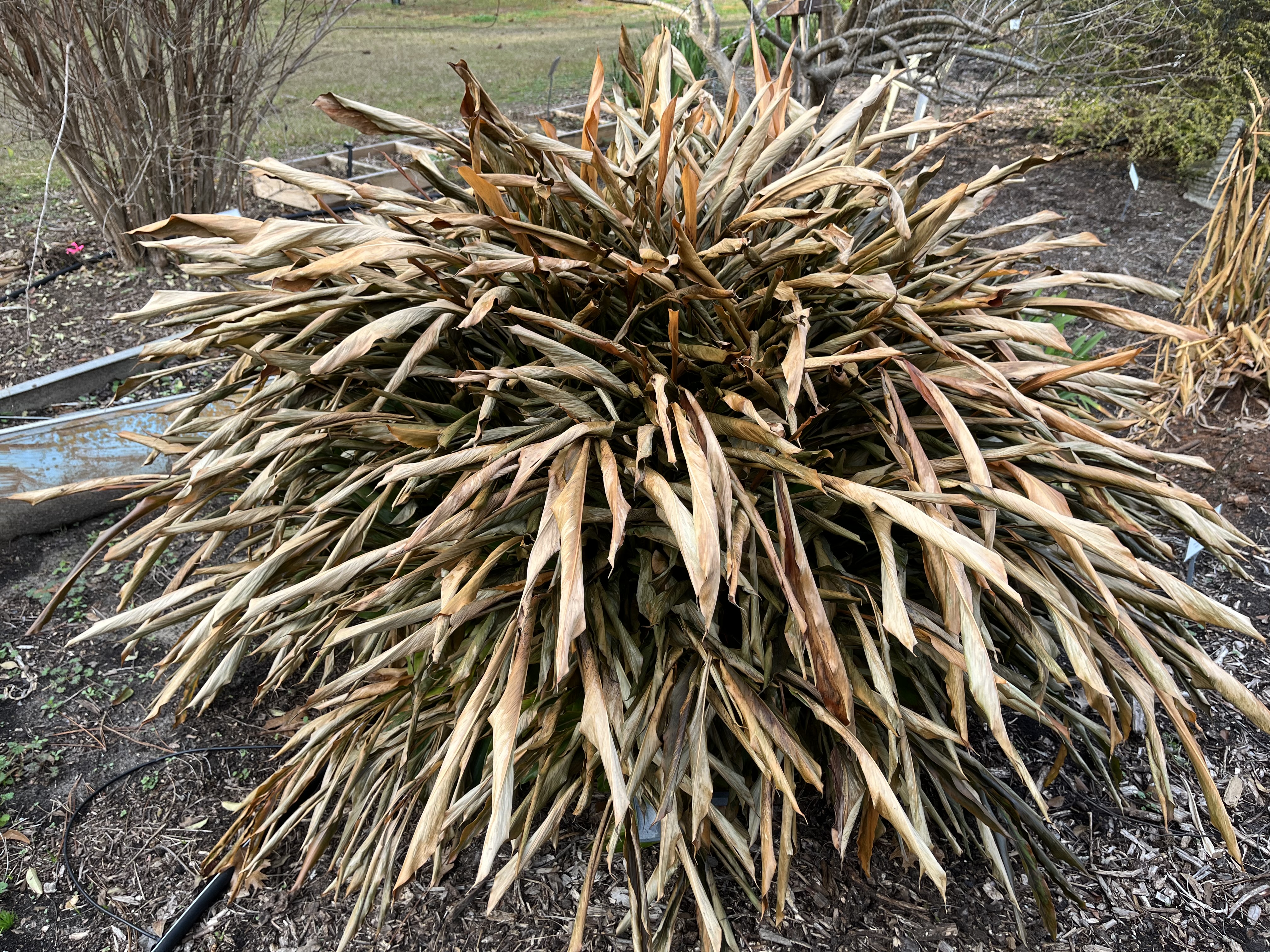
Ornamental gingers naturally die back in winter, and leaving the dried foliage in place helps protect underground rhizomes until new growth begins in spring. Photo by Molly Jameson.
Delaying pruning until spring gives plants the best chance to come back strong. It also makes cleanup easier. Instead of guessing where to cut, you’ll be able to trim back to healthy, actively growing stems. Many plants surprise us by pushing new growth from what looked like dead tissue just weeks earlier.
A Few Important Exceptions
Of course, there are times when brown shouldn’t be ignored. Plants that show signs of disease, active pests, or rot may need to be cut back sooner to prevent problems from spreading.
It should also be acknowledged that some plants simply struggle year after year, no matter how patient we are. In those cases, winter can be a useful time to employ the Right Plant, Right Place Florida-Friendly Landscaping principle. If a plant routinely suffers from cold damage, disease, or stress, it may be worth considering a tougher alternative – ideally one better suited to our climate. Native plants and other well-adapted species tend to handle unpredictable weather far better than plants already living on the edge of their comfort zone.
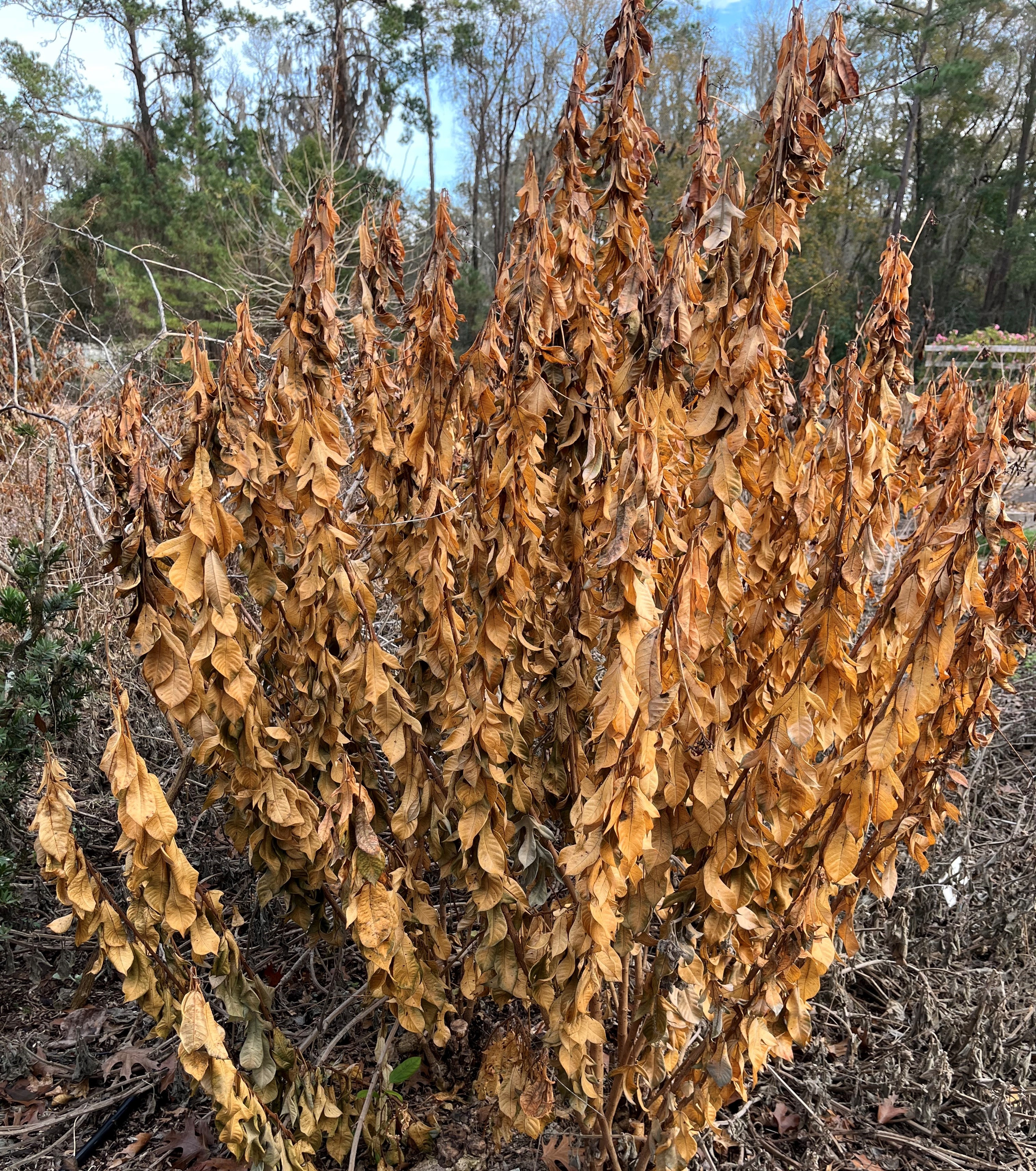
Cold-sensitive shrubs like Jatropha integerrima can show dramatic leaf browning after a freeze. Photo by Molly Jameson.
The key, of course, is intention. Leave the brown when it’s protecting the plant, but don’t feel obligated to keep it when it’s causing problems.
A Shift in Mindset
Learning to appreciate winter brown requires a small mindset shift. It asks us to value patience over order and function over perfection. It reminds us that gardens don’t need to look like the front of a garden magazine year-round to be healthy or have beauty.
So, the next time you’re tempted to declare your landscape “ugly” in winter, take another look. Notice the textures, the range of color, and the protection happening beneath that layer of brown.
After all, brown is a color too – and in winter, it’s doing exactly what it’s supposed to do.
- Brown Is a Color Too - January 22, 2026
- Cool Season Annual Herbs to Plant in December - December 11, 2025
- The Dirt on Compost: Hot and Worm Composting at Home - October 30, 2025