by Daniel J. Leonard | Feb 3, 2017
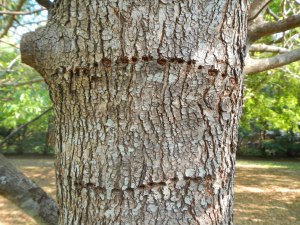
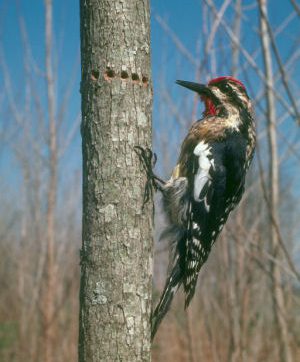
Have you noticed strange rings of pencil-sized holes on the trunks of certain trees in your landscape recently? If so, take heart that these holes are not emanating from an infestation of destructive insects but rather from a perfectly native, rather attractive migratory woodpecker, the Yellow-Bellied Sapsucker (Syphrapicus varius)!
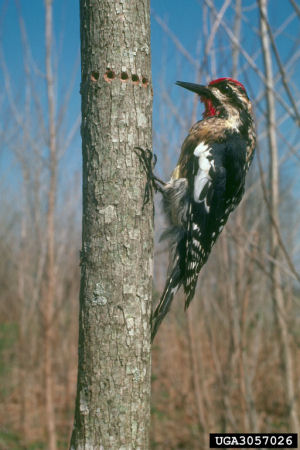
The Sapsucker is a smallish bird with a chisel-like bill, easily distinguishable by bold black and white face stripes and a conspicuous bright-red crown and throat. If you have any problem identifying it by its features, look to its migration pattern, the Yellow-Bellied Sapsucker overwinters in mild winter areas of the Americas (like Florida’s Panhandle) and causes damage during this period (roughly December through March). If you notice a bird wreaking havoc on your backyard flora this afternoon, it is likely a Yellow-Bellied Sapsucker!
Yellow-bellied sapsucker (male) on pecan
James Solomon, USDA Forest Service, Bugwood.org
Like other members of its family, this woodpecker makes a living by “pecking” holes in trunks of trees and small shrubs about chest-high from the ground and feeds on sap and the occasional insect drawn to the sap. Fortunately, the damage is not usually harmful to the tree except in severe cases where the trunk may be girdled or secondary infection occurs from pests/diseases entering the tree through the holes. Unfortunately for Florida gardeners, this little bird has preferences in which trees it attacks, the majority of which are favorite landscape plants. For example, heavy feeding has been observed, both anecdotally by the author and more scientifically by researchers and birding enthusiasts, on Red Maple, Pecan, Chinese Elm, American Holly, Pine and Live Oak. They also really seem to enjoy any soft-wooded shrub limbed-up in a treelike form like Waxmyrtle, Viburnum and Dahoon Holly. Talk about frustrating!
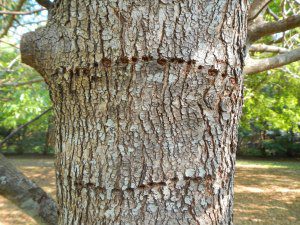
Sapsucker damage in a tree trunk.
Photo courtesy of Mississippi State Extension.
After learning that Sapsucker damage is not usually harmful, most homeowners opt to not control the birds’ feeding. However, if the aesthetic damage is not acceptable in your landscape, there are a few semi-effective control options and a host of other, less-effective home remedies. Wrapping the trunks of favored species with a loose, thick material such as burlap or felt is the preferred method of many ornamental nurseries and tree farms due to the material’s reusability and ease of removal after the migration has passed. Other commercial enterprises have had mixed success with hanging visually frightening CDs, pie plates and the like from low branches. Even less success has been seen with other homemade “cures” ranging from rubbing trunks of favored trees with Ivory soap to the use of sticky materials to deter perching. Shooting or trapping Yellow-Bellied Sapsuckers is not permitted as the birds are protected by state and federal wildlife law. As always, please contact your local UF / IFAS Extension office for advice and recommendations for other methods of discouraging unwanted bird visits!
Happy New Year and good gardening!
by Daniel J. Leonard | Nov 17, 2016
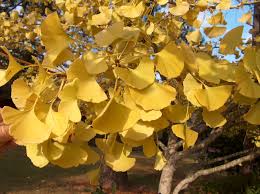
Ginkgo
Florida has so much to offer! It is home to the world’s most beautiful beaches. It has one of the largest agricultural economies nationwide.
But among all these things, Florida is lacking in one area that is very noticeable come fall: all the beautiful red, yellow, and orange leaf colors that paint the autumn landscape just a few hours to the north!
As frustrating as the lack of fall color in Florida’s native forests may be, this situation is easily amended in yards throughout the state by planting some autumn color standouts! Here are three of the very best for Northwest Florida:
This holdover from the Jurassic Period (Literally! Fossil records indicate Ginkgo has existed virtually unchanged for well over 100 million years!) has much to offer as an ornamental tree, including spectacular golden-yellow fan-shaped leaves in fall! Somewhat ungainly in youth, a mature Ginkgo is truly a sight to behold, an 80-100’ tall, imposing specimen. Ginkgos are very tolerant of all soil conditions except waterlogged, have few insect and disease pests, and are remarkably drought-tolerant once established. Be sure to select a male cultivar however, as female trees produce extremely odiferous seeds that remarkably resemble rancid butter!
- Chinese Pistache (Pistacia chinensis)
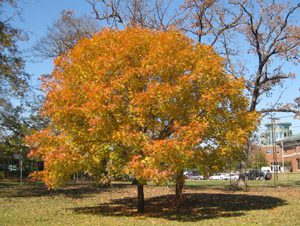
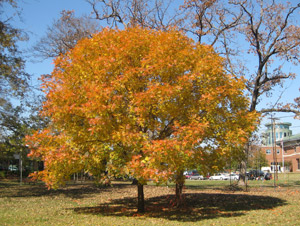
Chinese Pistache
A little-known, much underused tree in the Deep South, Chinese Pistache will light your landscape aflame with brilliant, orange-red fall foliage. One of the last trees to turn color in the fall, Chinese Pistache can help extend the show deep into November! It is a small to medium sized tree that will not overwhelm any but the smallest landscapes. As with Ginkgo, the habit of the tree in youth is awkward at best and the tree’s full potential is not realized until maturity when it becomes a dense, oval-round specimen. Chinese Pistache is close to bulletproof, tolerant of drought and poor soil conditions.
- Black Gum (Nyssa sylvatica)
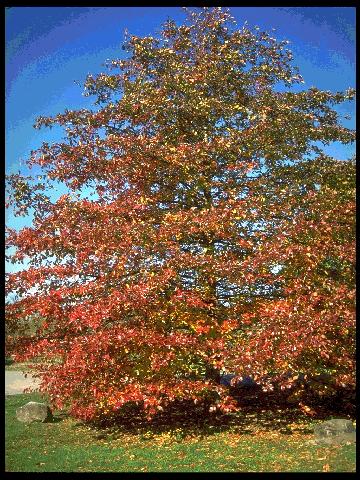
One of Northwest Florida’s best native trees for fall color is Black Gum. Black Gum is a standout tree, pretty in all seasons, possessing dark, almost-black bark, a tall pyramidal habit and vivid fall foliage in the deepest shades of red and purple. As a bonus, Black Gum usually begins its color change very early, occasionally in September. The addition of this tree to a lawn dominated landscape can deliver at least an extra month of color! Black Gum prefers moist, deep soils but is found in dry flatwoods and swamps alike, betraying its adaptability.
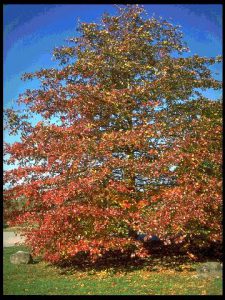
Young Black Gum Tree
Including the above trees in new or existing landscapes is an easy, smart way to extend the fall color show from September through November and make home gardeners long a little less for the colorful northern autumns! Happy Gardening!
by Daniel J. Leonard | Sep 22, 2016
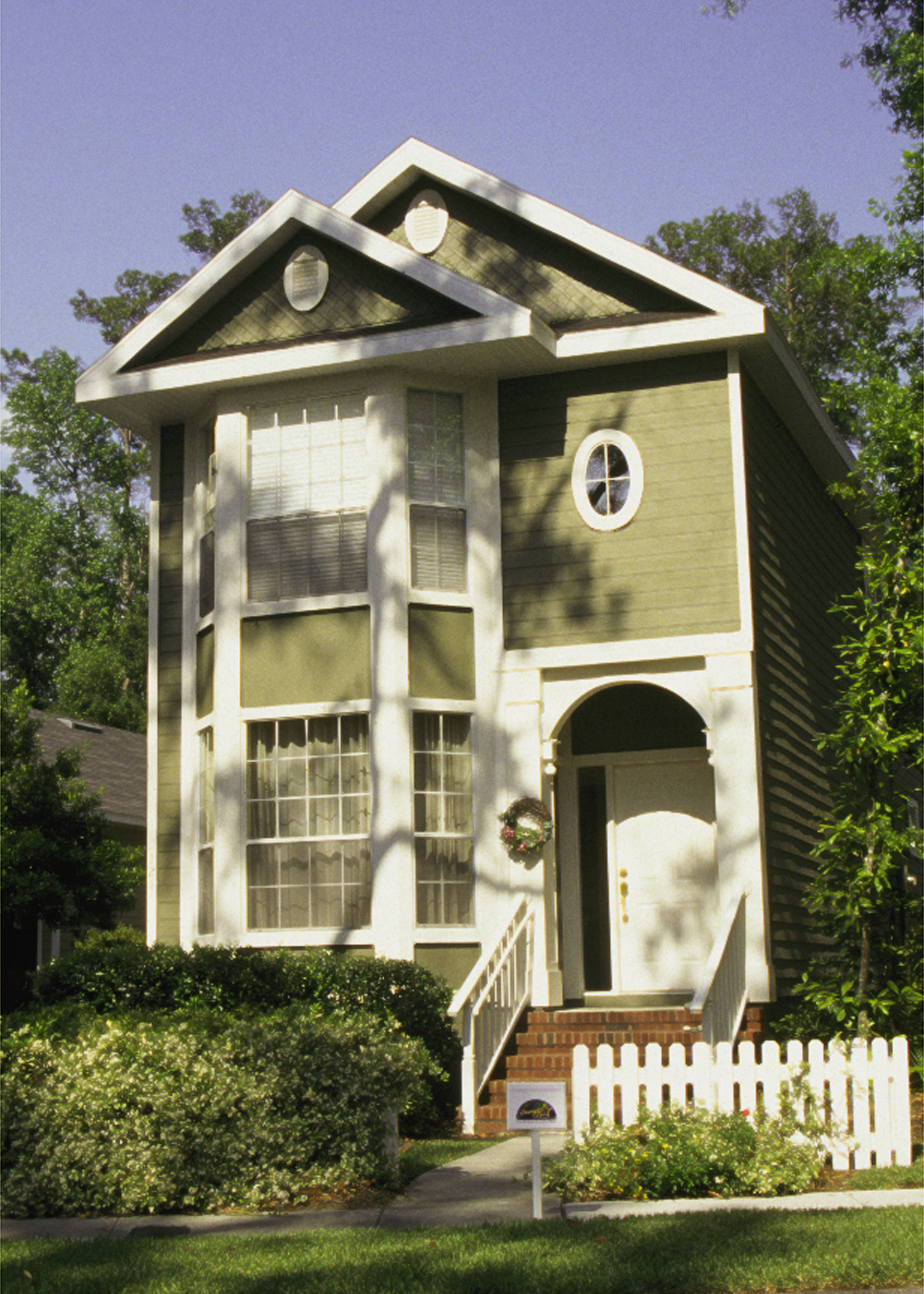
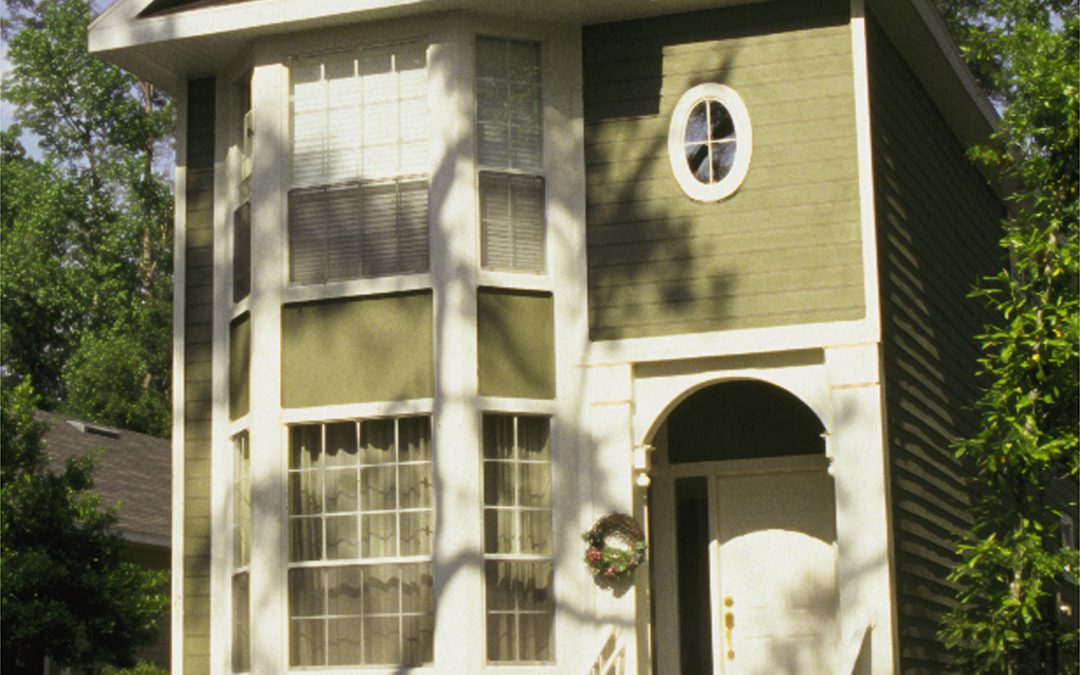
One of the most overlooked aspects of landscape design, particularly on DIY projects, is the idea of enhancing the architecture of your home by using plants that echo the shapes and features of the structure. The use of proper plant material not only shows off a home’s exterior beauty and increases curb appeal but often will translate into a significant boost in resale value! On site visits, I all too often encounter beautiful homes whose curb appeal potential is squashed due to poor plant selection. For example, how many times have you seen the ranch-style home with too-large Indica Azaleas across the foundation that are reaching for the eaves?
UF/IFAS File Photo.
Using plants to echo architecture is a pertinent topic for me as I just purchased a beautiful historic home in Walton County. This is a situation that could easily be ruined through improper plant selection. However, I’m going to try my best to use plants that enhance, not detract from, the architecture of the home. Here are a few very common architectural elements that happen to be present in my house and some easy planting tips to bring out the best in them:
- A steeply pitched roof and tall, narrow profile. A situation like this calls for the installation of a tight, upright shrub or tree to frame and echo the corner of the home. I am obeying this rule by planting a ‘Sioux’ crapemyrtle, a narrow, upright cultivar growing to 20’ and sporting flaming pink flowers. Some other plant options to consider installing: Ilex x attenuata ‘Savannah’ and other cultivars, ‘Apalachee’ crapemyrtle (lavender Flowers with cinnamon bark), ‘Brodie’ or ‘Spartan’ juniper (upright cultivars), ‘Little Gem’ magnolia. There are even a few selections of live oak such as ‘Highrise’, ‘Skyclimber’, etc. that fit the bill!
- Large, open front porch. We southerners love our front porch sitting, so don’t cover it up by planting large growing shrubs in front of it! Instead, plant a low growing, maintenance free ornamental grass or shrub! I decided to go with an airy, native look and fill the bed under my porch with pink muhly grass (Muhlenbergia capillaris). Here are a few other great options for a low growing plant to show off your porch: ‘Purple Pixie’ loropetalum (a new introduction from the Southern Living Plant Collection), dwarf Fakahatchee grass (an underused native), Indian hawthorne (overplanted but still effective), ‘Firepower’ nandina or one of its newer cousins (bulletproof with good fall color), ‘Soft Caress’ mahonia (elegant selection for a shady bed), holly fern (low growing evergreen fern for a shady area).
- Long, bare walls. Let’s face it, a blank wall is not visually pleasing and bare walls can actually act as a heat sink during our long summer afternoons! To break up the monotony of a bare wall and provide some shading for cooling purposes, mix plants of different heights and textures, even add a small tree or two! Here are a few reminders when landscaping to bring interest to a bare wall: Plant the taller plants (larger shrubs and small trees) in between windows to get height interest but not block views; use plants with flexible limbs and soft foliage for easy pruning and to make maintenance easier; choose plants with colors that will be compatible with the wall; finally, allow at least a foot or two between the wall and the mature size of your plants for ease of access! The plant choices for this application are endless. Get creative!
Whatever your house’s style may be, remember the above suggestions when planting and watch as your landscape grows to enhance the look and value of your home rather than detract from it! Happy planting!
by Daniel J. Leonard | Jul 26, 2016
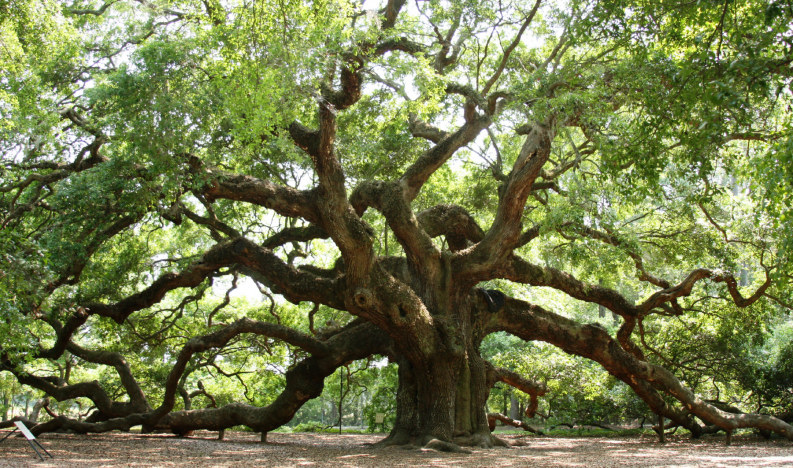
The Live Oak (Quercus virginiana) is one of the most iconic figures of the Deep South. Mentioning the words Live Oak invokes all sorts of romantic nostalgia of yesteryear and the reputation is not unearned. In fact, many Live Oaks still stand that were growing on American soil when the first English settlers set foot on Plymouth Rock. They are long-lived, picturesque trees that also happen to be nearly bulletproof in the landscape. Given these factors, it is not surprising that Live Oak is far and away the most common tree included in both residential and commercial landscapes in the Coastal South. However, even the venerable Live Oak is not without its problems; this article will discuss a few of the more common issues seen with this grand species.
The Angel Oak near Charleston, SC
Few conditions afflict live oak but when they do, improper planting or cultural practices are usually at play. Observing the following best management practices will go a long way toward ensuring the long-term health of a planted Live Oak:
- Remember to always plant trees a little higher than the surrounding soil to prevent water standing around the trunk or soil piling up around it, both of these issues frequently cause rot to occur at the base of the tree.
- If planting a containerized tree, remember to score the rootball to prevent circling roots that will eventually girdle the tree. If planting a B&B (Balled and Burlap) specimen, remember to remove the strapping material from the top of the wire basket, failure to do this can also result in the tree being girdled.
Live Oak has few insect pests but there are some that prove bothersome to homeowners. The following are two of the most common pests of Live Oaks and how to manage them:
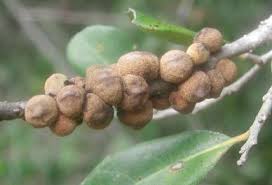
Typical galling on Live Oak
Galls are cancerous looking growths that appear on the leaves and twigs of Live Oak from time to time and are caused by gall wasps that visit the tree and lay their eggs inside the leaf or stem of the plant. The larvae hatch and emerge from the galls the following spring to continue the cycle. These galls are rarely more than aesthetically displeasing, however it is good practice to remove and destroy gall infected stems/leaves from younger trees as gall formation may cause some branch dieback or defoliation. Chemical control is rarely needed or practical (due to the very specific time the wasps are outside the tree and active) in a home landscape situation.
- Black Twig Borers can also be problematic. These little insects seldom kill a tree but their damage (reduction of growth and aesthetic harm) can be substantial. Infestations begin in the spring in Northwest Florida, with the female twig borer drilling a pen-head sized hole in a large twig or small branch and then laying her eggs in the ensuing cavity. She then transmits an ambrosia fungus that grows in the egg-cavity, providing food for the borer, other borer adults, and her offspring that take up residence and over-winter in the twig. The activity of the insects in the twig has an effect similar to girdling; the infected twig will rapidly brown and die, making removal and destruction of the infected branches a key component
In conclusion, though there are a few problems that can potentially arise with Live Oak, its premier status and continued widespread use in the landscape is warranted and encouraged. It should be remembered that, relative to most other candidates for shade trees in the landscape, Live Oak is extremely durable, long-lived, and one of most pest and disease free trees available. Happy growing!
by Daniel J. Leonard | Jun 22, 2016
Gardeners in Northwest Florida were blessed this spring with conditions conducive to great gardening, mild weather and plenty of rain. However, with those pleasant conditions has come an unusually high occurrence of Fireblight. Cases of Fireblight have been brought into our office almost daily this spring/early summer!
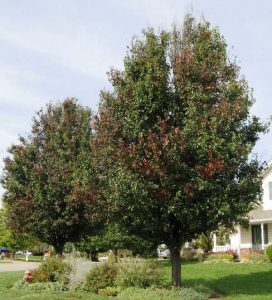
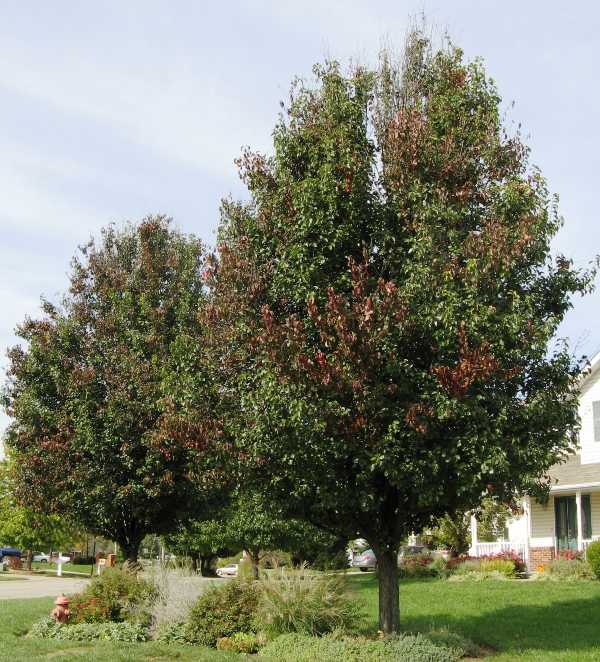
Mature ‘Bradford’ Pear infected with Fireblight
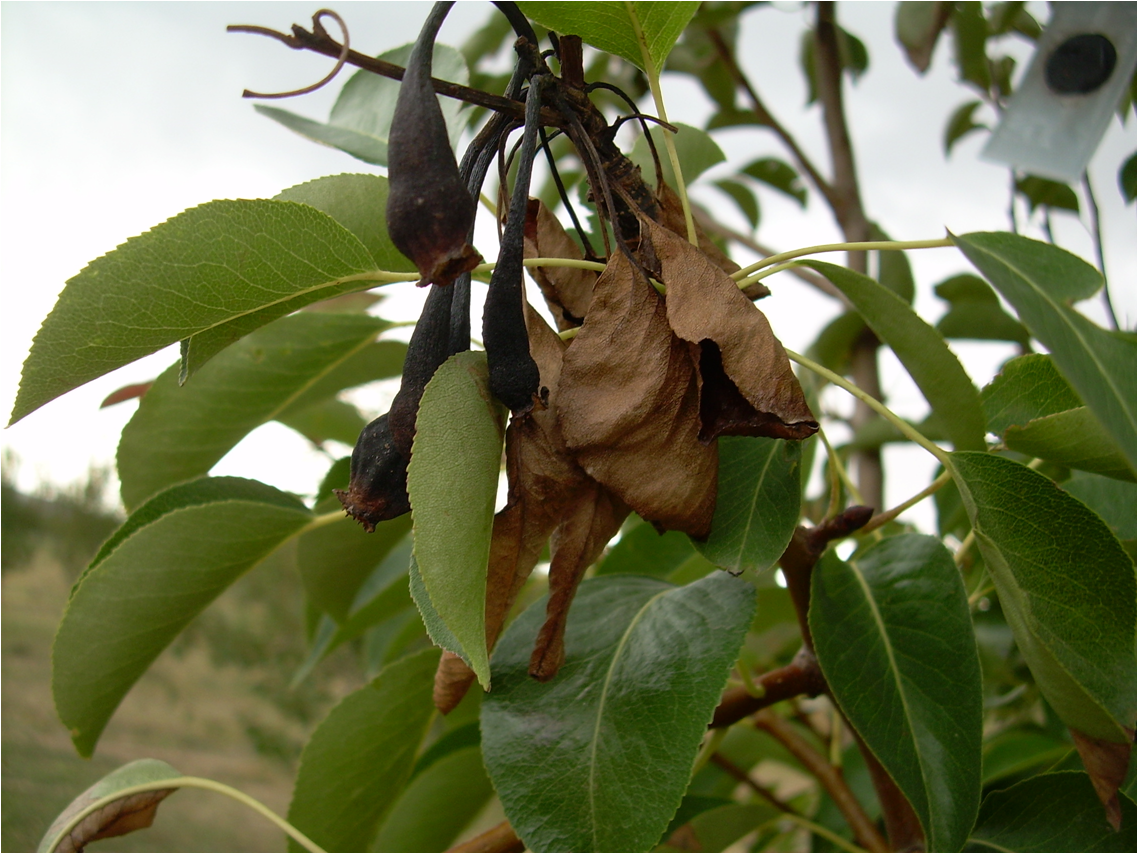
Fireblight is a difficult to control, rapidly-spreading disease caused by a bacterium (Erwinia amylovora) that affects many fruit trees, especially apple and pear but is also seen on quince, crabapple, hawthorn, loquat and photinia. Fireblight is generally noticed in late winter and early spring during periods of frequent rainfall as the plant begins to bloom and leaf out. The bacterium enters the plant through the opening flowers causing them to blacken and die. The disease then makes its way down the infected stem, destroying newly developing twigs along the way. Most homeowners notice the problem at this point in the progression; the new shoots have died, turned black and hold on the plant, giving it the tell-tale “burned” look. Homeowners also generally notice sunken lesions, or cankers, that form on the infected stems.
So, with a problem as unpredictable and destructive as Fireblight, what can one do to prevent it or combat its spread? There is no one method that can prevent or cure a Fireblight infection but there are several precautions homeowners can make to mitigate its effects.
- Plant resistant species and/or resistant cultivars of susceptible species, such as pear and apple. Under conditions like we’ve had this year, no pear or apple is immune but these cultivars have some proven resistance:
- Edible Pear: ‘Keiffer’, ‘Moonglow’, ‘Orient’
- Apple: ‘Anna’, ‘Dorsett Golden’
- Ornamental Pear: ‘Bradford’, ‘Cleveland Select’
- Remove infected and dead wood when the tree is dormant. Make a clean cut at least 12” below the last sign of infected wood and dispose of it. It is always a good practice to sanitize your pruners between cuts on a diseased tree. Also, there is little evidence to suggest that pruning out diseased wood on actively growing plants has much effect on further disease spread as long as conditions are still suitable for Fireblight formation.
- If you have noticed Fireblight on your trees in the previous year, it is good practice to make a preventative spray of a copper fungicide prior to the plant breaking dormancy.
- During bloom, streptomycin may be applied every three or four days for the duration of the bloom cycle to prevent infection. Consult the label for required days between spraying and consumption.
Fireblight is bad news in a fruit orchard but homeowners can take heart in the fact that the condition is not always fatal, especially if the preventative measures outlined above (proper cultural practices, proper pesticide use, and planting of resistant cultivars) are taken!