by Eddie Powell | Aug 12, 2013
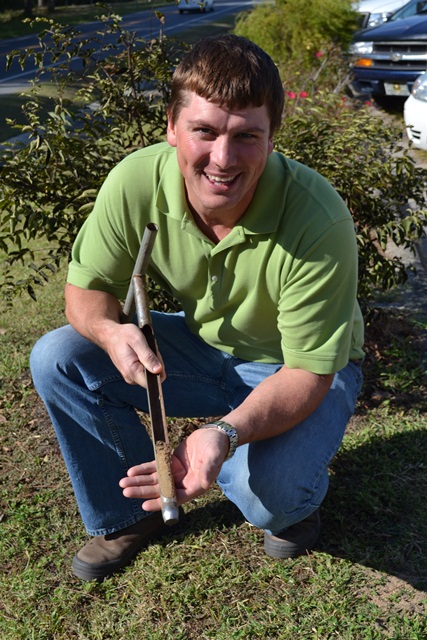
Soil Sampling Probe
Image Credit: Eddie Powell
Often, vegetable gardeners that I work with through the Walton County Extension office pose the question: Why should I take a soil sample?
I always answer that soil testing will determine whether lime and fertilizer need to be applied to the soil to support good plant growth.
Soil sampling must be done prior to the planting of crops so that it can be determined whether or not adequate levels of nutrients are present in the soil and if the pH is at the proper level for the type of crop grown. The test results of these soil samples will also indicate the amount of fertilizer that should be applied to the garden.
Keep in mind that this test only tells you the amount of fertilizer (if any) to add to the soil, and does not specify when and how often it should be applied. Such information can be gathered at your local Extension Office.
It is best to consult with your local extension agent once you have received your soil results so that he or she can advise you on the proper steps to take as to when and how to apply fertilizer and/or lime to the soil. Also, refer to this publication for tips on soil testing for the home vegetable garden.
Soil testing will save money in the long run and is the most important step that is taken in preparing garden soils for good plant growth. Remember, the fall growing season is the time to do your soil testing for the spring. Contact your Local UF/IFAS Extension Office for a soil test kit.
by | Aug 5, 2013
With all of the rainy weather Northwest Florida has been having this summer, plenty of excess yard debris is littering our yards. Don’t put it in the landfill, Compost It !
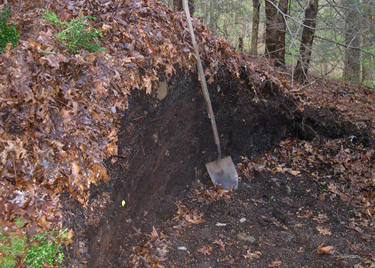
Compost Pile
Compost is used primarily in bed preparation to improve the soil and can even be used in preparing potting mixes. Partially composted material also can be used as mulch. And since homemade compost is free, it helps reduce the cost of gardening – which means more money left over to buy plants.
Returning these organic materials to the garden maintains natural biological cycles and is an ecologically sensible means of recycling organic waste. It is never very efficient nor environmentally friendly to pile up leaves and grass clippings in bags on the curb to be hauled away to rapidly filling landfills and then go out and buy peat moss that has been dug up and shipped in from Canada.
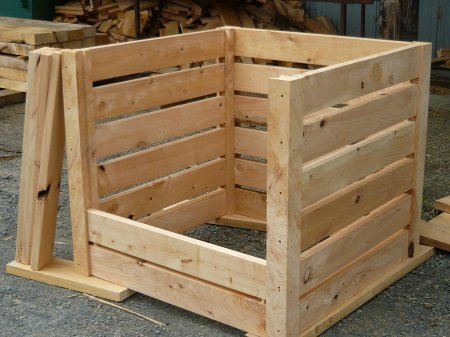
Build Your Own!
Compost piles should be located in a convenient, but out-of-the-way, location. A source of water nearby is helpful. Avoid locating the pile against fences or other structures made out of wood, because the constant moisture can cause decay. Make the pile about 3 feet wide by 3 feet deep by 3 feet wide to 5 by 5 by 5 in size. Anything smaller will not decompose as well, and larger piles are more difficult to work.
Although compost can be made just by stacking organic matter in a pile, most gardeners prefer to enclose the pile in a bin. There are a number of commercial bins on the market, or you can make your own very easily. A 15-foot-long piece of wire fencing material bent into a circle and fastened with a few pieces of wire is inexpensive, easy to build and works well. Avoid using untreated wood to build the bin, because that could lead to termite problems.
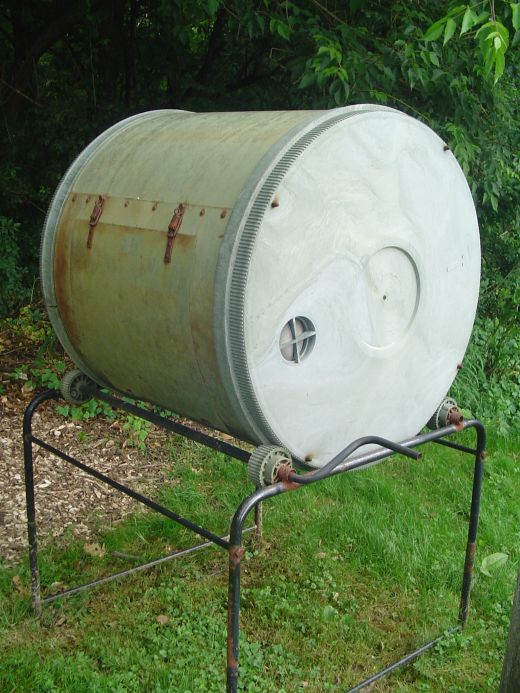
Commercial Bins Are Available
Compost can be created simply by piling up organic matter and allowing natural decomposition to take place (this is sometimes called passive composting). There is nothing really complicated about it, although using this method requires patience. Depending on circumstances, it may take six to 12 months for the organic matter to fully compost.
Typically, composting uses various techniques to speed up the natural breakdown of yard waste. It’s important to remember that raw organic material is converted into compost by the action of fungi and bacteria. In active composting, processes are set in place to make these organisms work faster and more efficiently.
These fungi and bacteria require adequate nitrogen, oxygen and moisture to decompose organic matter rapidly. The composting process attempts to provide these requirements, and the better those essentials are supplied, the faster the process will occur. Shredding or finely chopping materials also greatly speeds up the process.
As the microbes decompose the organic materials, temperatures within the pile may approach 160 degrees at the center. When properly done, this process produces a rich, earthy smell, not the bad odors many gardeners fear will occur. In addition, properly maintained compost piles will not attract and harbor vermin such as rats.
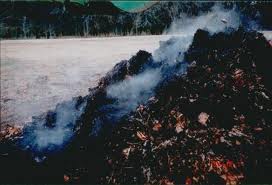
During Decomposition Compost Piles Get Very Warm
Try to include a variety of materials to encourage rapid decomposition. The more types of acceptable materials that are added the better the composting process.
Brown materials, such as brown leaves or chipped branches and stumps, are relatively low in nitrogen. Adding a commercial fertilizer or an organic fertilizer (such as blood meal) that contains nitrogen encourages rapid, thorough decomposition when these types of materials provide the bulk of what is being composted. A light sprinkling is applied over each 8- to 12-inch layer of organic matter as the pile is built.
If the pile is mostly green matter, turn it weekly to keep it loose and oxygenated.
Organic materials that can be used for composting include fallen leaves, grass clippings, shredded hedge clippings, raw vegetable and fruit trimmings, coffee grounds, dead houseplants and old flower arrangements. Manures, such as cow, horse, rabbit or poultry manures, make excellent additions to the compost and are relatively rich in nitrogen.
On the other hand, never put cooked foods, grease, meat, seafood scraps, fat or dog or cat droppings in the pile.
Oxygen is provided by enclosing the pile in a bin that has sides with a lot of ventilation openings, which allow air to move in and out. Turning the pile occasionally is labor intensive, but it ensures the pile is well aerated.
During dry weather it may be necessary to water the pile to maintain adequate moisture levels. Dry organic matter will not decompose. The pile should stay moist, but not constantly soggy. A pile that stays too wet does not contain enough oxygen and may produce sour odors. If this happens, turning the pile will correct the problem.
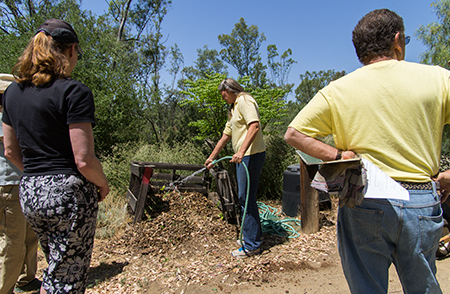
Water May Need to be Added During Dry Periods
As materials compost they lose more than half of their volume. When compost is ready for use, it should be dark brown and crumbly with much, or all, of the identity of the original material lost.
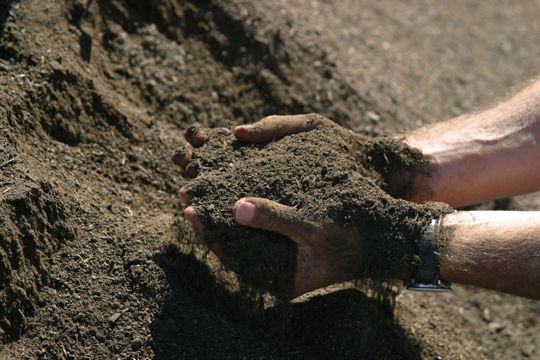
The Finished Product
The time it takes to finish varies depending on the materials used, how finely they were chopped and how well the appropriate moisture and oxygen levels were maintained. Two to six months is typical, but it can occur much faster. For more information, check out this great UF / IFAS publication on composting.