
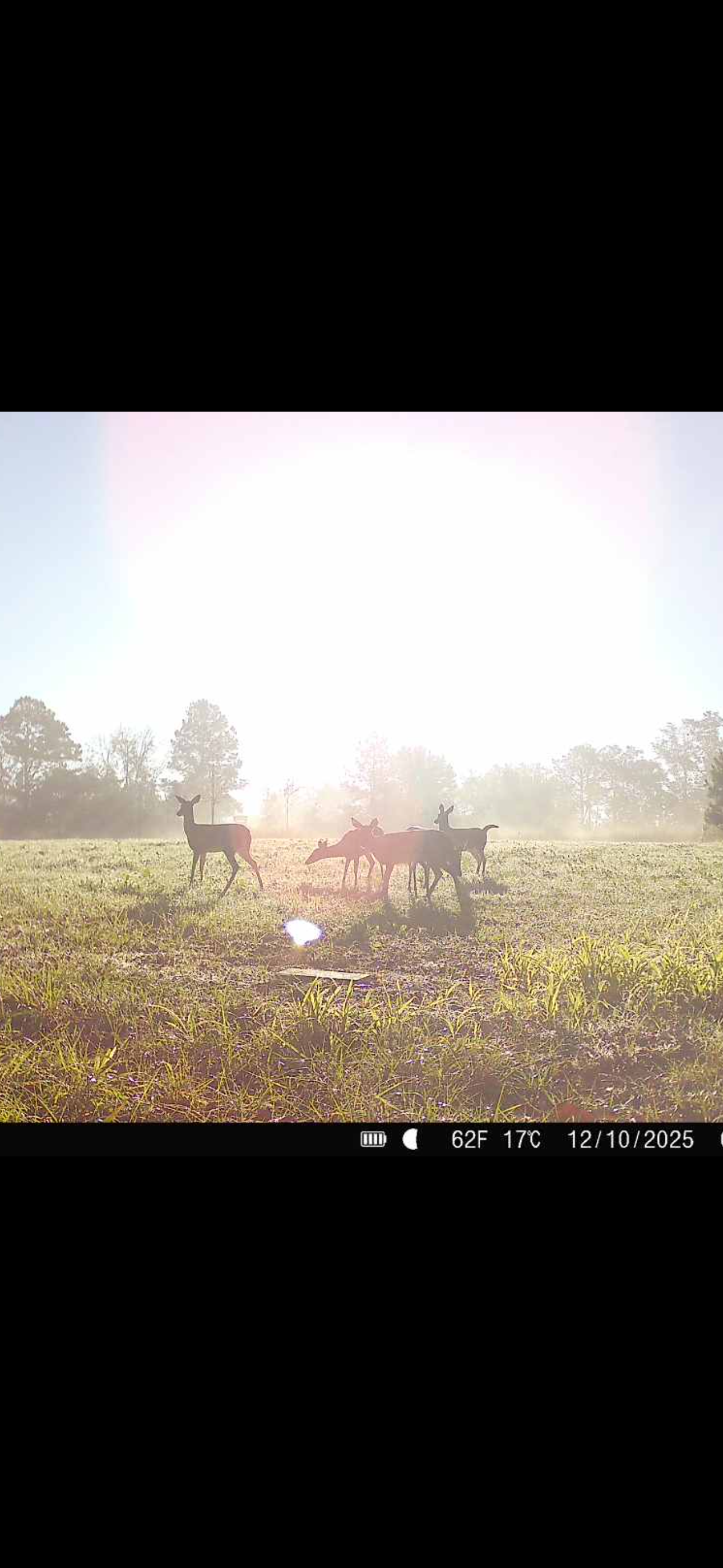
Trail camera picture of white-tailed deer on private land.
Florida has the lowest doe harvest ratio in the southeast, with a continuing decline in harvest numbers. In 2021, the total number of does harvested was at a low, being down 22% from the 5-year average. This makes it difficult to manage the overall population, especially in the Florida Panhandle, where habitat is more robust.
Without management, white-tailed deer populations become out of balance, susceptible to disease, and can cause issues for the ecosystem as a whole. Additionally, deer cause extensive and expensive damage of agronomic crops every year.
With Florida’s mild climate, natural die-offs like winter kills are not a part of the management equation. This makes the hunters role in white-tail conservation key. While buck harvest is a typical goal of hunters, managing the doe population is key to overall herd health and long-term management. Here are three reasons doe harvest is key:
- Habitat Management and Overpopulation
The female is the reproductive foundation of the white-tail herd. Overpopulation in the natural landscape can damage the natural habitat and lead of more deer than the land can support. Particularly in the Florida Panhandle, there is a lack of high-quality browsing areas
Does are the reproductive foundation of the herd. When too many deer are on the landscape, deer numbers can quickly exceed what the habitat can support. Harvesting early in the hunting season will help balance the population before the herd enters the winter season.
- Health
Scientifically, we know that overpopulated natural herds lead to disease. This can come from a lack of feed sources, which can weaken immunity; close intermingling in feeding or high-transmission areas; and reduced fawn survival. By harvesting does and controlling the population density, white-tail populations are overall more robust and healthier. In all natural populations, when the herd density is not managed (naturally or by conservation efforts), issues with health are amplified.
Learn More About Increasing Fawn Health
- Balanced Herd Structure
A healthy age structure and sex ratio within a population is key. According to the National Deer Association, a doe-to-buck ratio of 2:1 is ideal, however difficult to achieve. Additionally, while the sex ratio is often a hot topic, the age structure is just as crucial for a healthy herd. Harvesting can be a tool to support a healthy age structure and sex ratio within the population. If hunters do not harvest does, their populations will likely become skewed and less healthy.
Learn More Here
Incorporating doe harvest into deer management plans is a proven strategy that benefits the herd, the habitat in the Florida Panhandle.
- Three Benefits of Harvesting Does for Healthy Deer Populations in the Florida Panhandle - December 22, 2025
- The Northern Cardinal - January 26, 2024
- CWD Update: New Regulations for Hunting Season - October 13, 2023