by Rick O'Connor | Jan 30, 2015
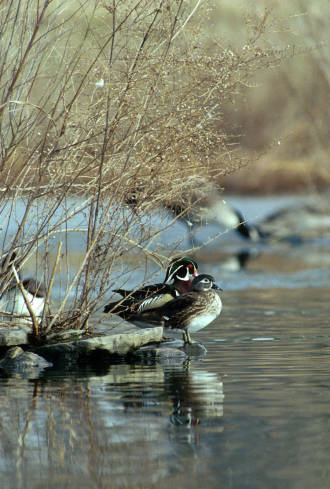
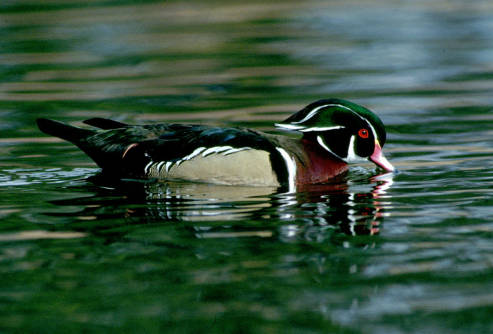
Wood ducks are one of the most colorful ducks in North America. Breeding males showcase an unbelievable combination of colors including a red bill and eyes, a metallic purplish-green crested head, black cheeks with thick white stripes, a maroon chest and rump, black and blue wings, dark yellow sides, and a white belly. The drab grayish-brown females are most easily recognized by their white eye ring and crested head.
A brightly colored male wood duck. Photo: USFWS National Digital Library
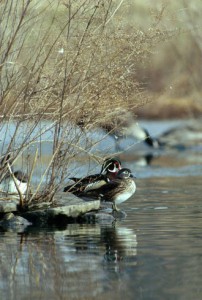
A pair of wood ducks with the more drably colored female in the foreground. Photo: USFWS National Digital Library
Another distinguishing characteristic of wood ducks is their habit of nesting in Florida. Few species of ducks do this.
In Florida, wood ducks begin laying eggs in cavities during late January. They prefer cavities located within a half mile of permanent water bodies. They like cavities in large trees that have clear access to a large entry hole, and shrubs nearby to offer protection for newly-hatched ducklings.
In areas with few large cavity trees, nest boxes can provide alternative locations to nest. Nest boxes intended for wood ducks should be made of natural wood: cedar is a good option because it weathers well. Boxes should be mounted with the entrance hole 6 or more feet above the ground or the surface of the water (if placed over a pond or swamp). Nesting hens will appreciate you placing some cedar wood shavings in the bottom of the box to serve as nesting material. Adding a predator guard below the nest box will greatly increase the chances the hen and her eggs/ducklings don’t get eaten by snakes or raccoons.
It’s best to have nest boxes in place before egg laying begins, which is right about now: late January. However, it’s never too late in the year to put up a new nest box. A box put out later in the year may be useful for a late-nesting hen. Many females have more than one brood during the long nesting long season which won’t end until late summer, so opportunities exist for a nest box installed later in the year to get used.
Wood ducks were given their name because they spend much of their time in wooded swamps, ponds, creeks, rivers, and freshwater wetlands. They prefer bodies of water that have 25-50% open water with 50-75% vegetative cover (a mix of shrubs, emergent plants, and trees) where they can hide and feed.
Wood ducks are sometimes called the “acorn duck” because of their fondness for these treats that fall from oak trees. They have a special preference for acorns from water oaks, laurel oaks, and shumard oaks. They also enjoy duck weed, smartweed, waterlily, seeds from many sedges, rushes, and grasses, as well as fruits from native trees and shrubs and occasionally invertebrates (spiders, insects, snails, crawfish).
Several adaptations differentiate wood ducks from other waterfowl and equip them for life in both woods and water. Well-developed toes and claws allow them to grab onto tree branches while perching. The placement of their legs near the center of their bodies allows them to walk on land more gracefully than most other ducks. Their broad wings and long wide tail increase maneuverability while flying to their cavity nest.
To learn more about wood ducks and what you can do to provide habitat for them, see this publication from UF/IFAS Extension.
Author: Holly Ober – holly.ober@ufl.edu
I am an Associate Professor and Extension Specialist in the Department of Wildlife Ecology and Conservation. My research covers wildlife ecology, habitat management, and identifying creative ways to cope with nuisance wildlife.
by Rick O'Connor | Jan 16, 2015
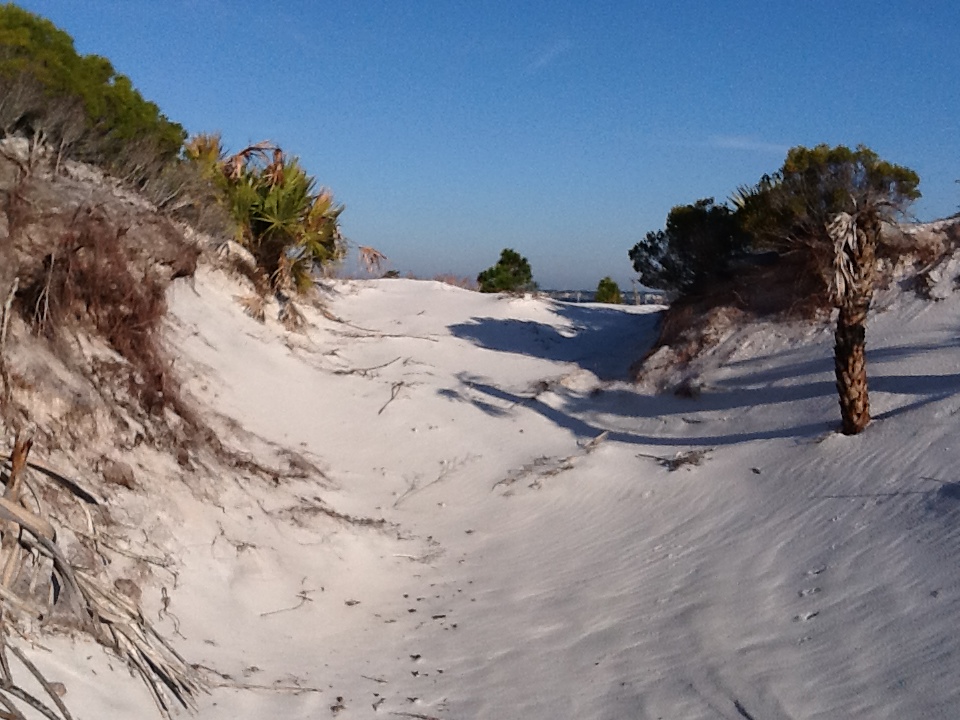
Beginning this month we will be posting a series of natural resource articles high lighting Florida’s Panhandle. The photographs and hikes presented in this series are from Escambia and Santa Rosa counties but the same natural places can be found anywhere between the Perdido and Apalachicola Rivers. We hope our readers will visit these places and DISCOVER FLORIDA’S PANHANDLE on their own. This year we will begin at the Gulf of Mexico and visit our BARRIER ISLANDS. We will visit the same location on Santa Rosa Island in Escambia County each month over the course of a year. During this series we should see how things change each season and learn more about our natural places.
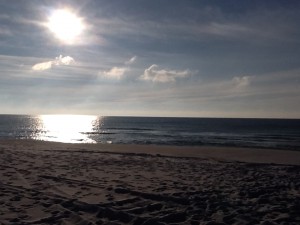
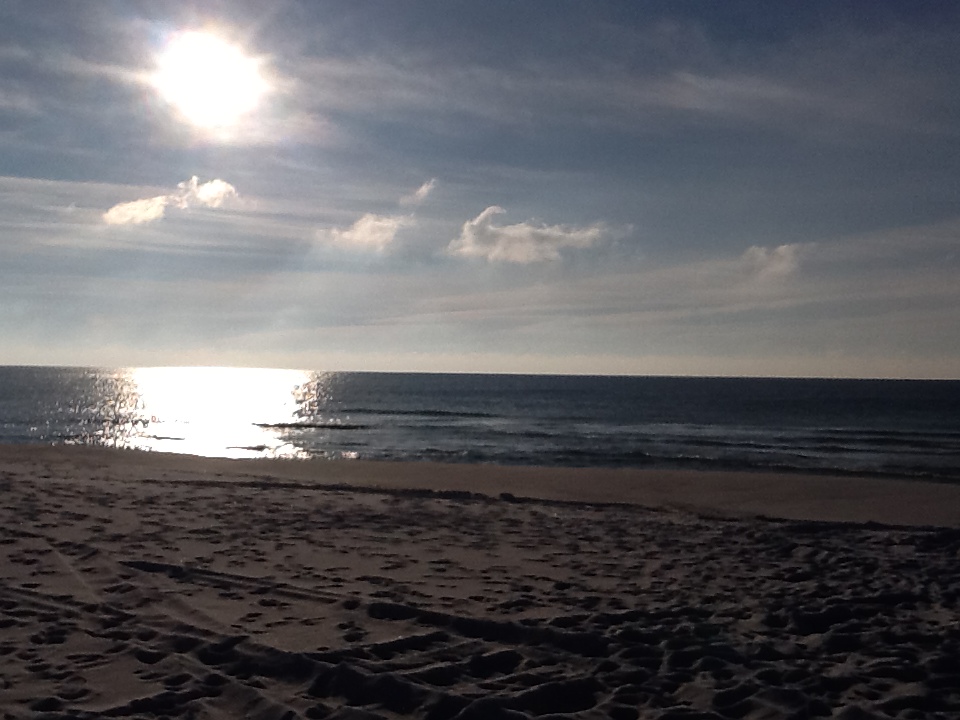
The Gulf of Mexico at sunrise. Photo: Rick O’Connor
Here is the Gulf of Mexico. The northern Gulf is primary sand but their are areas of hard bottom that provide habitat for many of our commercial important fisheries. 450 feet off the shore from this photo is an artificial reef placed by Escambia County for residents and visitors alike to explore. These reefs attract a variety of reef fish and sea turtles and are great for wildlife viewing. Notice how low the sun is in the sky on this winter morning. The shortest day of the year was December 21 (when the sun was it’s lowest) and will be “climbing” as this series continues. Many beach residents use this as their clock!
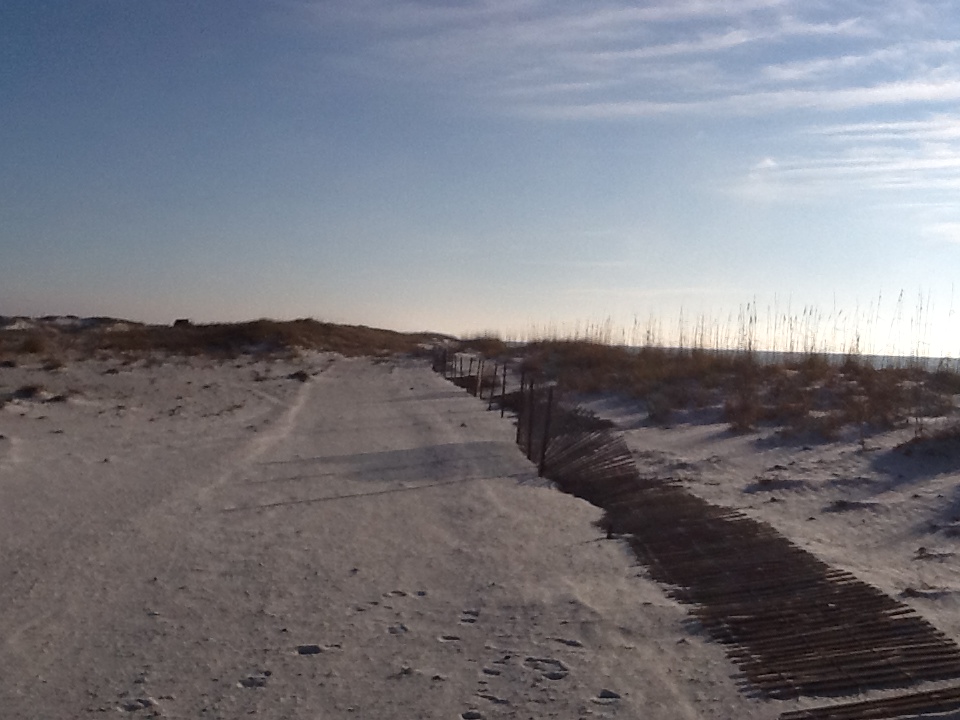
Our barrier islands are considered the “world’s whitest beaches” and this is because of the high amount of quartz deposited here. In this photograph you can see the water is farther from shore than usual. This is due to the strong north winds blowing water offshore; this happens every winter – but provides feeding opportunities for shorebirds. The sand fencing is used by many of our counties to “kick start” dune restoration.
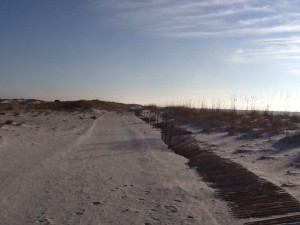
Primary dune line with sand fencing. Photo: Rick O’Connor
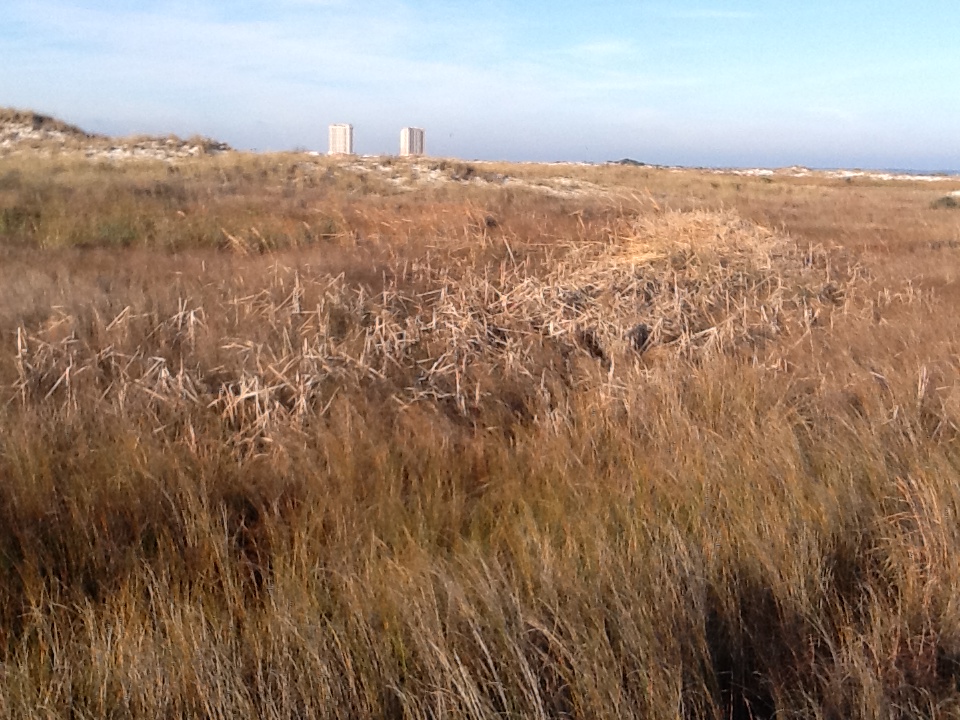
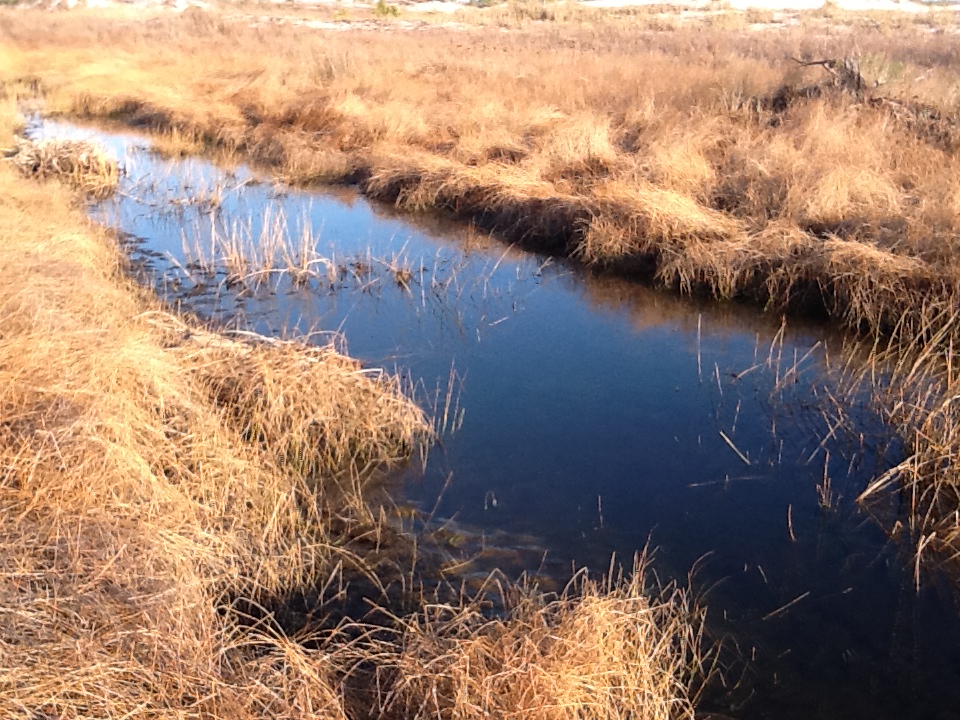
Beyond the primary dune on this portion of the island you will find low areas known as swales. These “depressions” will fill with water during rain events and provide much needed freshwater for the organisms who live out here. Barrier islands are xeric environments (meaning “desert like”) and freshwater habitats are very important for many creatures. Some of these ponds are ephemeral (meaning non-permanent) and dry up during some periods of the year.
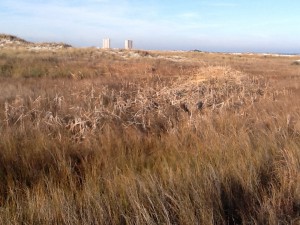
Swale with dead cattails. Photo: Rick O’Connor
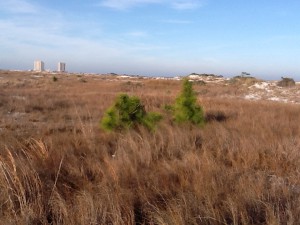
Small pines on the edge of a swale. Photo: Rick O’Connor
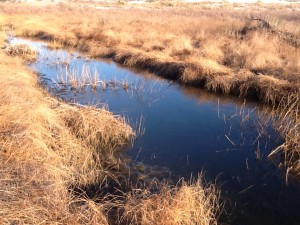
The water in most swales is freshwater. Photo: Rick O’Connor
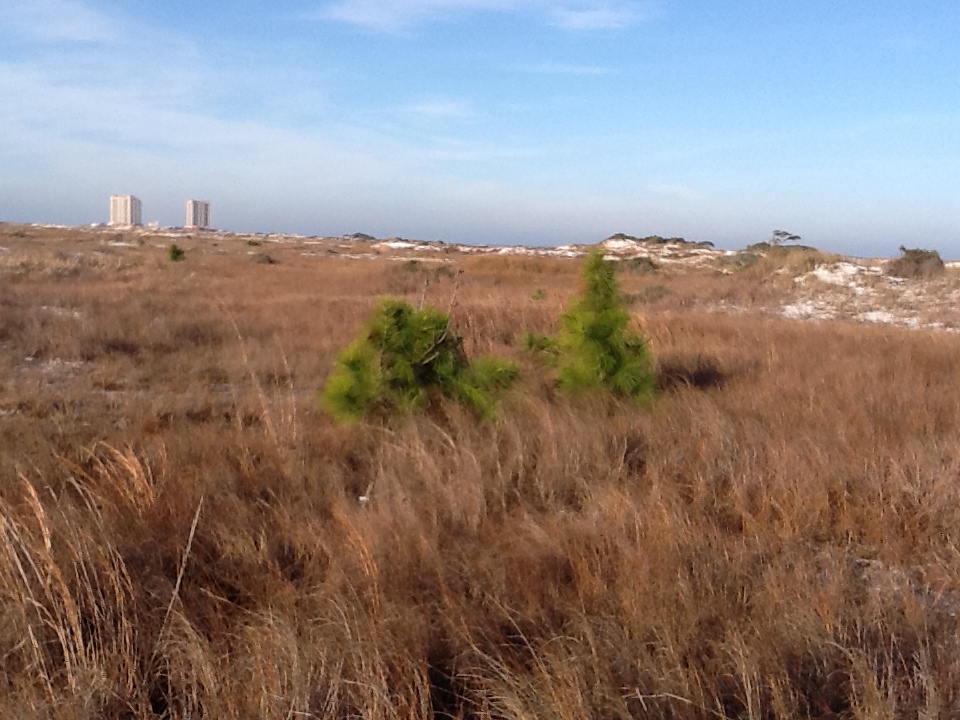
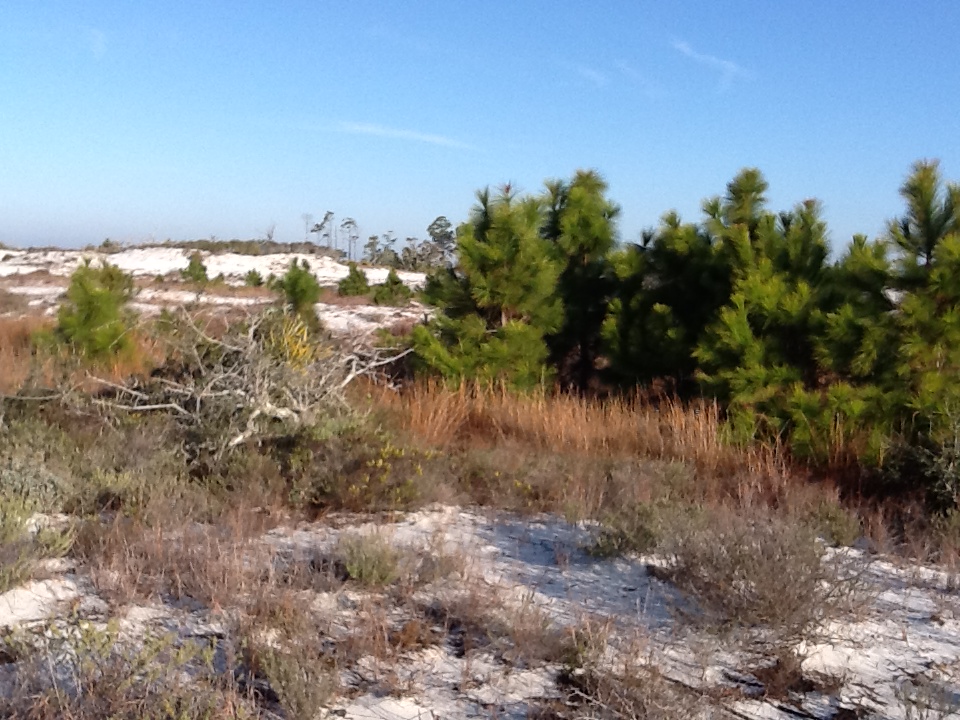
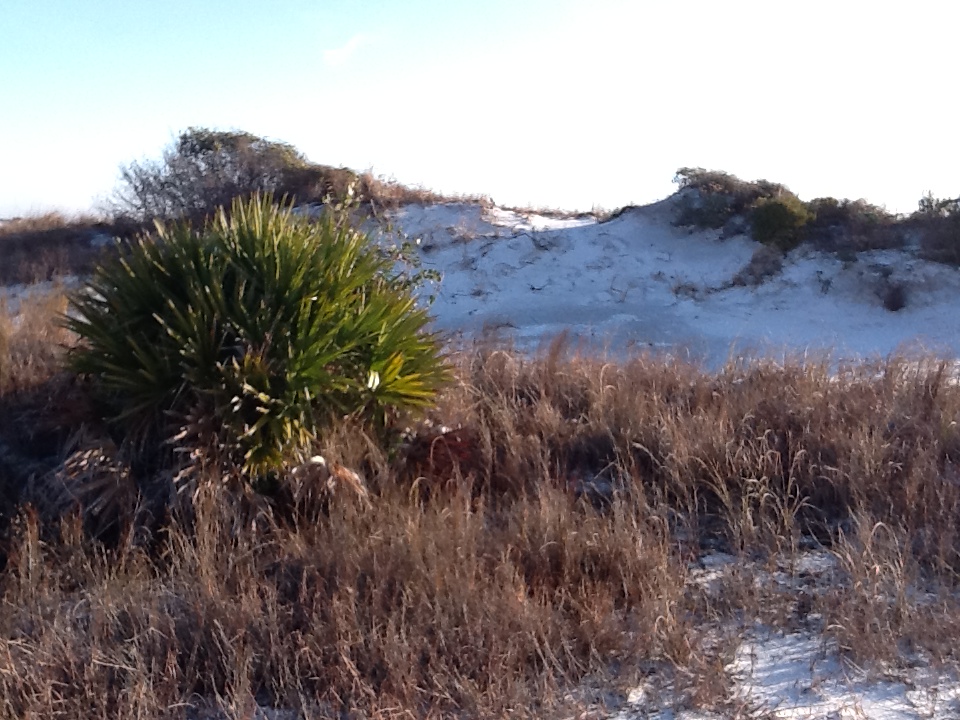
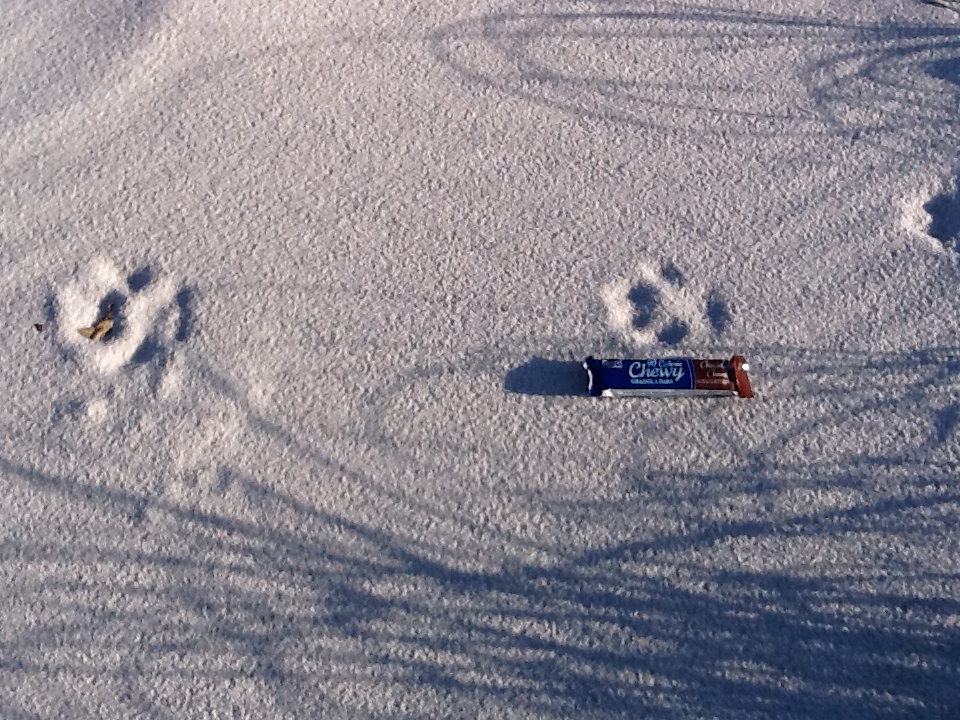
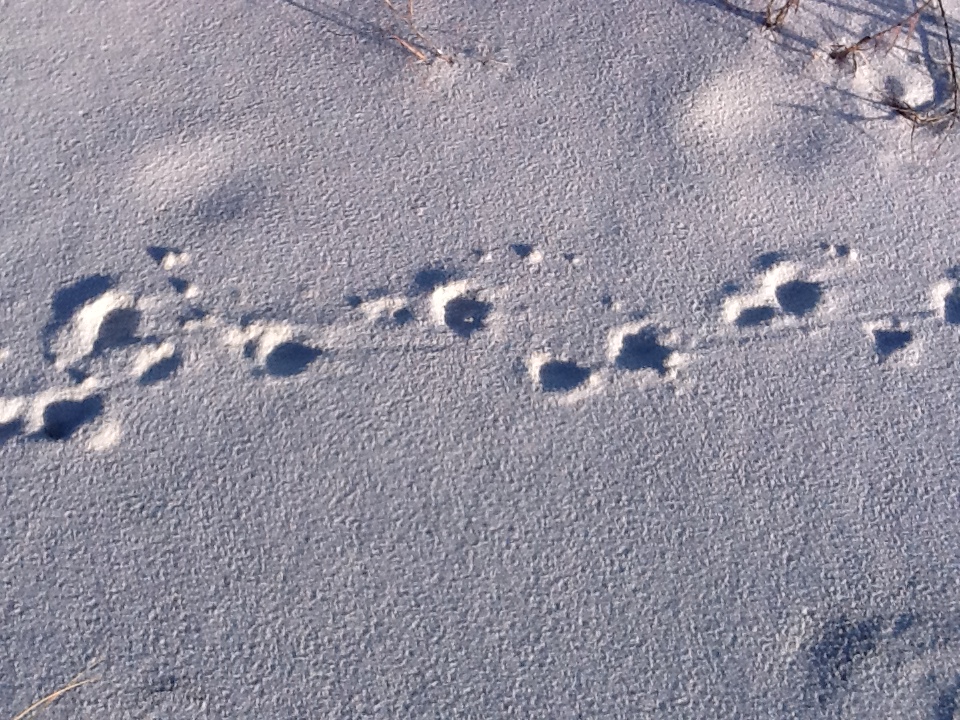
Where the primary dune and swales end the secondary dune fields begin. Because of the primary dunes there is less wind and salt spray which allows different species to take root. The secondary dunes are often identified by their small round shrubs – such as goldenrod and beach heather. These larger plants will trap larger amounts of sand producing larger dunes. On the secondary dunes I usually find lots of tracks. Identifying tracks is difficult (especially in soft sand) but fun. Most of what I saw this winter day were mammals. Raccoons, opossums, and armadillos are very common. Skunks were once common but have been scarce since the hurricane years. Below are tracks of a canine. Many people bring their dogs to the beach but coyote and fox are also found here. These tracks measured about 3.5″ and more round than triangle shaped; suggesting this is a dog.
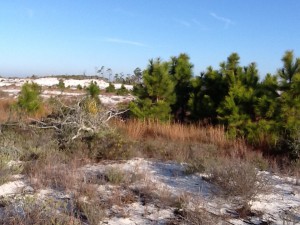
Small secondary dune with small pine trees.
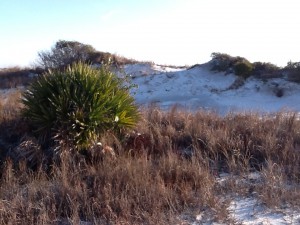
This secondary dune supports a saw palmetto. Many forms of wildlife depending on these shrub areas.
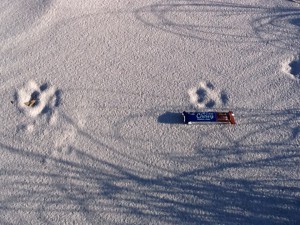
These unidentified canine tracks are probably of a dog; though coyotes are on our islands
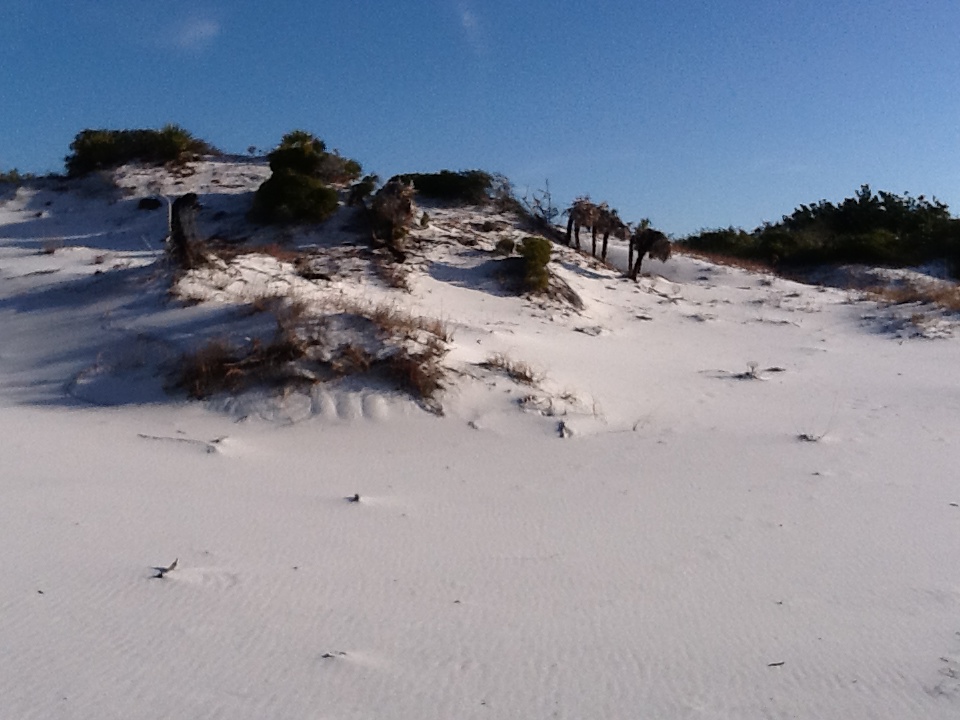
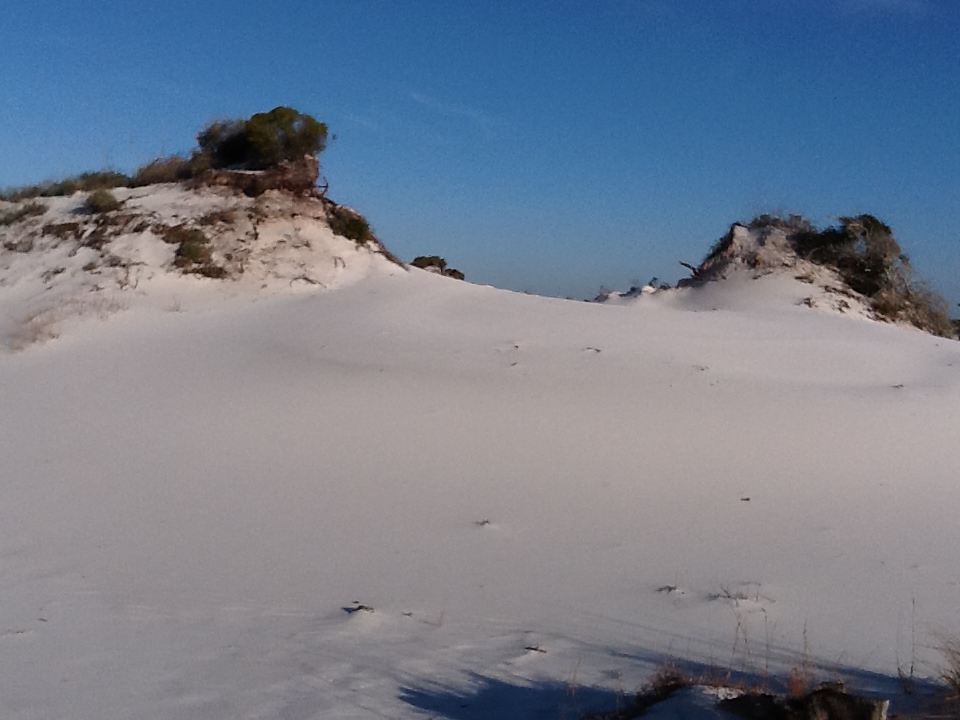
Beyond the secondary dunes are the largest dunes on the island, some measuring over 50′, these are the tertiary dunes. With the secondary dunes blocking wind and salt spray larger plants still are allowed to grow. Here we find actually trees; pine, live oak, magnolia to name a few. With the loss of primary and secondary dunes the tertiary dunes are exposed to the wind and salt spray of the Gulf side, which puts them at risk. This is why sea oats and primary dunes are protected in most counties.
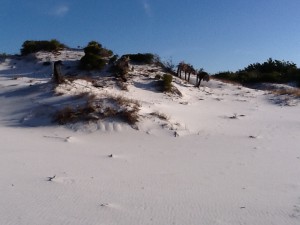
The face of a tertiary dune. Photo: Rick O’Connor
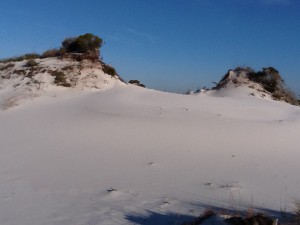
Tertiary dunes are the largest dunes on the island; some reaching over 50′.
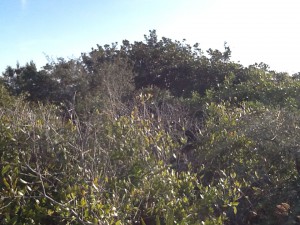
Tertiary dunes support trees such as this magnolia and yaupon holly.
The large field of tertiary dunes blocks enough wind that forests and salt marshes can establish themselves on the back side of the island. Here the diversity and abundance of wildlife increases. We have found not only the mammals already mentioned but snakes, freshwater turtles and terrapins, and a variety of birds. This winter day I found several small woodland and mocking birds. Some of our islands have deer and alligators.
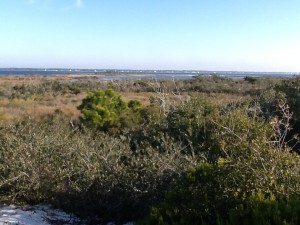
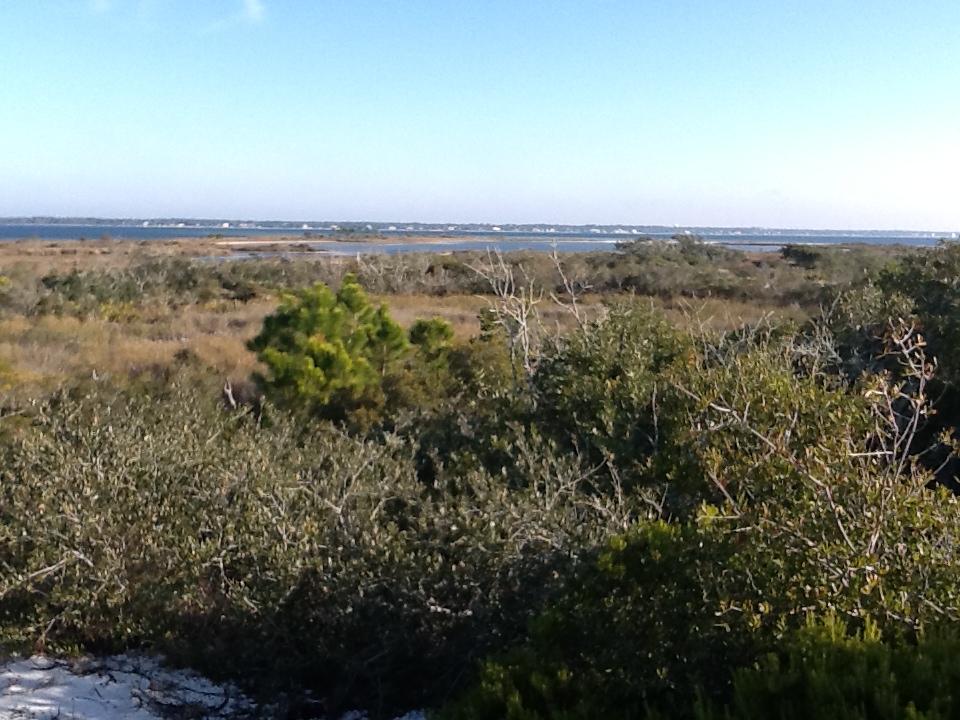
From atop a tertiary dune you can view the maritime forest, salt marsh, and sound beyond. Photo: Rick O’Connor
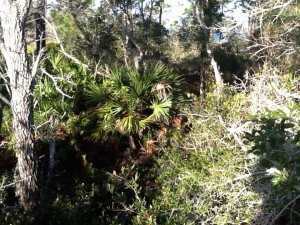
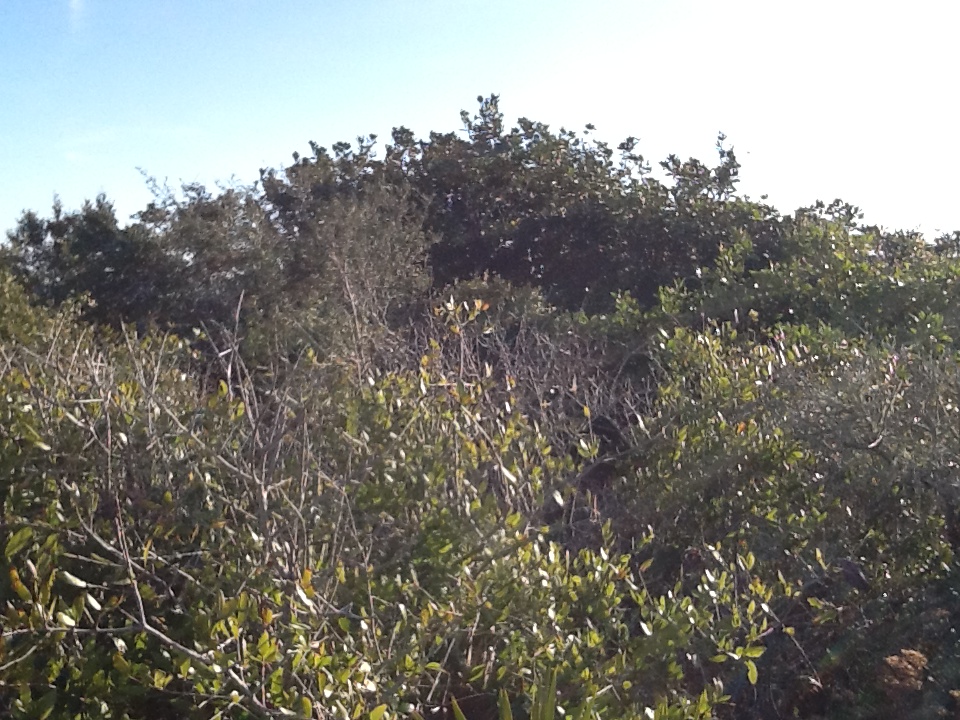
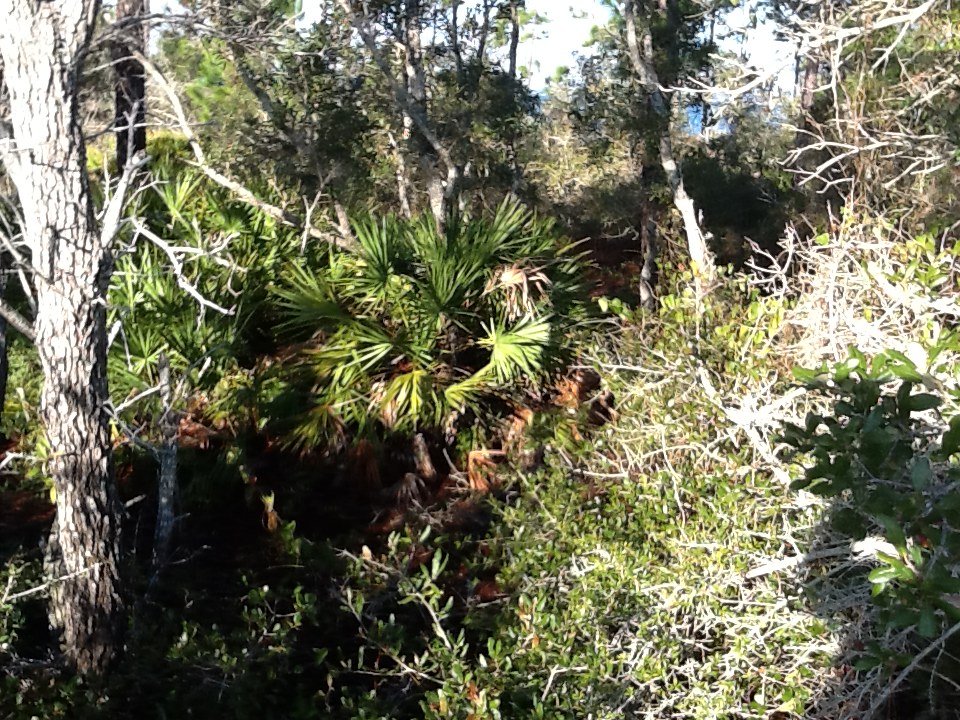
Within the maritime forest you will find a variety of plants and animals.
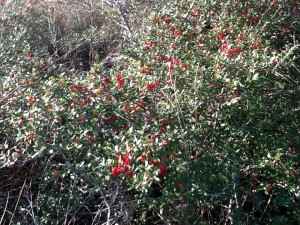
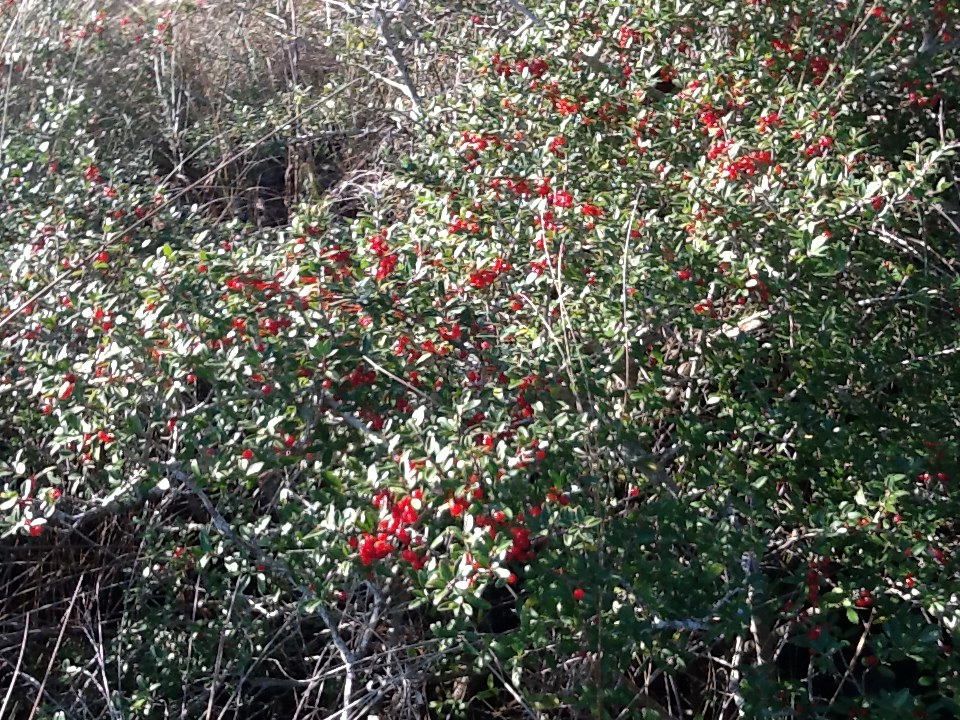
Holly’s are famous for having the bright red berries around Christmas time. Here in January the berries are still found on some of them.
Between the maritime forest and the salt marsh you may find freshwater ponds. Like the swale ponds, these places are great places to find wildlife. Though I have not seen them in many years I have found alligators in this area. These ponds support populations of amphibians and small fishes.
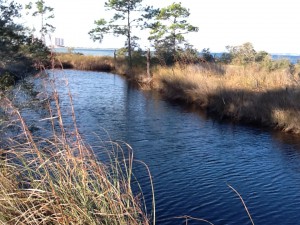
This freshwater pond has bull minnows, amphibians, snakes, and – in the past – alligators. Photo: Rick O’Connor
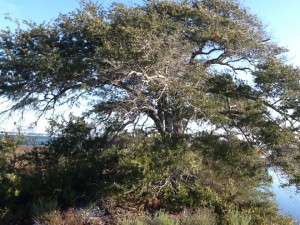
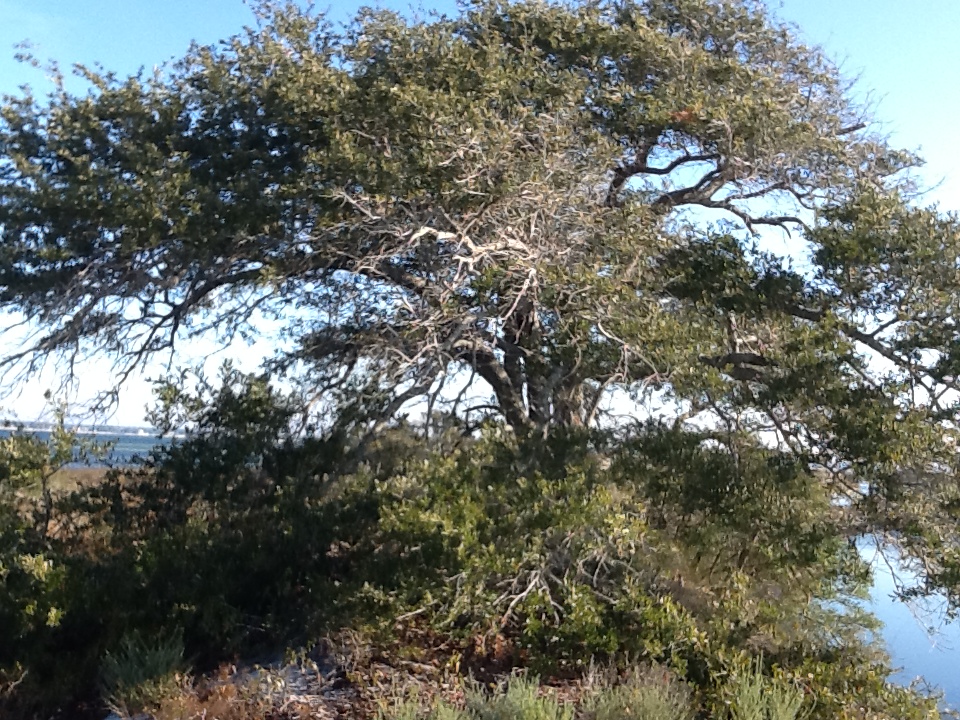
With the dunes blocking offshore winds trees can grow much larger on the back side of the island; like this live oak.
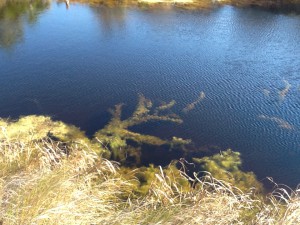
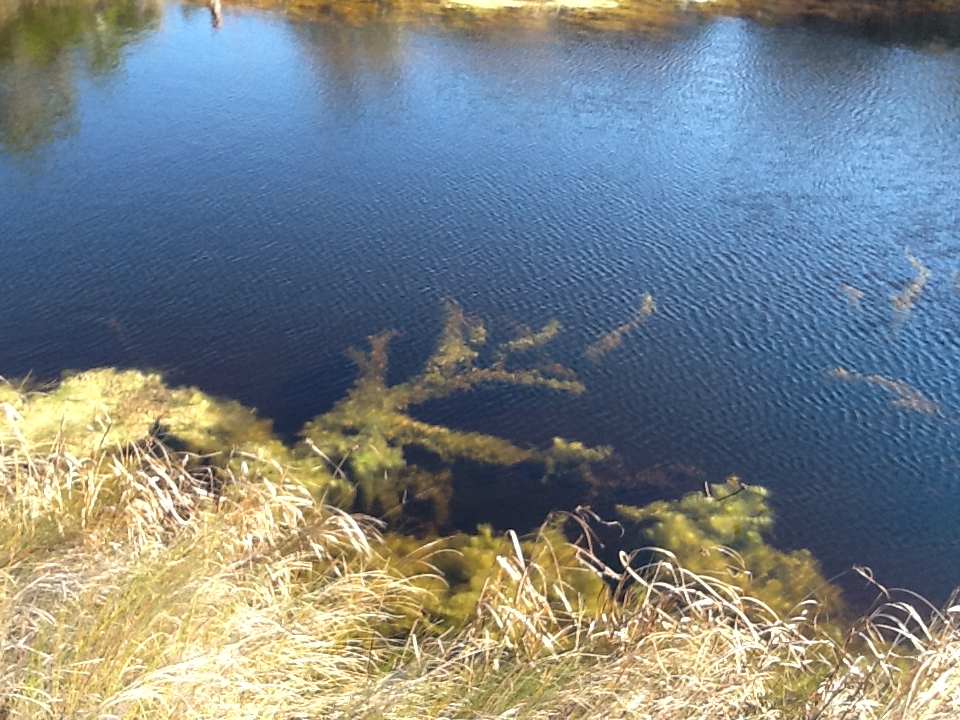
This pond supports a stand of green algae which supports many of the aquatic animals that visit here.
On this winter day I primarily saw bird life. The air temperature was 39 F and the wind was out of the north. Many of the mammals move at night and the reptiles, being cold blooded, were hibernating somewhere; the bird life however was pretty active. Many woodlands birds were out feeding on seeds and berries, herons and egrets were in the marsh hunting fish in the shallow waters, and shorebirds were picking through the beach wrack and some were diving.
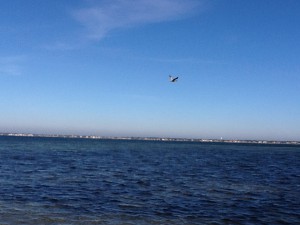
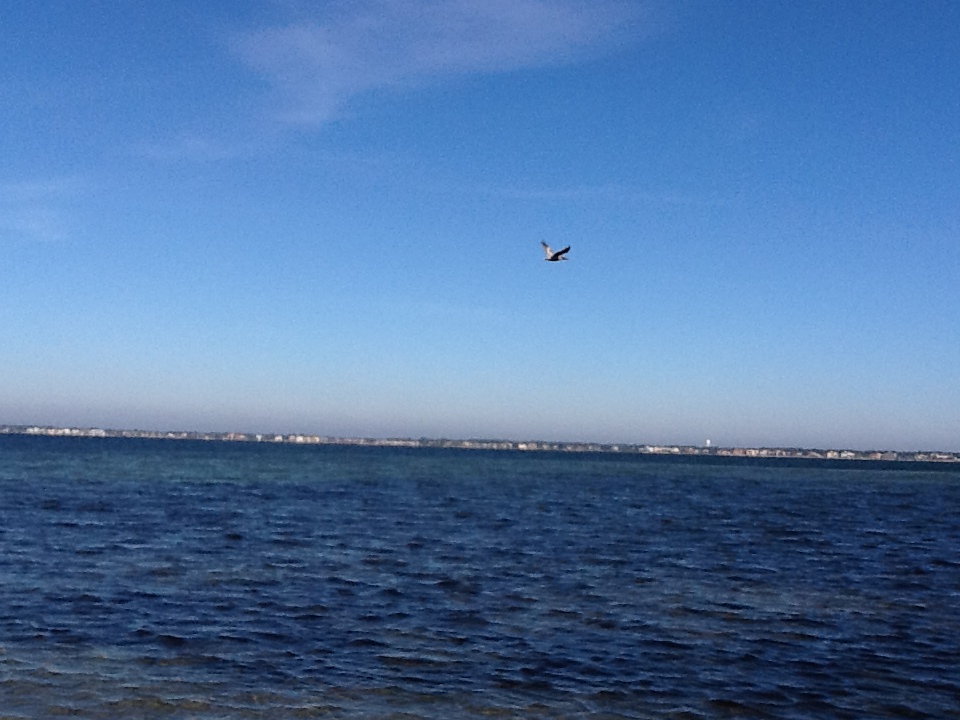
This pelican is searching over Santa Rosa Sound for a fish to feed on. Photo: Rick O’Connor
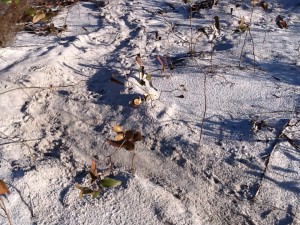
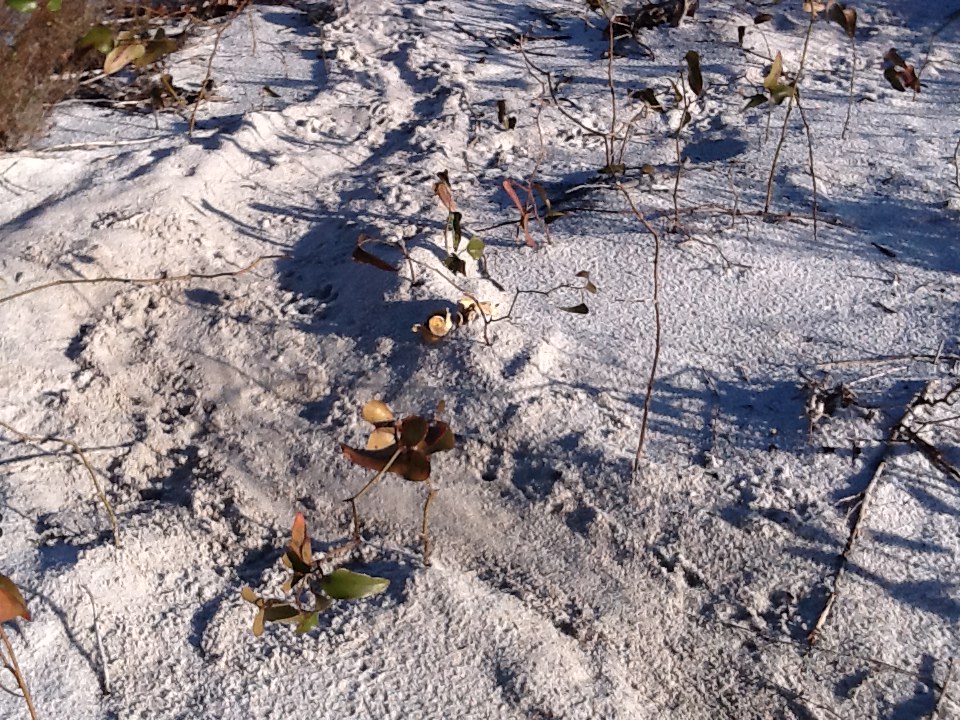
This unusual drag was found between the salt marsh and the sound side shoreline. It looks like a turtle crawl but at his time of year more probable something being dragged by something.
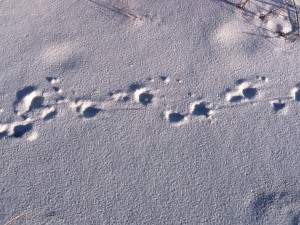
Armadillo tracks can be identified by their “tail drags”.
Salt marshes are one of the most productive systems on earth; and the target for another FLORIDA’S PANHANDLE series. Crabs, shrimp, mollusk, worms, terrapins, fish, and birds are some of the wildlife that call this place home – and maybe we will find some as this series continues into the warmer months. Today I found pelicans, herons, and egrets here eating.
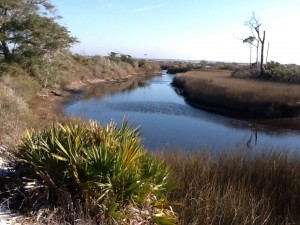
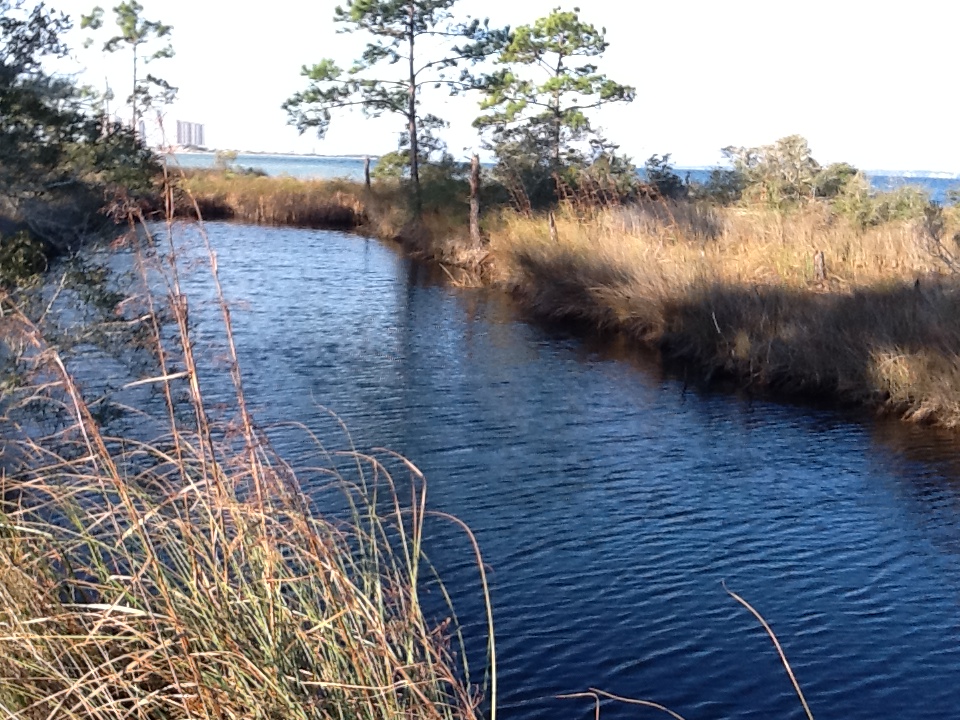
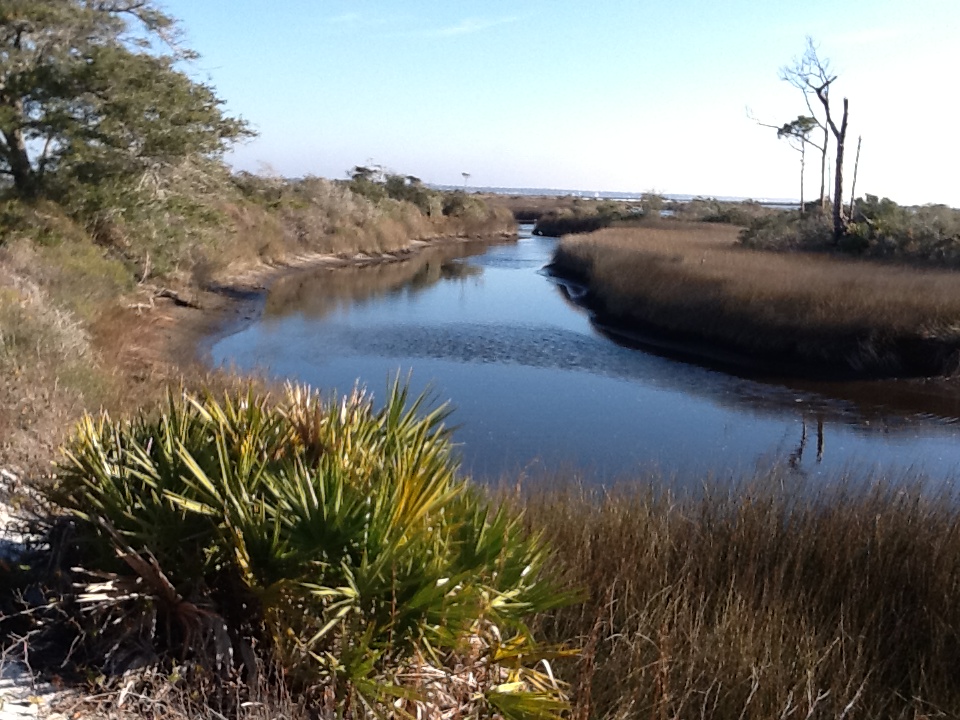
A finger of a salt marsh on Santa Rosa Island. The water here is saline, particularly during high tide. Photo: Rick O’Connor
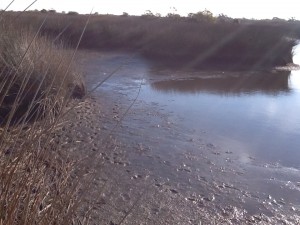
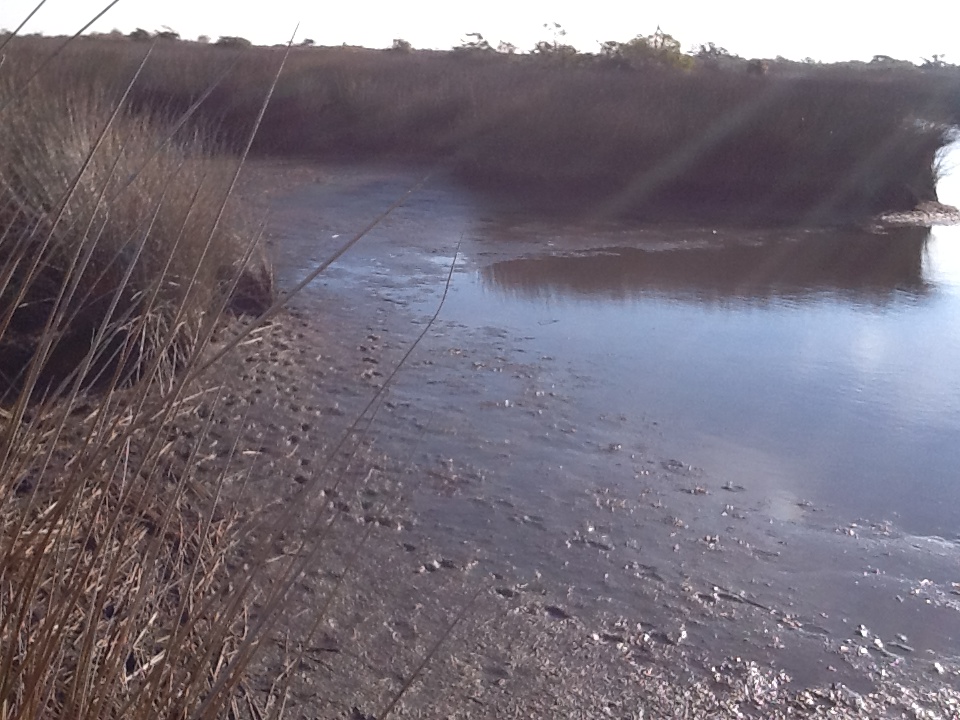
The muck of a salt marsh. This rich organic mud is very loose and the hiker can quickly sink! Notice the tracks of a predator.
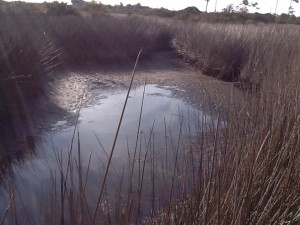
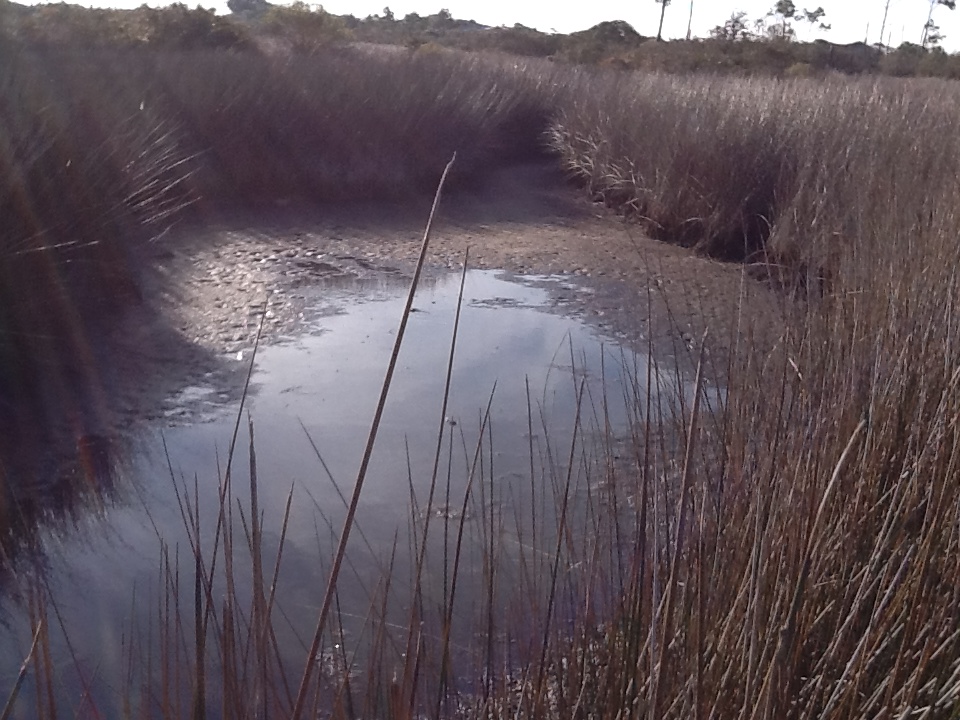
Notice the low water levels typical of winter. This congregates fish into smaller pools and makes it easier for birds and mammals to catch them.
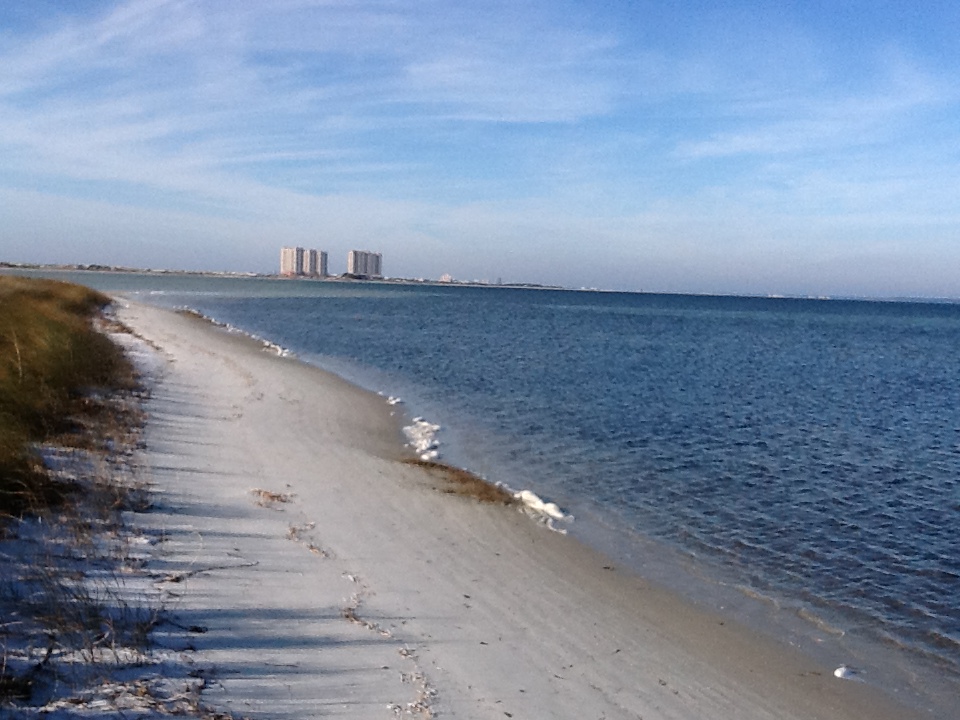
The Sound side of the island has wind but less wind than the Gulf side. The wave energy here is also lower supporting seagrass and oyster communities. Like the marsh these places are very productive; though all I really saw moving on this cold winter morning were the birds. There are two species of seagrass common to our sounds; turtle grass and shoal grass. However there have been reports of more tropical species appearing. We may find some when the water warms up. These waters support at least 100 species of fish and many invertebrates we enjoy eating.
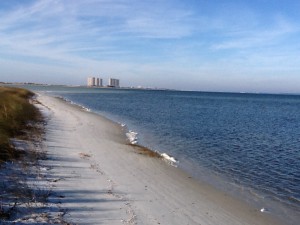
The darker areas in the water are seagrasses. Photo: Rick O’Connor
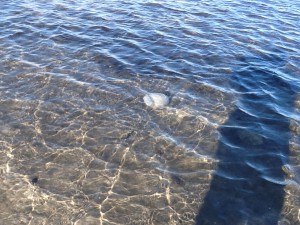
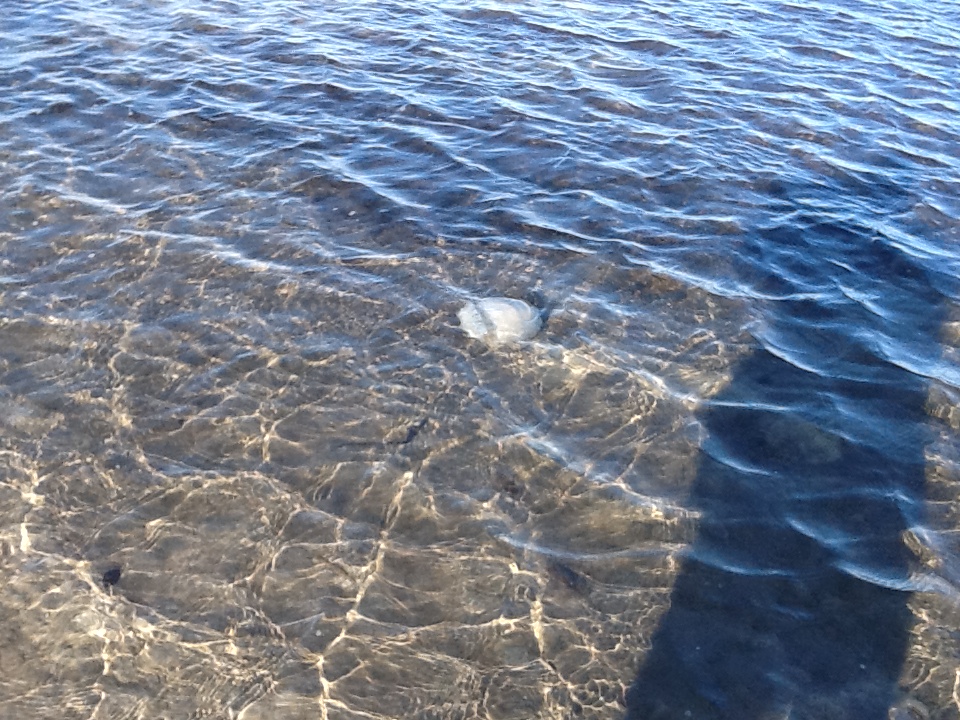
I found this along the shore last winter. These are cannonball jellyfish.
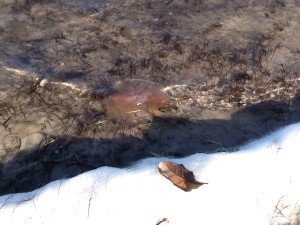
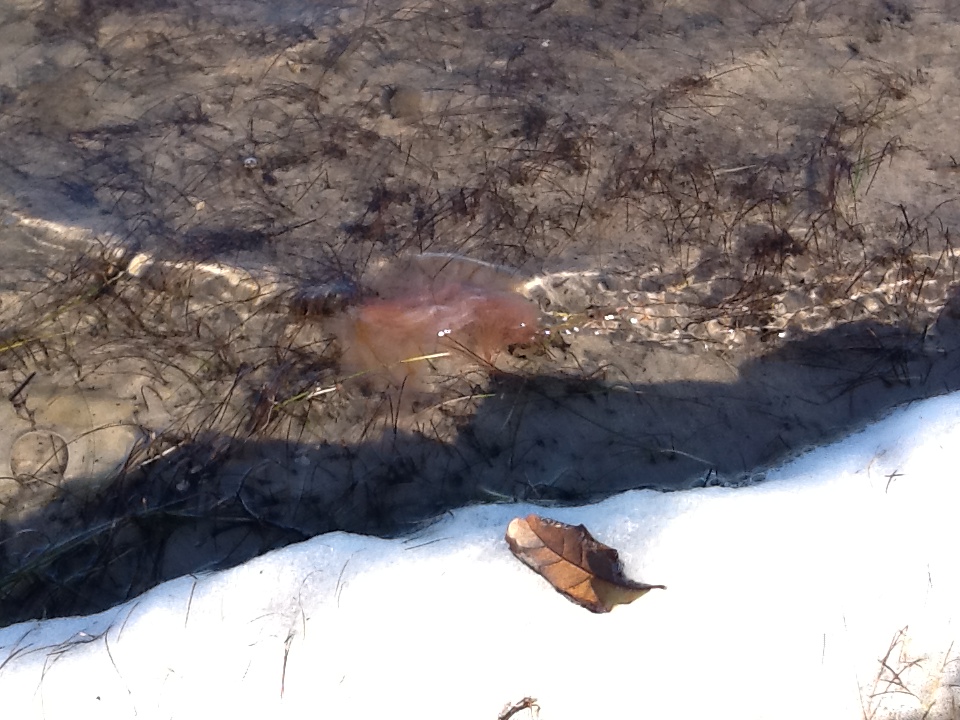
This is a sea nettle. This species of jellyfish has a more painful sting. I only saw one of these today but saw several cannonballs.
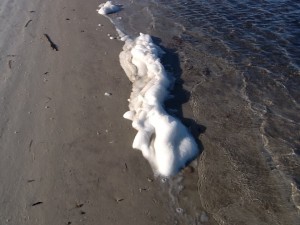
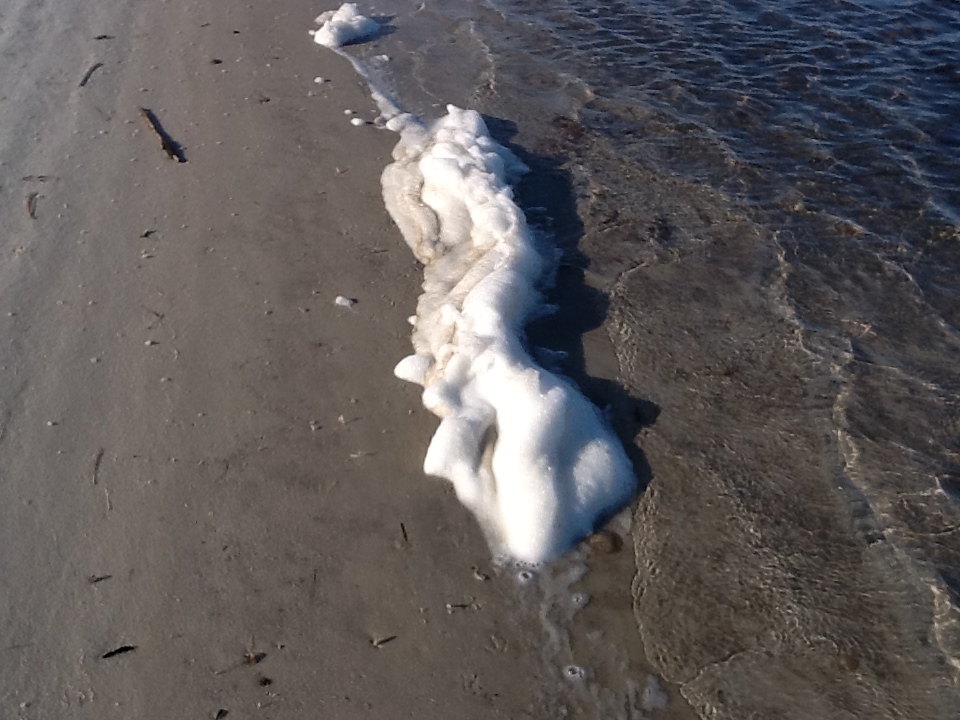
People find this “sea foam” frequently when they visit the beach. It is formed when the winds pick up and there are nutrients in the water. It was up and down the beach today.
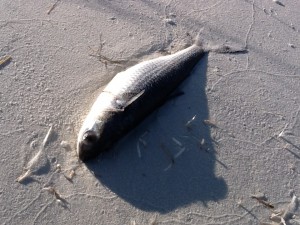
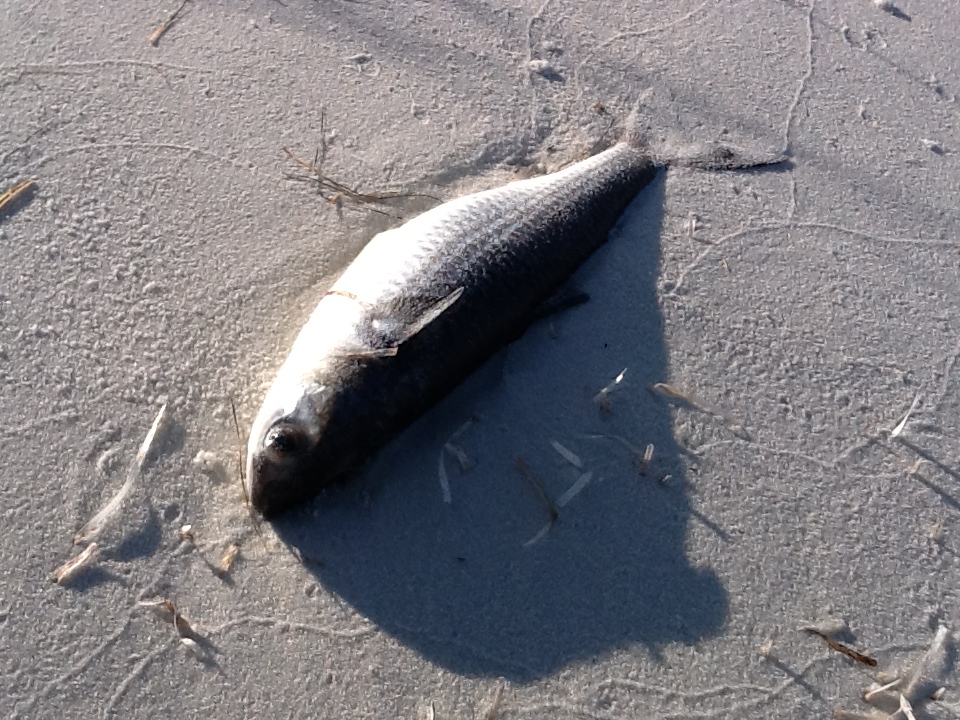
It is not uncommon to find dead fish along the shore after a hard freeze as we have had in recent weeks. When it warms these dead fish will attract scavengers including cottonmouths. Maybe we will see one later in the year.
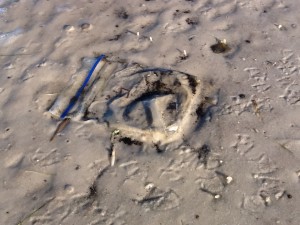
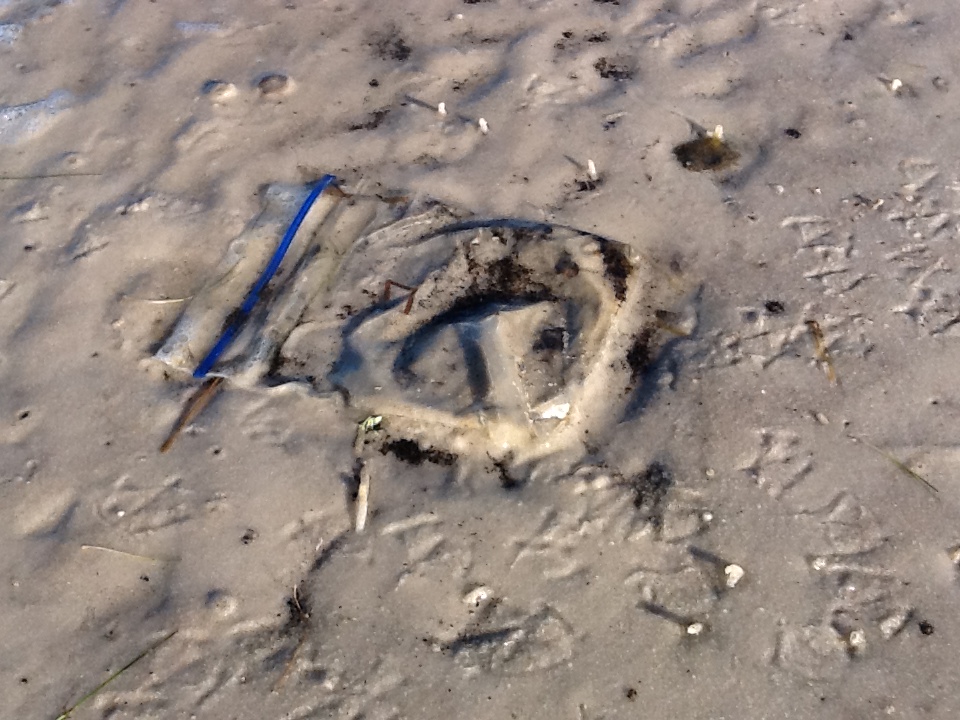
There was very little trash on the island today but it was there. These pieces of debris can cause serious problems for coastal wildlife. We will discuss this issue more as this series moves on.
Well, for January we found the beach to be cold and windy. Very little wildlife was out to be viewed other than birds and the numerous tracks in the dunes, but as the temperatures warm we will see more. Take some time to visit our barrier islands and enjoy them. Until February.
by Rick O'Connor | Dec 12, 2014
Thank You for a Wonderful Year!
As we come to the end of our 100th year of serving the citizens of Florida, the University of Florida/IFAS Extension Faculty located in the 16 county offices of the Florida Panhandle thank you for making 2014 another great year!
Extension has come a long way assisting farmers and their families with relevant information since the beginning of the 20th century. Today, 100 years later, UF/IFAS Extension continues to provide science-based information to the citizens of Northwest Florida.
This year our County Extension Faculty provided valuable information and educational programs to 1000’s of individuals, families, businesses, and agricultural producers across the panhandle. As you know, our educational programming includes topics in areas such as Agriculture, Natural Resources, Horticulture, Family and Consumer Sciences, and 4-H Youth Development. UF/IFAS has a Solution for your Life!
We are excited about, and dedicated to providing our clients the most recent and science-based information on a wide range of topics such as:
- agricultural production and marketing,
- providing youth with exciting opportunities that develop life skills, teamwork, and responsibility
- food preservation, cooking
- helping individuals and families with health and wellness, parenting and manage budgets,
- consumer assistance within the home,
- wildlife and land management,
- coastal and inland fishery management,
- home gardening and commercial landscaping,
- acquiring Continuing Education Units for a variety of licenses.
Though the first 100 years of UF/IFAS Extension have been very productive we do not plan on sitting back and resting on the accomplishments of the past. We will continue to provide you and your family the best information and education available to provide “Solutions for Your Life!”
Thank you once again for participating in our Extension programs! We look forward to seeing you in 2015, and as always, if you have a question on any topic, or a suggestion to help us help you better, please do not hesitate to contact us. You can find your local County Extension office on the web at http://nwdistrict.ifas.ufl.edu or Facebook at https://www.facebook.com/IFASNW.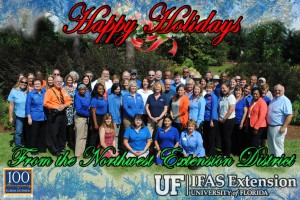
Happy Holidays & Best Wishes for the New Year!
From,
Dr. Pete Vergot III, Professor, and Northwest District Extension Director and your County Extension Faculty and Staff of the UF/IFAS Extension Northwest District serving Panhandle Florida
by Rick O'Connor | Nov 7, 2014
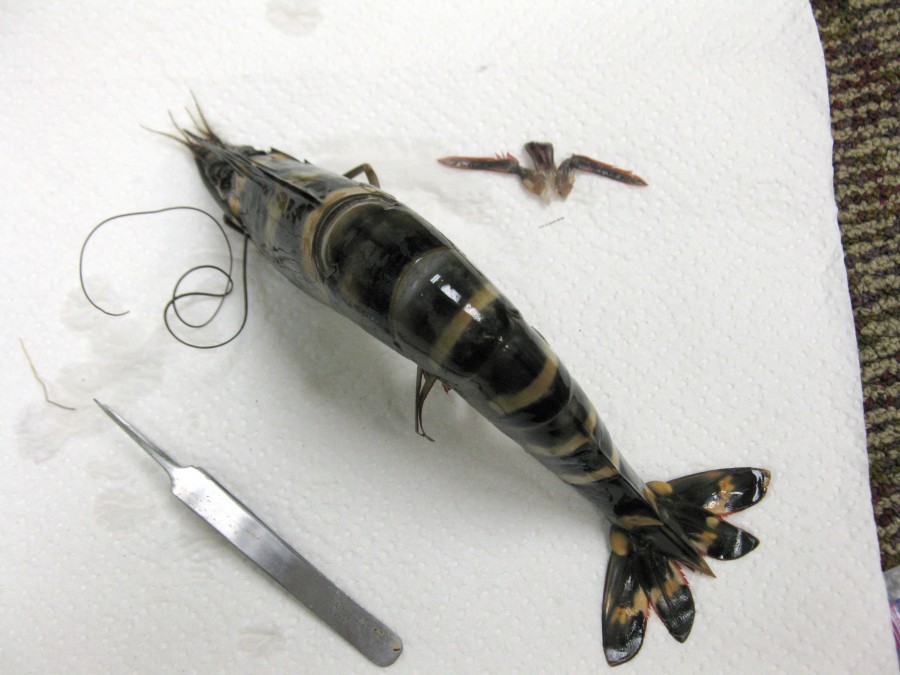
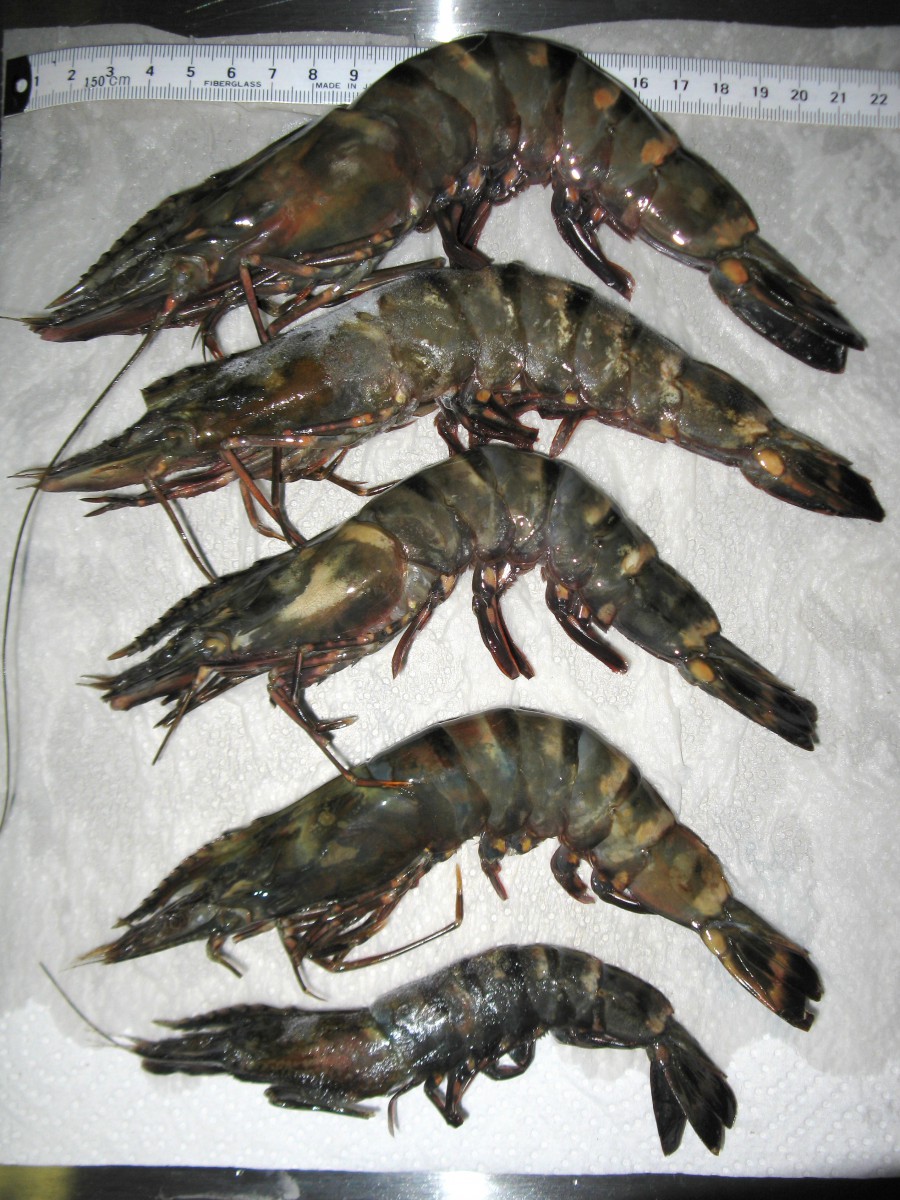
This catchy phrase coined by Robert Turpin (Escambia County Marine Resources Division) describes the new invader to our marine waters. Many coastal residents are aware of the invasive lionfish that has invaded our local reefs but few have probably heard of the Asian Tiger Shrimp. This member of the penaid shrimp family, the same family are edible white, brown, and pink shrimp come from, was brought to the United States in the 1960’s and 70’s as an aquaculture project. Over the years farmers have moved from Tiger Shrimp to the Pacific White Shrimp and the last known active farm was in 2004.
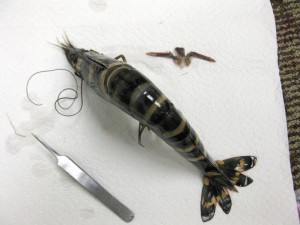
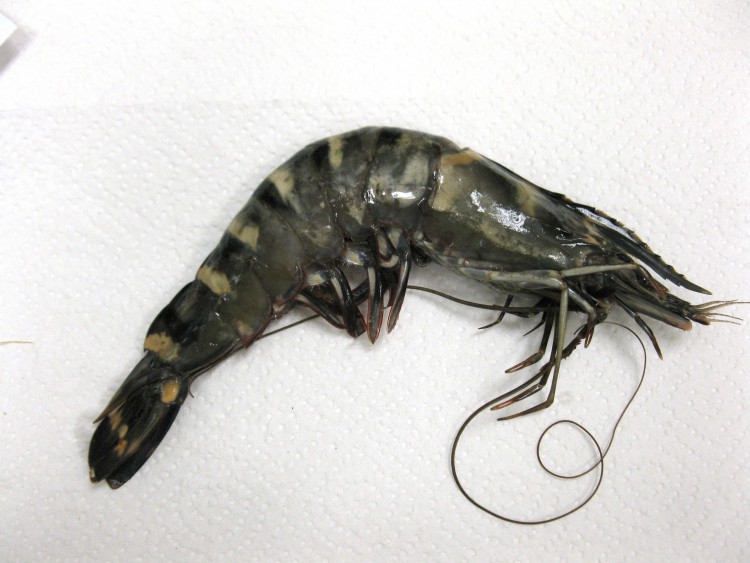
The Asian Tiger Shrimp can reach lengths of 12″
In 1988 2000 of these shrimp were lost from a farm in South Carolina during a flood event. 10% of those were recaptured and some were collected as far away as Cape Canaveral. No more was heard from this release until 2006 when 6 were captured; one of those in Mississippi Sound near Dauphin Island. Each year since the number of reported captures has increased suggesting they are breeding.
2006 – 6 captured
2007 – 4 captured
2008 – 21 captured
2009 – 47 captured
2010 – 32 captured
2011 – 591 captured
One individual was caught in 2011 near Panama City and 5 were collected in 2012 in Pensacola Bay. In recent weeks the Sea Grant Agent in Escambia County has received reports of numerous Tiger Shrimp being collected from Escambia Bay. There is currently no scientific evidence of negative impacts of this shrimp in our area. They are aggressive predators of benthic invertebrates and may out compete our native penaid shrimps and could possibly feed directly on the juveniles.
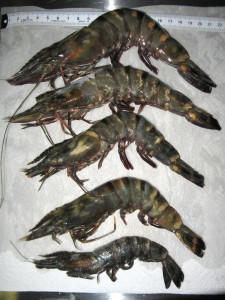
Five tiger shrimp captured by shrimpers in Pensacola Bay.
NOAA scientists are interested in obtaining samples of this shrimp for DNA studies. It differs from other local penaid shrimp in that it is larger (8-12” long), dark in color (dark green to black) and has light stripes (white to cream colored). The larva and juveniles live in the bay. Sub adults will migrate offshore for breeding. They are a tropical species that have a low tolerance for cold temperatures, showing no growth below 20°C, but have a high tolerance for changes in salinity. If you thing you may have one of these shrimp and are interested in donating one, please contact Sea Grant Agent Rick O’Connor at (850) 475-5230 or roc1@ufl.edu.
by Rick O'Connor | Oct 31, 2014
By Jack Payne
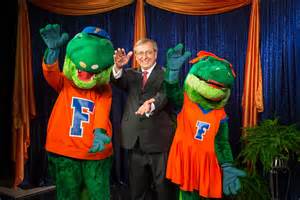
The selection of Dr. W. Kent Fuchs (pronounced “Fox”) as the next president of the University of Florida should be cause for celebration for anyone who cares about Florida agriculture and natural resources.
I’ll confess, I had some initial apprehension about whether an electrical engineer would be properly attuned to the importance of UF’s land-grant mission.
But I had the chance to take the measure of the man one-on-one over a 21Ž2-hour dinner as part of UF’s efforts to recruit top leaders to apply for the presidency, and I’m convinced he will support university research, extension and teaching that improve the lives of all Floridians. I endorse Fuchs, who still has to be confirmed by the State University System Board of Governors.
Fuchs was born into a hardscrabble existence on an Oklahoma farm. It was such a tough life that his dad decided Alaska would be more forgiving, and it’s where Fuchs grew up until the family moved to Miami, where he attended high school.
And let’s remember, he’s provost at one of the most venerable of land-grant universities, Cornell. It’s the only Ivy League school with a horticultural department, much less a School of Integrative Plant Science like the one Fuchs helped launch. Before Cornell, he was a leader at Purdue, also a land-grant university, and taught and researched at a third, the University of Illinois Urbana-Champaign.
With his Florida, agriculture, and land-grant bona fides, he sold me on being the right person for the job when he told me that if hired he would go on a statewide tour of stakeholder meetings. Not just to meet donors and alumni, but growers, commodity leaders, natural resource managers and UF/IFAS Extension agents.
That’s a promising sign that he intends to honor the public-service ethic of the land-grant university. He sees his new job the same way I see mine — that his office is not a room in Gainesville, but it’s the entire state. He’s walking the walk in New York with the recently announced Engaged Cornell, a $150 million initiative that aims to institutionalize a mandatory public-service component in undergraduate education so students contribute to solving problems outside the university gates.
UF’s land-grant mission is supposed to apply university wide. Traditionally, though, UF’s Institute of Food and Agricultural Sciences has more demonstrably implemented it than many other branches of the university.
There’s potential for real change in this area as our medical center leaders see in Extension the opportunity to do so much more to promote public health. Similarly, our engineering administrators have approached IFAS about working through Extension to bring technical assistance to businesses and communities.
There are also opportunities for IFAS to do more to serve Florida’s $142-billion-a-year agriculture and natural resource industries, particularly after six years of flat or declining state funding.
Support from UF’s leader is essential to IFAS’s quest to provide solutions to citrus greening, efforts to tackle the state’s water quality and water supply challenges, ambitious plans to expand the work of our agricultural leadership institute and work in helping Florida prepare for climate change and sea-level rise.
The land-grant system was founded more than 150 years ago on the noble proposition of democratizing higher education.
Today we have an opportunity to define the 21st century land-grant institution that is true to its mission while responding to the pressing problems of today.
Today IFAS seeks support from the UF administration to expand four-year online degree programs. We offer these at a discounted tuition to students who by choice or circumstance need a UF education to come to them instead of having to move to Gainesville.
Appalled by anecdotes of students going hungry or even scrounging from garbage bins, we at IFAS have begun formally assessing the extent of food security on campus as the first step toward establishing a food pantry for students in need. We’re hiring more bilingual 4-H agents and partnering with organizations that serve minority populations as we seek to better serve people who have traditionally been underrepresented in our youth development programs.
It’ll take a commitment from the top to secure the resources needed to realize IFAS’s potential. That commitment starts with an appreciation of the land-grant mission. Fuchs has looked me in the eye and shown me he has it.
Over salad, I began probing the extent to which this man intended to honor the land-grant mission with action. By decafs and dessert, I was presenting him with the Gator pin right off my own lapel and letting him know he’d be receiving a copy of A Land Remembered from me.
The presidential search committee on which I served declared a strong academic background an essential criteria for our next leader. The distinguished research background Fuchs has and his Ivy League experience more than satisfy that.
Some of us on the search committee – which also included IFAS plant breeder Harry Klee — also championed an appreciation for the land-grant mission as an important consideration in the search for a new president. We’re gratified to see we have it in Kent Fuchs, and we hope you’ll get to see it when he visits your region.
Jack Payne is senior vice president for agriculture and natural resources, University of Florida, and head of the Institute of Food and Agricultural Sciences
http://http://fosterfollynews.com/2014/10/30/personal-comment-a-land-grant-president-for-uf/