Those who have lived in the Panhandle area for many years will remember the days when our local bayous were places people water skied, kids learned to swim, and fishermen brought home plenty of speckled trout. But today we see little of this. Water quality within our bayous has declined to a point that the general public is concerned about recreation within them and most use them as access to larger bodies of water where they can enjoy water activities.
What Happened?
The mouth of Bayou Grande near Navy Point; a popular recreation location
Those who lived here when things were better say they first noticed problems when new roads and subdivisions were built in the 1950’s. Decline in water clarity was one of the first things they noticed. This was followed by a loss of submerged grasses, fish kills, and an increase in health advisories due to high levels of bacteria. These new subdivisions cleared much of the native vegetation in the neighborhoods and along the water front. The loss of vegetation and new roads allowed for more runoff to reach the bayous. Much of this runoff was in the form of leaf litter, twigs, animal waste, and maybe even carcasses of dead creatures. Once reaching the water these organics are broken down by bacteria into forms of nitrogen and phosphorus that can be utilized by aquatic plants and phytoplankton. This increase in plants will produce more oxygen, but they also consume oxygen in the evening. The high demand for oxygen in the evening can cause dissolved oxygen levels to decline to a point where aquatic life begins stressing; we now say the water is hypoxic. To add to the problem people began to have the desire for lawns of non-native grasses which require fertilizer and watering; thus increasing the nutrient load on the system and an increase in hypoxia. This eutrophication process was a major contributor to the fish kills that the bayous were experiencing.
In addition to nutrients, animal waste could be found in the stormwater. Animal waste can contain pathogensthat could be a serious risk to public health. Scientists monitor the concentration of these pathogenic bacteria by using a group of indicator bacteria called fecal coliformbacteria. High levels of these fecal coliforms indicate that a potential health risk could be present and the Escambia County Health Departmentwould issue a health advisory for that body of water. A study showed that the concentration of fecal coliforms increased in areas where coastal development increased, connecting them to stormwater problems.
So What Can We Do?
Marine Science Academy students from Washington High School measuring chlorophyll in Bayou Texar; photo: Ed Bauer
We will probably never be able to get the bayous back to the state they were in before the development boom of the mid-20th century but there are few things we can do.
First, the reason the nutrients and fecal coliforms increased was an increase in runoff. This increase was due to road construction and loss of vegetation. We cannot do much about the roads but we can rethink how we landscape our yards and waterfront property.
The Florida Friendly Yards Programis one that helps residents with selecting plants and landscaping features that require little or no fertilizer or water. This not only reduces the runoff but saves the homeowner money. Rain barrels and rain gardens are also methods that can both reduce water runoff and save money. For more information on this program you can contact Carrie Stevenson at the Escambia County ExtensionOffice; 850-475-5230 or ctsteven@ufl.edu.
Shoreline vegetation can be restored through the Living Shoreline Program. In this program the Florida Department of Environmental Protection works with the homeowner on designing a shoreline marsh and/or oyster reef project. Living Shorelines utilize plants that remove much of the nutrients found in runoff and oysters are known to filter 50 gallons of water per day, reducing turbidity typically caused by runoff. Not only do Living Shorelines reduce nutrient runoff, they also reduce erosion caused by wave energy. For more information on Living Shorelines contact Beth Fugate at beth.l.fugate@dep.state.fl.us.
Planting a Living Shoreline on Bayou Texar in Pensacola; photo: Florida Department of Environmental Protection
A third program that can help bring back the bayou is the Clean Marina / Vessel Program. This program is through the Florida Department of Environmental Protection. For more information contact Jeanne Williams at Jeanne.Williams@dep.state.fl.us.
We hope you will consider using one of these programs to help improve the water quality within our bayous. If you are interested in having a presentation on these programs contact Rick O’Connor at the Escambia County Extension Office; 850-475-5230 or roc1@ufl.edu.
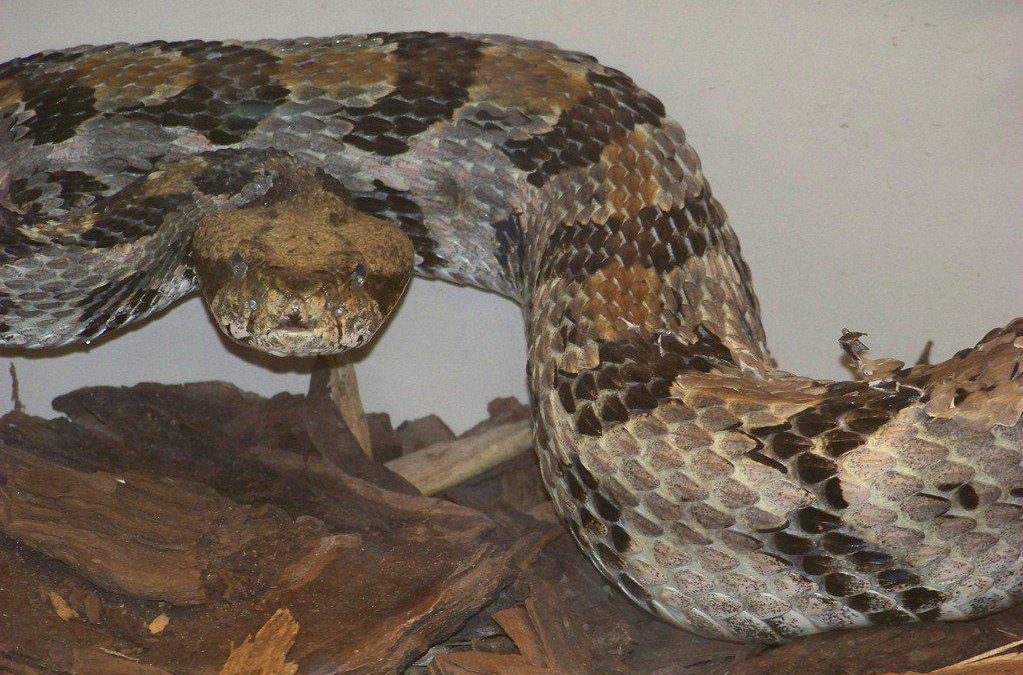
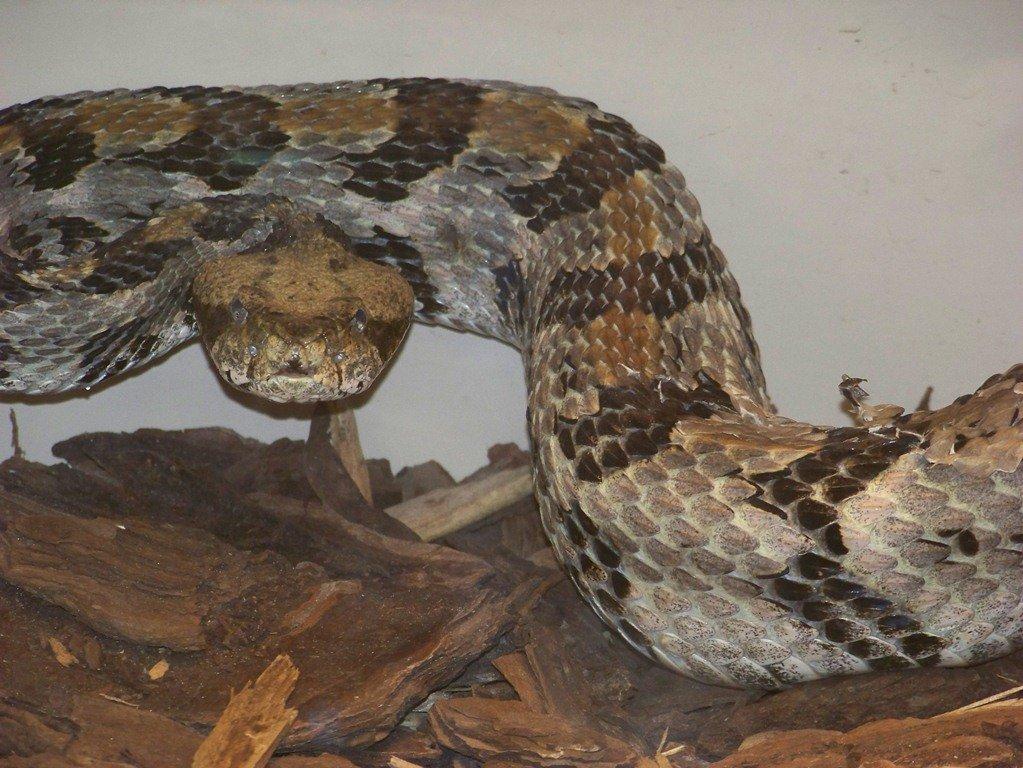
The Timber Rattler, also known as the Canebrake Rattlesnake can grow to over 6 feet. Commonly found in damp woodland environments. Photo Courtesy of Molly O’Connor
The Southeast Partners in Amphibian and Reptile Conservation has dubbed 2013 as the “Year of the Snake”. There are many animals that strike fear in humans but little cause more than snakes. Interestingly kids seem to like them. It is when we become an adult that we do not. Why is that?
Snakes are very cryptic and stealthy hunters preferring the mode of hide-ambush. We encounter them along a trail only to be surprised and the “surprise” scares us to death! Many people do not like surprises and never want to experience that feeling again; so snakes become enemies.
The ole saying “the only good snake is a dead snake” is very true to many people. Many of us have encountered snakes and a few may have been bitten. Studies suggest that 95% of humans bitten by snakes are either trying to catch it, or kill it. So the lesson is clear… if you do not want to get bit, leave it alone.
Snakes in fact do very good things for us. They are one of the best “rodenticides” you will find. It is actually better to find a snake in your barn than a rat. Like spiders and bats, which consume thousands of unwanted insects, snakes should be appreciated for what they do for us and left to do it.
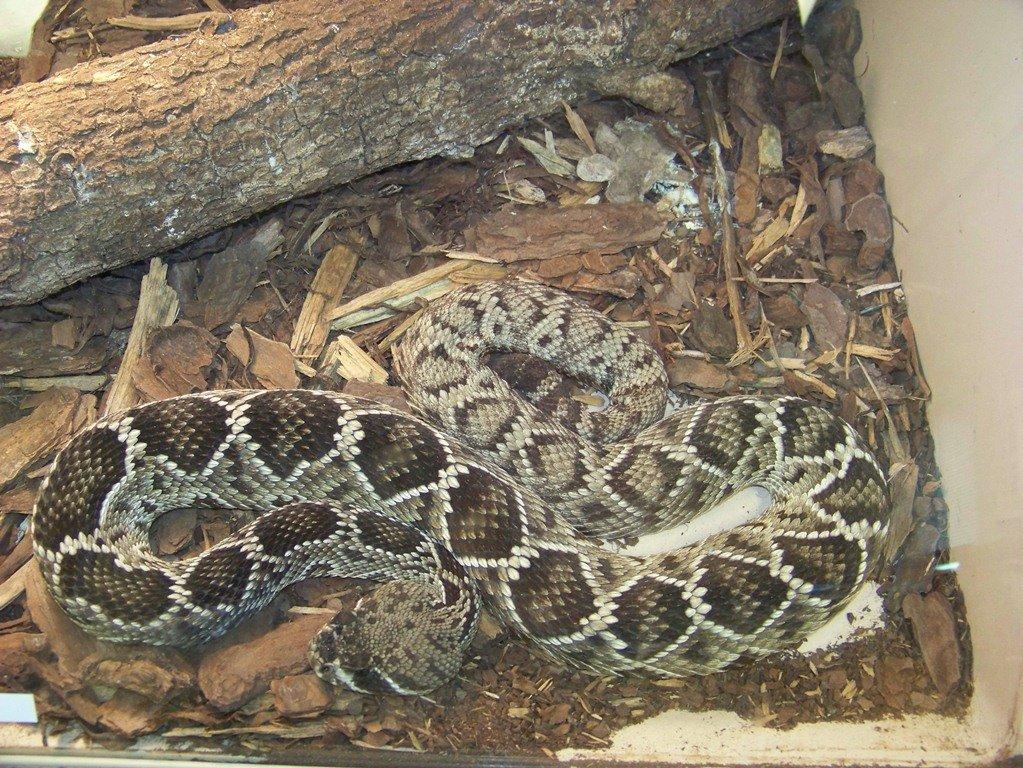
This diamondback has beautiful camouflage markings, helping it hide and ambush prey. Photo courtesy of Molly O’Connor.
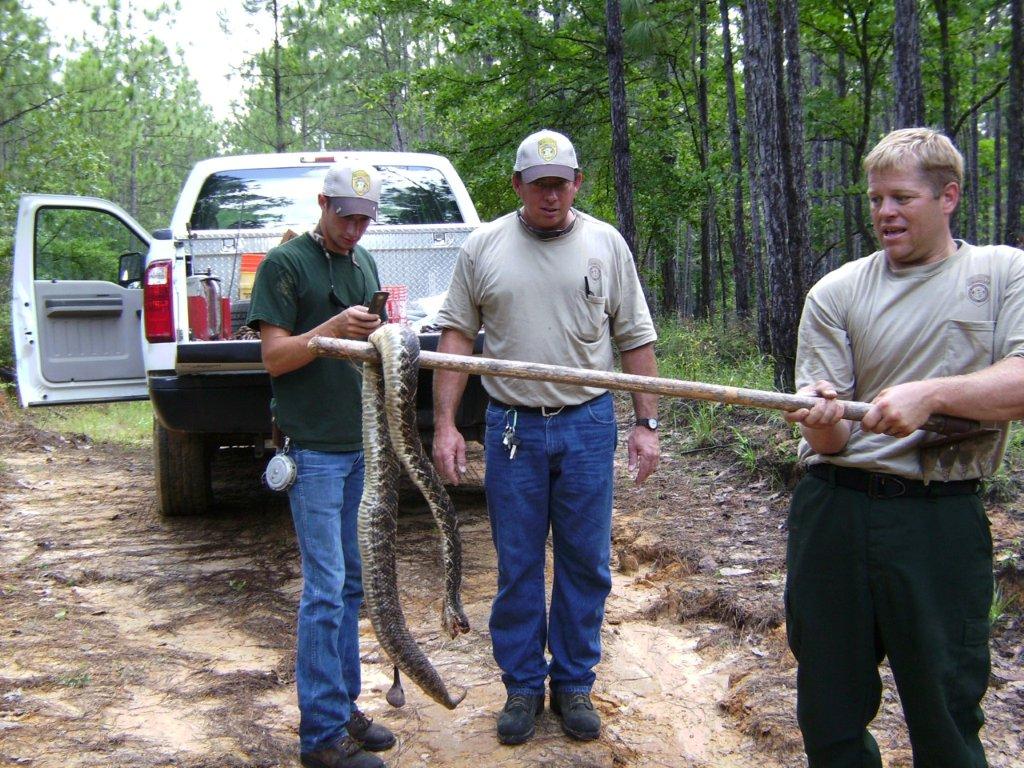
A large snake like this almost invites the adventurous to chase and pick it up. This is not recommended since 95% of snake bites occur while trying to pick-up or kill a snake. Better to leave in place and give space. Photo courtesy of Alan Dennis.
Ray Ashton lists 66 species and subspecies of snakes in the state of Florida. Only 6 of these are venomous. 60 (91%) of Florida snakes belong to the Family Colubridae. All colubrid snakes in Florida are non-venomous. They can be distinguished from the others by their round pupils, narrow heads, and solid (non-hollow) teeth. There are five species of Florida snakes in the Family Viperidae. The “pit-vipers” have hollow hinged fangs through which they can inject venom. They possess elliptical pupils and have a “pit” between the eye and nostril that can detect infra-red heat. One species, the coral snake, is found in the Family Elapidae. Elapids are some of the most venomous snakes in the world and include such animals as the cobras and sea snakes. They differ from pit-vipers in that they have round pupils and small heads (not “diamond” shaped) and differ from colubrids in that they have straight hollow fangs for injecting venom.
Snakes do not chase people down; they are actually afraid of us and only bite in defense. All snakes warn before they bite. Some snakes will musk hoping you smell it and move away. Most snakes will shake their tails; often against dead leaves to make a rattling sound. Many will make themselves look larger by opening their mouth wide or by flattening out their head and/or body. They do not want to bite; they bite as a last resort.
Rick O’Connor shows non-venomous snake to kayakers on recent field trip. Photo courtesy of Carrie T. Stevenson.
To celebrate “THE YEAR OF THE SNAKE” we will be posting articles on different snakes found in Northwest Florida each month over the course of 2013. If you are interested in more information, contact Rick O’Connor at roc1@ufl.edu or call 850-475-5230. This month’s Snake Pictures are rattlesnakes!
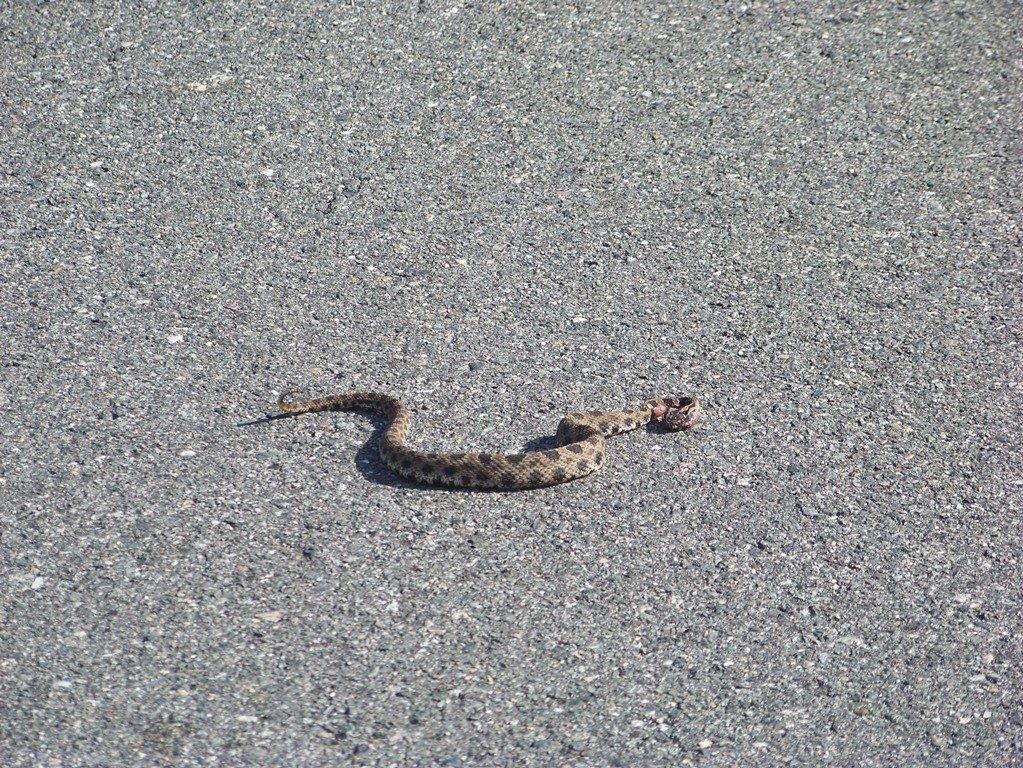
The smallest of the rattlesnakes is the pygmy. It’s also the smallest venomous snake in Florida. Despite it’s size, it’s capable of holding it’s own when it feels threatened. Photo courtesy of Molly O’Connor
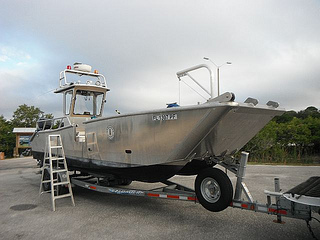
Boaters should consider additional fuel prep when a boat will not be in use for an extended time period. Photo Courtesy of Florida Sea Grant
Since the introduction of 10% ethanol to gasoline (E-10 fuel) many boaters, including yours truly, have had problems with fouled fuel filters and marine engines not running at their top performance. The ethanol added to the fuel combines with oxygen increasing the combustion process. This makes for a more efficient burning fuel and less emissions for the environment. Sounds great, but it has been a nightmare for mariners.
The problem with boats is that we do not use them on a daily basis as we do our cars. When E-10 fuel sits it will absorb oxygen via water vapor through the vents. Over time the ethanol/water mixture begins to separate from the gasoline in a process called “phase separation”.
Extreme separation leaves a milky, rusty brown mixture at the bottom of the fuel tank; right where the intake for the fuel line is on many motors. This mixture moves through the motor clogging fuel filters, miss-firing, or not running at all.
Water contaminated ethanol fuel creates a mixture that can breakdown fiberglass fuel tanks, fuel lines, and sealing rings releasing particles that plug filters as well. To counter this problem Jeff Posner, of Posner Marine in Pensacola, recommends a fuel stabilizer that will inhibit phase separation. The manufacturers state that adding the correct amount will inhibit separation for 12 months. A colleague of mine has used this product while his boat sat for three months and had no problems with the engine after that period of time. Posner does recommend you read the label to make sure you are purchasing “marine-grade” stabilizer and not one meant for lawn mowers or chains saws. CR 4000 fuel lines will inhibit deterioration but Posner mentioned that motors built since 2000 should have these already.
WHAT SHOULD I DO WITH THE E-10 FUEL OVER LONG PERIODS OF NON-USE?
Many boaters park their boats for the winter. There has been a debate as to whether to store the can empty and buy new fuel in spring or store full with stabilizer. According to several sources the better of the two options is to fill the tank 95% full and add the stabilizer. Empty space in the tank will fill with water vapor entering through the vents. More space equals more water which equals more separation which equals more problems. The tank should be 95% full to allow for expansion of gases. Many portable fuel tanks do not have vents, thus no water vapor entry, but Posner states any water vapor in the tank will trigger separation if the temperature increases; so keep portable tanks cool and out of the sunlight. He also recommends that the fuel with stabilizer run through the motor before you park it for the winter.
There are service stations in the Panhandle that sell gasoline with no ethanol; this can also be found at many local marinas. The cost may be more but could save you frustration and money down the road. The government is now considering E-15 fuel. Posner stated that the newer marine engines are designed for the E-10 but not the E-15, and that you should not use that in your boat until newer marine products designed for it are on the market.
So… when storing fuel in your motor over the winter, fill the tank, add stabilizer, run fuel through the motor, and place a new filter/water separator on the line for spring. With good winter prepping you should have a great boating summer. You can find more information at the following:
An exciting new event is coming to our area. Northwest Florida’s first Artificial Reef Workshop since 2006 will be held February 19 – 20, 2013 at the Niceville Community Center. The community center is centrally located in the Panhandle and located at 204 N Partin Dr, Niceville, FL 32578. Sessions and guest speakers will provide the latest information regarding Reef Designs, Artificial Reefs and Fisheries Management, Monitoring Tools, Artificial Reef Construction Issues in Inshore and Nearshore State Waters, The Economic Benefits and Impacts of Artificial Reefs in NW Florida, and other artificial reef topics of local interest.
Workshop organizers are seeking additional vendors, sponsors, and/or donations of promotional items. Showcase your business to federal, state and local government, local reef building associations and private reef builders. If you would like to participate as a vendor or contribute as a sponsor please contact Candy Hansard by email candy@ecreef.org or call Scott Jackson at 850-784-6105 to check for space availability. Space is limited, please act soon.
Note: Previous advertised date of workshop has been changed to avoid potential schedule conflict with Gulf Council Meeting.
Sessions and quest speakers will discuss subjects including reef design, fisheries management, monitoring, goals and strategies, construction issues in state waters, economic benefits and impacts, and other topics of interest.
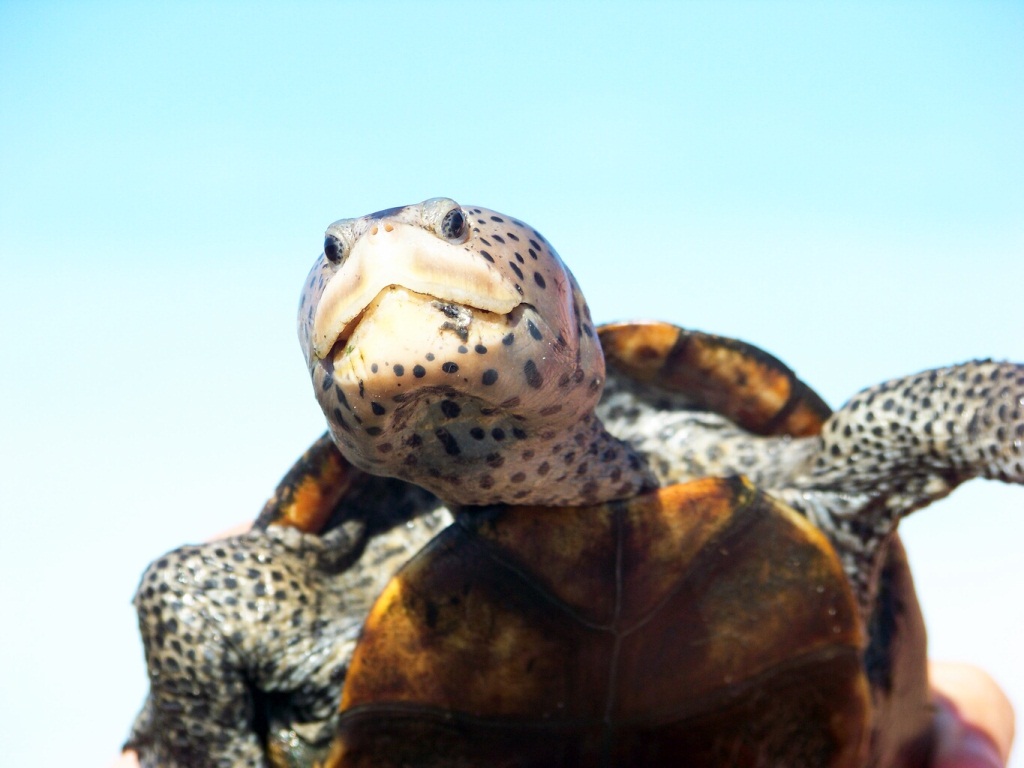
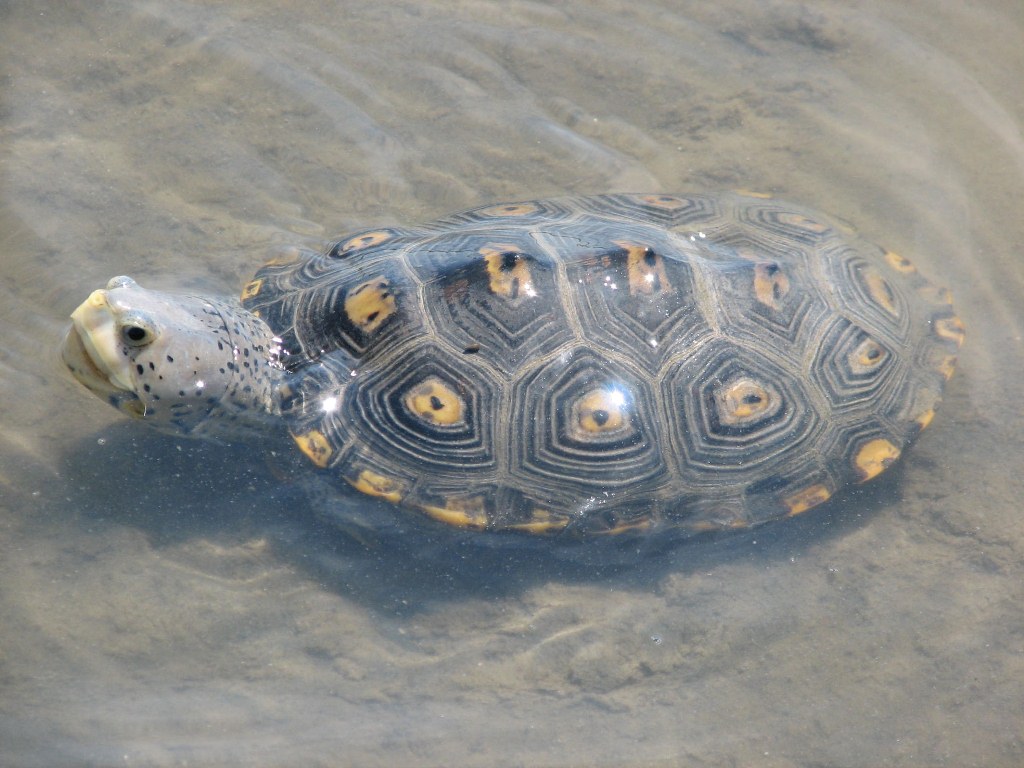
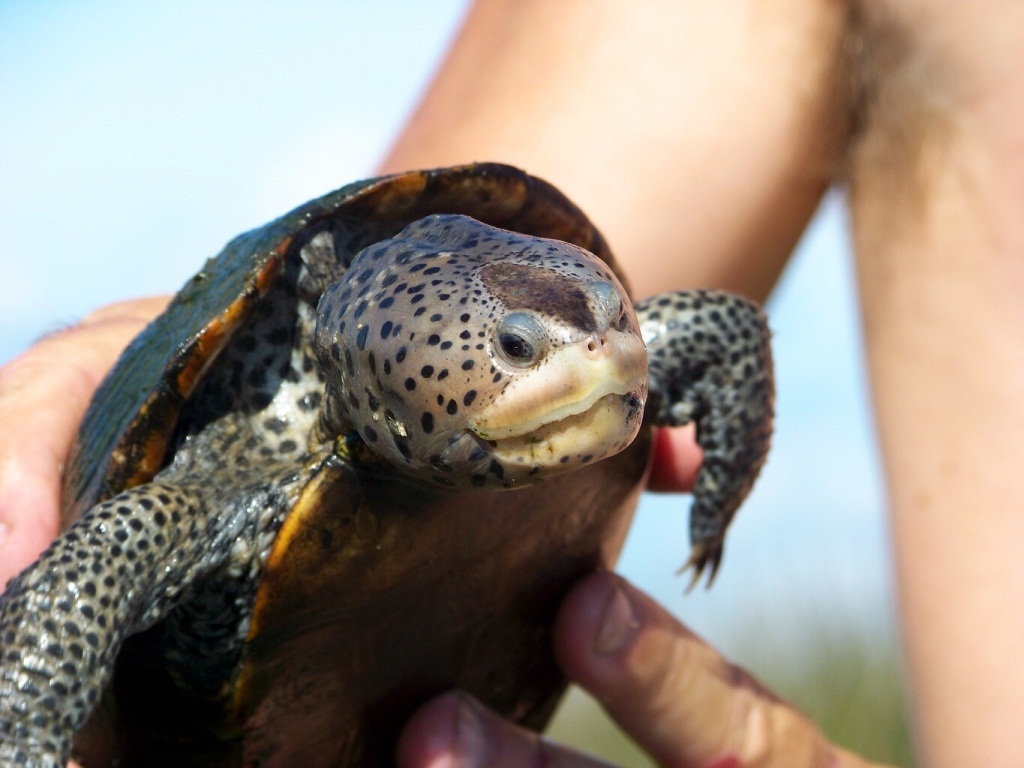
It is hard to say one turtle is more beautiful than another but this is one beautiful turtle! The diamondback terrapin is the only brackish water turtle in the United States. These turtles can be easily distinguished from other species by their light colored skin with dark spots, and their choice of habitat – salt marshes.
Ornate Diamondback Terrapin (photo: Dr. John Himes)
Terrapins inhabit creeks within marshes close to where they were born and rarely range from their natal home. They require dry ground for nesting. Terrapins spend their time basking in lagoons near the surface or on open mudflats at low tide. They feed primarily on shellfish, preferring snails and bivalves, but will also feed on small crabs, shrimp, worms, fish, and occasionally vegetation.
The females are larger than the males and have shorter tails. Mature females typically lay 6 to 10 eggs and will nest more than once in the same year. Nesting begins in late April in our part of the country and females laying multiple clutches will do so every 16 days. The sex of the offspring is determined by the nest temperature (warmer than 29˚C = females) so generally the eggs in the upper part of the nest are female. Unlike sea turtles, female terrapins approach the nesting beach at high tide during daylight hours. Most of the nests we find in Santa Rosa County are near salt bush (Baccharis sp.) but we have found them in open areas or near debris like driftwood. They also differ from sea turtles in that young head away from open water preferring the plants of the marsh. The heaviest predation is on the eggs and young. The dominant nest raider is the raccoon. Hatchlings are preyed upon by raccoons, otters, skunks, crows, and sea gulls; adults have few predators.
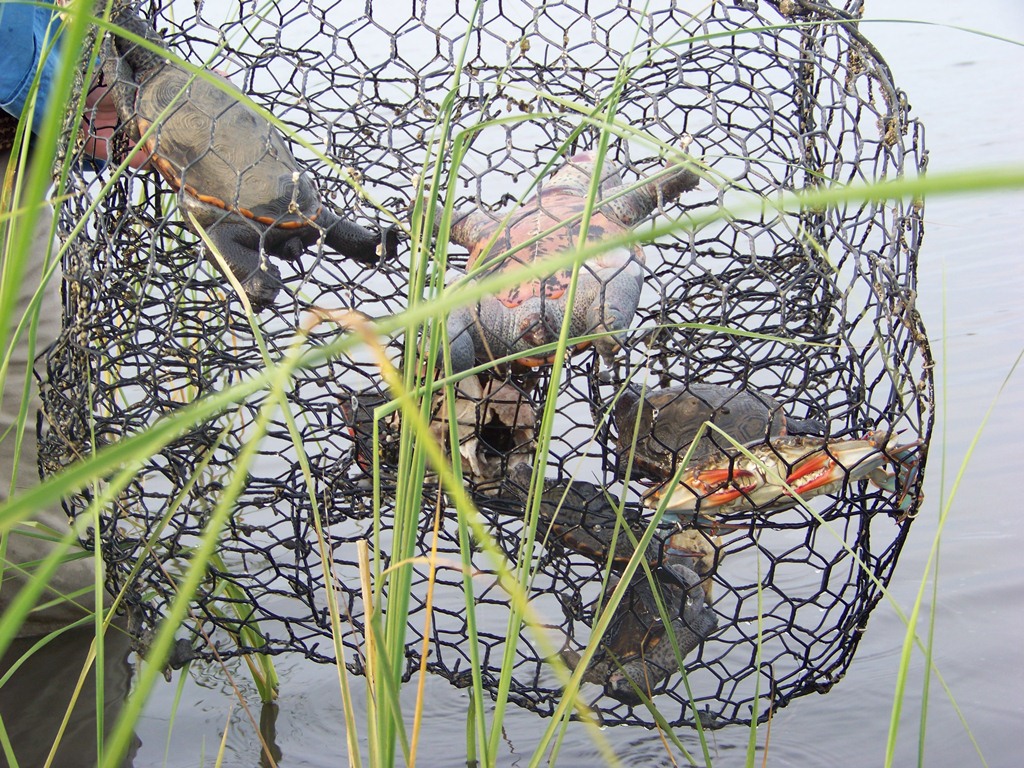
Terrapin populations have declined over the last 150 years. In the late 19th century it became very popular to eat them and the demand for the animal became an economic dynamo for many coastal fishermen. Terrapin researchers from the University of Alabama at Birmingham found a newspaper article from that time period that discussed a terrapin farm in Mobile County that had 25,000 terrapins; suggesting they were once very common. With the increase in the popularity for food their numbers decreased, this caused an increase in price and a decline in their popularity. The introduction of the crab trap in the 20th century became problematic for them. Terrapins swim into traps and can not reach the surface to breathe. In some states a “by-catch reduction device” or BRD is required on crab traps. Studies of these in New Jersey and Florida showed they have no significant impact on the crab catch but do reduce the number of terrapins captured. BRDs are not currently required in Florida as commercial traps are actively fished and bycatch removed when crabs are harvested. “Derelict” crab traps are those that are not actively being fished, killing all sorts of aquatic life. Derelict crab trap removal events which removes this potential hazard to turtles and to blue crabs as well.
We have been conducting a monitoring program assessing the status of Terrapins in the Panhandle since 2006 and have found at least one in every coastal county between Alabama and the Apalachicola River. We have identified five nesting beaches and believe that one population has between 25-50 individuals within it (likely much lower numbers than historically found). The marsh turtle status is certainly of concern for many biologists.
To learn more about terrapins and the crab trap removal program visit the following websites or call your local extension office. For more information on obtaining a bycatch reduction device (BRD) for your recreational crab traps contact Rick O’Connor, 850-475-5230.
Terrapins in a derelict crab trap (photo: Molly O’Connor)