by Mark Tancig | Jan 13, 2022
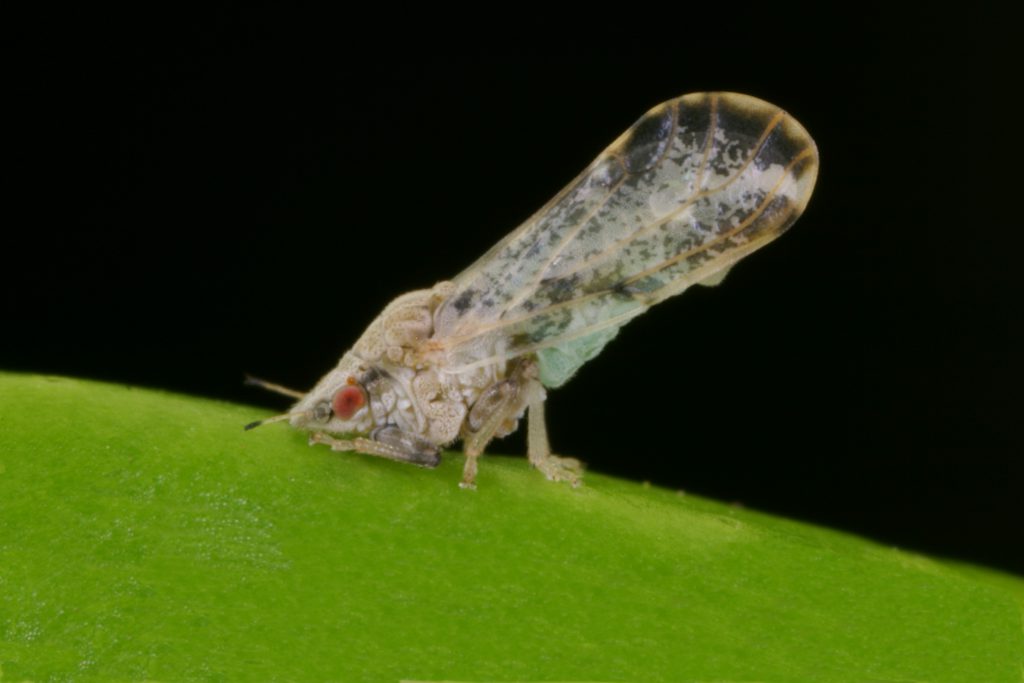
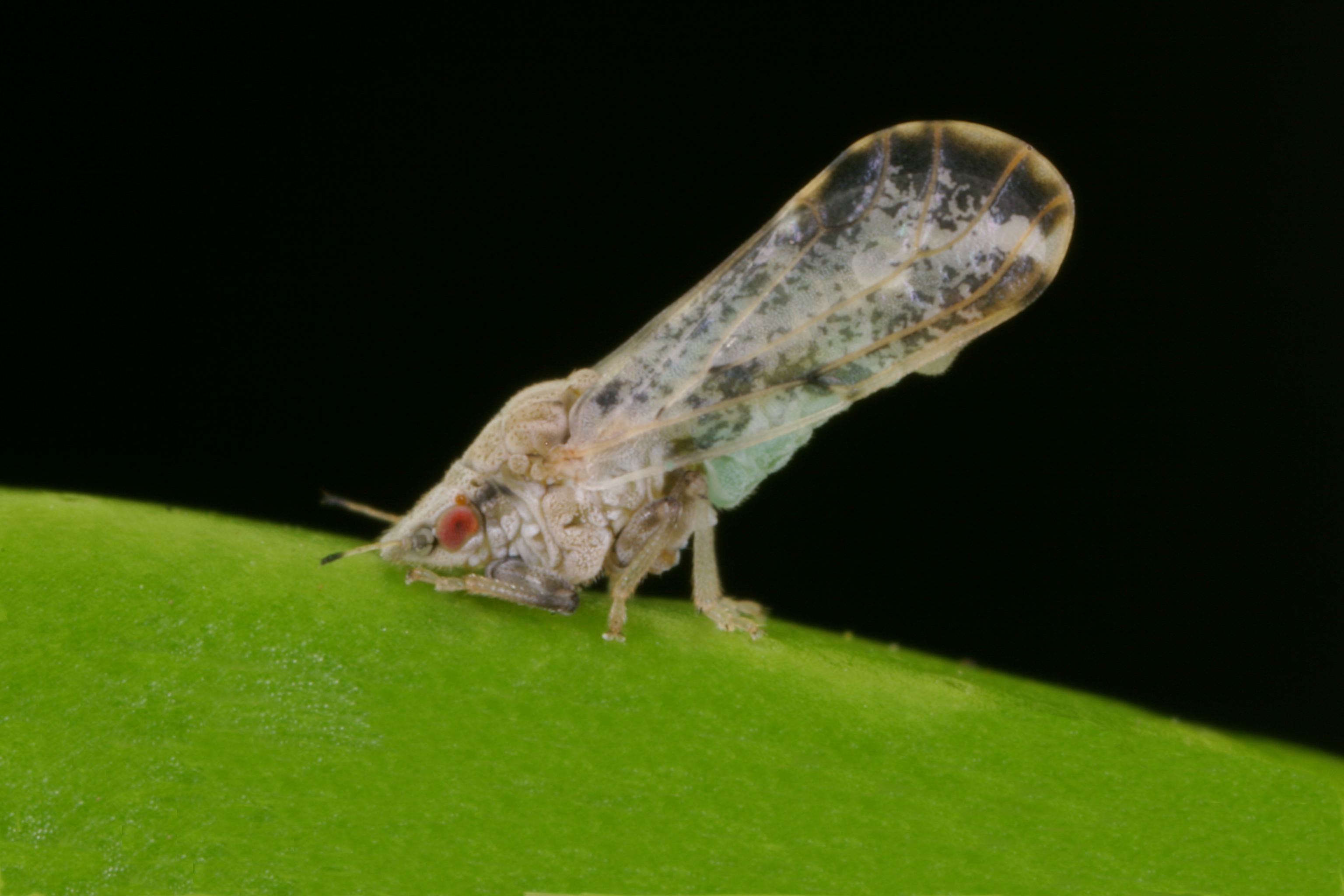
Asian citrus psyllid, Diaphorina citri. UF/IFAS/Entomology Photo: Michael Rogers.
In late 2016, as many of us were enjoying the harvests from our backyard citrus, a bacterial plant disease that can affect all citrus, citrus greening, was widespread in central and south Florida but had not made it this far north. That year, the vector, the insect that spreads the disease from tree to tree, had been found in Leon County and a few other surrounding Panhandle counties, but the disease had not. By mid-2017, the disease had been confirmed in Franklin County and we hoped that our cooler temperatures could keep the insect and disease at bay. Well, I regret to inform you that the disease has also now been confirmed in Leon County, growing in a residential yard in Tallahassee. Now that it is confirmed in non-coastal (and cooler) north Florida locations, I thought a review of the signs and symptoms – as well as what to do with your tree if you suspect or confirm greening – would be helpful.
The tricky part about diagnosing citrus greening is that it has symptoms that look very similar to soil nutrient deficiency symptoms, especially when first infected. This is a good time to mention that citrus require certain micro-nutrients for optimal growth and a citrus-specific fertilizer product should be used when applying fertilizer. Both the disease and certain nutrient deficiencies cause yellowing of the leaves. With greening, the yellowing is typically blotchy and/or not in any particular pattern. Nutrient deficiencies typically cause unique patterns of yellowing, such as a V-shape or artistic-like symmetrical patterns on each side of the leaf’s midvein. The soil’s acidity, or pH, can also cause some nutrients to not be taken up by the plant even if they are present. Soil testing, available from your local UF/IFAS Extension office, and scheduled fertilizations with a citrus-specific fertilizer can ensure that nutrients are not to blame for the discoloring of leaves. More advanced stages of the disease cause such symptoms as leaf drop, fruit drop, lop-sided fruit, uneven inner fruit cores, and reduced fruit quality.
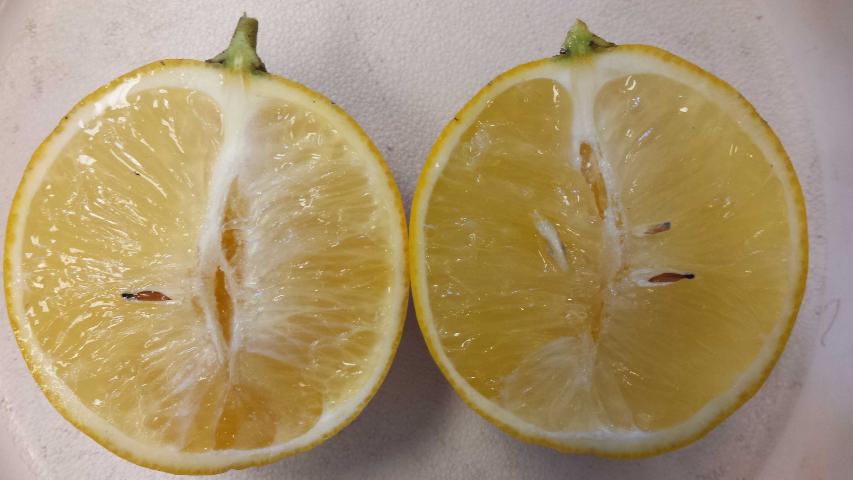
Citrus greening symptoms of the fruit. Photo by Brooke Moffis.
A more obvious sign of potential problems for your citrus are the presence of the insect vector, the Asian citrus psyllid. This is a tiny little insect that goes from one leaf to the other sucking up plant saps for food and unknowingly spreading the bacterium responsible for citrus greening. You can monitor for them by looking closely at the new flushes of growth. If the psyllids are present, you will likely notice most their small, peach-colored eggs and/or white, waxy secretions. If found, it doesn’t necessarily mean that your tree has greening, but you will want to minimize the chance that they could carry it to your tree. The psyllids can be treated with pesticides, ranging from the less harsh options (horticulture oils, neem oil, kaolin clay) to the more hardcore stuff (malathion, carbaryl, imidacloprid). Of course, always read the label of any pesticide before use and/or consult a qualified landscape professional for assistance.
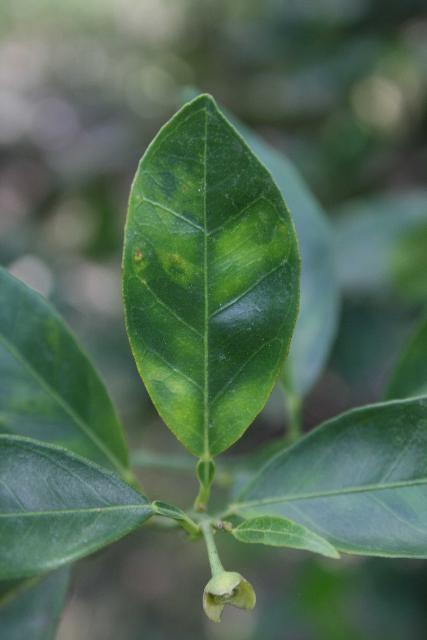
Blotchy leaf symptom of citrus greening. Photo by Jamie D. Burrow.
If you suspect your tree is infected, a diagnostic test can be performed by UF/IFAS plant pathologists at the North Florida Research and Education Center (NFREC) in Quincy to confirm. The test does cost $50, which may seem a little steep, but it’s an expensive lab analysis to run and may be worth piece of mind.
If citrus greening is confirmed in your tree, the right thing to do, unfortunately, is to remove and burn the plant material as there is no known cure. While the Florida Department of Agriculture and Consumer Services (FDACS) doesn’t have any removal requirements for infected dooryard citrus, tree removal is best to prevent additional spread of the disease to other trees, especially those grown by commercial producers in our area. This may seem drastic but eventually the health of the tree and quality of the fruit will decline to a point where you will want to remove it anyway. Don’t forget that movement of any citrus plant outside of the state is prohibited for the very reason of preventing spread of citrus diseases.
You may be asking, “Is it okay to replace it with another citrus tree?” The answer is yes you can, but you do risk re-infection and will want to be monitoring the new planting.
You may also be thinking, “What is going to happen to Florida citrus?” That’s a question that many researchers at UF/IFAS are trying to answer. There is some hope that intense irrigation and nutrient management, as well as specific pruning practices, can help infected trees continue to be profitable for commercial growers. Recently, UF/IFAS researchers were awarded several grants to try and figure a way out of this problem. Some of the lines of research focus on exploring the resistance found in different citrus varieties, including an Australian lime that appears to be greening resistant. This could potentially be used as a future rootstock. Another approach is to try and treat the plants with a particular peptide that would prevent the disease from binding in the insect’s gut. Isn’t that amazing?
Until a fix is found, we should be monitoring for this disease in our area and taking steps to reduce its presence through controlling the psyllids and removing infected trees. If you suspect a tree has greening, please contact your local county Extension office to review the symptoms and discuss your options.
Much more information on citrus greening is available at the following Ask IFAS website: https://edis.ifas.ufl.edu/entity/topic/citrus_greening and from this 2017 article – https://nwdistrict.ifas.ufl.edu/phag/2017/03/03/disease-alert-citrus-greening-and-asian-citrus-psyllids-found-in-the-panhandle/.
by Ray Bodrey | Jan 13, 2022
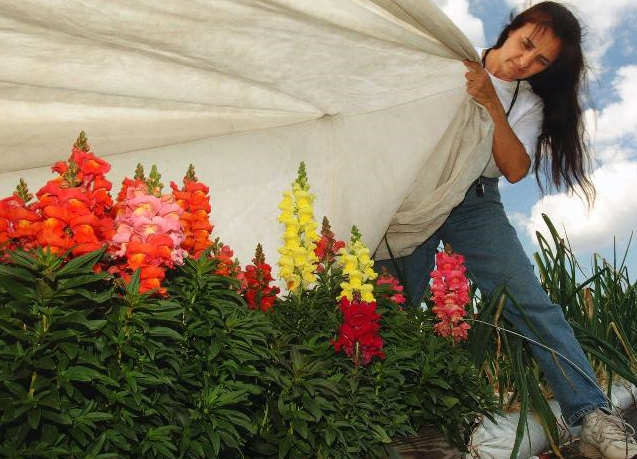
January and February are typically the coldest months in Florida. Low temperatures can damage even the more cold-hardy plants. However, there are measures that can be done to help cold-damaged plants recover.
After a frost or freeze, see if your plants are dry. Even injured plants need water. Plants can be greatly damaged if the temperature drops suddenly, as they have no time to acclimate to the freezing temperatures. These freezing temps cause ice crystals to form in plants cells. These crystals expand, rupturing the cell walls and preventing the plant from maintaining shape. If severe, this can certainly kill tender plants. On more cold hardy plants, damaged foliage will appear wilted and curled down. In a few hours or days, it will darken and turn black. Flowers, buds, and new growth often dieback under freezing temps.
After freezing temperatures occur, it’s important to remove damaged leaves and flowers as soon as they turn brown or black. This will help prevent diseases from occurring. Pruning should be postponed until cold temperatures are no longer expected and new growth begins to appear on the plant. This practice ensures live wood, which appears dead from losing its leaves, is not mistakenly removed from the plant. Cold damaged wood can be detected by examining the cambium layer (under the bark) of the plant. If it has black or brown discoloration, it is damaged and should be pruned back behind these points. Plants should be fertilized in the spring, to encourage new growth.
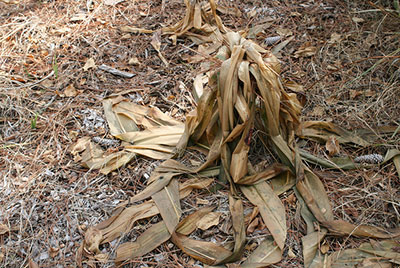
Cold damage. Photo Credit: University of Florida/IFAS
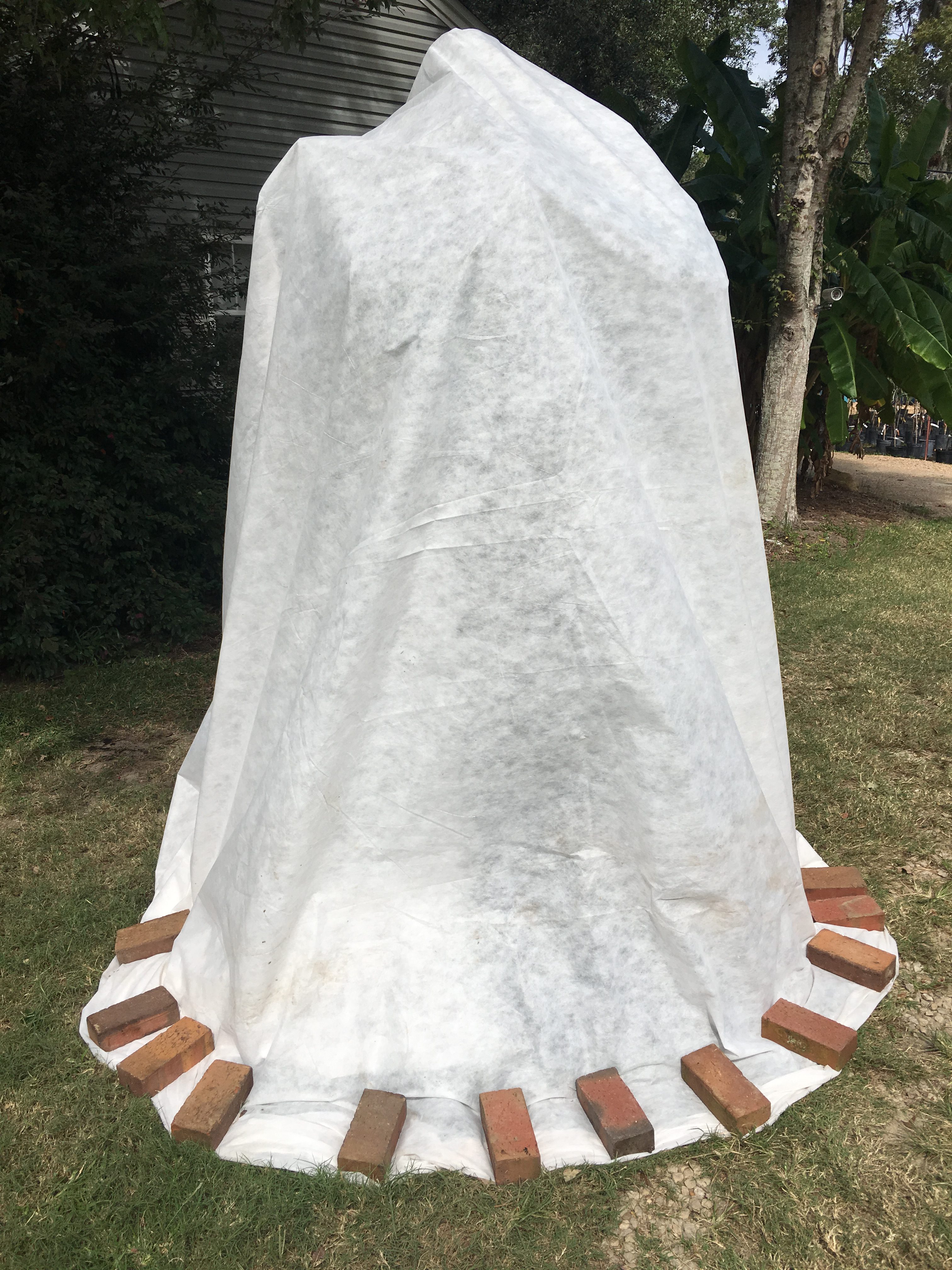
What about proactive care? You can accomplish this by moving potted plants indoors and covering tender landscape plants with a protective covering. Protective covering can include old bed sheet, pieces of material or fabric, and cardboard boxes. Be careful not to let the protective covering touch the plants. The surface of the covering will become as cold as the air temperatures and may damage any tender leaves it encounters. Also, don’t forget to remove the covering the next day when temperature raises this is important so the plants do not “bake” in the warmer temperatures. Plants placed near the house, lights, or other structures, which shelter them from wind, will be more protected than those fully exposed to the cold air.
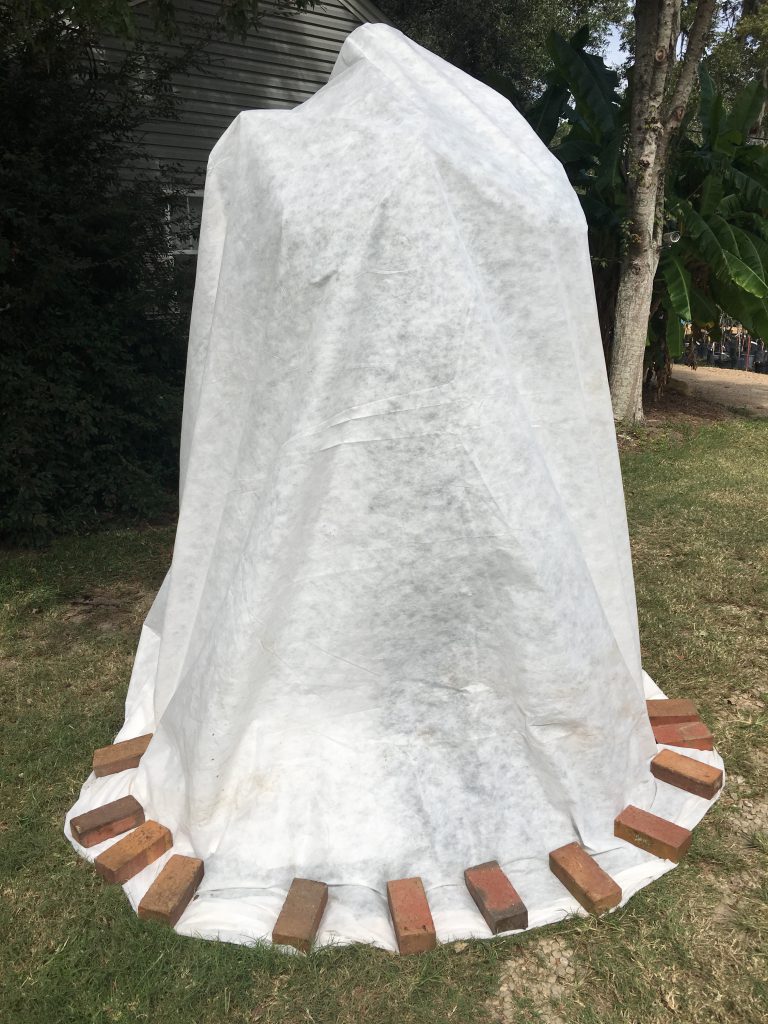
Use frost cloth to completely cover cold sensitive plants. Be sure to make complete contact with the ground and use heavy objects to keep the fabric secure. Photo by Jonathan Burns.
For more information on freeze damage plants contact your local county extension office.
Supporting information for this article can be found in the UF/IFAS Extension EDIS publication: “Cold Protection of Landscape Plants”, by Sydney Park Brown: https://edis.ifas.ufl.edu/publication/mg025
by Ashley Stonecipher | Oct 28, 2021
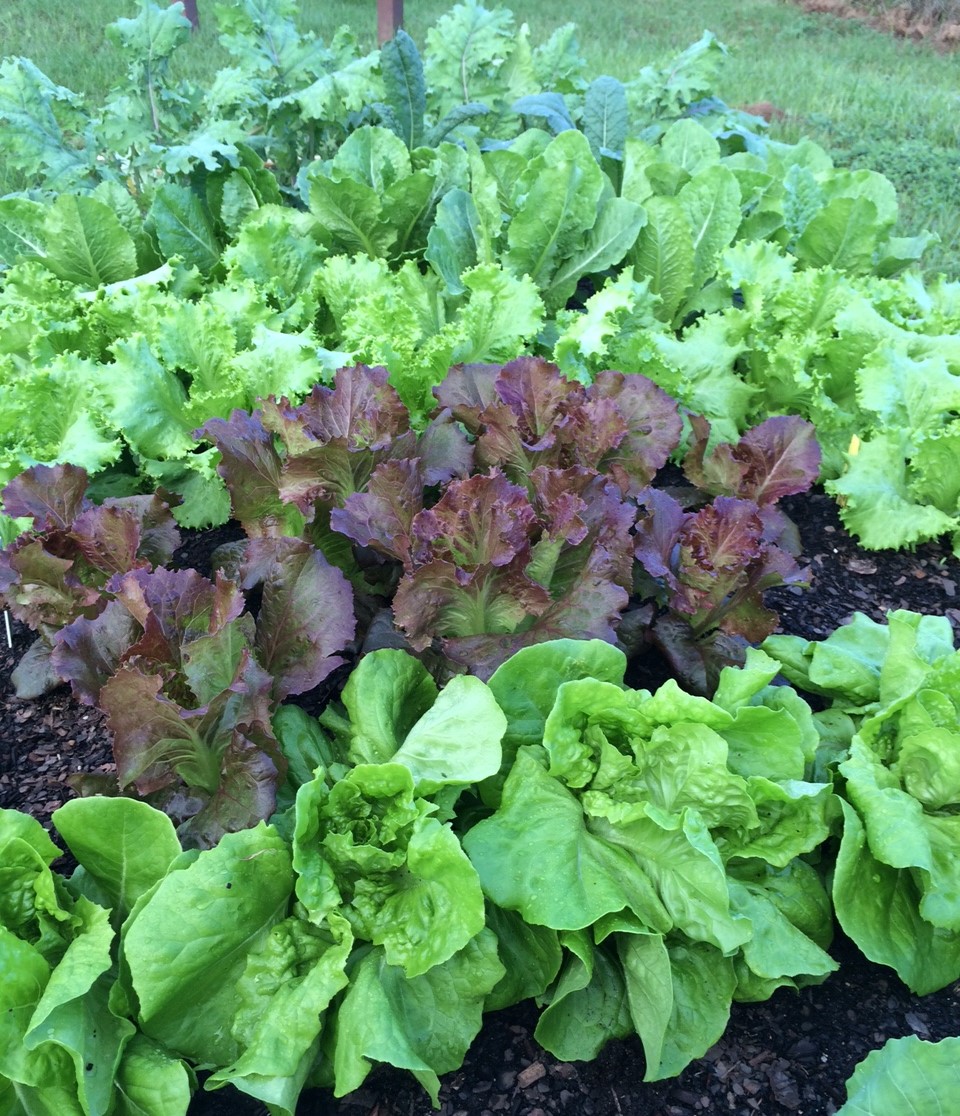
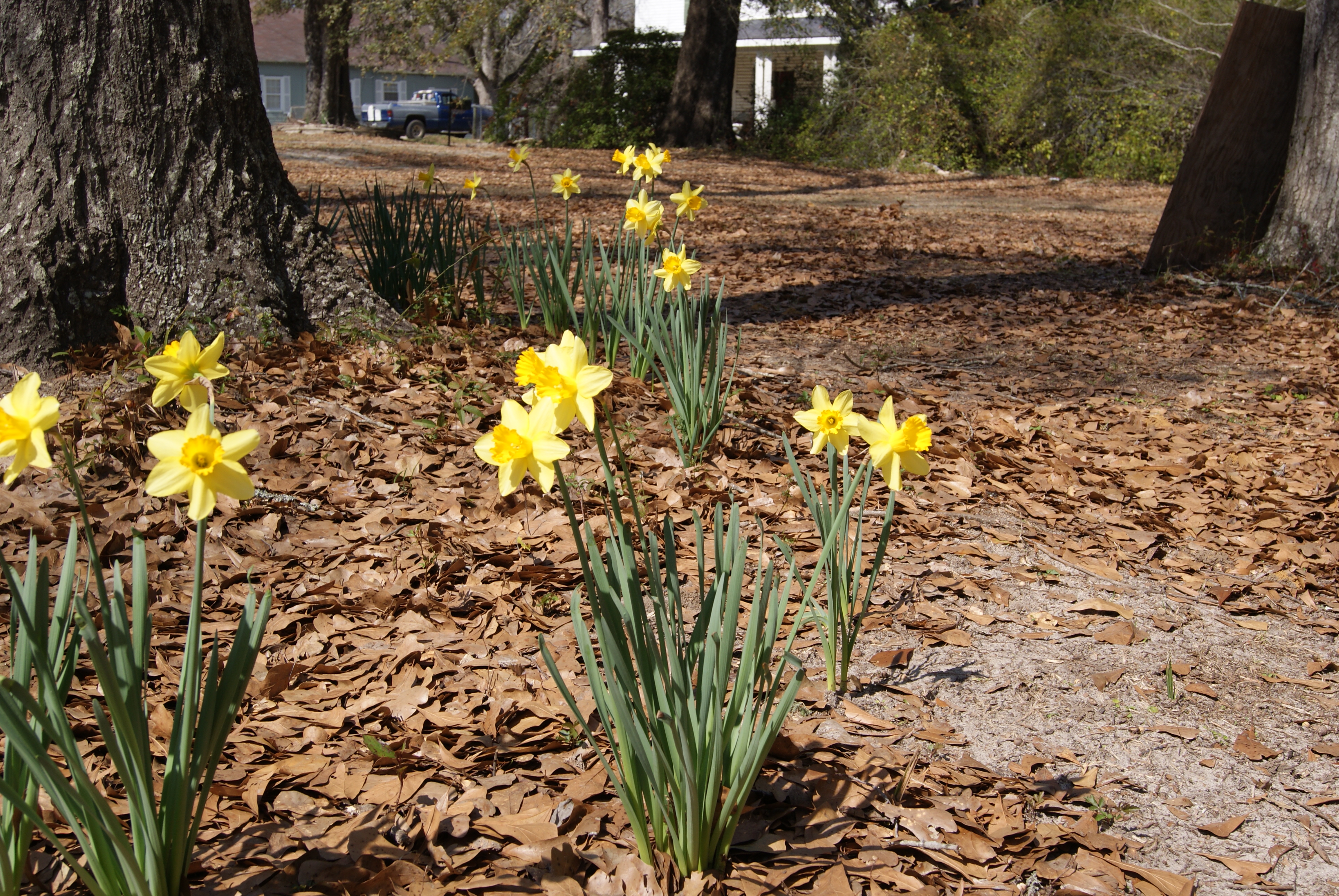
As October gets by us and November quickly approaches, I would like to include the preparation on What to Plant? And What to Do? Some great annual plant choices are digitalis (foxglove), petunias, and Shasta daisy. There are many daffodil bulb varieties for North Florida including the following: Carlton, Fortune, Silver Charms, Thalia, and Sweetness. We will be getting into more of the cooler days, so this is a good time to start bulb onions and salad crops such as arugula, lettuce, and spinach. Dill, fennel, oregano, and sage are all herbs that can be planted throughout the fall months.
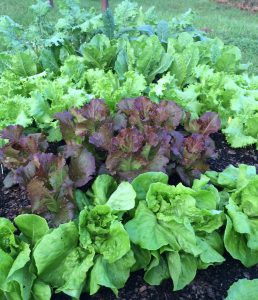
Start preparing now so your fall garden will be full of dark leafy greens, multi-colored lettuces, and root vegetables of all shapes and sizes. Photo by Molly Jameson.
In lawns there are a few key things that can be done in October. It is possible to control winter weeds before they appear. This is the time to use preemergent herbicides when nighttime temperatures are between 55-60 degrees Fahrenheit for four to five days in a row. If a green lawn is desired, you can overseed with annual ryegrass when the daytime temperatures are in the low 70s. Remember, the lawn will still need to be watered and mowed to maintain a healthy ryegrass. Watch for fungus like brown patch and large patch disease. This can become active when the soil temperature is between 65-75 degrees Fahrenheit.
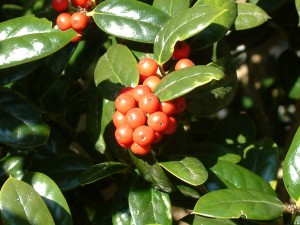
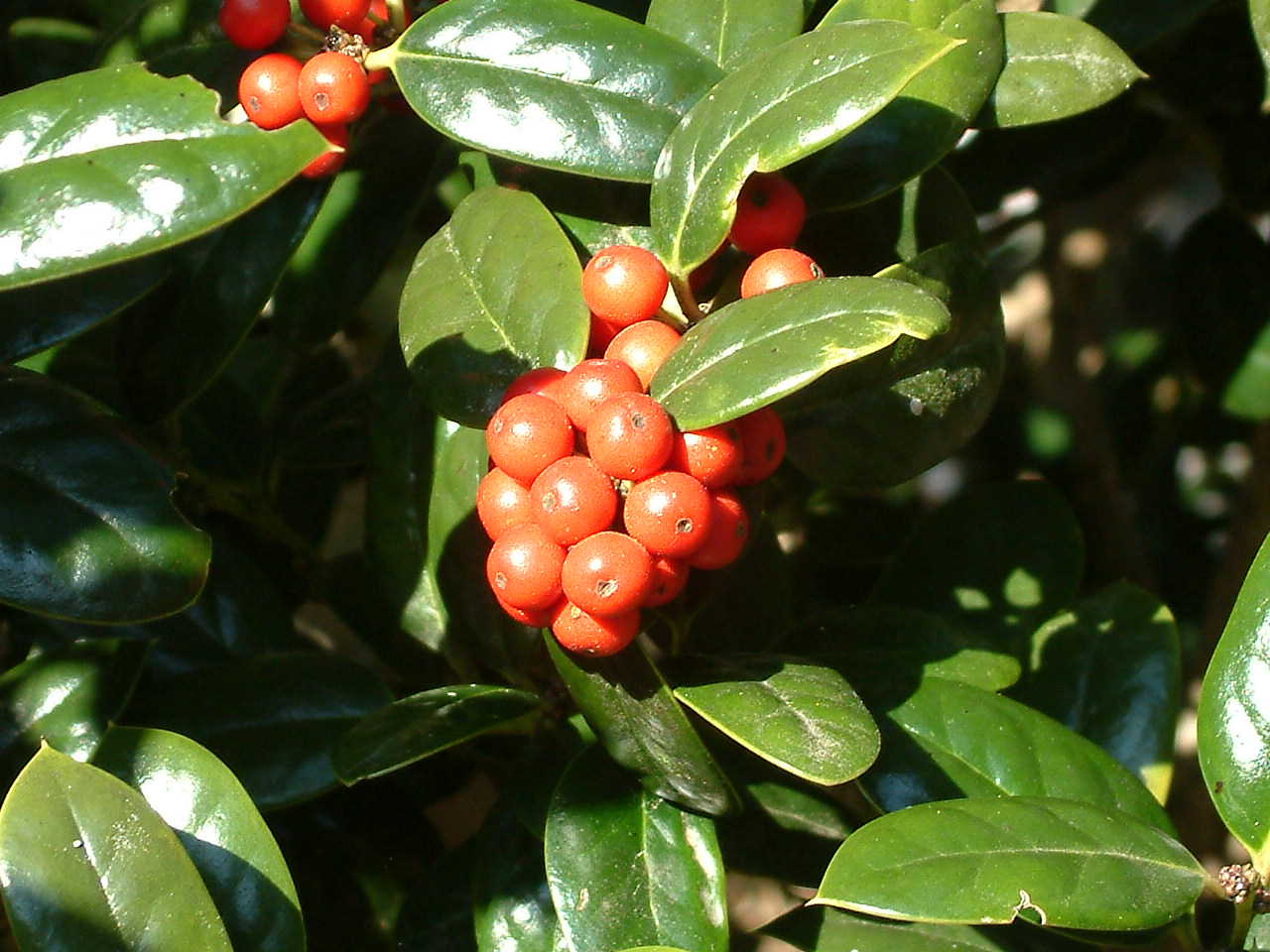
Hollies also attract bees to the landscape.
Credit: Beth Bolles, UF IFAS Extension Escambia County
And last but not least as you prepare for winter around the corner you can plant evergreen hollies that will make it through the cold and provide a splash of color with red berries. Gather pine needles that are dropping and use as a natural mulch, and this is the last month that strawberry plants can be established in a bed or a large container.
by Larry Williams | Aug 26, 2021
Hot, summer months are not the time to be using most lawn herbicides.
One issue is the heat of summer. Most lawn herbicide labels include statements such as the following.
“Do not apply when temperature exceeds 90°F.” “Do not broadcast apply this product when air temperatures are above 90°F (85°F for St. Augustinegrass) unless temporary turf injury can be tolerated.”
Every year we’ll see lawns that are injured or killed because of lawn herbicides being applied when temperatures are too hot.
Summer is usually a rainy and windy time of the year. Many lawn herbicide labels include statements such as the following.
“Allow 12 hours after application before watering lawn for maximum effectives on listed weeds.” “Apply only when wind is no more than 10 mph.” “Applying this product in calm weather when rain is not predicted for the next 24 hours will help to ensure that wind or rain does not blow or wash pesticide off the treatment area.”
It is critical to read and follow the label directions and precautions for any pesticide you use. Pesticide labels, including herbicides, include the following statements.
“To the extent consistent with applicable law, the buyer assumes all risks of use, storage, or handling of this product not in accordance with label directions.” “It is a violation of Federal law to use this product in a manner inconsistent with its labeling.”
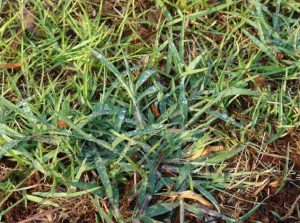
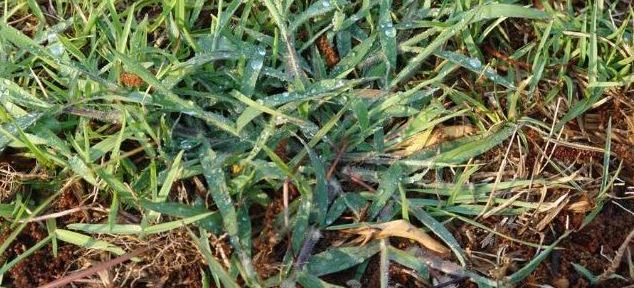
Crabgrass growing in centipedegrass lawn. Photo credit: UF/IFAS Extension
By the time summer arrives, many of the lawn weeds are mature, which means they are well established with extensive root systems. These mature, well established weeds are much more difficult to control. They are more susceptible to herbicides when they are small, young, and not well established. Also, these mature weeds have been allowed to produce countless numbers of seeds as they move into summer. Most weeds are prolific seed producers. For example, a single crabgrass plant (a common summer lawn weed) can produce 150,000 seeds.
Applying a preemergence lawn herbicide in February to help prevent summer annual weeds such as crabgrass or applying a postemergence lawn herbicide during spring while the weather is mild and before the weeds are out of control simply makes more sense than waiting until summer.
The best options now with lawn weed control involve continuing to follow good mowing practices, maybe hand removal of some weeds, and just simply waiting it out until next February and spring to worry with the use of lawn herbicides.
In the meantime, you may want to read the following UF/IFAS Extension publication on lawn weed control.
https://edis.ifas.ufl.edu/pdf/EP/EP14100.pdf
Larry Williams, UF/IFAS
by Daniel J. Leonard | Jun 24, 2021
Nutsedge, commonly called “nutgrass”, is one of the most important and difficult to control weed pests in the world. Found in nearly every growing situation, from crop fields and vegetable gardens to landscapes and turfgrass lawns, I bet every person reading this has contended with controlling nutsedge at some point! Nutsedge (a common term to describe several species of weeds in the genus Cyperus) not only reduces curb appeal, but also h as a detrimental effect on desirable plantings around it. Because of its aggressive nature and dense root system, it competes heavily with “good” plants for water, light, and nutrients, causing the plants we are trying to grow to suffer. This is a weed that you definitely do not want in your lawn or landscape!
To keep nutsedge at bay, it’s important to know a few facts about it. First, “nutgrass” is not a grass at all, but a totally different class of plants known as sedges. This is important because selective herbicides used to kill grassy weeds will not affect nutsedge. Though they’re grass look-alikes, sedges can be distinguished by their distinctive triangular shaped stems. You can actually feel the three edges of nutsedge stems. If ever in doubt over whether a weed is a grass or a sedge, remember “sedges have edges”. Most sedges are perennials, dying back to the ground each year in winter and reemerging from tubers, called “nutlets”, that can survive over a foot under the ground! Also, while sedges generally prefer wet areas, they aren’t very particular about where they grow and are equally at home in sand or clay, wet or dry, and sun or shade. All these characteristics make sedges hard to control and cause much consternation amongst gardeners!
The first line of defense in controlling nutsedge is keeping a dense cover over any bare ground. In lawns, this means maintaining a thick, healthy turf as weeds love to enter lawns through thin or patchy areas. This can be accomplished by mowing regularly, fertilizing appropriately based on a soil test, not overirrigating while also not allowing the grass to suffer badly during droughty periods. Easier said than done. In landscape beds, preventative control is a little easier. First, as nutsedge prefers wet areas, only irrigate when it is needed. During much of the year, most established landscapes can get by on rainfall alone. Next, simply maintain a roughly 3” layer of pine straw, wood chips, pine bark, or other natural mulch of your choice. Doing so will reduce all manner of weeds, nutsedge included, and is generally beneficial for ornamental plants as well! I do not recommend landscape fabric as it is a pain to install and remove and is not extremely effective at reducing nutsedge as the sedge’s sharp growing points punch right through most plastic or fabric mulches.
Though mulching and other preventative measures can reduce nutsedge numbers, those methods alone are usually not enough and chemical herbicides are required. Fortunately, in Panhandle lawns and landscapes, there are several excellent, readily available options for sedge control: imazaquin and halosulfuron.
- Imazaquin is the active ingredient in the common product Image Kills Nutsedge and has good activity on most sedge species. It can be applied safely to all the common turfgrass species grown in the area and can even be sprayed right over the top of most common ornamental landscape plants!
- Halosulfuron is the active ingredient in the product Sedgehammer (available online or at specialty landscape supply stores) and several other generic products. Halosulfuron products provide excellent control of all nutsedge species and are safe to use in all turfgrass species found in Florida. While most landscape plants are tolerant of halosulfuron application, use care and try to only spray it on sedge weeds to avoid any unwanted yellowing or damage.
While both products begin working immediately, it may take several weeks to see sedge weeds start suffering and patience is necessary! Though both products are effective, follow up applications 3-4 weeks later are generally necessary to clean up any surviving sedge.
Nutsedge is a nasty little weed that can be difficult, though not impossible to manage. Through some smart cultural practices and timely applications of either imazaquin or halosulfuron, you can keep your lawn and landscapes nutsedge free! For more information about nutsedge control on your property or any other agricultural or horticultural topic, contact your local UF/IFAS County Extension office! Happy Gardening!