Zoysiagrass Becoming More Popular in the Panhandle
If you’ve been researching lawn grass options recently, you’ve probably come across a not so traditional variety known as zoysiagrass. There’s no mystery why zoysiagrass has become a hit with lawn enthusiasts in the Panhandle. This variety is a great choice for coastal, warm weather climates. However, there are always management practices that need to be carefully considered, before deciding on a lawn grass variety.
Zoysiagrass was introduced to the U.S. from Asia around the early 1900’s. The grass has mostly been used for turf applications, especially on golf courses and other athletic fields. However, in recent years, breeding advances have made this variety a viable option for homeowners. Some of these improvements involve insect resistance and fast establishment periods.
Except for one species, zoysiagrasses must be planted by sod, plugs, or sprigs. Zoysia japonica is the only species commercially available in seed form. Zoysiagrass is a not a cold hardy plant. It’s the first grass variety to turn brown under cold temperatures and is slow to turn green once warmer temperatures arrive. Probably the most attractive quality of zoysiagrass is the ability to grow in virtually any soil, ranging from sandy to clay, acidic or alkaline. Moderately shaded locations are also acceptable for zoysia. Zoysiagrass is extremely drought tolerant. The plant’s root system has a great adaptation to combat drought conditions. Since the root system is very deep, it is able to maximize soil moisture potential.
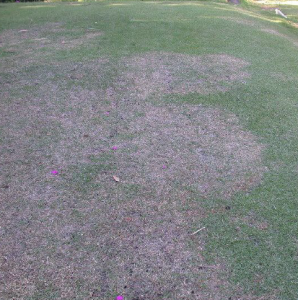
Figure 1. Large (brown) patch disease caused by Rhizoctonia solani.
Credit. J. Bryan Unruh, UF/IFAS.
Zoysiagrass is not a silver bullet for lawn problems. It encounters weed and insect problems as well. The most formidable disease of zoysiagrass is large brown patch. This disease is caused by the fungal pathogen, Rhizoctonia solani. The disease begins in small patches that turn from yellow to brown. It’s common to see these patches with healthier grass in the center. The pathogen is most active when soil temps fall between 65-75°F. This generally correlates with the fall season and then throughout the following spring in the Panhandle. Zoysiagrass is no more susceptible to the disease as any other grass, but the recovery time is lengthy. With this being said, a proactive fungicide regimen is recommended.
Zoysiagrass also responds better to smaller quantities of fertilizer applied more frequently rather than supplying larger quantities infrequently. UF/IFAS Extension recommendations state that zoysiagrass should receive three applications per year in the Panhandle region.
If you are looking to seed or sod your landscape, zoysiagrass may be an option to consider. Best management practices influence the overall health and quality of your lawn and reduces its susceptibility to disease. Take these practices into consideration when deciding on a lawn grass.
Please visit Florida Friendly Landscaping, http://fyn.ifas.ufl.edu/, for more information on maintaining your landscape.
Supporting information for this article can be found in the UF/IFAS EDIS publication “Zoysiagrass for Florida Lawns” by J. Bryan Unruh, L. E. Trenholm, and J. L. Cisar: http://edis.ifas.ufl.edu/pdffiles/LH/LH01100.pdf
An Equal Opportunity Institution. UF/IFAS Extension, University of Florida, Institute of Food and Agricultural Sciences, Nick T. Place, Dean for UF/IFAS Extension. Single copies of UF/IFAS Extension publications (excluding 4-H and youth publications) are available free to Florida residents from county UF/IFAS Extension offices.