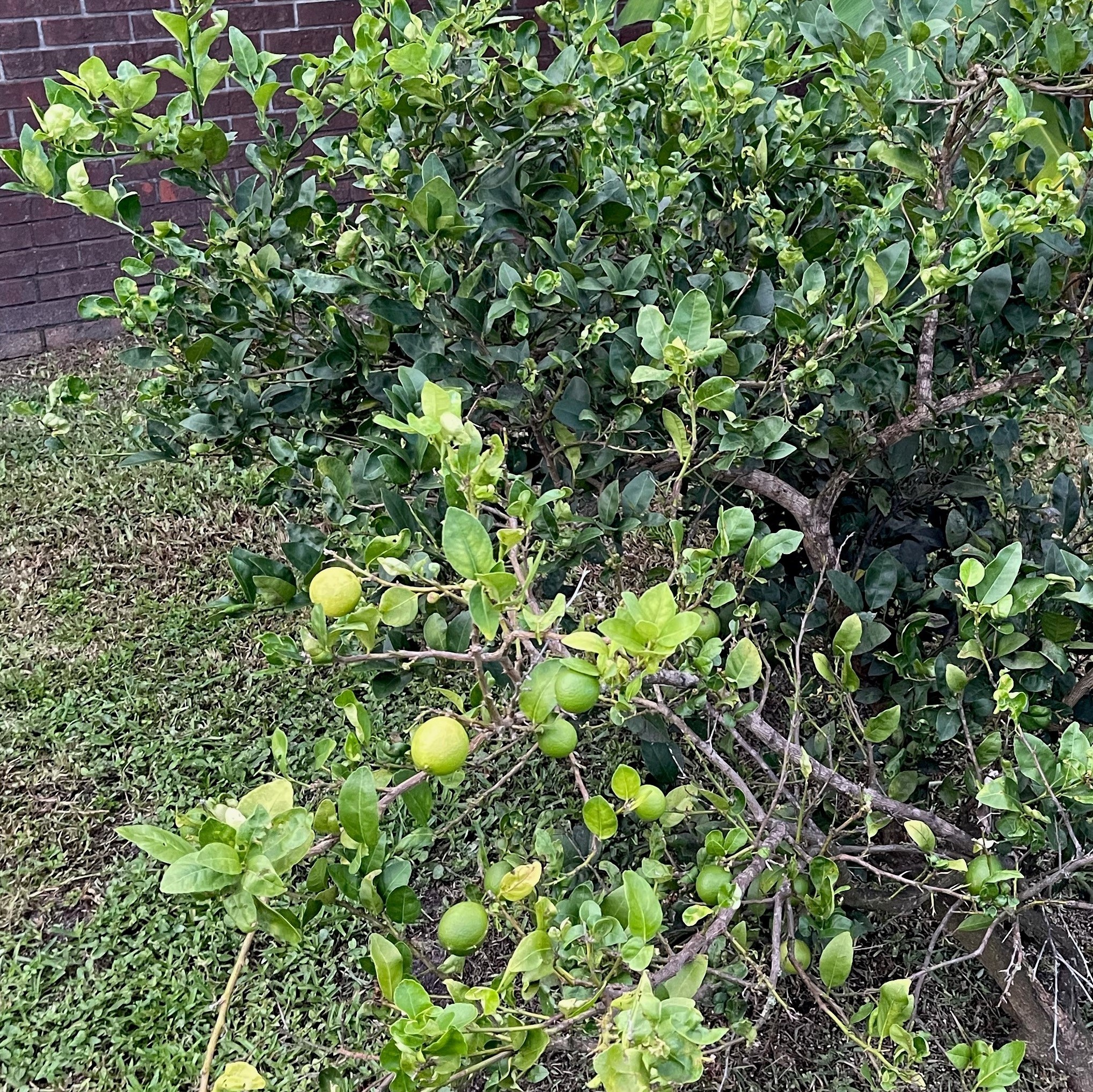
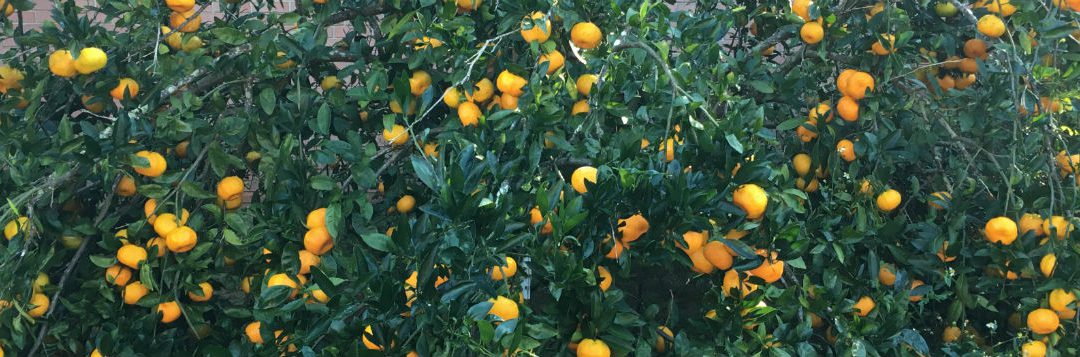
The Christmas season is all about the gifts! This statement couldn’t be further from the truth, but most likely some gifts will be given. An old traditional gift is gift fruit. And a lot of the time that gift fruit is a mix of citrus from Florida. A unique citrus that I’ve been wanting to add to my grove is the limequat. A few weeks ago I had a close encounter with a limequat at a local nursery, but it was in disguise. The limequat in question had a tag that read ‘Key Lime’. I am a fan of Key lime pie, therefore I like Key limes, but I knew I don’t want the added maintenance of protecting a Key lime tree from the cold. I had a suspicion this plant was a limequat, but I decided to pass on it. This experience prompted me to do a little research, so I don’t pass up on this opportunity in the future.
Key Lime fruit at various degrees of ripeness. Photo Credit: Ray Bodrey, University of Florida/IFAS Extension – Gulf County
Key Lime vs. Persian Lime
Before we talk more about limequats, I think it’s important we discuss the differences between Key limes and Persian limes. The Persian lime, Citrus latifolia, originated in southeast Asia. The first report of these trees in the United States was at a home in California in 1875. Like Persian limes, the Key lime, Citrus aurantifolia, originated in southeast Asia and was brought to the Americas by Spanish and later became naturalized in the Florida Keys and throughout Central and South America. Although these limes are two different species, they are both hybrids of crosses between the same three species (Citrus medica, Citrus grandis, and Citrus micrantha). Persian limes are more cold hardy than Key limes and neither are as cold hardy as limequats.
Kumquats growing on a tree. Photo Credit: University of Florida/IFAS
Limequat
Limequats resulted from cross pollination between a Key lime and a kumquat. However, limequats are less cold hardy than kumquats. Similar to kumquats, the skin of limequats is sweeter than their flesh. Three common cultivars of limequats are ‘Eustis’, ‘Lakeland’, and ‘Tavares’. ‘Tavares’ limequats produce larger fruit than ‘Eustis’ and ‘Lakeland’, but their mature fruit are more orange in color. A number of commercial and retail nurseries sell a limequat variety under the name ‘Key’ or ‘Key Lime’, which stemmed my confusion at the local nursery. All confusion could have been avoided if I would have known the scientific name at the time of my visit. (Limequats are listed as either Citrus x floridana or Citrofortunella x floridana.)
So now you know how limequats came about. For more information on limequats and other citrus species, please visit the UF/IFAS Gardening Solutions Citrus Page.
Cold hardy citrus are a treat for north Florida gardeners. Credit: Tyler Jones, UF/IFAS
Growing citrus in the backyard is definitely a gardening perk for those living in north Florida. However, our frequent cold snaps are also a source of anxiety for many backyard citrus growers. With weather forecasters excited to highlight dips in temperature, many folks call their local extension office, or head to social media, fretting over what they should do with their citrus. This article is intended to walk you through what to consider when deciding how cold it needs to get before worrying.
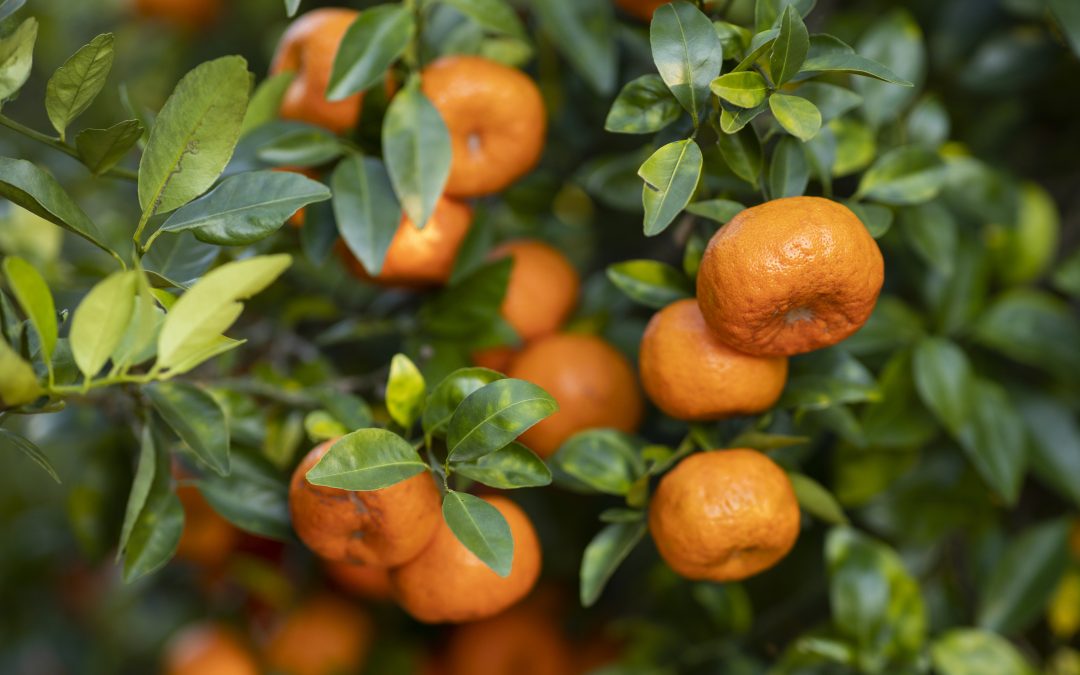
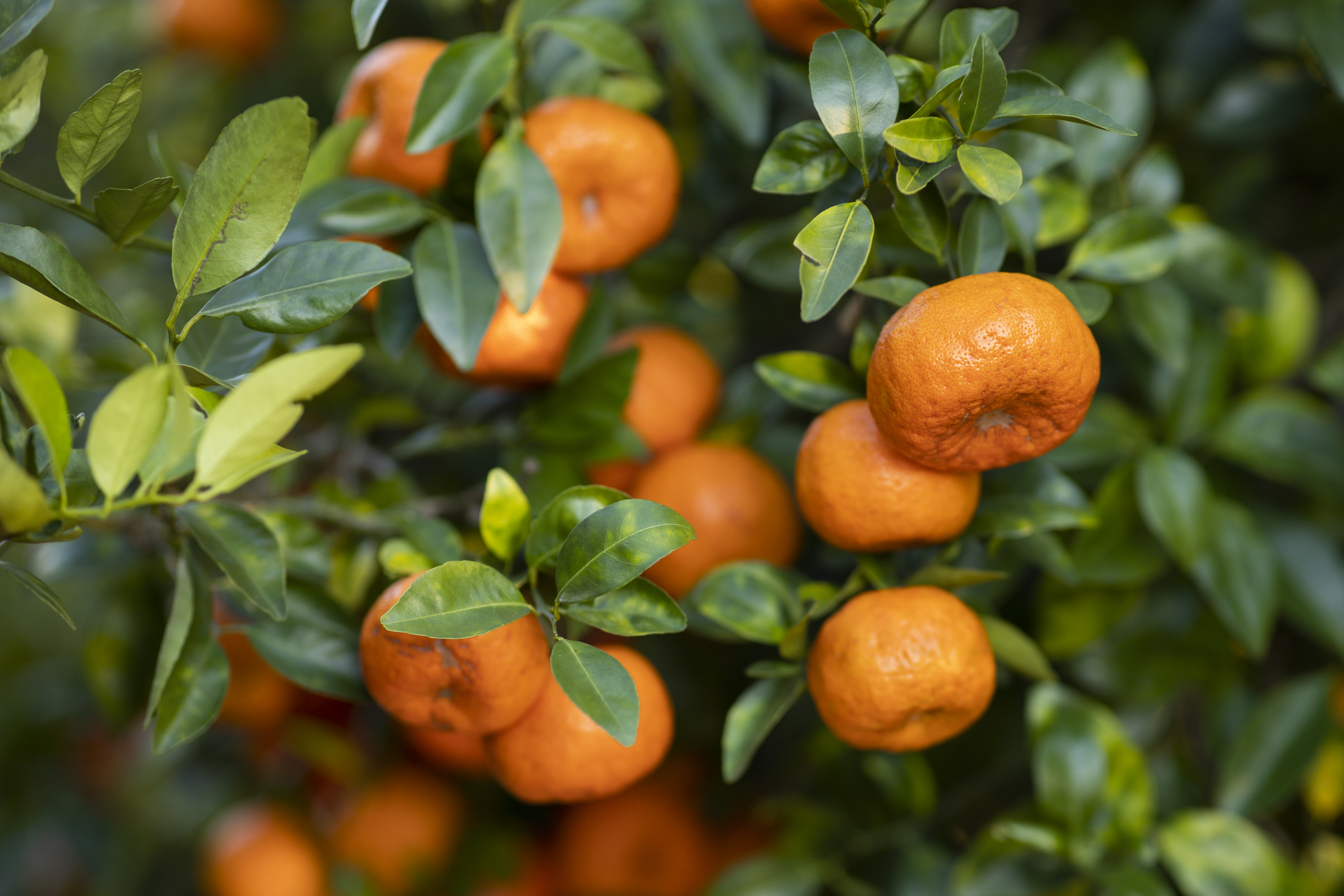
First of all, you can really help yourself out by selecting and planting varieties that are known to be cold hardy. In addition to Myer lemon, calamondins, kumquats, grapefruit, and pummelo, other cold hardy citrus varieties include:
mandarins – satsuma, shiranui, Sugar Belle, Tango and Bingo
oranges – navel, Hamlin, Minneola Honeybell, and Valencia
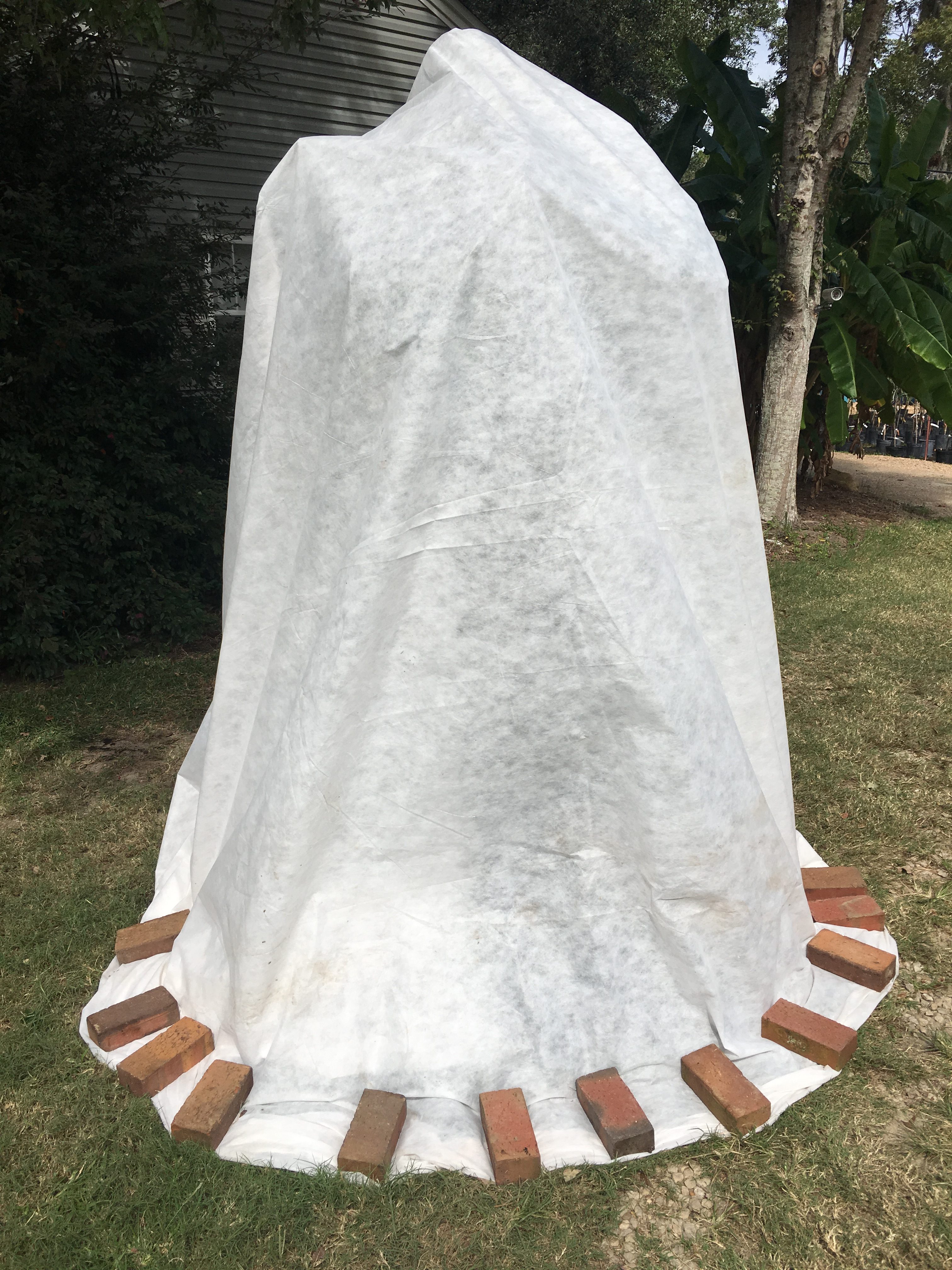
Again, the above varieties are known to be hardy, as trees, down to at least temperatures in the mid-20s. Young trees are more susceptible to these temperatures, but once mature, you shouldn’t worry about having to cover them down to the mid-20s. Remember, when covering plants for cold protection, you want the material – whether it be fancy frost cloth or just a simple blanket – to completely cover the tree and drape on the ground. It is the heat leaving the soil that you are trying to capture to keep the tree protected.
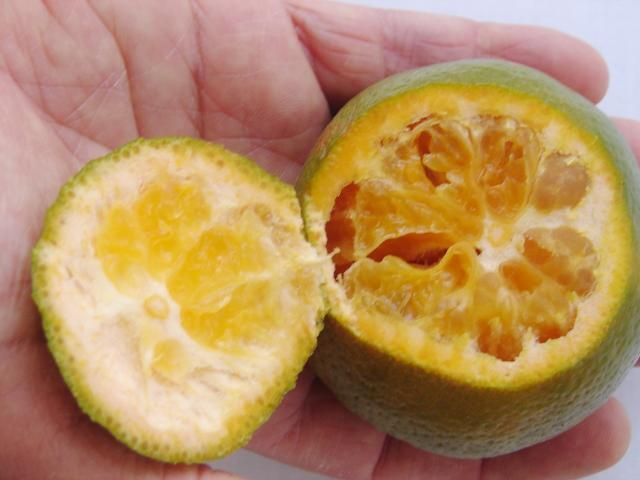
When it comes to the fruit, temperatures reaching 26 to 28 degrees for more than two hours may begin to freeze and cause damage. Satsumas, navels, and Meyer lemon fruit have thinner skins compared to grapefruit and so are more likely to freeze. Ripe citrus fruit is more cold-tolerant than unripe fruit due to their sugar content. Unfortunately, if you have unripe fruit, remember that citrus does not ripen off the tree. If you notice frozen fruit after a freeze, salvage any fruit as soon as possible, mostly for juicing, or dispose of in the compost pile.
Citrus fruit showing damage after a freeze. Credit: Mongi Zekri, UF/IFAS
Now, back to the forecasters. They seem to get excited every time we begin to reach anywhere near 32 degrees and begin issuing frost and/or freeze warnings. These are important to consider, but as we now know, just because we’re getting frost or freeze temperatures, it doesn’t mean we’ll lose our citrus. According to the National Weather Service, here’s what all of these advisories mean:
Frost Advisory – minimum temperature is forecast to be 33 to 36 degrees on clear and calm nights during the growing season
Freeze Watch – issued when there is a potential for significant, widespread freezing temperatures (32 degrees and below) within the next 24-36 hours.
Freeze Warning – issued when significant, widespread freezing temperatures (32 degrees and below) are expected.
So, if you hear there is a frost advisory, not much need to worry. If we get all the way to a freeze warning, now we need to pay attention to what the minimum low temperature is forecasted to be. If it’s 28 or below, now we begin to worry about any fruit on the tree. It does have to hold at these low temperatures for several hours before damage occurs, so maybe we’ll be okay. Once we get to the lower 20s, we should probably go ahead pick all of the ripe fruit and hope for the best on any unripe fruit. At these sub-freezing temperatures, we also need to start implementing measures to protect the tree, especially the graft union where the top of the tree has been united with the rootstock, typically indicated by a thickened or swollen like area at the base of the tree. This includes tree covers and soil banking – mounding soil over the graft union through the sub-freezing temperatures.
When covering a tree for cold protection, be sure to drape the cover all the way to the ground. Credit: Jonathan Burns.
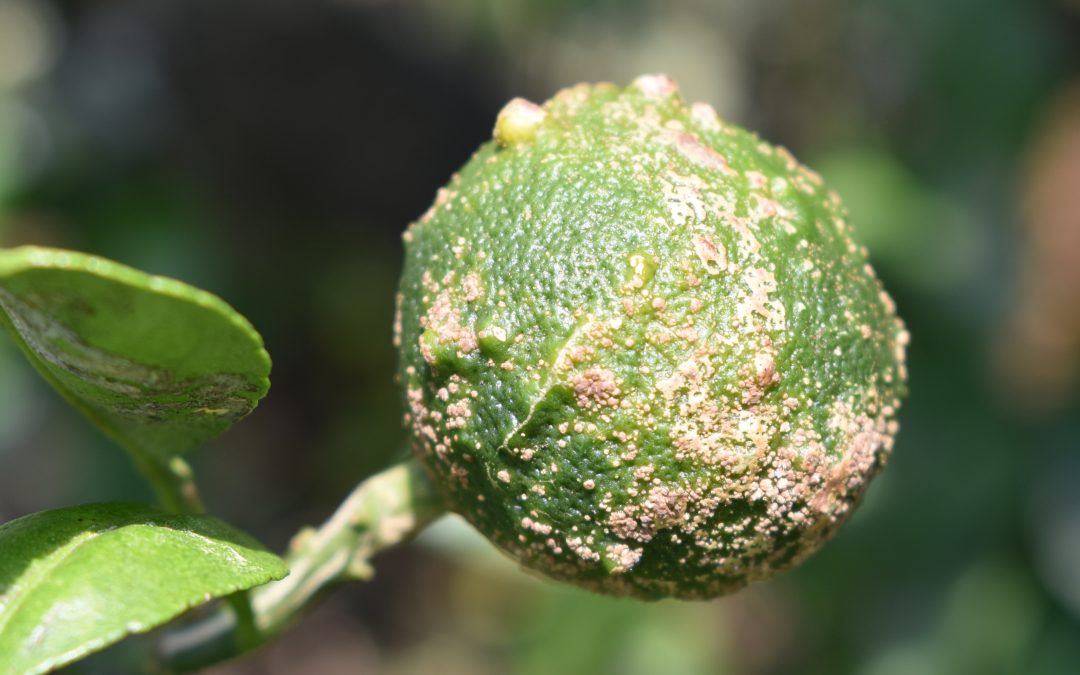
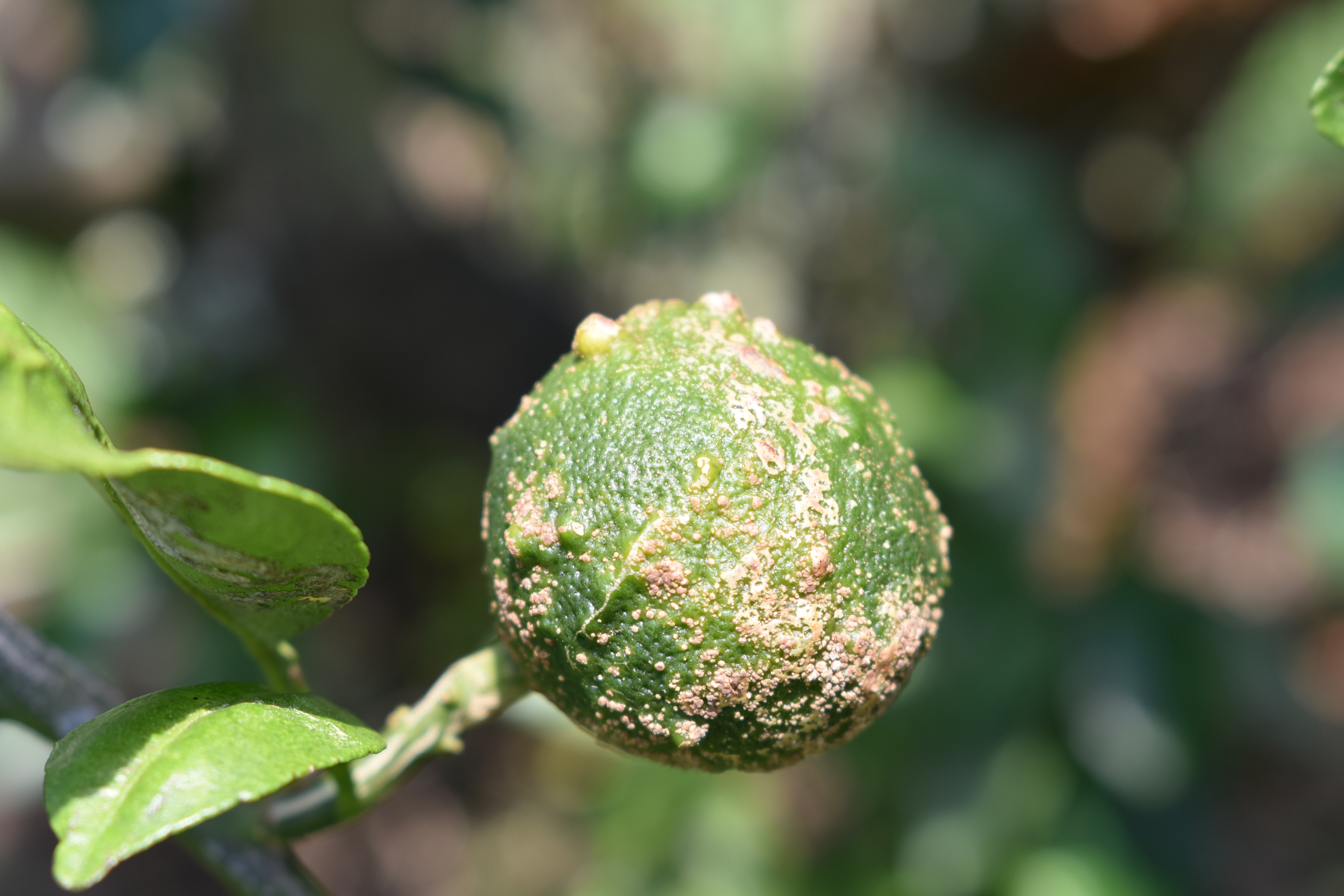
Citrus scab, caused by the fungal pathogen Elsinoë fawcettii, is a common disease affecting citrus trees in the home landscape such as satsuma mandarins, tangelos, grapefruit, and other tangerine hybrids. This disease affects the leaves, fruit, and twigs of citrus trees, creating unattractive, wart-like lesions. While citrus scab is rarely fatal to the tree, it can reduce the quality and marketability of the fruit.
Citrus scab on young satsuma mandarin fruit. Photo Credit: Danielle Williams
Identification and Symptoms
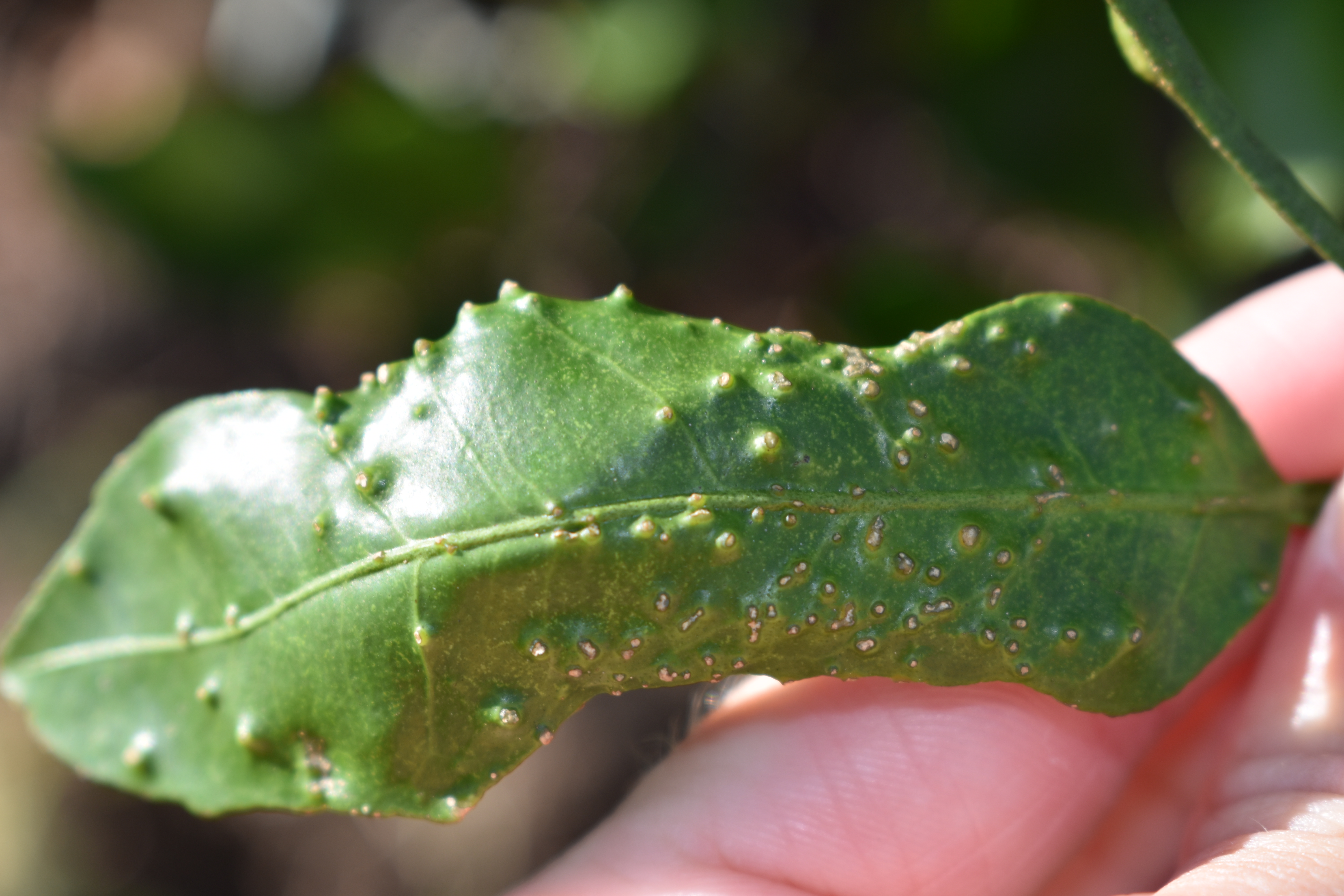
The most noticeable symptom of citrus scab is the development of corky, irregularly shaped lesions on the surfaces of leaves and fruit. These lesions start as small, pale, slightly raised areas that gradually enlarge and turn dark brown to light gray. On leaves, the lesions often appear on the lower surface, giving them a warty appearance. Fruit may exhibit scab lesions, which can cause deformities and discoloration, making them less appealing for consumption, however it does not make the fruit inedible.
Raised lesions of citrus scab on leaf. Photo Credit: Danielle Williams.
Understanding the Disease Cycle
Citrus scab thrives in warm, moist conditions and is primarily spread through wind-driven rain that carries the fungal spores to new infection sites. The spores can overwinter in infected plant debris and on asymptomatic parts of the tree, leading to new infections during the growing season. Recognizing this cycle can help residents take preventative measures during critical times of the year.
Management and Control
To keep citrus scab at bay, homeowners should employ a combination of cultural practices as well as careful chemical use when necessary.
Cultural Practices
Sanitation: Regularly remove and dispose of fallen leaves, fruit, and other plant debris to reduce the number of overwintering spores. This practice is particularly important in the fall and early spring.
Pruning: Prune the tree to improve air circulation within the canopy. This reduces humidity levels around the foliage, making the environment less conducive to fungal growth.
Irrigation Management: Avoid overhead irrigation. Overhead watering can splash spores onto healthy tissue, spreading the infection. Instead, water trees at the root zone or use microsprinkler irrigation.
Chemical Control:
Fungicides: Applying fungicides can help protect new growth from infection. Copper-based fungicides are commonly used and can be effective. It is important to read and follow the product label on application timing and directions for use. Typically, fungicides for controlling scab should be applied in early spring when new growth begins.
Conclusion
Regularly inspect your citrus trees for signs of citrus scab, especially after periods of rain and humidity. Early detection and treatment are crucial to prevent widespread infection. Maintaining a healthy tree through proper fertilization, watering, and pest management can also reduce the tree’s susceptibility to diseases like citrus scab.
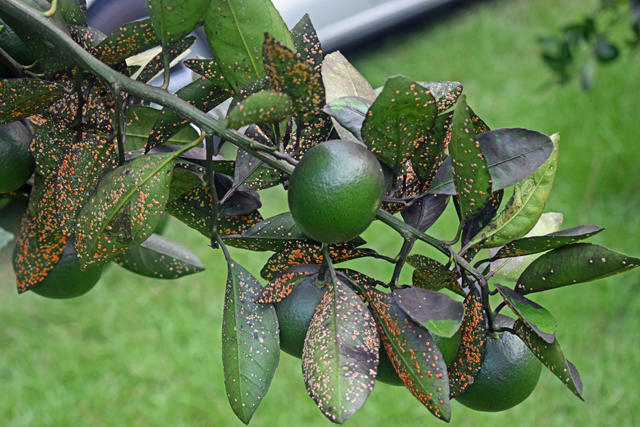
Figure 1. Aschersonia aleyrodis, entomopathogenic fungi feeding on immature whiteflies on a satsuma tree. Photo Credit: Doug Mayo, UF/IFAS Jackson County.
Proper plant disease and insect identification is essential, not just in agriculture production, but in the garden and landscape setting too! The presence of “friendly fungi” on a citrus tree is a prime example of the phrase, “there is more here than meets the eye”. Friendly fungi is an entomopathogenic fungi that attacks citrus whitefly and cloudywinged whitefly nymphs. At first glance though, it can be a scary sight and may look like your citrus tree is being plagued with a new citrus disease or a new species of scale, when in fact, the whitefly nymphs are being controlled by a beneficial and naturally occurring biological control agent!
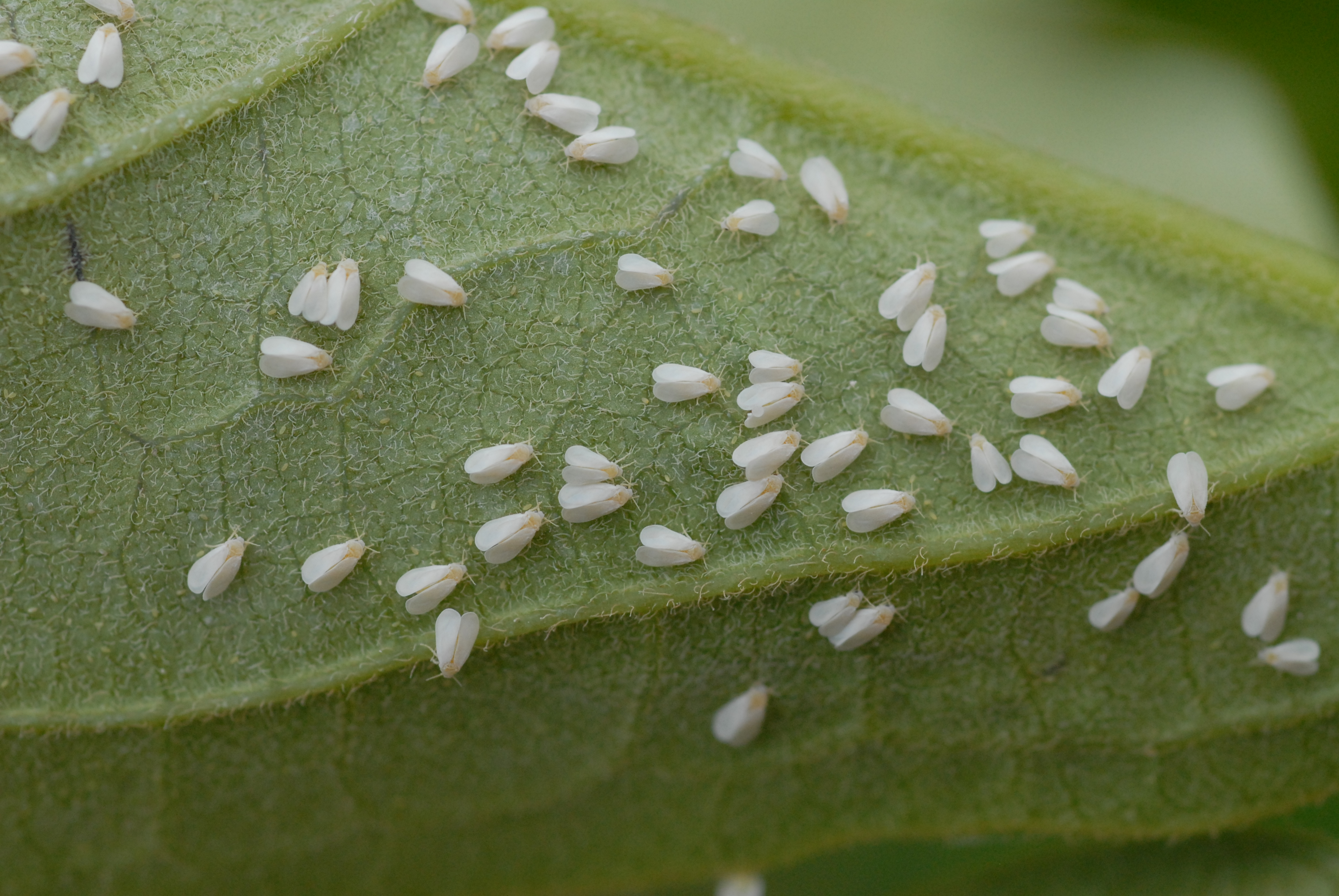
Figure 2. Adult citrus whitefly feeding on the underside of leaf. Photo Credit: Lyle Buss, UF/IFAS Entomology.
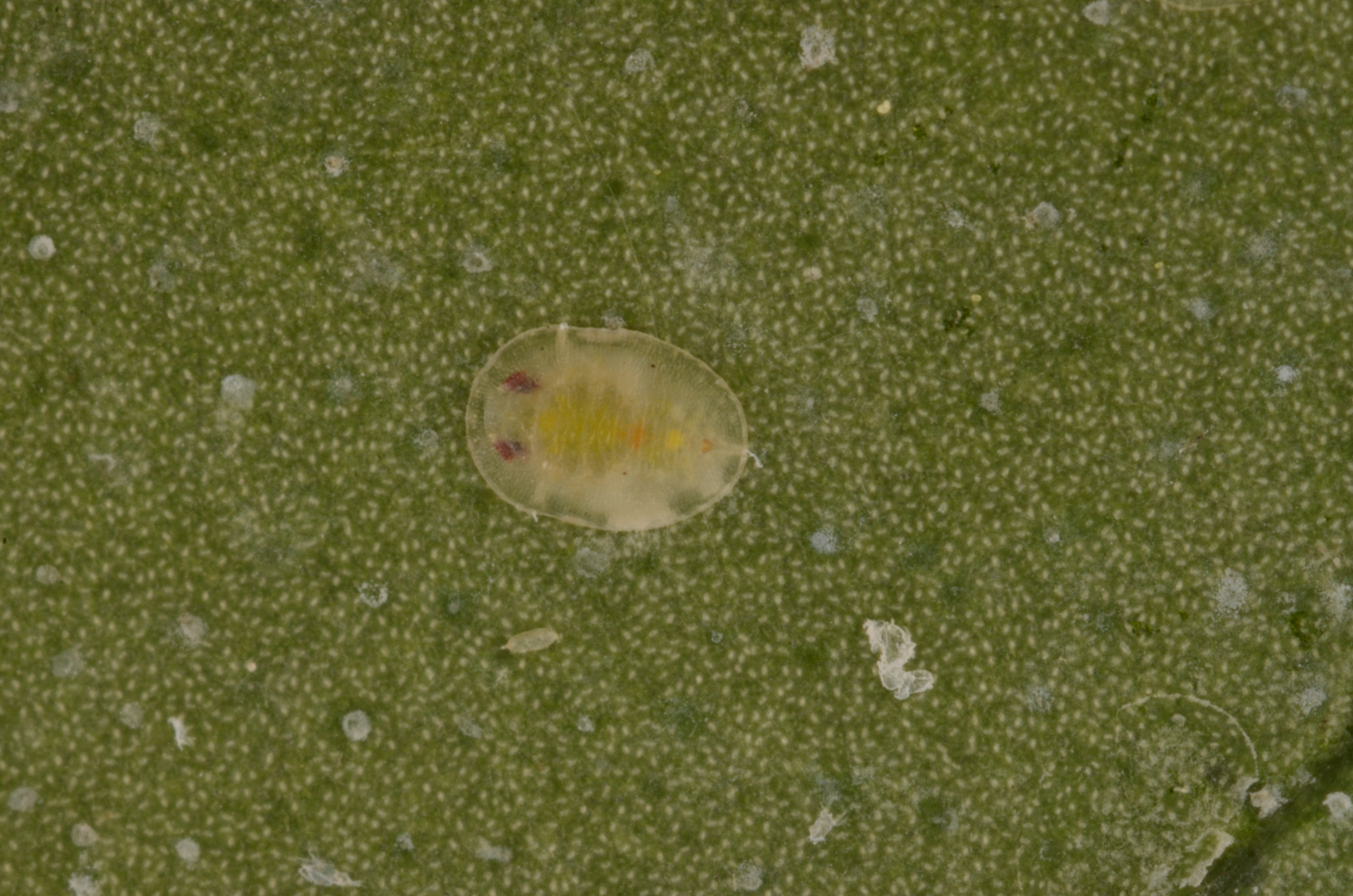
The citrus whitefly (Dialeurodes citri) and the cloudywinged whitefly (Singhiella citrifolii) are two insect pest species of whiteflies that occasionally cause injury to citrus. The adults are small, white and resemble tiny moths (Figure 2). Adults lay eggs on the underside of leaves and eggs hatch into nymphs (Figure 3). The nymphs cause injury to the plant by feeding and consuming large quantities of sap. As a result of the large amount of sap consumed, nymphs excrete honeydew which causes growth of sooty mold fungi. Severe sooty mold infestations give plants an unhealthy appearance and can reduce plant photosynthesis.
Figure 3. Citrus whitefly nymph feeding on the underside of leaf. Photo credit: Lyle Buss, UF/IFAS Entomology.
Citrus whiteflies have historically been controlled by a suite of predators including two strains of the entomopathogenic fungi, Aschersonia aleyrodis, the red strain and Aschersonia goldiana, the yellow strain. The red strain infects the citrus whitefly and the yellow strain infects the cloudywinged whitefly. These fungi are commonly referred to as “friendly fungi”. Both strains are present in North Florida and are normally observed now, through mid-September, following the rainy season.
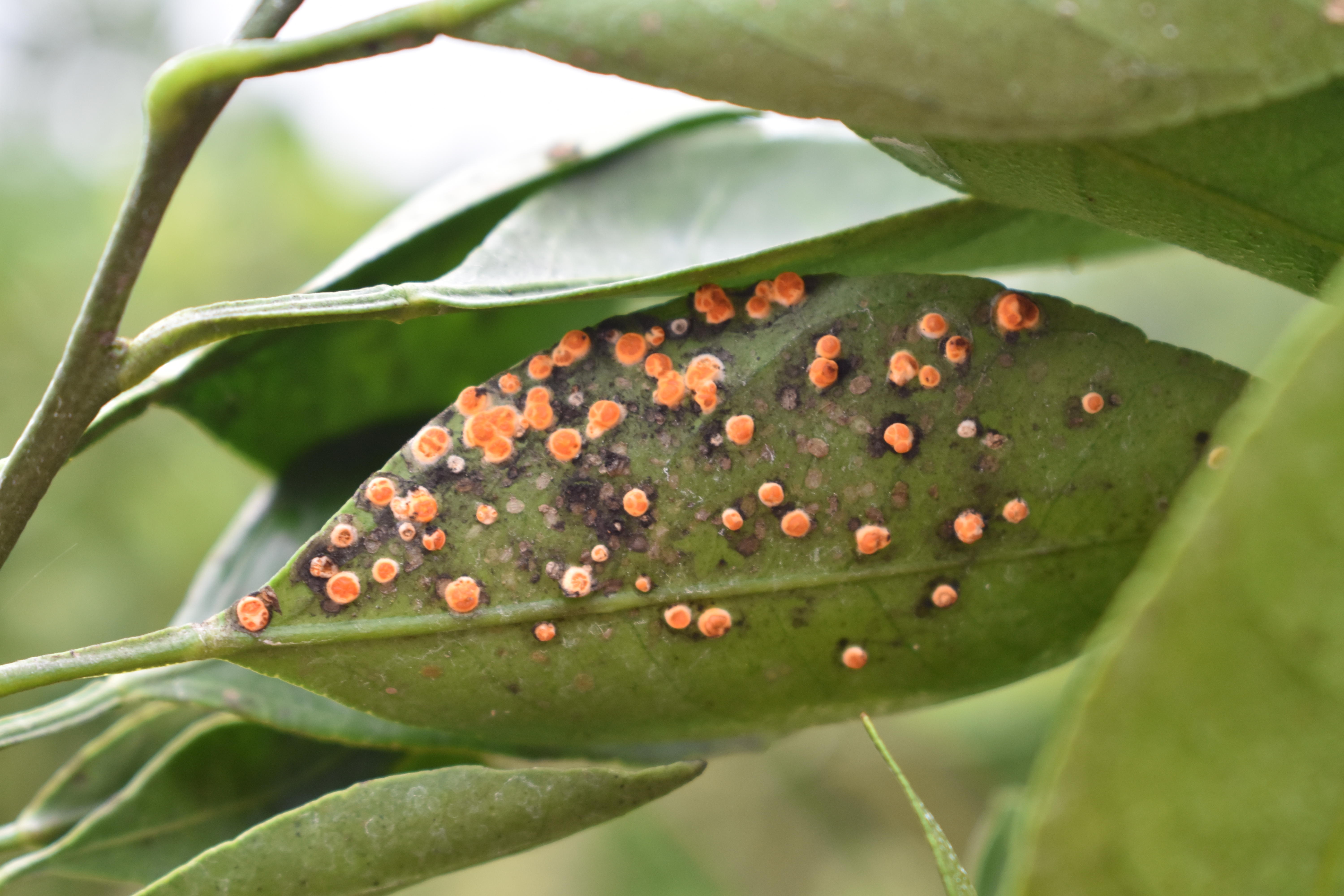
Figure 4. Friendly fungus attacking whitefly nymphs that are feeding on the underside of a satsuma leaf. The black growth is sooty mold, caused by the whitefly nymphs. While this leaf looks bad, the friendly fungus is helping to reduce the whitefly population. Photo Credit: Danielle Williams, UF/IFAS Gadsden County.
The friendly fungi can be clearly seen from a distance with their bright red and/or yellow spots. While it may be a scary sight to see, the entomopathogenic fungi does not harm the tree and is beneficial in helping control whitefly populations! For more information, please contact your local Extension Office.
Written by: Muhammad Adnan Shahid and Shahid Iqbal.
UF/IFAS Horticultural Sciences Department, North Florida Research and Education Center, Quincy FL
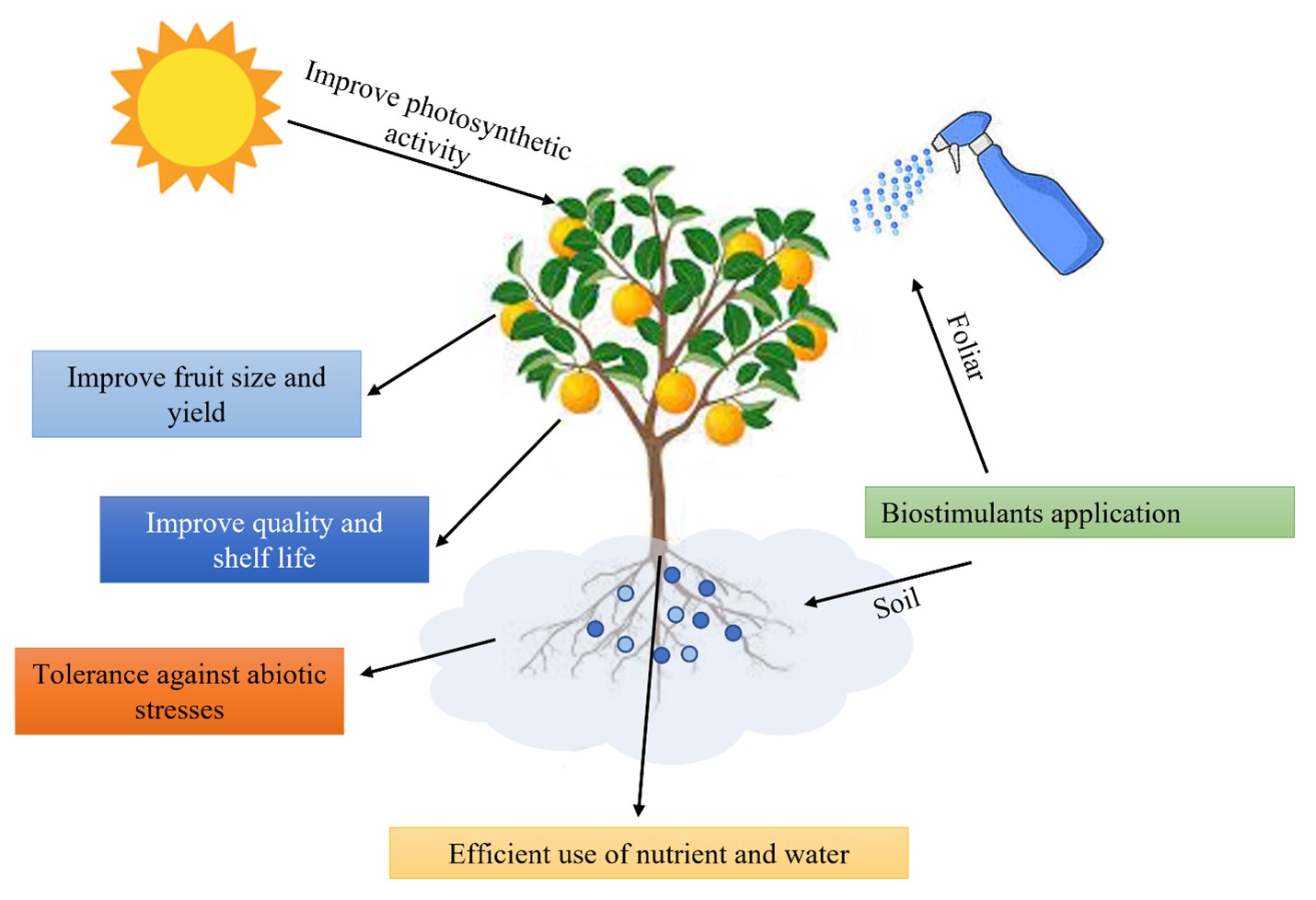
Biostimulants are a type of substance or microorganism applied to plants to improve their nutrient efficiency and resistance against abiotic stress (salinity, cold, heat, UV, flooding, drought, heavy metal toxicity, nutrient deficiency), diseases, and quality traits. Due to the increase in world population, the growing pressure on crop productivity is a demanding challenge; therefore, it is necessary to reduce the use of agrochemicals with negative impacts on human health and the environment. Thus, new strategies from the bio-based industry must be found and adopted. Citrus is a highly desirable and profitable fruit crop with undesirable characteristics like excessive flowering and physiological fruit disorder that negatively affect the market value.
Biostimulant Types and Practical Application
Many crop growers have expressed an interest in biostimulants in recent years. As these products gain popularity, we have found that there’s still a lot of controversy about their efficacy. Before determining whether Extension endorses them, let’s review the various types and their practical usage.
Several types of biostimulants include humic and fulvic acid, seaweed extracts, protein hydrolysates, chitosan, beneficial bacteria, fungi and microbial inoculants, and other types of amino acids and polyamines. These products are commercially available with different formulations and ingredients and have immense potential in horticultural crop production, especially in citrus.
Plant biostimulants can be applied through foliar application, fertigation, or directly through the soil, enhancing crop growth and quality. Biostimulants could reduce plant environmental threats and minimize the negative consequences of unsystematic chemical application.
Benefits of Using Biostimulants in Citrus Crop Production
Biostimulant products improve plants’ overall health and help maximize fruit production and quality by providing complete nutrition. The benefits of using biostimulants are highlighted below.
Improve plant metabolism to induce high-yield and quality.
Enhance soil fertility by fostering complementary soil microorganisms.
Increase tolerance against abiotic stresses.
Facilitate nutrients and their movement inside the plant vessels
Boost fruit quality attributes like color, sugar content, etc.
Application of biostimulants and its effect on plant growth and quality traits.
Concluding remarks and recommendations
Biostimulants are in the frontline as a novel strategy to achieve the goal of sustainable citrus crop production, yield, and superior quality. Proper management practices are important for high-yield and quality fruit in citrus production. The use of biostimulant products can provide producers with sustainable production. Before using these products, contact a regional extension specialist or citrus expert for their proper application and trail setup. The Fruit Physiology Lab at North Florida Research and Education Centre (NFREC), Quincy, Florida has started a research project on determining the efficacy and efficiency of different microbial and non-microbial biostimulants in cold hardy citrus production, to improve yield, and fruit quality. For any further information on the use of biostimulants please contact Dr. Muhammad Shahid, Fruit Physiologist/Assistant Professor of Horticulture at mshahid@ufl.edu.