Being a gardener in Florida is exciting. We have many plants to choose from and the weather is mostly pleasant but always seeming to surprise us. One disadvantage of living in such a place, in addition to having so many growing zones, landscape nurseries, and major shipping ports, is that invasive species that land in Florida don’t like to leave. One newcomer in the lineup of invasive pests is the crape myrtle bark scale (Acanthococcuslagerstroemiae). This invasive insect pest made its way from Texas and, as of a few weeks ago, the only Florida sighting had been in Santa Rosa County. Unfortunately, this pest has now been confirmed in Leon County. Landscapers and gardeners in north Florida should learn how to identify this pest and what options are available for control.
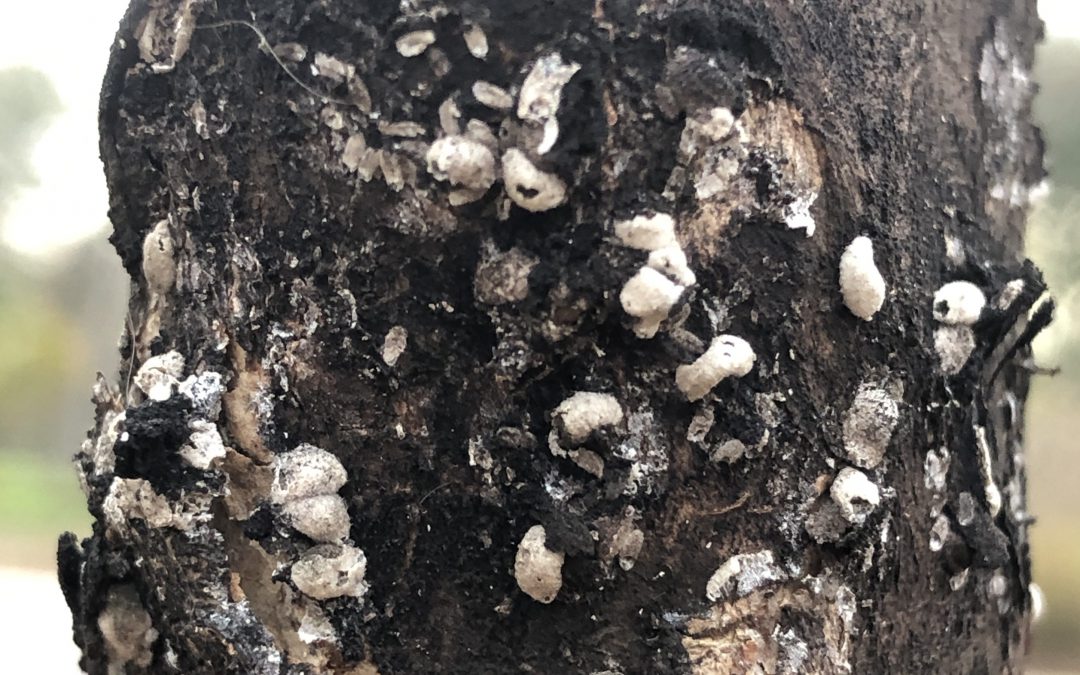
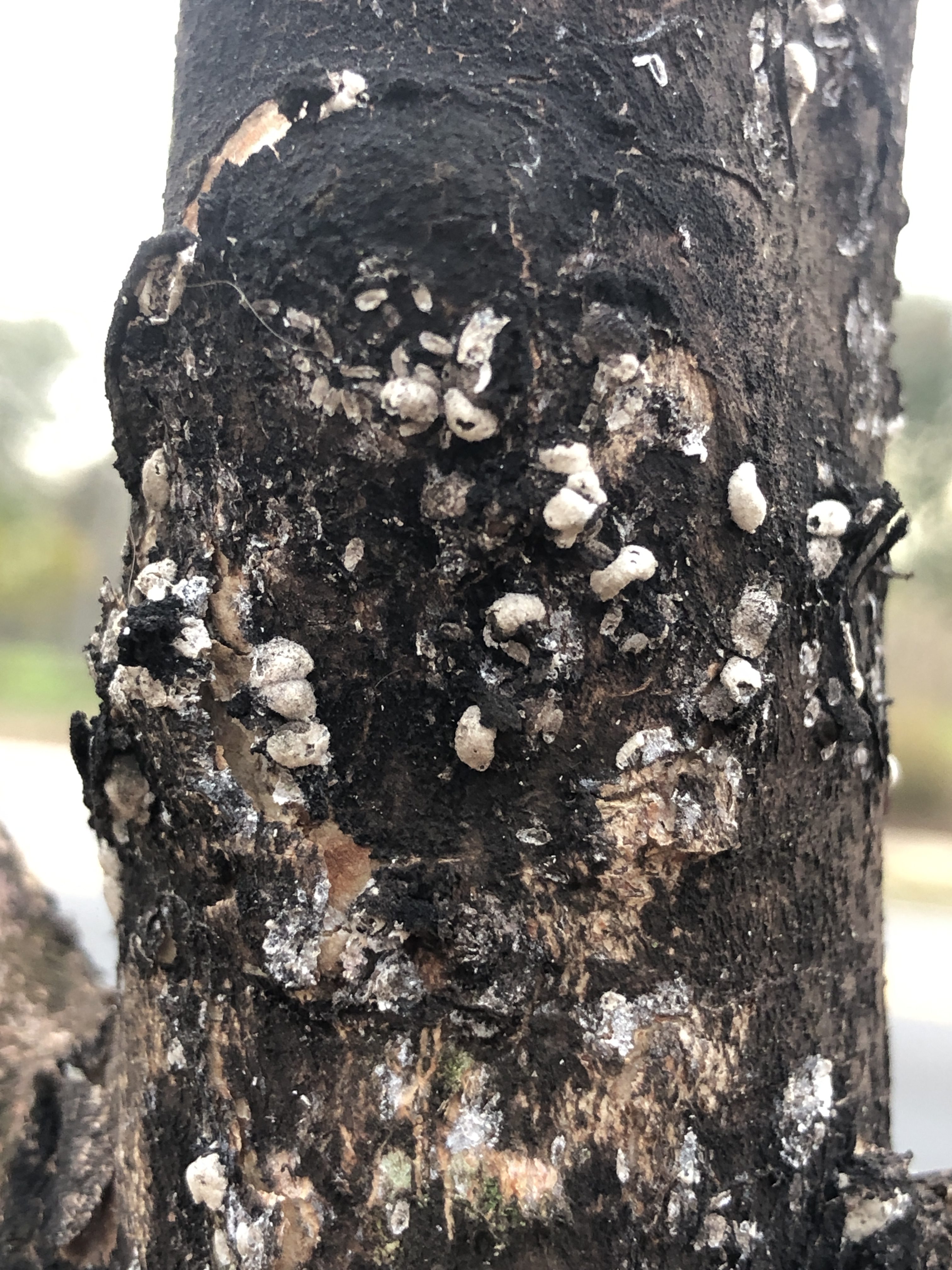
The crape myrtle bark scale, as the name suggests, has a pretty specific host – the crape myrtle (Lagerstroemia spp.). However, in the United States, this scale has also been found feeding on our native beautyberry (Callicarpa americana). Due to the widespread planting of crape myrtles, these should be the gardeners primary focus when looking for this new pest. If present on the tree, it is hard to miss. These scales feed on the bark and are a snow-white color. Being a scale, they produce honeydew that is then covered in black sooty mold. So, if you see a crape myrtle with black branches, look closely and you may see the white scales. If you crush these scales and they leave a pink goo on your fingers, then you very likely have crape myrtle bark scale. Of course, you can send a picture or sample to your local county extension office for confirmation.
Black sooty mold and white scales along the trunk and branches are a tell-tale sign of crape myrtle bark scale. Credit: Mark Tancig, UF/IFAS.
If you do happen to find crape myrtle bark scale in your own landscape, or one that you manage, proper control is important to prevent it from moving along any further. Since scales suck on sap and are protected by an outer shell, systemic insecticides are the preferred product for effective control. These include the neonicotinoids, such as imidacloprid (Merit) and dinotefuran (Safari). The larval stage can be controlled with a horticultural oil, sometimes mixed with another insecticide like bifenthrin (Talstar), however, this will not control the adults. Another option is to completely remove the tree and burn all of the plant material.
Excessive sooty mold has turned these branches black. Be on the lookout for crape myrtles looking like this to help identify crape myrtle bark scale. Credit: Jim Robbins, Univ. of Ark. CES. Retrieved from bugwood.
The crape myrtle bark scale can significantly reduce the aesthetic value of crape myrtles due to the black sooty mold that covers the bark. It is also known to reduce flowering and can lead to thinning of leaves. Since crape myrtles make up a big part of our managed landscapes, let’s all work together to scout for this pest and control it when found. If you have questions, please contact your local county extension office.
Difference in flowering due to crape myrtle bark scale damage. Credit: Jim Robbins, Univ. of Ark. CES. Retrieved from bugwood.
The weather is the most important factor determining where certain fruits can be successfully grown. Terms such as chilling requirement and cold hardiness play a major role in both species and variety selection.
Most fruits which grow in the Panhandle are deciduous, meaning that during the winter, they lose their leaves and go through a semi to full dormancy period. This period is a much needed rest and reset for the plant. The cool season actually helps the plant to rebound for another fruiting season and affects how well the plant will yield fruit. This is where the term “chilling hours” comes into play.
Temperatures below 45 degrees Fahrenheit are considered “chilling”. The number of hours below 45 degrees accumulated throughout the winter determines the total amount of chilling hours. Different species of citrus and dooryard fruit, along with different cultivars of these plants differ in the amount of chilling hours need for that all important rest & reset period. Satsuma is a popular fruit trees in our area, as it is by far the most cold hardy citrus. Evidence suggests that the satsuma can survive a temperature as low as 14 degrees Fahrenheit.
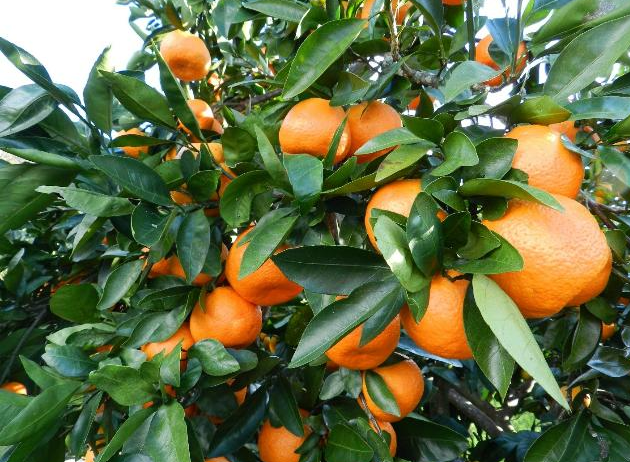
Figure 1. Mature satsumas ready for harvest.
Credit. Pete Anderson. UF/IFAS Extension.
What happens if the plant doesn’t receive the needed amount of chilling hours? Plant hormones can be disrupted, and both leafing and blooming could be light and come outside of the normal range of the season. So, where do we stand in the Panhandle for overall chilling hours? Typically, we see approximately 500 hours chilling hours. Therefore, its best to plant citrus and dooryard fruit that have the characteristic of needing 500 or less hours for chilling. Please see this informative document on citrus and dooryard fruit varieties: https://edis.ifas.ufl.edu/publication/MG248
Now, on to the term cold hardiness. By definition, this is the plants ability to withstand cool season temperatures without injury. Most tropical fruits cannot tolerate our Panhandle temperatures. Those of us that cut back banana trees every year know this all too well. To check your plant hardiness zone, please see the USDA Plant Hardiness Zone Map: https://planthardiness.ars.usda.gov/
Before you plant a fruit tree, make sure you understand about its cold hardiness and whether or not it has a chilling requirement. This will both save you money and a headache, in the end. If you’re in doubt about a particular variety, contact your local extension office.
Any North Florida resident who has tried their hand at growing apples, peaches, or plums may occasionally find themselves frustrated by a year (or two…or three) with a poor or nonexistent harvest. What has gone wrong? Are the trees getting a disease? Were they not fertilized properly?
It may be that the tree owner has done everything correctly, but the weather is actually to blame. The answer to “what has gone wrong?” may lie with a concept called “chill hours”. Plants that are adapted to living in colder climates need some way to figure out when the winter is over. If a plant starts blooming too early, it’s likely that a frost will come along and knock out this year’s flowers. No flowers, no fruit. For a plant, this means no little baby plants this year to keep the species going. To avoid this, some plants have figured out a way to detect and keep track of how cold it’s been in a particular year. When enough hours of cold weather have accumulated, that’s usually a safe signal that spring must be near. This means it’s time to blossom when the weather next warms up.
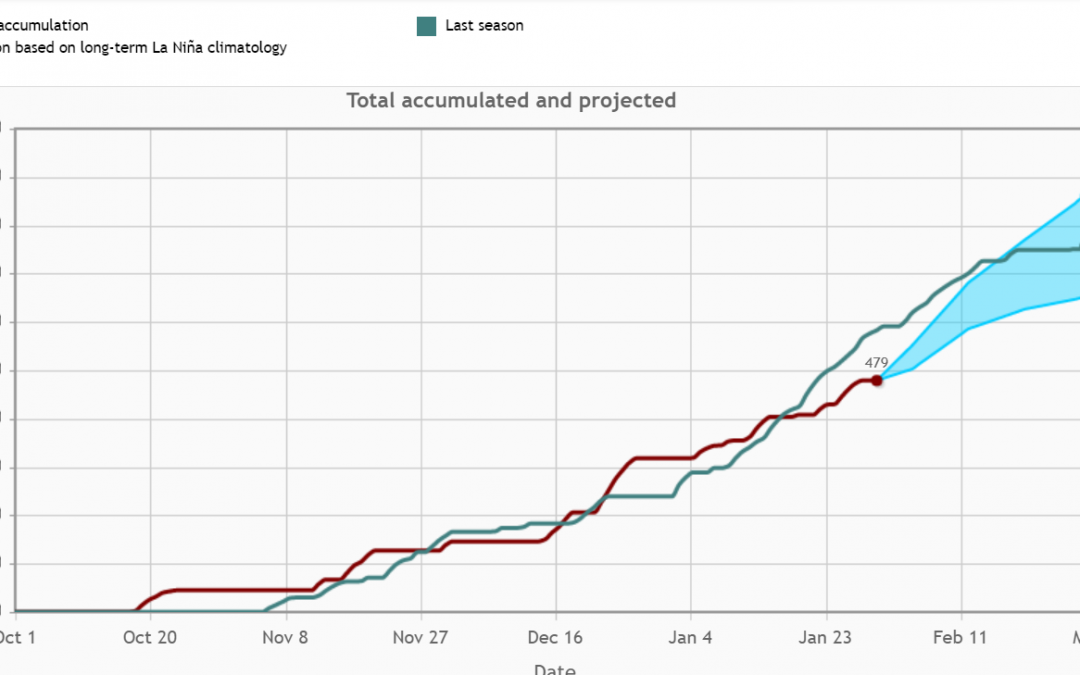
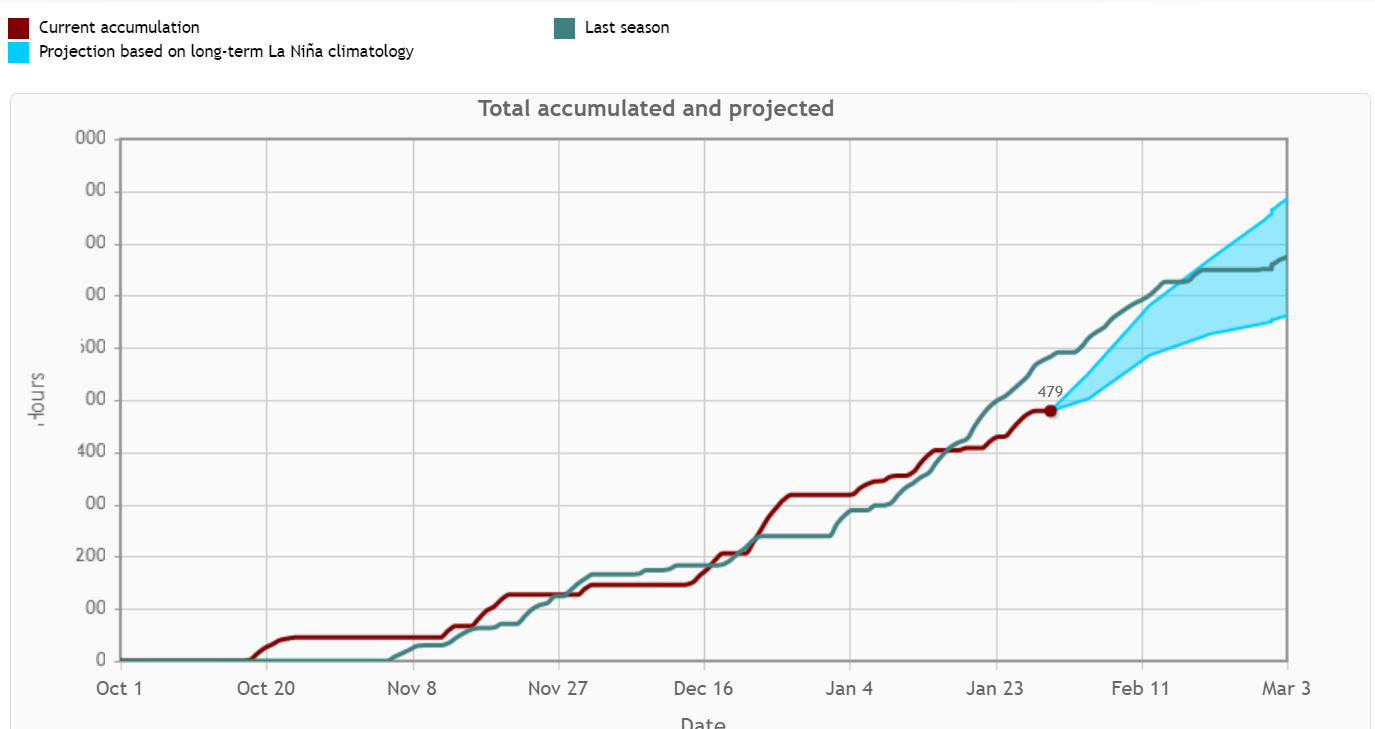
Usually. Different varieties of plants are adapted to blossom at different times of year, depending on the average amount of cold weather the area they live in gets each year. A plant from a colder climate might not start growing flowers until it has detected 1,000 hours of cold…or more! Given that the temperature range that counts as a chill hour is around 32-45 degrees Fahrenheit, you might correctly guess that such varieties will NOT do well in Florida. In north Florida, we receive somewhere from 500-700 chill hours each year. This winter (as of February, 2023), we have received 479 chill hours in Walton County.
Chill hour total for Walton County, as of Feb 1, 2023
That’s not a lot, and we may not get much more weather that plants recognize as cold enough to count. Apple growers with varieties that need even as few as 500 chill hours may not be making many pies this year. So what can be done?
First, temper your expectations. Understand that even though we may get the occasional hard freeze, it may not count any more toward the chill hour requirement than temperatures just above freezing. Then, when it warms up the following week, those 70 degree temperatures may actually set BACK the chill hour clock for some plants.
Second, choose varieties that require few chill hours in the first place. A ‘Honeycrisp’ apple, needing 800-1000 chill hours each year, is probably never going to produce fruit in the panhandle of Florida. Other apple varieties might, though! Try varieties such as ‘Anna’ (which needs only 300 chill hours), ‘Dorsett Golden’ (250 hours), or ‘Tropic Sweet’ (300 hours). For peaches, try varieties like ‘GulfAtlas’, ‘Gulfcrimson’, or ‘Gulfsnow’ (400 hours each).
Third, consider learning to love other types of fresh fruit. Persimmons, figs, kumquats, and loquats may not show up very often in treasured family recipes, but they can offer a tasty alternative to plants that simply might not be well adapted to our climate.
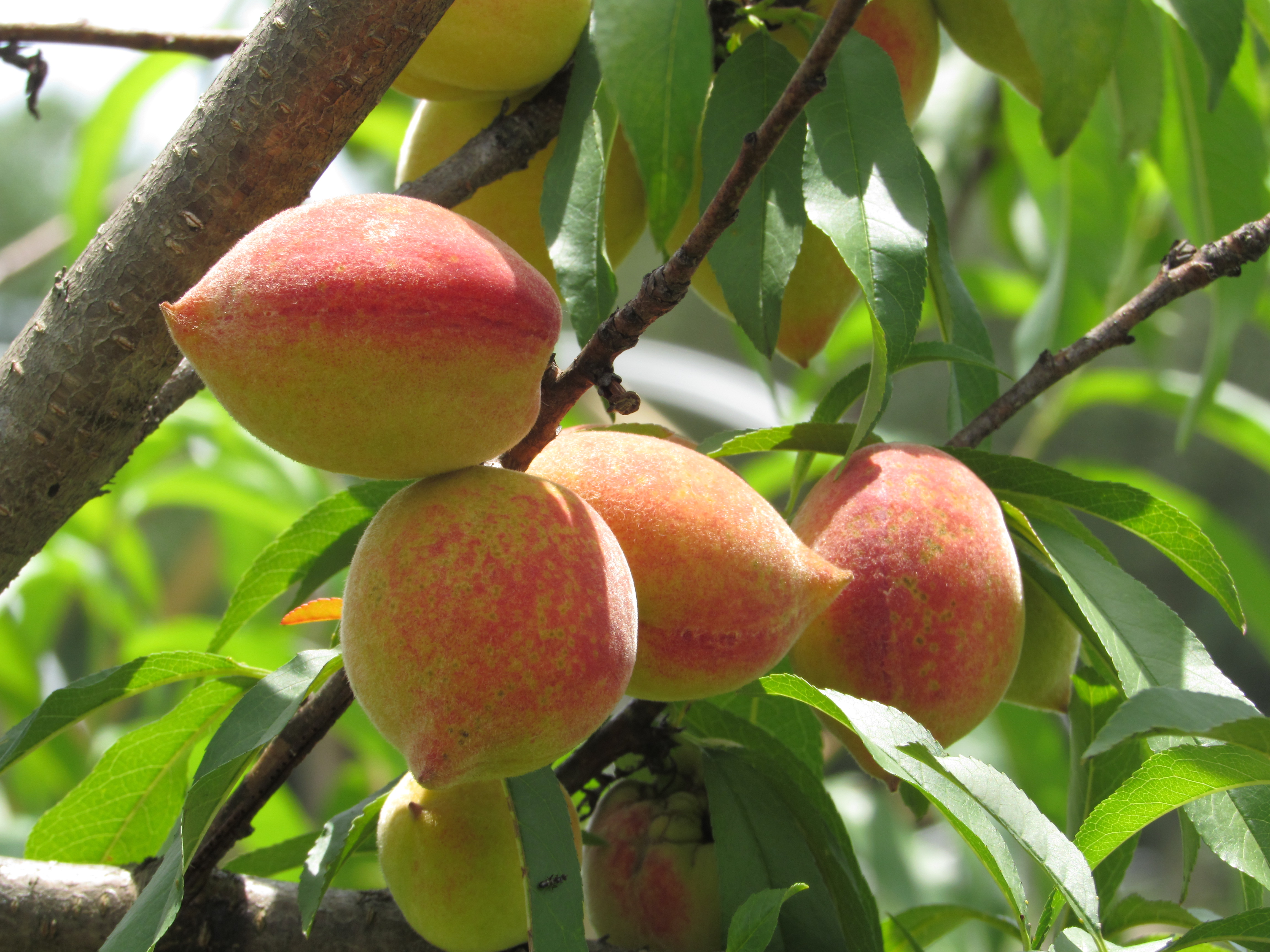
Peaches are popular, but they may not produce fruit every year!
For more information, try these links:
To calculate how many chill hours your specific area has received, check out the tool at agroclimate.org.
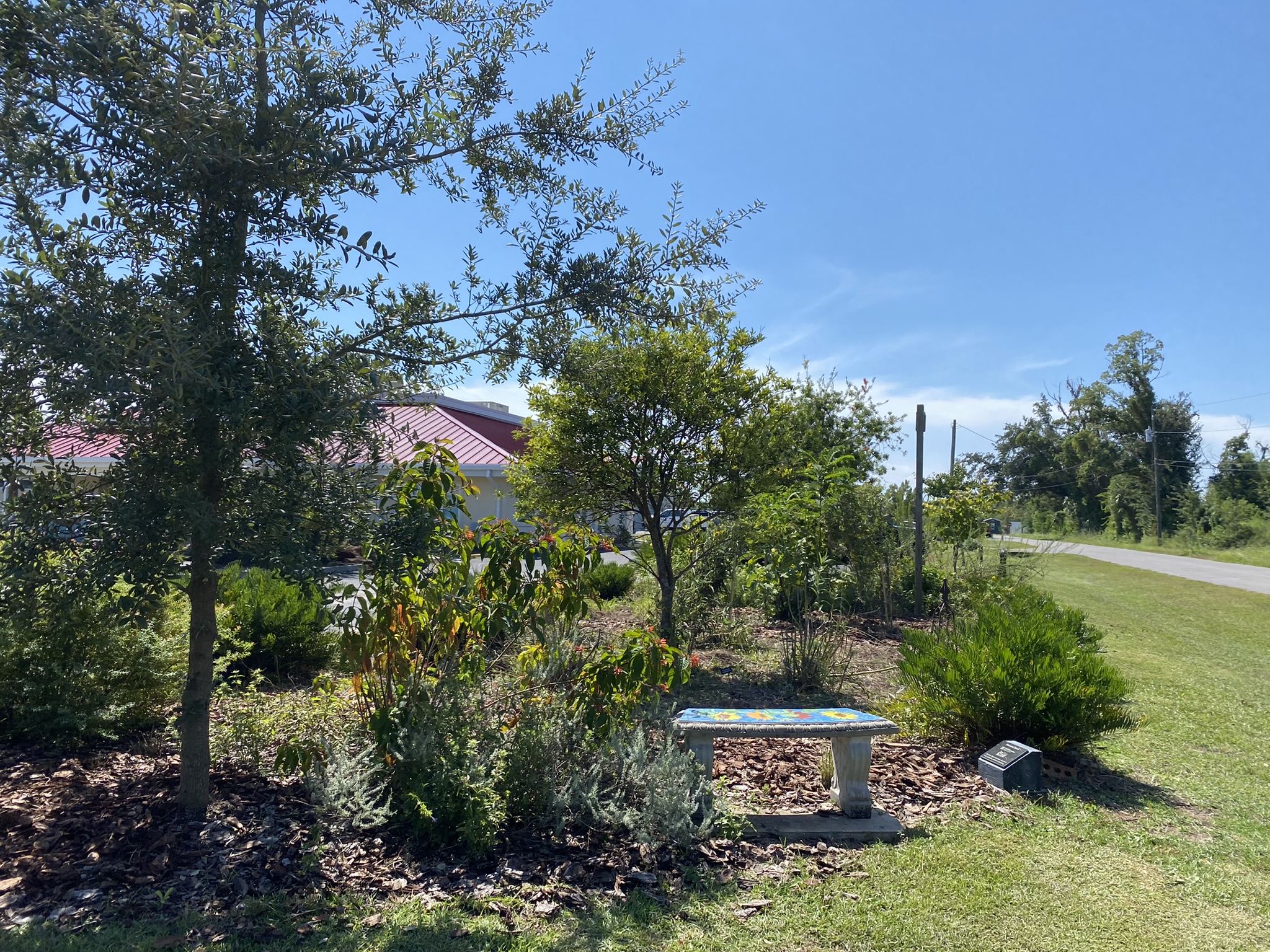
Have you ever visited a public garden or a park and wondered what type of plant you were looking at? Or found the name on a sign but wondered – can I grow that at my house? How big will it get? Does it have flowers, berries, keep its leaves in the winter? We feel your pain, fellow plant lovers!
Gardens are ever evolving and providing up to date printed information on all the plants can become difficult to manage and involve a lot of wasted resources. In Bay County, we have several gardens at the Extension Office, and we try to keep everything labeled, but space on signs is limited to plant name and we want to teach gardeners how to grow not just identify plants. To expand outreach of Florida-Friendly plants, we have created a website with all the plants in our demonstration gardens.
The site is organized by garden area, common name, and botanical name to ease navigation. Each plant profile has photos at different stages, basic cultural information, and links to additional research-based information.
Whether you are visiting our gardens in person or just want information on plants that perform well in the Florida Panhandle, we hope you will check out our new site and let us know if you found it useful and how we can improve.
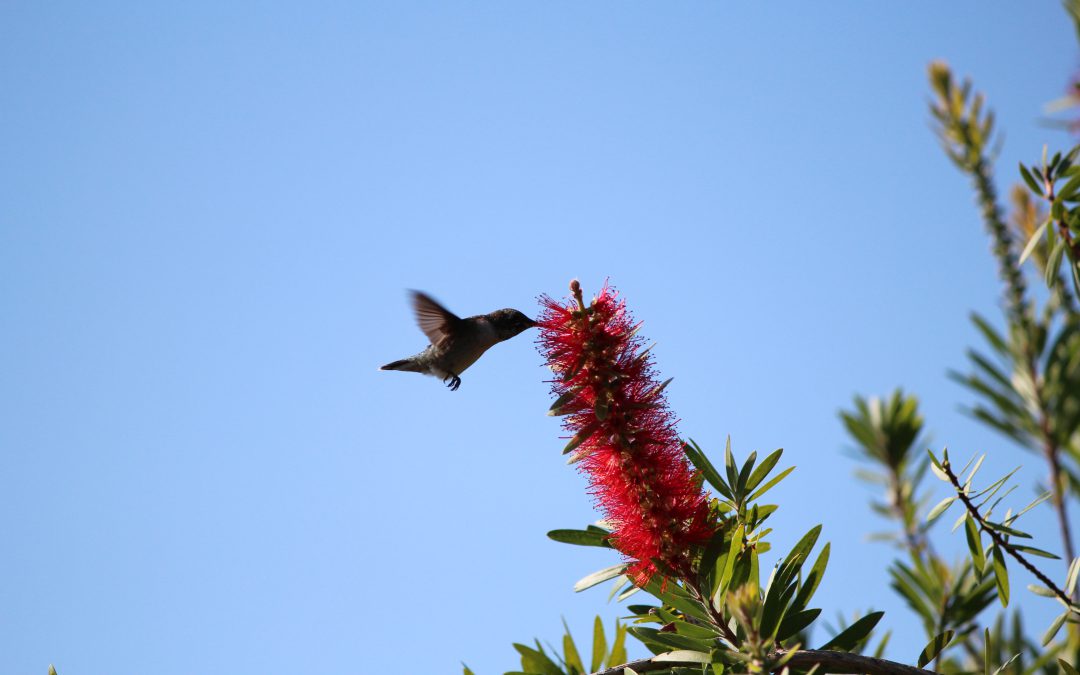
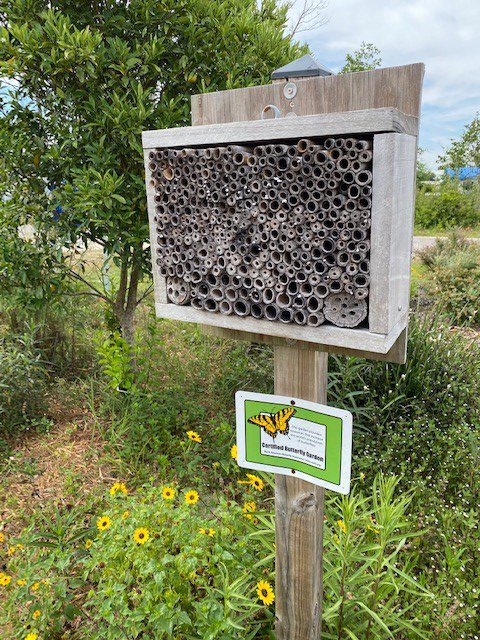
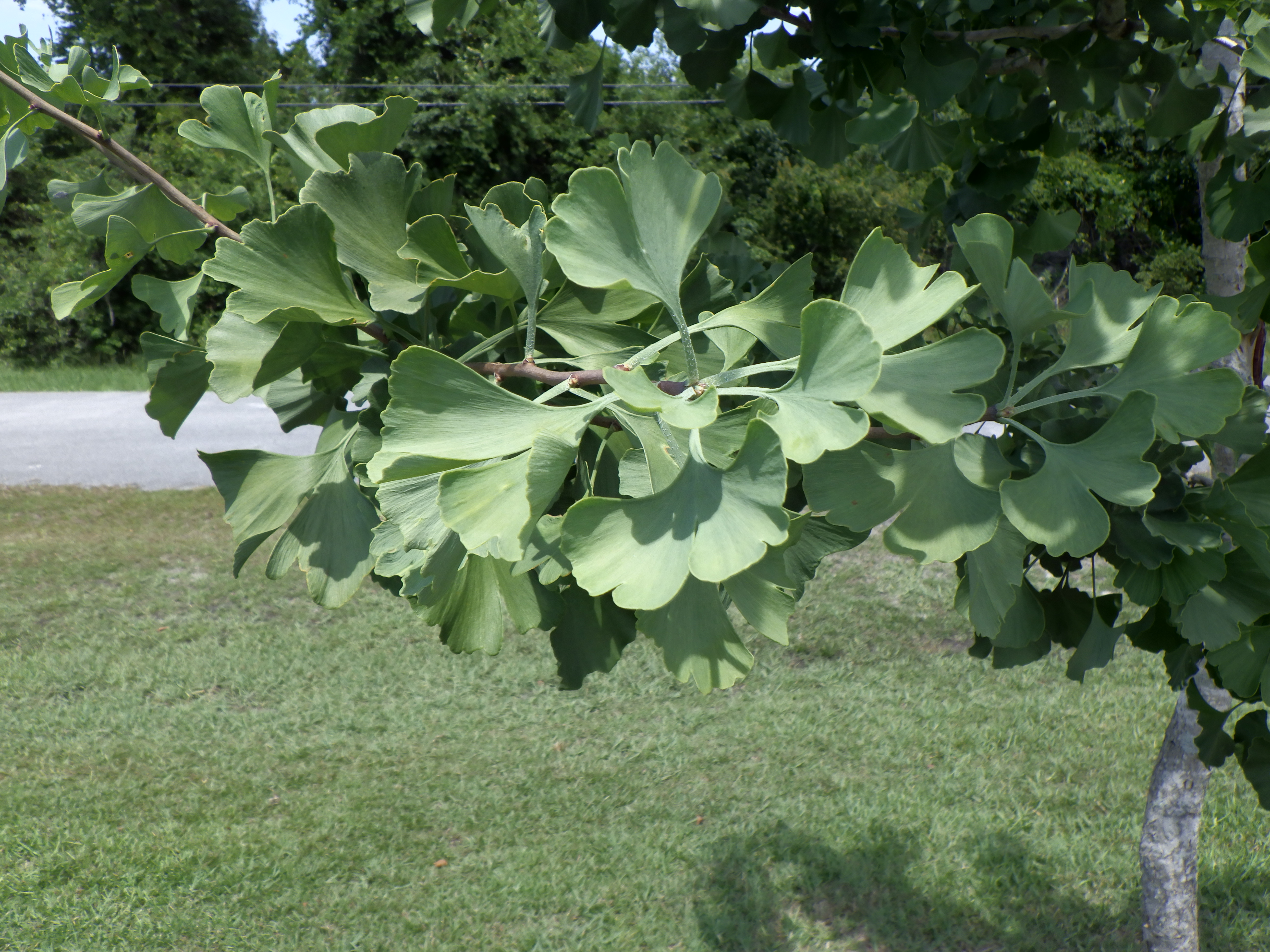
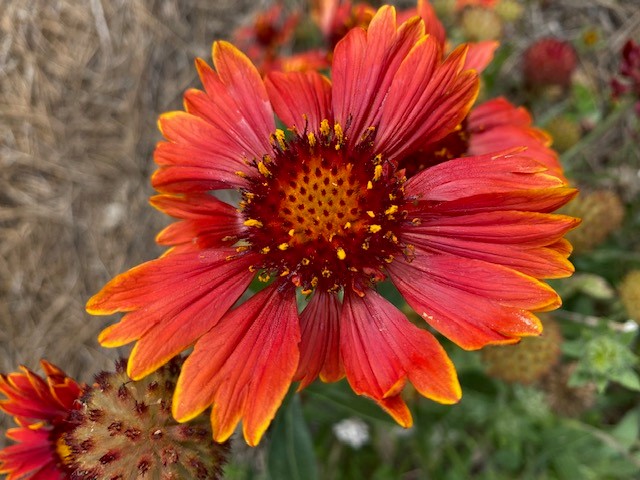
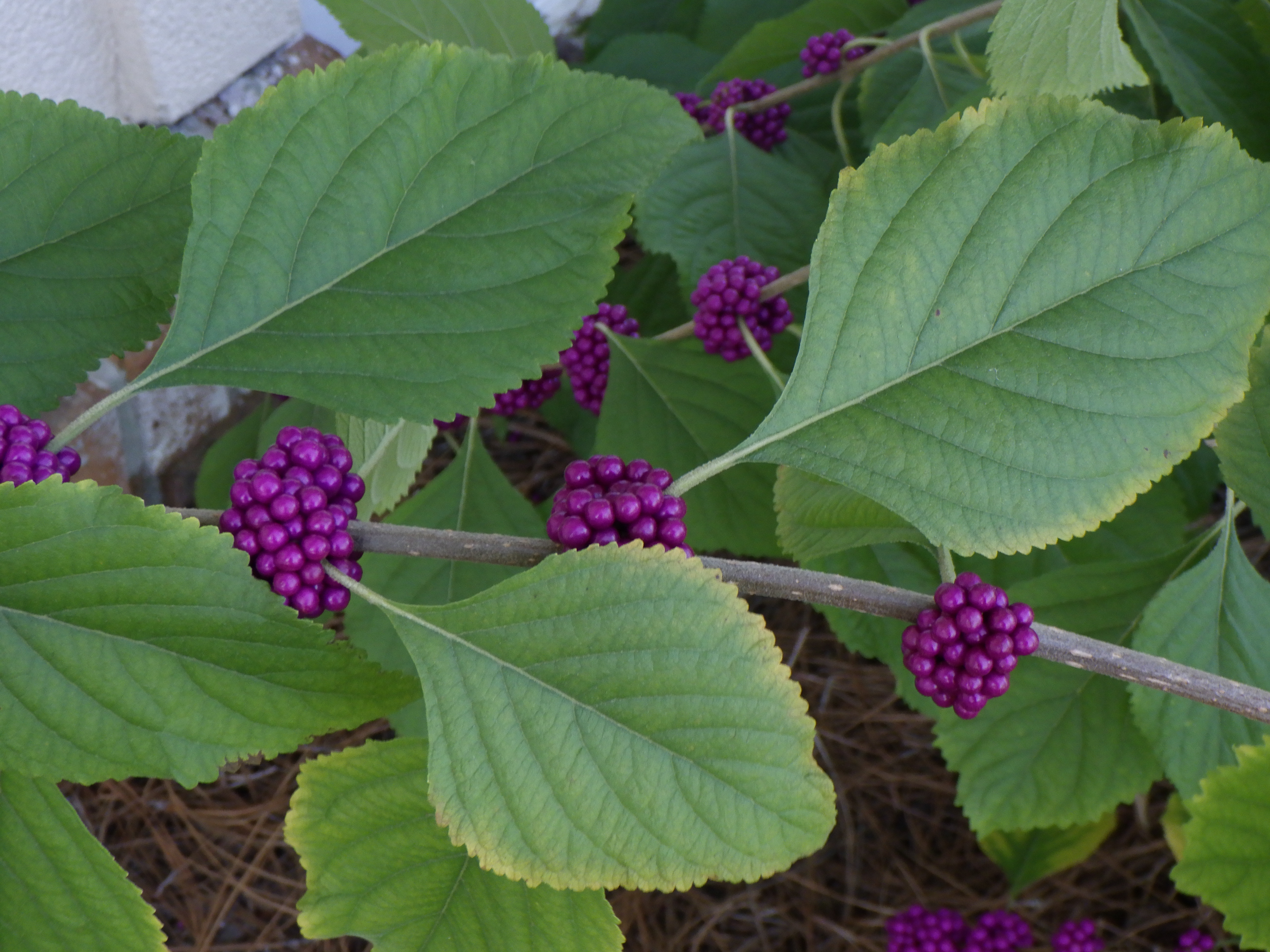
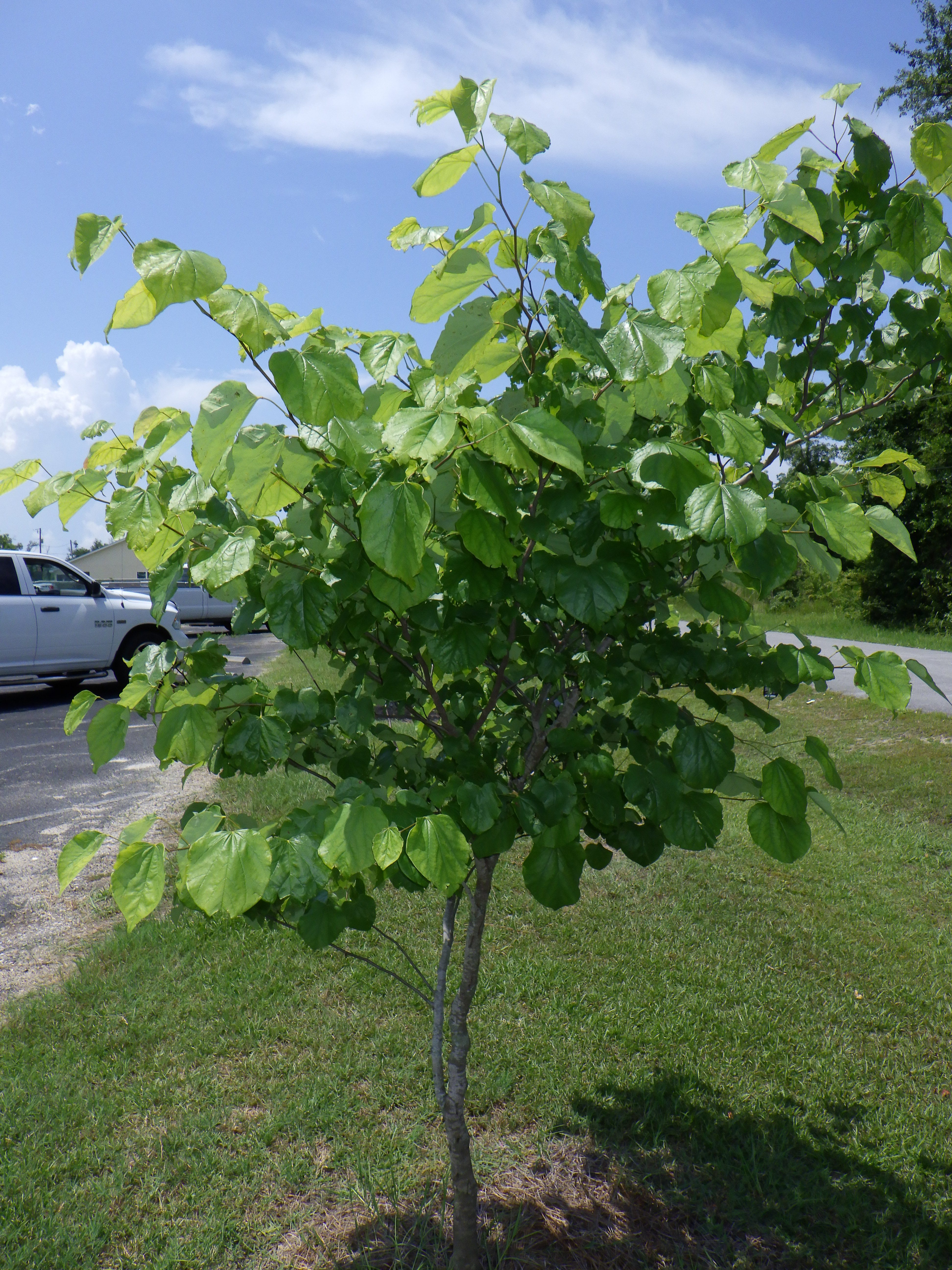
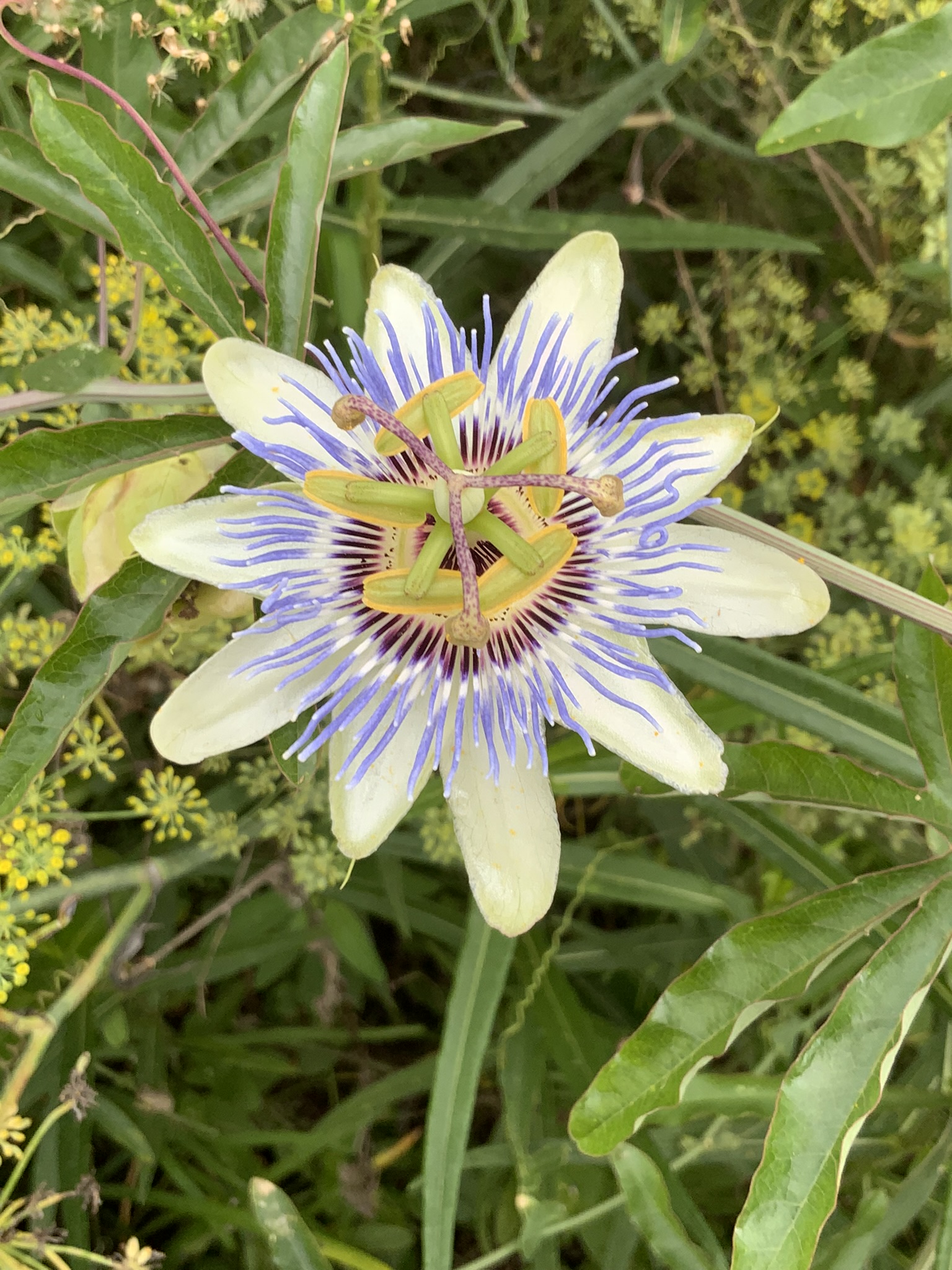
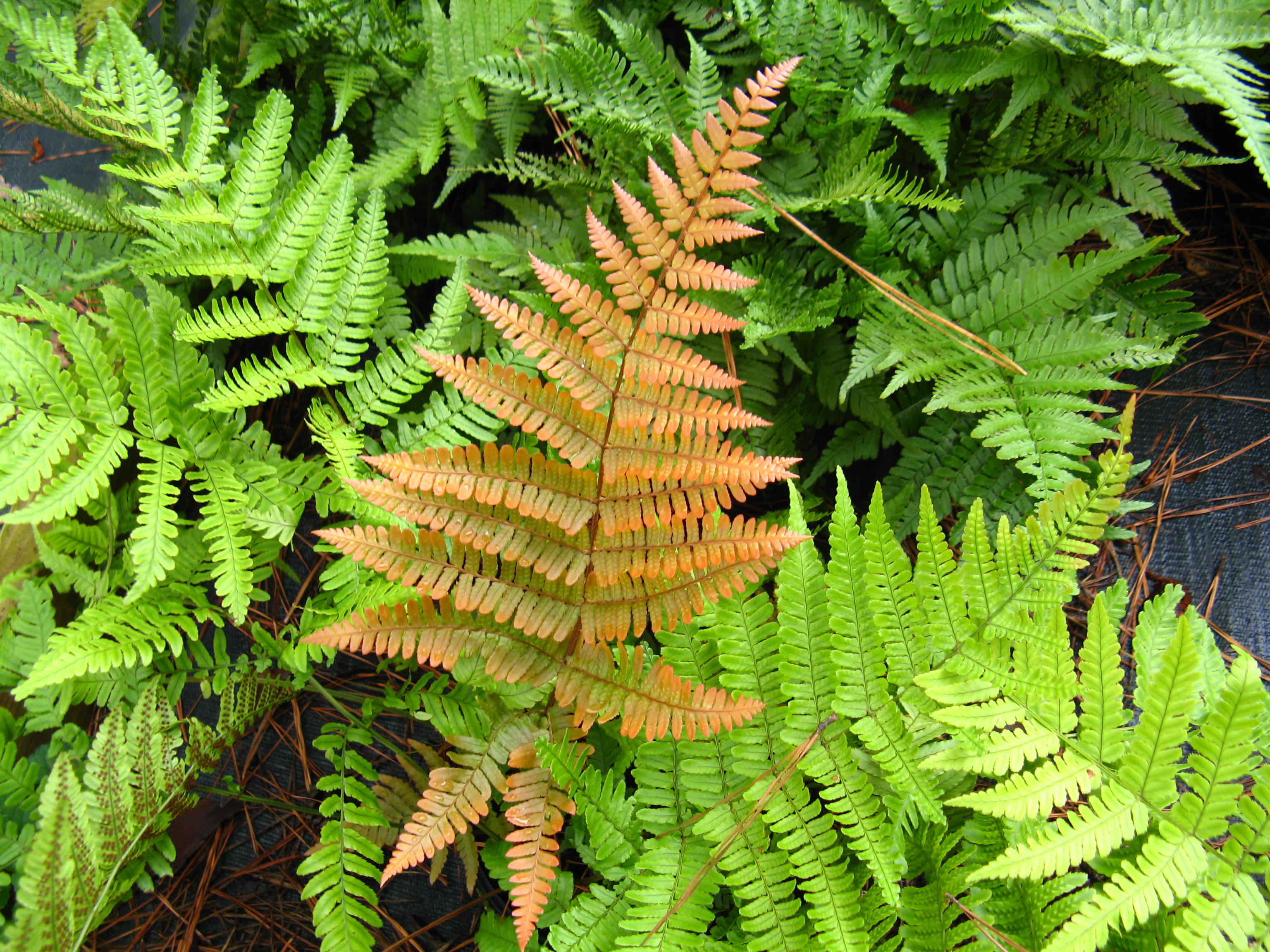
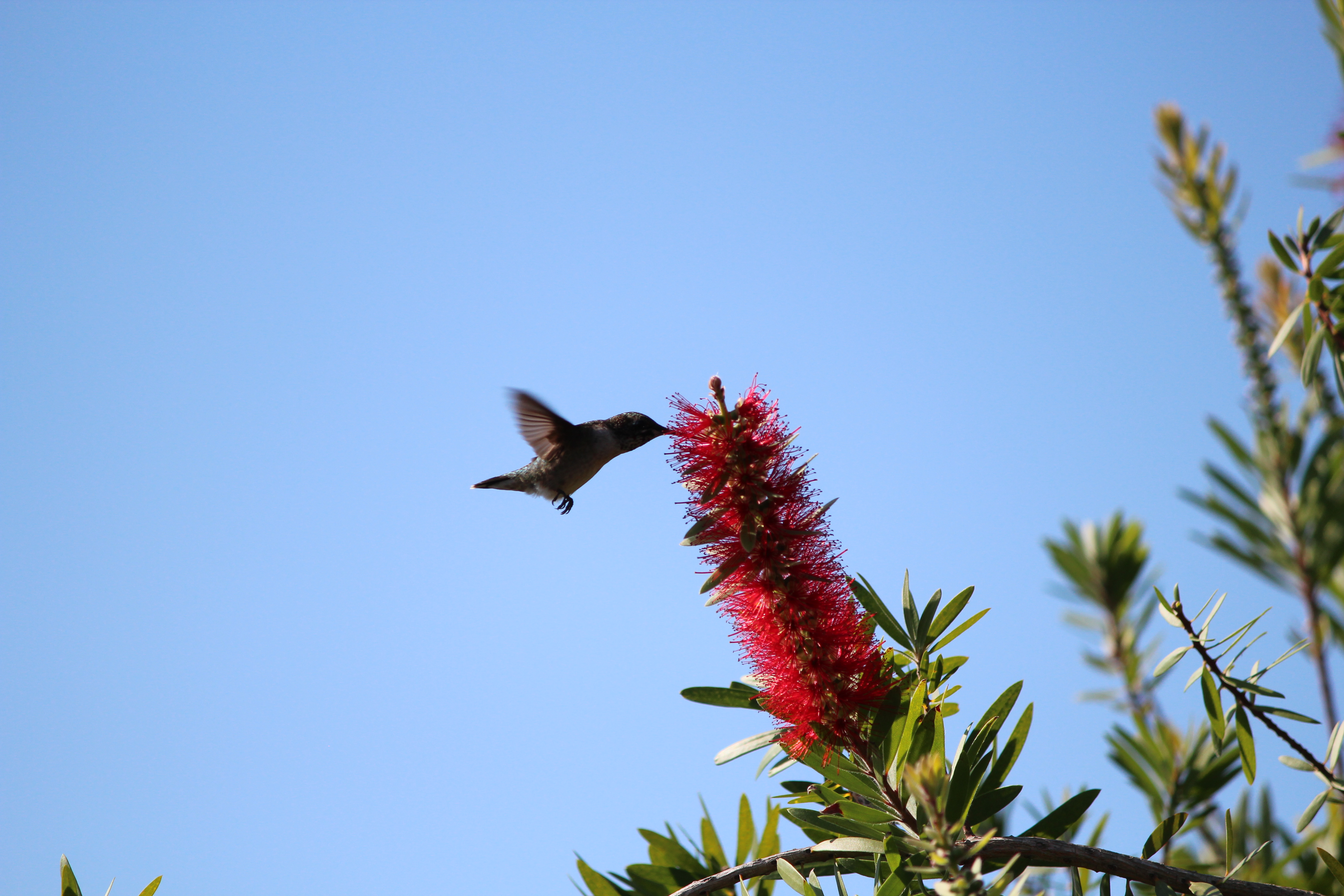
Pollinator hotel. J. McConnell, UFIFASGinkgo leaves. J. McConnell, UFIFASBlanket flower. J. McConnell, UFIFASAmerican beautyberry. J. McConnell, UFIFASEastern redbud. J. McConnell, UFIFASPollinator garden. J. McConnell, UFIFASMaypop flower. J. McConnell, UFIFASAutumn fern. J. McConnell, UFIFASHummingbird at red bottlebrush flower. J. McConnell, UFIFAS
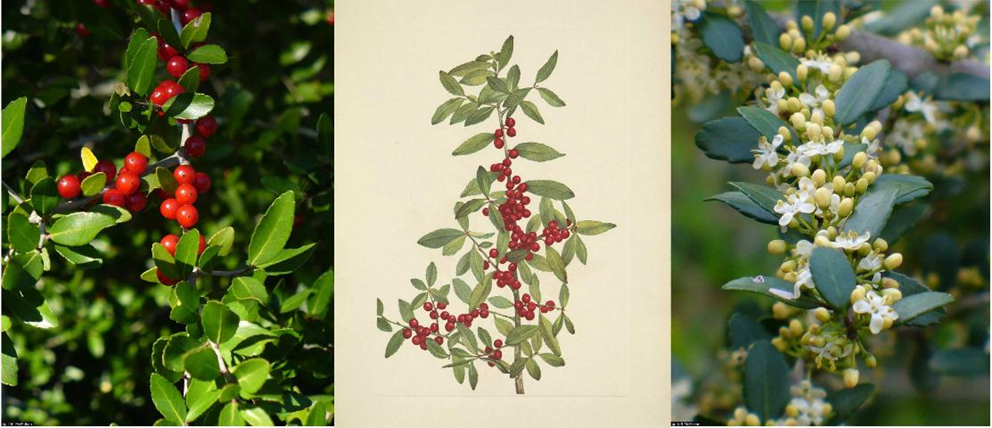
Credit: Jeff McMillian, hosted by the USDA-NRCS PLANTS Database. Illustration credit: Mary Vaux Walcott, North American Wild Flowers, vol. 3 (1925)
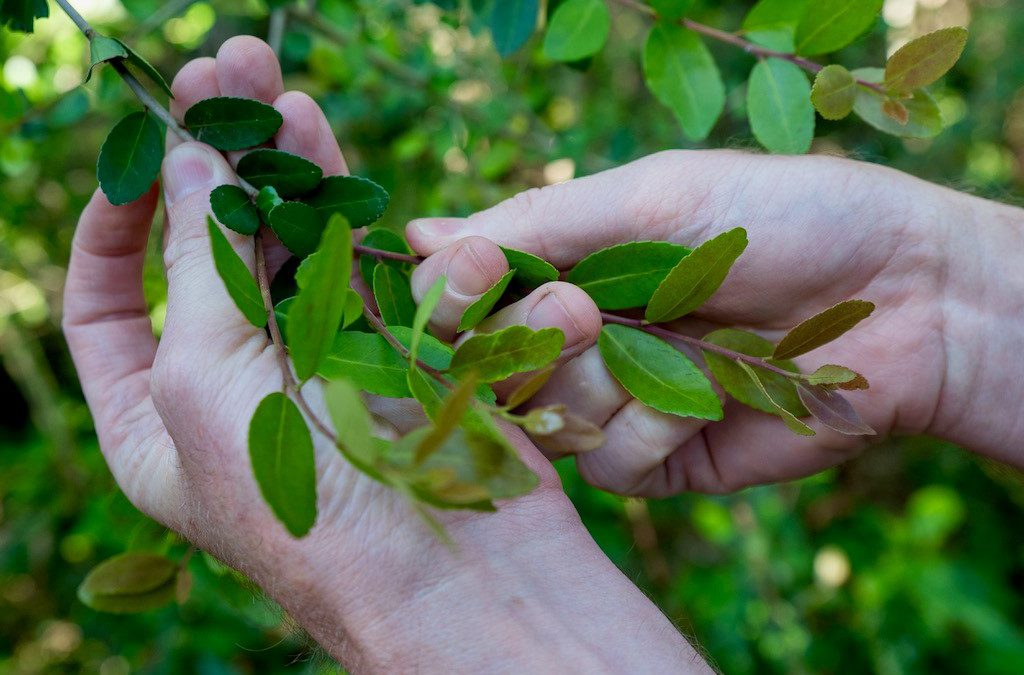
Yaupon hollies, Ilex spp., are a native plant to Florida that grow very well and abundantly in our local soils. The yaupon holly is one of the hardiest holly species found in Florida. You may see this holly grown as a tree, large or small specimen shrub, or even as a hedge. Using a low-input native plant like yaupon in the landscape can result in less nutrient pollution, reduced water use and resilience through drought, freezes, and hurricanes. This plant thrives in the southeast and is hardy up to USDA zone 7. They can even tolerate temperatures as low as 10F for short periods of time. Pollinators are also attracted to the yaupon flowers – if you are trying to attract bees for other crops on the farm, this is the plant for you! Growing yaupon is much easier than other crops because the species can handle a variety of conditions, from full sun to light shade and soil from dry to wet. Growth rate is moderate when they are young and slows as plants age. Yaupon hollies are good for stabilizing the soil, preventing erosion, and providing a habitat for wildlife.
Yaupon is a very old plant that historically has been used as an important food source, medicine and even a ceremonial item by Timucua Indigenous groups for thousands of years. The Timucua people of Florida believed that yaupon purified the mind and body of those who drank it. Yaupon is the only naturally caffeinated plant species grown in the United States. It provides a balanced caffeine boost without the bitter tannins that you get from regular tea. Yaupon contains 30% less caffeine than coffee but provides a dose of theophylline and theobromine. These 2 compounds provide an energy that will not cause jitteriness and caffeine crash that other caffeinated beverages can give you. There are also dozens of vitamins, minerals, amino acids, polyphenols and antioxidants to protect the body, and these can help calm the mind as well.
‘Schilling’s Dwarf’ is a yaupon cultivar perfect for homemade tea production. The plant gets no taller than four feet and four feet wide. While you can make yaupon tea from any yaupon holly cultivar, all ‘Schilling’s Dwarf’ clones are also all male, which means no berries will get in your way of harvesting leaves. To prepare tea from the yaupon plant, leaves are removed from the stems and lightly washed, discarding any berries and debris. The stems may also be used and will not change the flavor. Next you will dehydrate leaves and stems by air or sun drying. Leaves can be stored whole or crushed and blended into smaller pieces if desired. These leaves produce a caffeinated beverage that is similar to green tea with grassy flavors. If these same leaves are lightly roasted, over a hot pan or in the oven, it will produce an earthier beverage that can have notes of malt and toasted coffee.