by Evan Anderson | Jan 20, 2022
Florida’s state observance of Arbor Day falls on January 21st in 2022. On this day, people are encouraged to plant trees and recognize their importance. Trees provide us with shade and shelter, filter air and water, and increase biodiversity as well as acting as a source of materials for building and industry. Half of Florida’s land area is forested and North Florida has a large timber industry. Given the importance of trees to our wellbeing and the erratic and sometimes extreme weather in our region, the question occasionally arises, “What trees are best to plant here?”.
The answer to that question depends heavily on the needs of the person asking it. A landowner looking for long-term profit from forestry may choose to plant longleaf pines, despite the risks that hurricanes pose. A homeowner desiring a shade tree, however, might want a different answer.
There are plenty of varieties of trees that grow well in the panhandle of Florida, and the further one lives from coastal areas, the greater the options. Particularly along the shores, however, choices are limited by soil types, exposure to high winds, and even salt spray. So which are the toughest and hardiest trees for our area?
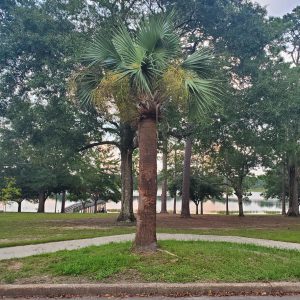
A sabal palmetto.
Florida’s state tree is the sabal palmetto. Also called the cabbage palm, this palm is particularly cold tolerant, withstanding temperatures down to 15º F. Once established, they are drought tolerant and fairly resistant to pests and diseases, as well as being particularly sturdy in high winds. Though they may be thought of as “common”, this is a testament to their survivability in our climate and they should not be dismissed as an option for landscapes.
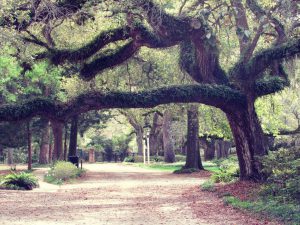
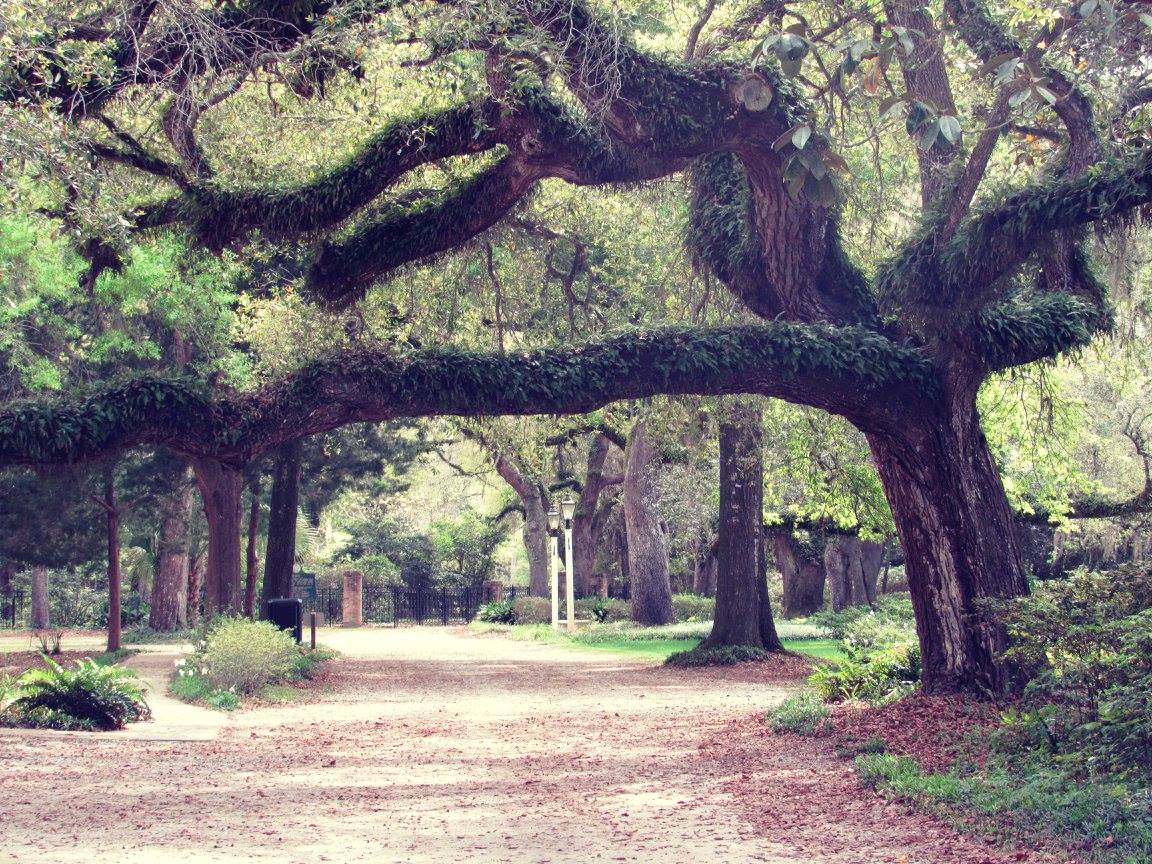
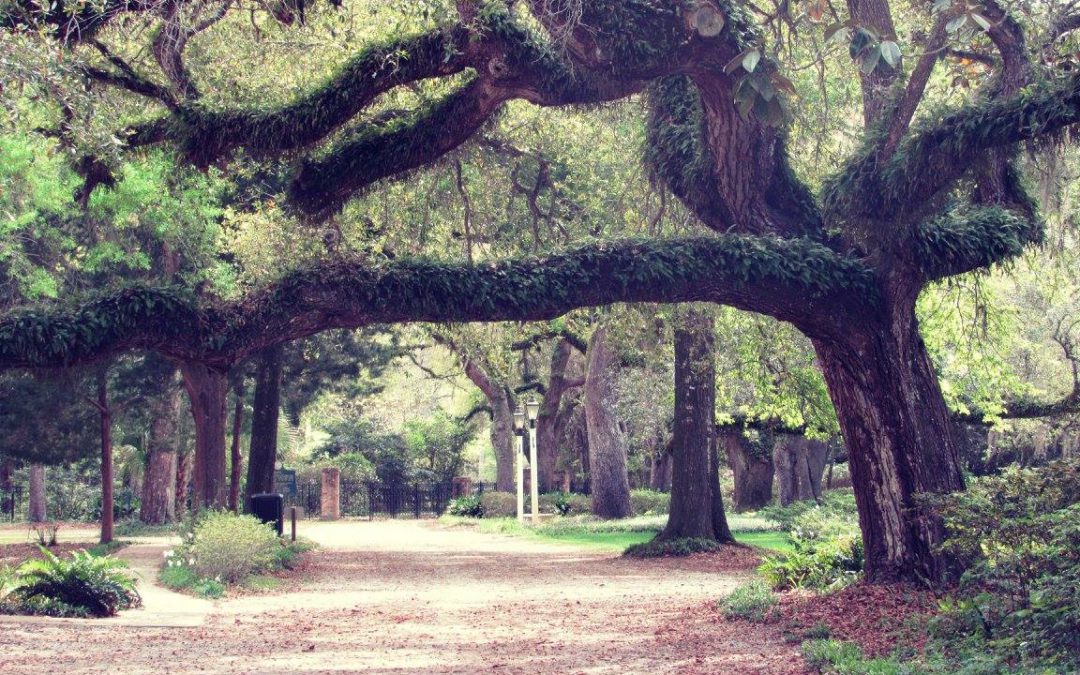
A large, old Southern live oak.
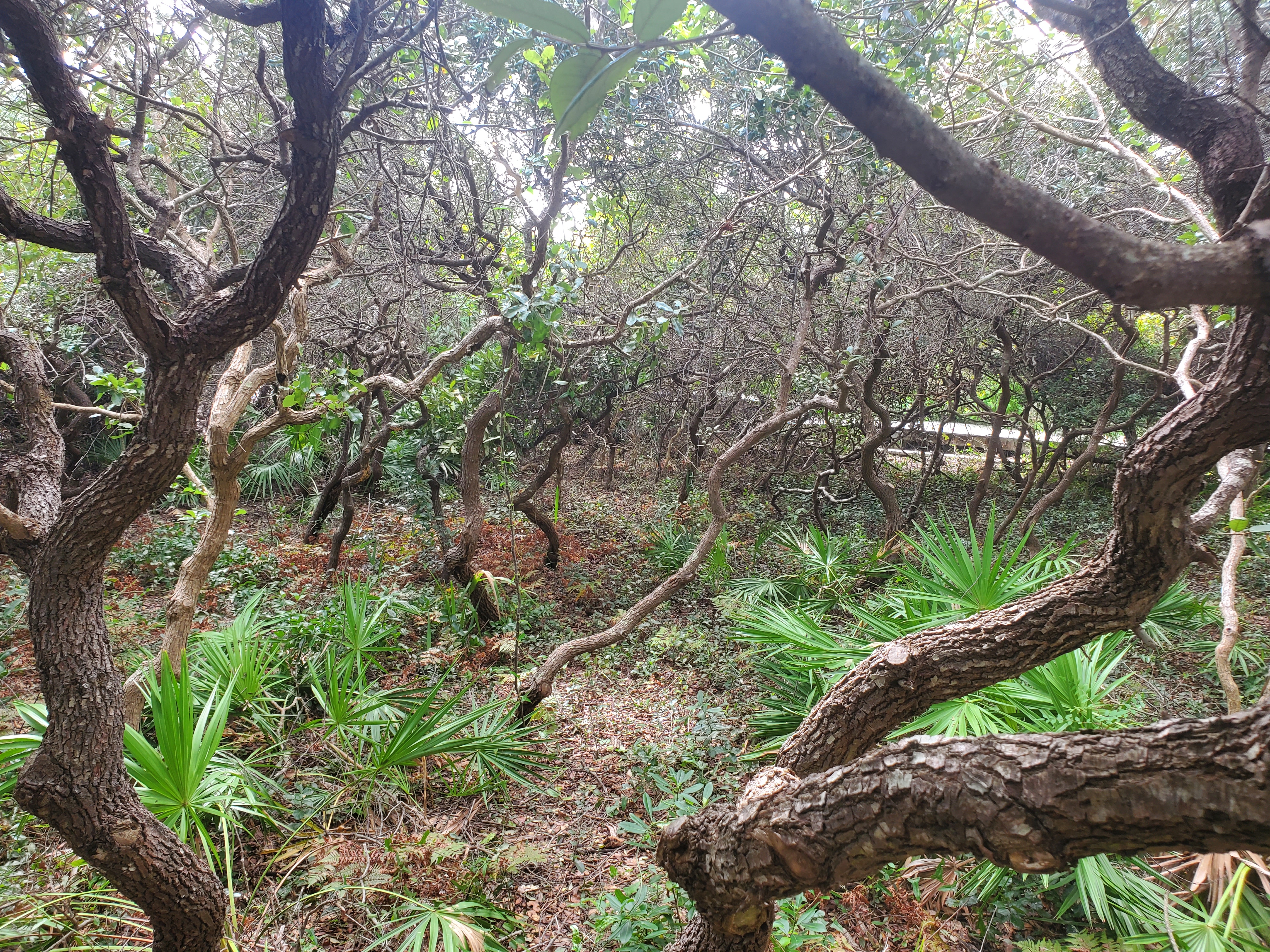
Both the Southern live oak and especially the sand live oak are exceptionally survivable trees. Sand live oak is found closer to the coast, where it tends to grow in beautiful multi-trunked forms slightly inland, or in lower thickets along the dunes. It tends not to reach the same heights as Southern live oak, but does well in the harshest of
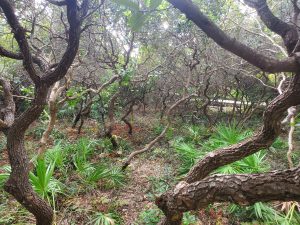
Sand live oaks growing near the beach dunes.
conditions, lasting through almost anything nature can throw at it. Even if defoliated by heavy storm winds, these trees survive. Hurricanes claim only the occasional live oak that catch enough wind to uproot and topple the entire tree, which is not a common occurrence.
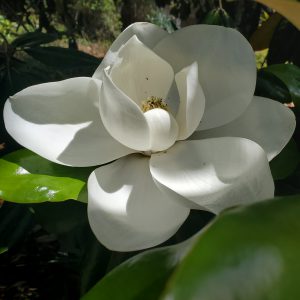
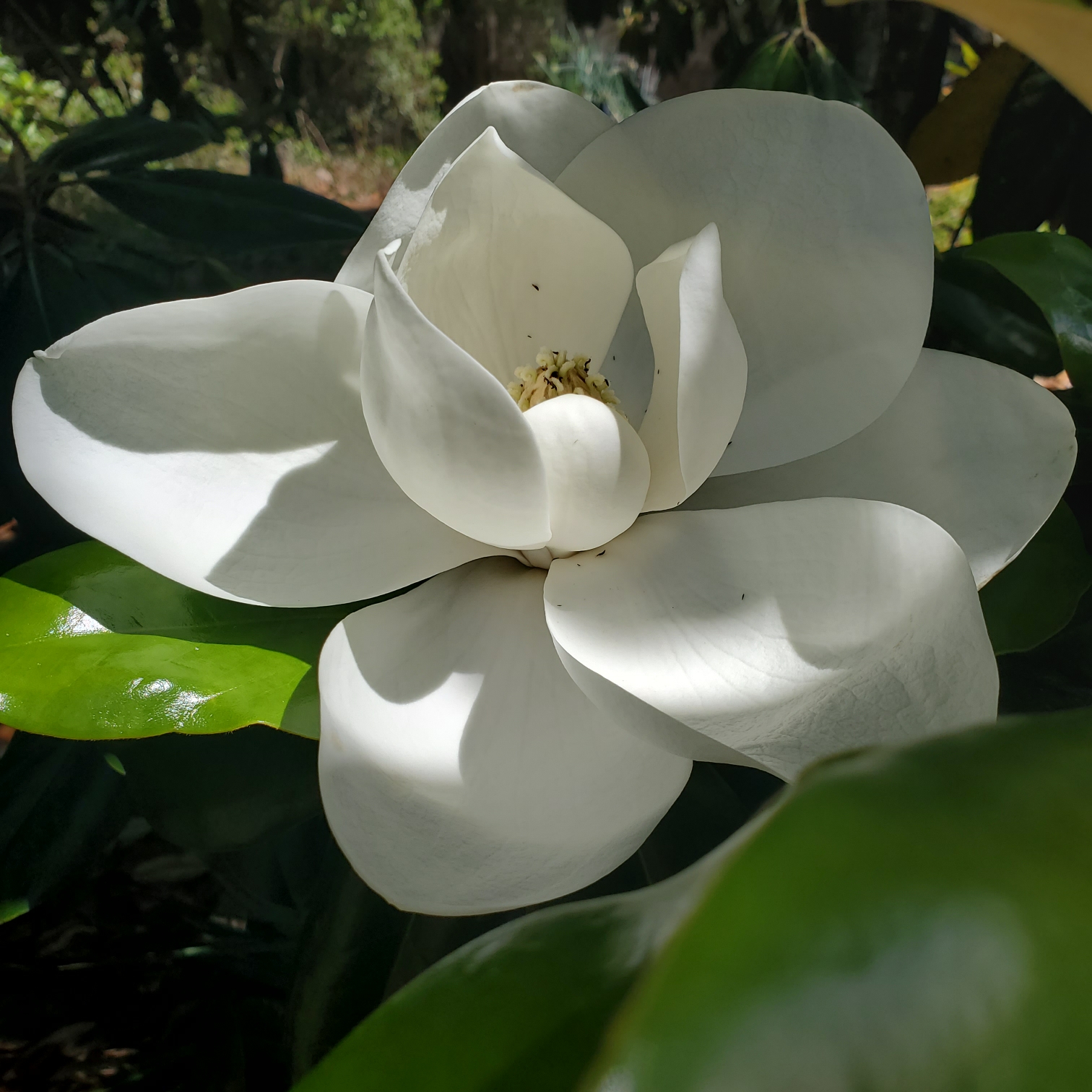
The bloom of a Southern magnolia.
Southern magnolia comes in many sizes, from huge old specimens to more compact cultivars such as ‘Little Gem’, which can be trained to grow as hedges. Tolerating a wide range of soil moisture, these trees are rarely harmed by disease, though scale insects often take up residence on their leaves (which rarely seems to bother the trees, even if infestations are heavy). With gorgeous and fragrant blooms in the springtime, Southern magnolia stands up in high winds and makes an excellent addition to a landscape.
For more information on trees that do well in storms, see our EDIS publication on the topic. Also note that native species, trees that are properly pruned, those that are well established as opposed to newly planted, and trees free of disease or damage tend to survive better in any case. Ensuring that plants of any sort are placed in the right spot can serve the landscaper well in the long run as well – see the Florida Native Plant Society’s website for help in choosing the right plants. As always, your local Extension office is available to assist with questions as well.
by Matt Lollar | Dec 16, 2021
Trees provide shade, aesthetics, and perspective to the landscape. However, they only serve as burdens if not properly selected and maintained. To help determine what trees do best under certain conditions and to provide information on tree care, this month’s Gardening in the Panhandle LIVE! was all about trees.
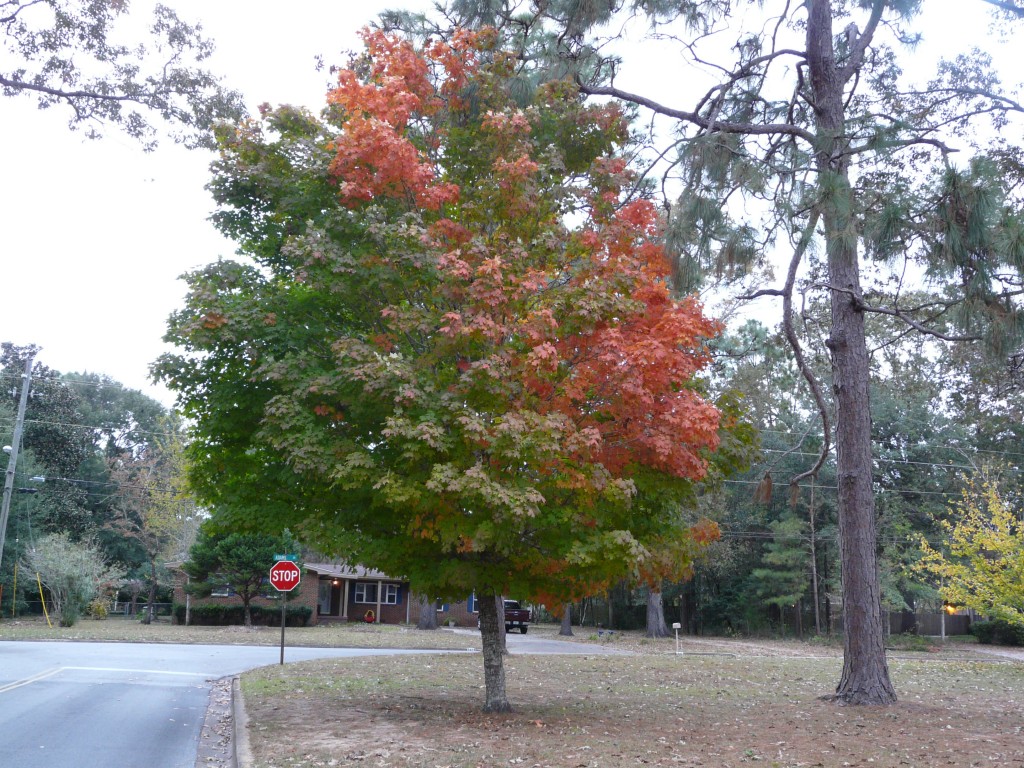
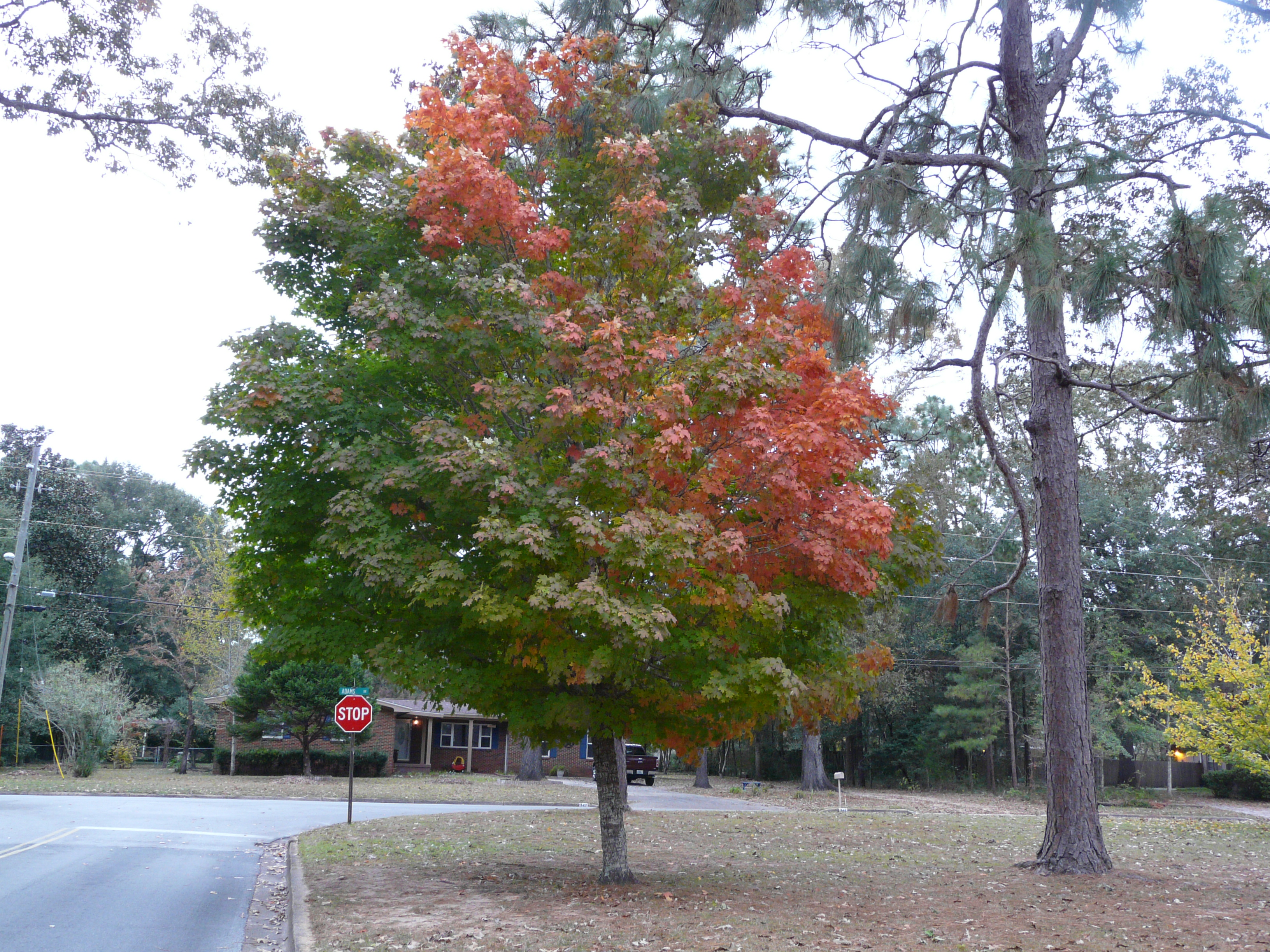
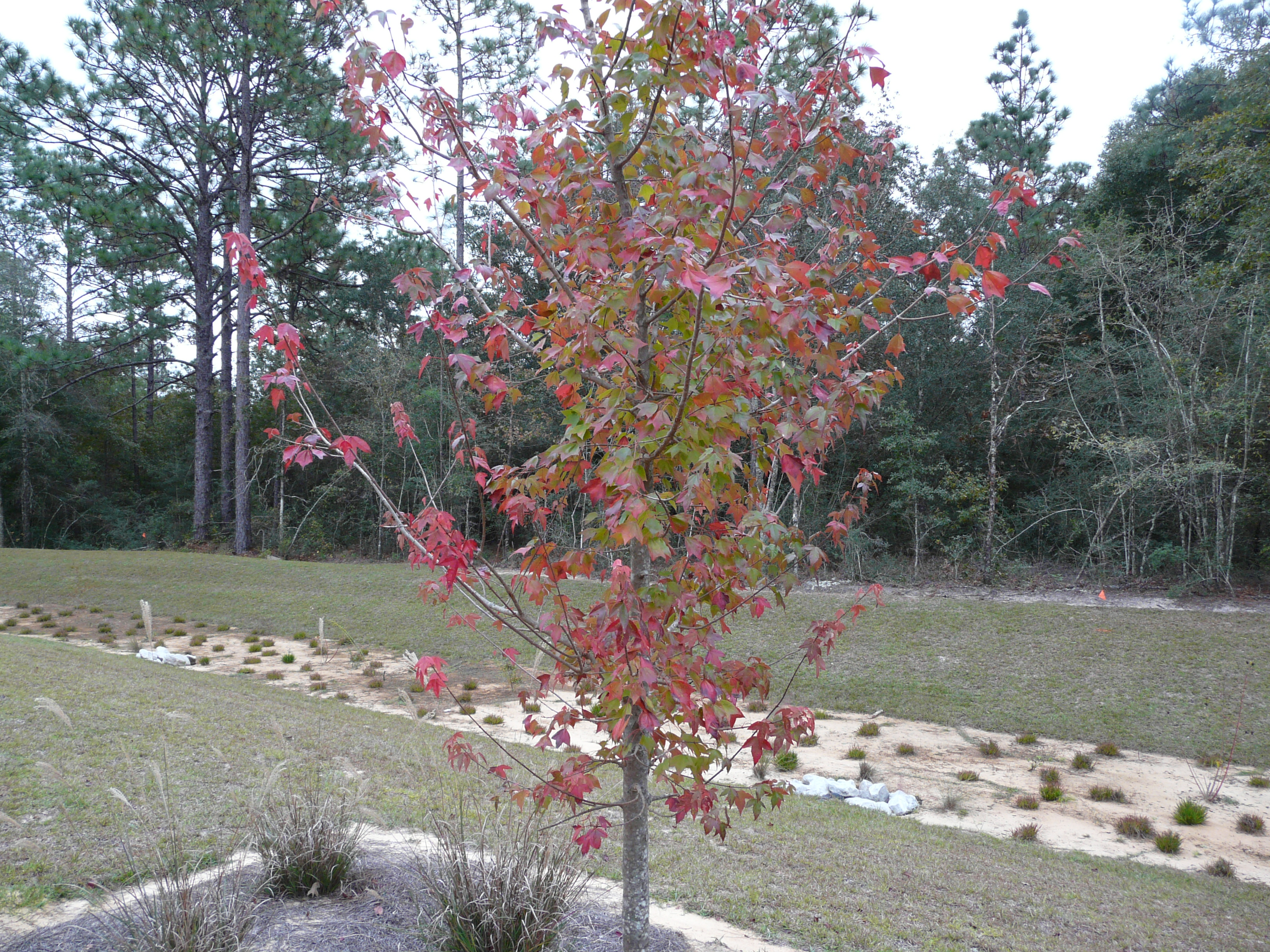
Florida maple beginning to exhibit fall color. Photo credit: Larry Williams, University of Florida/IFAS Extension – Okaloosa County
Tree Selection
Some trees grow faster than others. That’s not always a good thing, but if you’re trying to select a tree that grows fast and will provide shade in your yard then you might want to give the following species a try. Click on the links for more information.
A lot of times you’ll read a particular tree species prefers moist, well-drained soil. Some coastal soils are very well drained and require supplemental irrigation after establishment to keep some species alive. One tree that does well in sandy, well-drained soils without supplemental irrigation is the sand live oak. Another tree, that would never win a popularity contest, but does well in sandy soils is the sand pine. This tree has a gnarly growth habit, which would make it an interesting focal point in the landscape. Turkey oaks are another option for dry spots.
There are a lot of fruit tree species that can be grown successfully in the panhandle. The key to good fruit production is selecting trees that are adapted to the average number of chill hours (usually calculated by the number of hours between 34ºF and 45ºF) your yard receives on a yearly basis. Some peaches, plums, and nectarines have been developed for our climate. Citrus such as satsumas and tangerine hybrids grow well in the panhandle, but sometimes require cold protection. Persimmons, loquats, and pears are other fruit trees that grow well.
If you already have mature trees in your yard, then you may be looking for smaller, understory trees to enhance your landscape.
Living this far south, you often have to really seek out trees that change color in the fall. Dogwoods, Florida maples, and blackgum trees all have great fall color. Some of the red oaks also have nice fall color. Two that come to mind are the nuttall oak and the Shumard oak.
Trees can cause a lot of damage if planted too close to sidewalks or buildings. To determine if a tree will fit in a confined space, you will need to consider its mature trunk flare diameter.
Florida is the southern extreme for growing ginko trees. If you decide to plant a ginko tree, make sure to select a male cultivar to avoid stinky, slippery fruit.
To successfully plant a tree, you need to start with a healthy tree. If the tree you purchase was grown in a pot, make sure it isn’t rootbound and doesn’t have encircling roots. You also should inspect the tree’s form, branching structure, and look for the presence of included bark. Please read “Selecting Quality Trees from the Nursery” for more tips on what to look out for when purchasing a healthy tree.
Some trees are more tolerant than others of high winds and flooding. Please read this publication about tree failure from hurricanes to help determine what tree species are better adapted to these weather events.
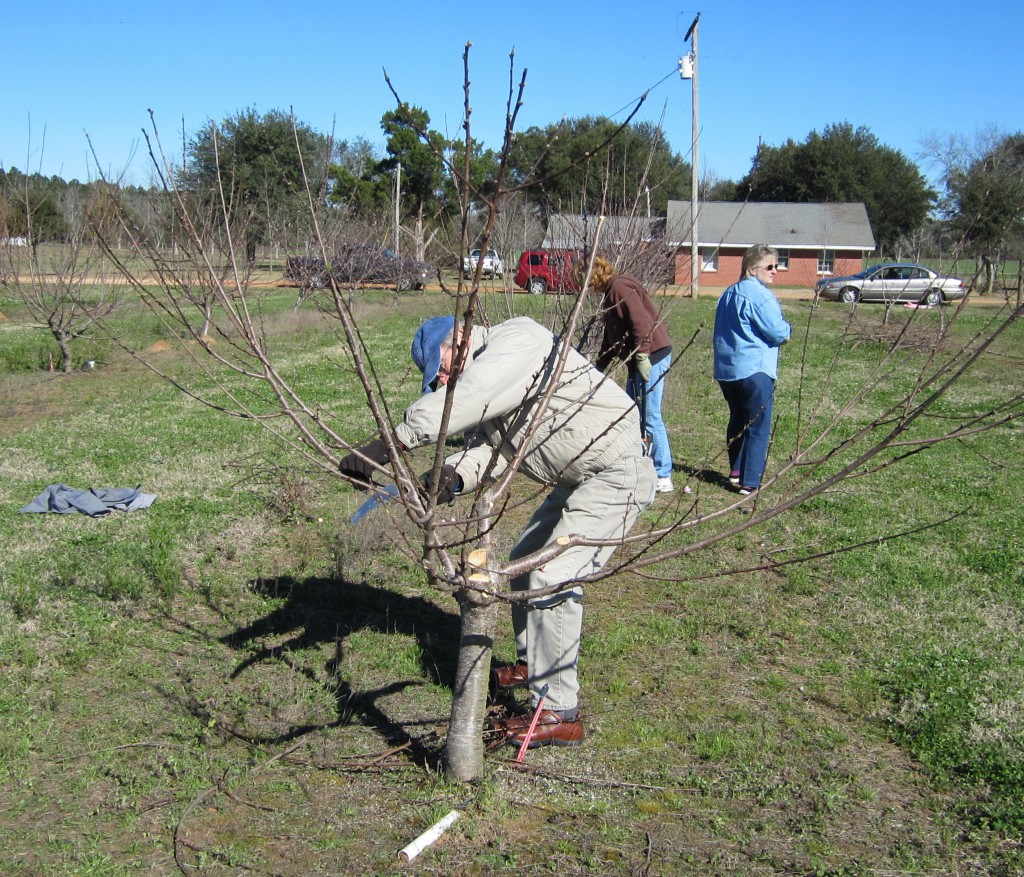
Santa Rosa County Master Gardener Pruning a Stone Fruit tree at the WFREC. Photo Credit: University of Florida/IFAS Extension
Tree Maintenance
Armillaria is a common fungal pathogen that infects trees from their roots. Other major diseases are more specific to certain species. A more comprehensive list of tree and shrub diseases can be found on the Ask IFAS website.
Tree establishment period depends on a lot of factors. Once a tree is established, it’s roots can be equal to about three times the distance from the trunk to the dripline.
Part of the beauty of a bald cypress is its knees. However they can also be a nuisance for mowing and other yard maintenance. The purpose of cypress knees is a bit of a mystery and there are a lot of theories on the subject.
Fallen leaves can help add nutrients back to your yard. Even if you are trying for a manicured lawn, you may want to rake up the leaves and use them elsewhere in the landscape.
Regardless of the species, most fruit trees benefit from a good pruning. Deciduous fruit trees should be pruned to maintain good branch structure and form, while citrus may benefit from a light hedging.
Trees are a wonderful addition to any landscape, but it’s important you select the right tree for the right place. Hopefully this article provided some information to guide you in the right direction.
by Evan Anderson | May 20, 2021
A number of landowners in our region have been noticing a number of caterpillars coming down from the treetops. Sometimes appearing in vast numbers, the forest tent caterpillar has been found throughout Florida and the United States. Several years of heavy infestation occurred in Central Florida more than a decade ago, but populations are usually not high enough to cause significant damage to trees.
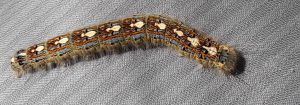
A forest tent caterpillar. – Photo courtesy of Shoal Sanctuary Nature Preserve.
The forest tent caterpillar is the larval stage of a somewhat nondescript brown moth. The moths lay their egg masses on twigs, and the eggs hatch in the spring. Caterpillars feed on a variety of tree species, but seem to prefer oak and gum trees. They spend anywhere from two to six weeks eating. When they are nearing maturity, they can become a problem for humans who do not appreciate the many droppings they produce, or their habit of descending from the trees to find places to spin their cocoons. They are sometimes attracted to lights or the walls of buildings, where they congregate in search of a place to pupate. They are not harmful to people, however.
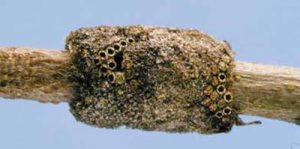
A forest tent caterpillar egg mass. – Photo courtesy of Jeffrey Lotz, Division of Plant Industry
Particularly cold winters may help decrease populations of these caterpillars. Inclement weather or high temperatures may do the same in the summer, and natural predators often help to control populations when present as well. Controlling forest tent caterpillars is most often unnecessary even when there are large numbers of them. It may help to avoid parking cars under large infestations or to turn off outdoor lighting that might attract them at night. If they wander indoors, check screens and window seals to be sure there are no gaps for them to enter.
If these or other caterpillars become such a nuisance that control measures must be considered, consider using a product such as Bacillus thuringiensis, or Bt, which specifically affects caterpillars and not other beneficial insects. Keep affected trees healthy with proper fertilization and watering, and even a defoliated tree will probably recover from any damage these insects cause. For more information, see our EDIS publication on the Forest Tent Caterpillar or contact your local Extension office.
-Evan Anderson, Walton County Horticulture Agent.
by Matt Lollar | Nov 8, 2018
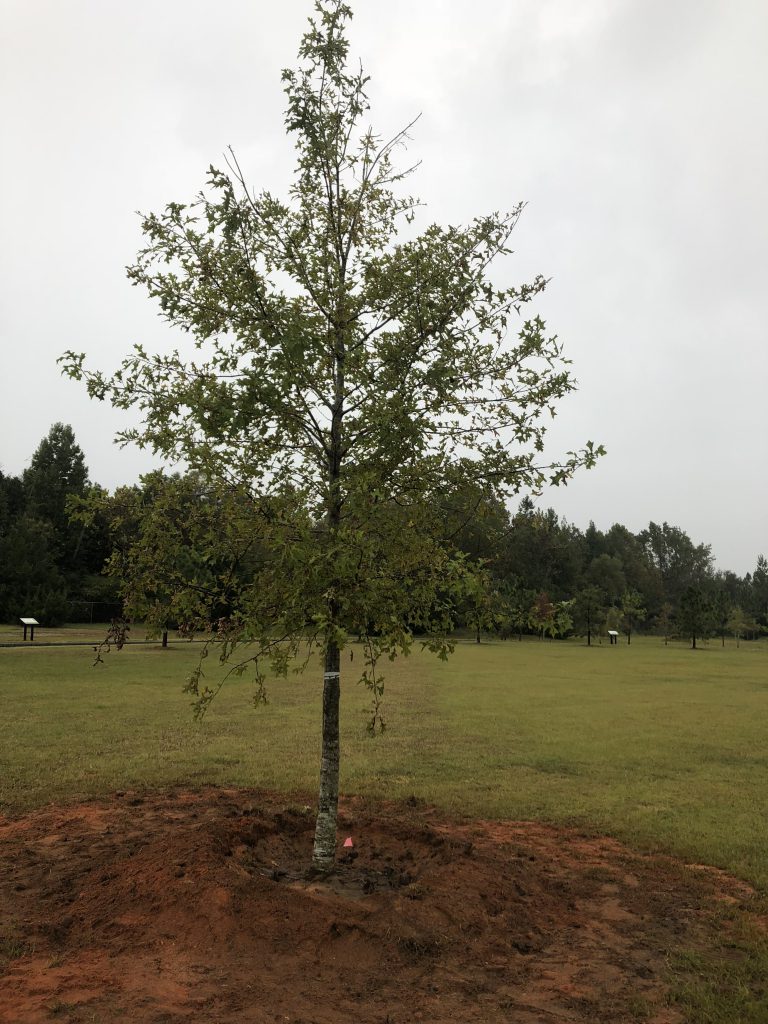
A planted tree with water retention berm. Photo Credit: Matt Lollar, University of Florida/IFAS Extension – Santa Rosa County
Often, Extension agents are tasked with evaluation of unhealthy plants in the landscape. They diagnose all sorts of plant problems including those caused by disease infection, insect infiltration, or improper culture.
When evaluating trees, one problem that often comes to the surface is improper tree installation. Although poorly installed trees may survive for 10 or 15 years after planting, they rarely thrive and often experience a slow death.
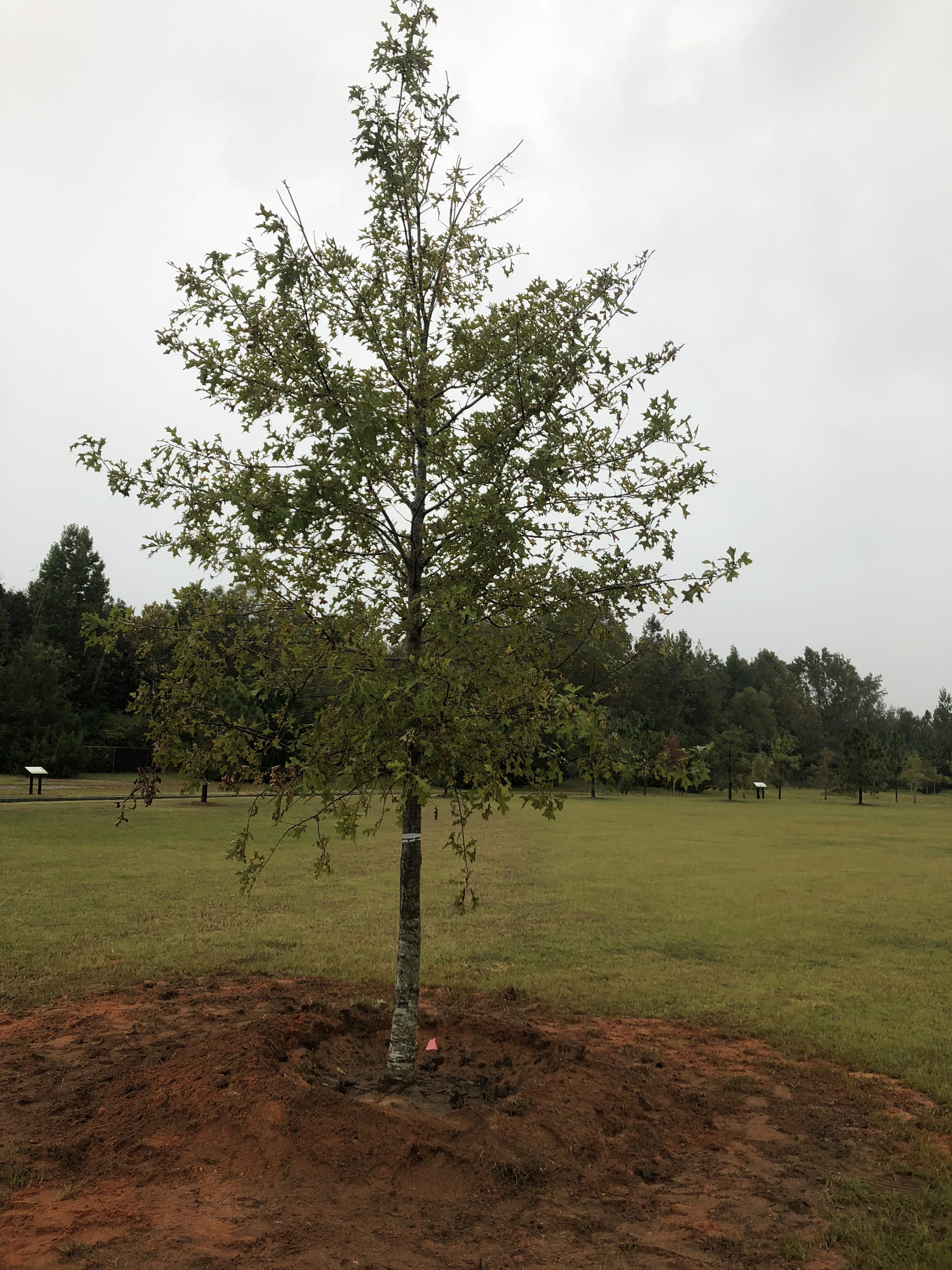
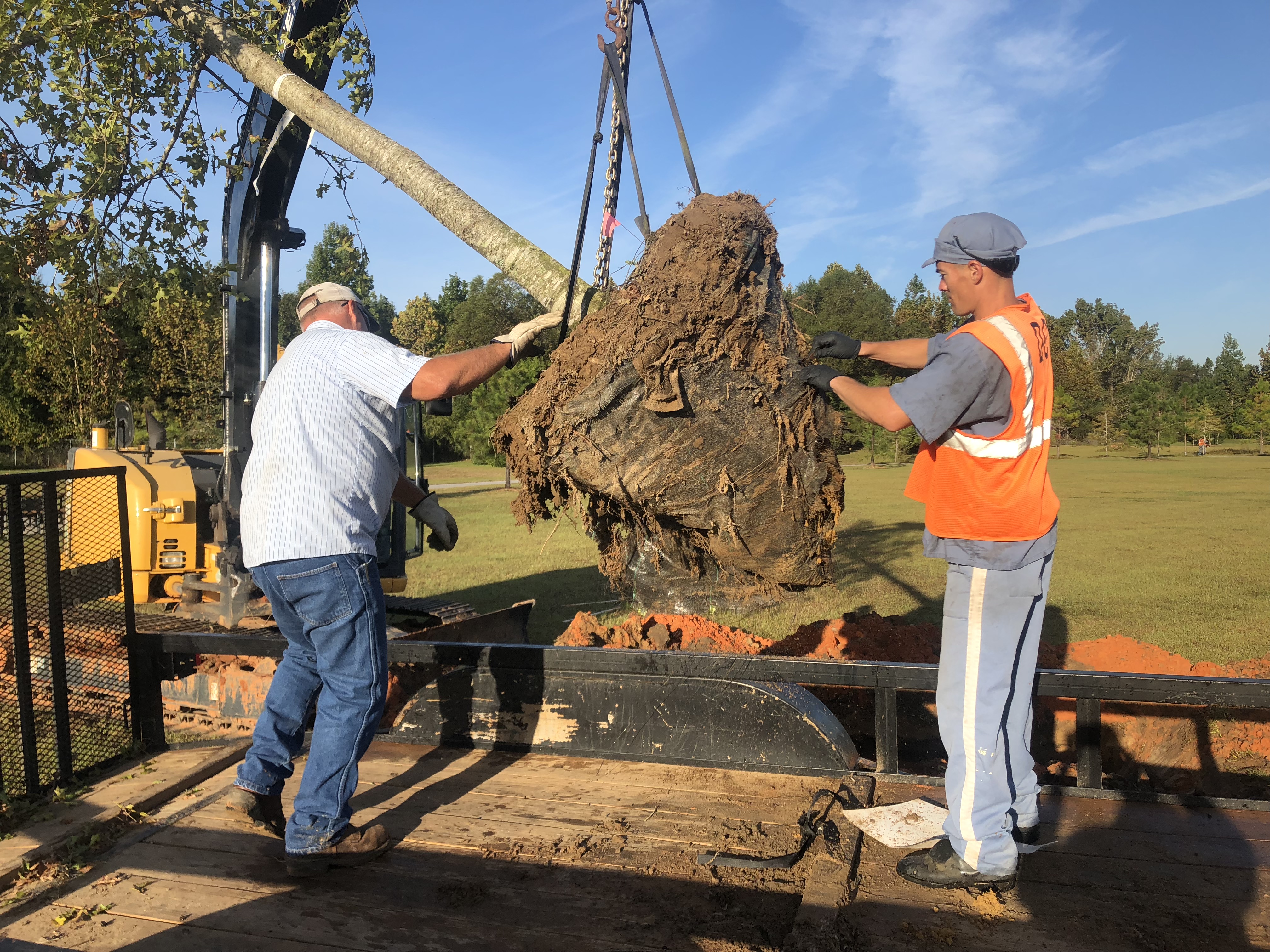
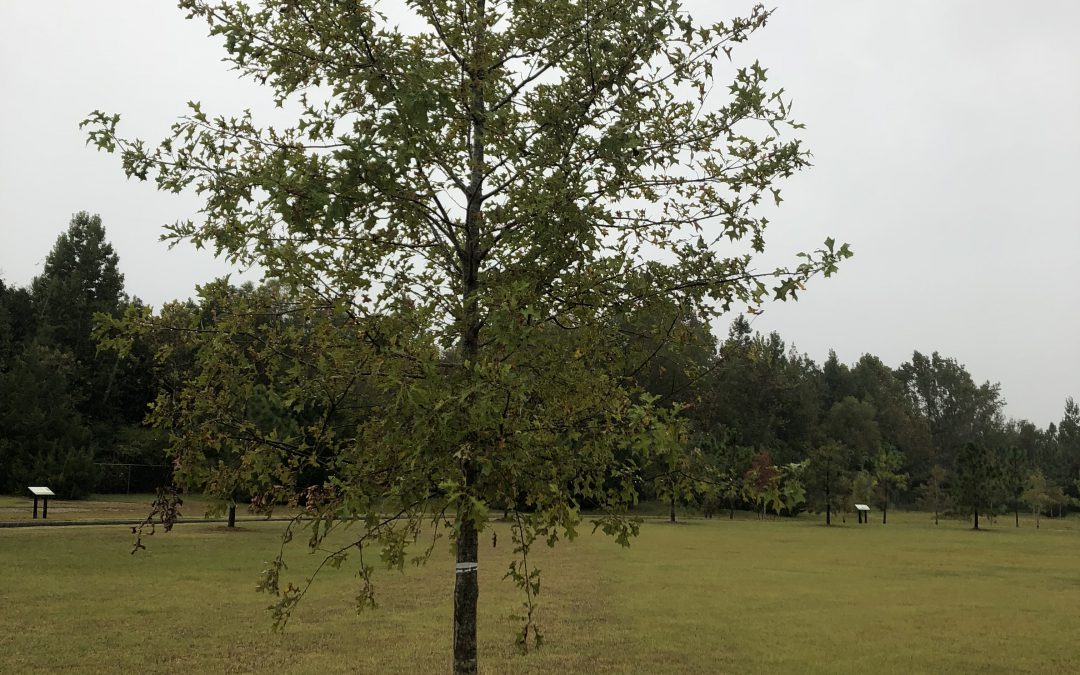
Fall is an excellent time to plant a tree in Florida. A couple of weeks ago beautiful Nuttal Oak was planted at Bagdad Mill Site Park in Santa Rosa County, FL. Here are 11 easy steps to follow for proper tree installation:
- Look around and up for wire, light poles, and buildings that may interfere with growth;
- Dig a shallow planting hole as wide as possible;
- Find the point where the top-most root emerges from the trunk;
- Slide the tree carefully into the planting hole;
- Position the point where the top-most root emerges from the trunk slightly above the landscape soil surface;
- Straighten the tree in the hole;
- Remove synthetic materials from around trunk and root ball;
- Slice a shovel down in to the back fill;
- Cover the exposed sides of the root ball with mulch and create water retention berm;
- Stake the tree if necessary;
- Come back to remove hardware.
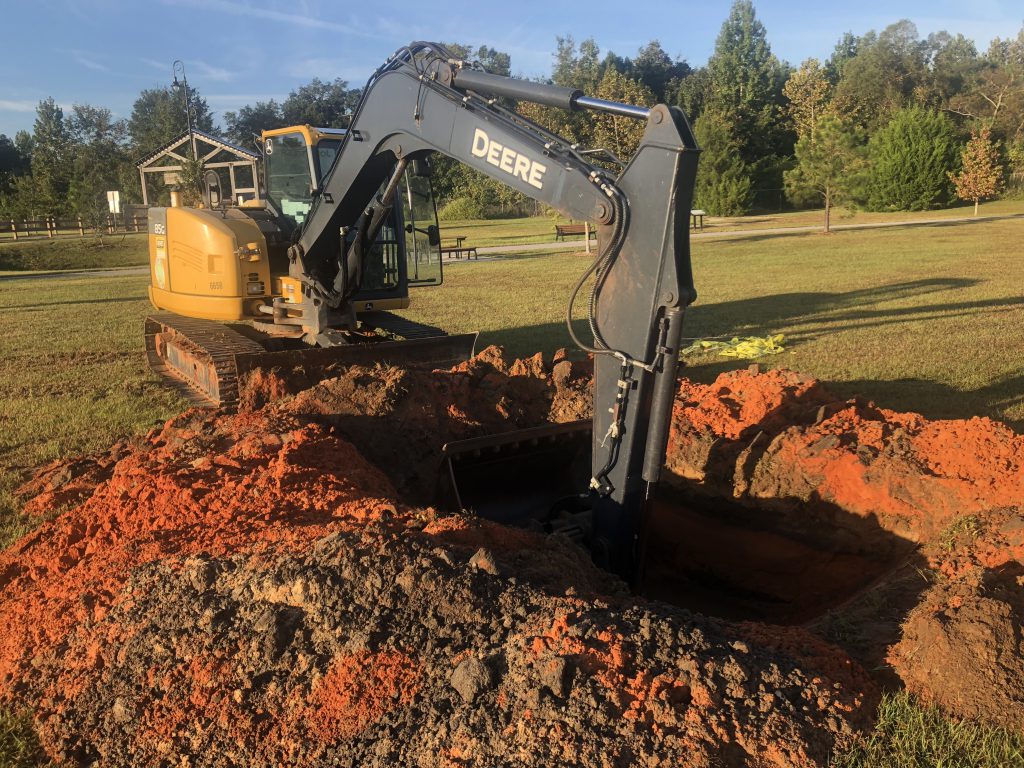
Digging a properly sized hole for planting a tree. Photo Credit: Matt Lollar, University of Florida/IFAS Extension – Santa Rosa County
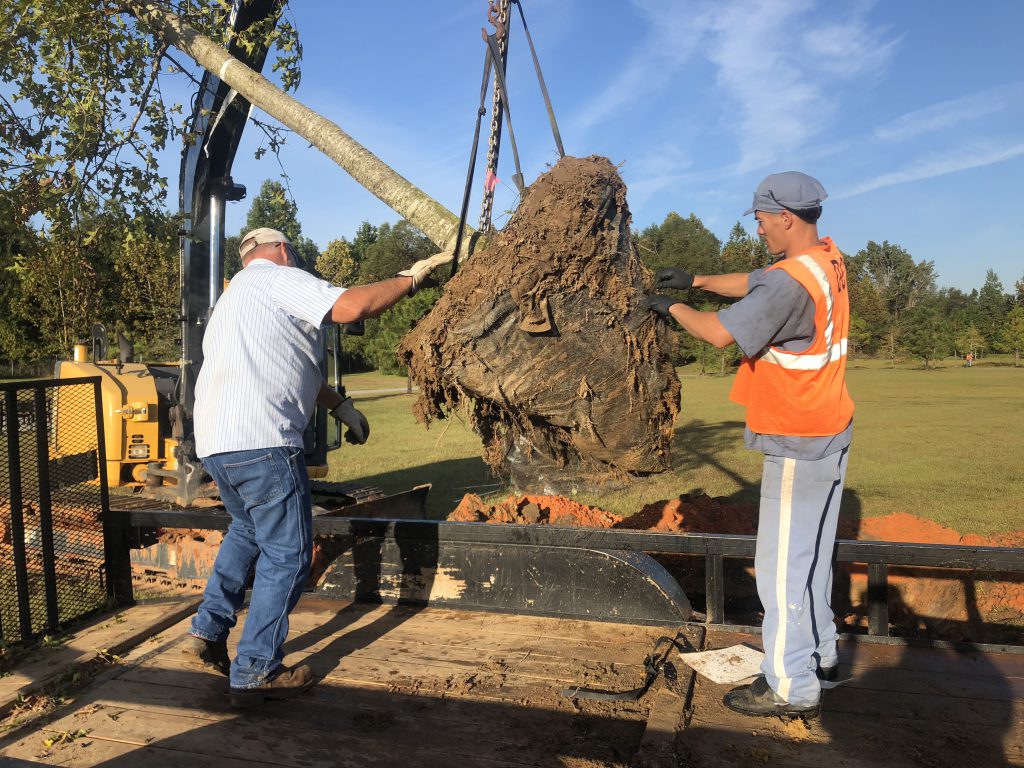
Removing synthetic material from the root ball. Photo Credit: Matt Lollar, University of Florida/IFAS Extension – Santa Rosa County
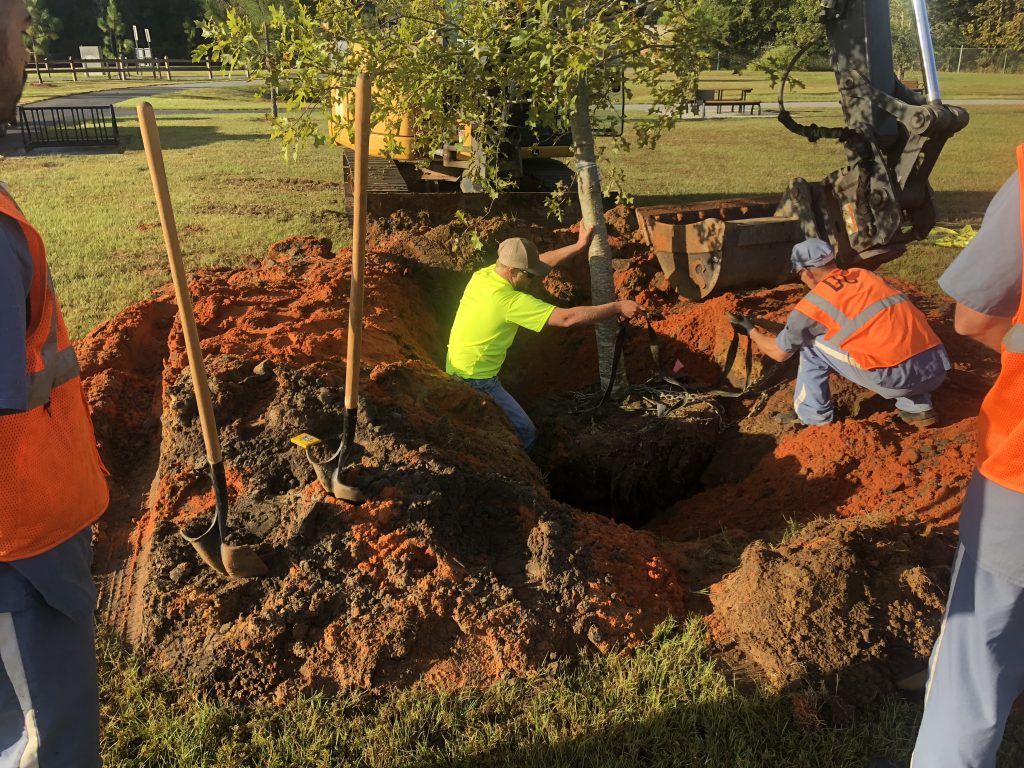
Straightening a tree and adjusting planting height. Photo Credit: Matt Lollar, University of Florida – Santa Rosa County
For more detailed information on planting trees and shrubs visit this UF/IFAS Website – “Steps to Planting a Tree”.
For more information Nuttall Oaks visit this University of Arkansas Website.
by Matthew Orwat | Jul 23, 2018
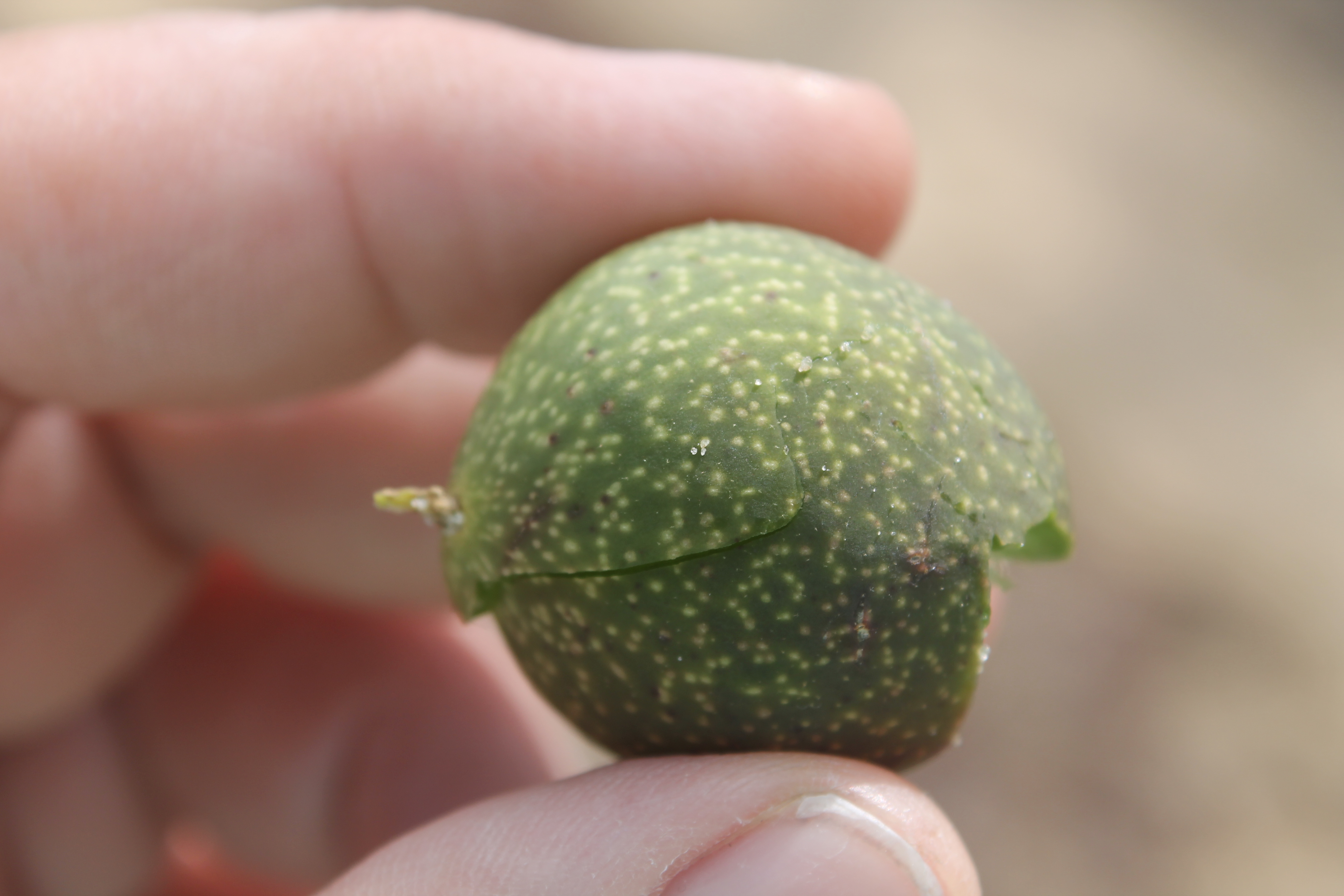
Gall caused by a wasp in the Cynipidae on Water Oak.
Humans usually believe that we have a mastery of the natural world, and know everything about it. More often than not, nature tricks us with illusions that play on our pre-conceived notions about plant life. We are conditioned to believe that everything hanging from a tree must be a fruit or nut of some sort, so much so that a wasp gall hanging from a common water oak can change our perception of that plant, making us think that it is a rare or unusual species of plant we have never seen before.
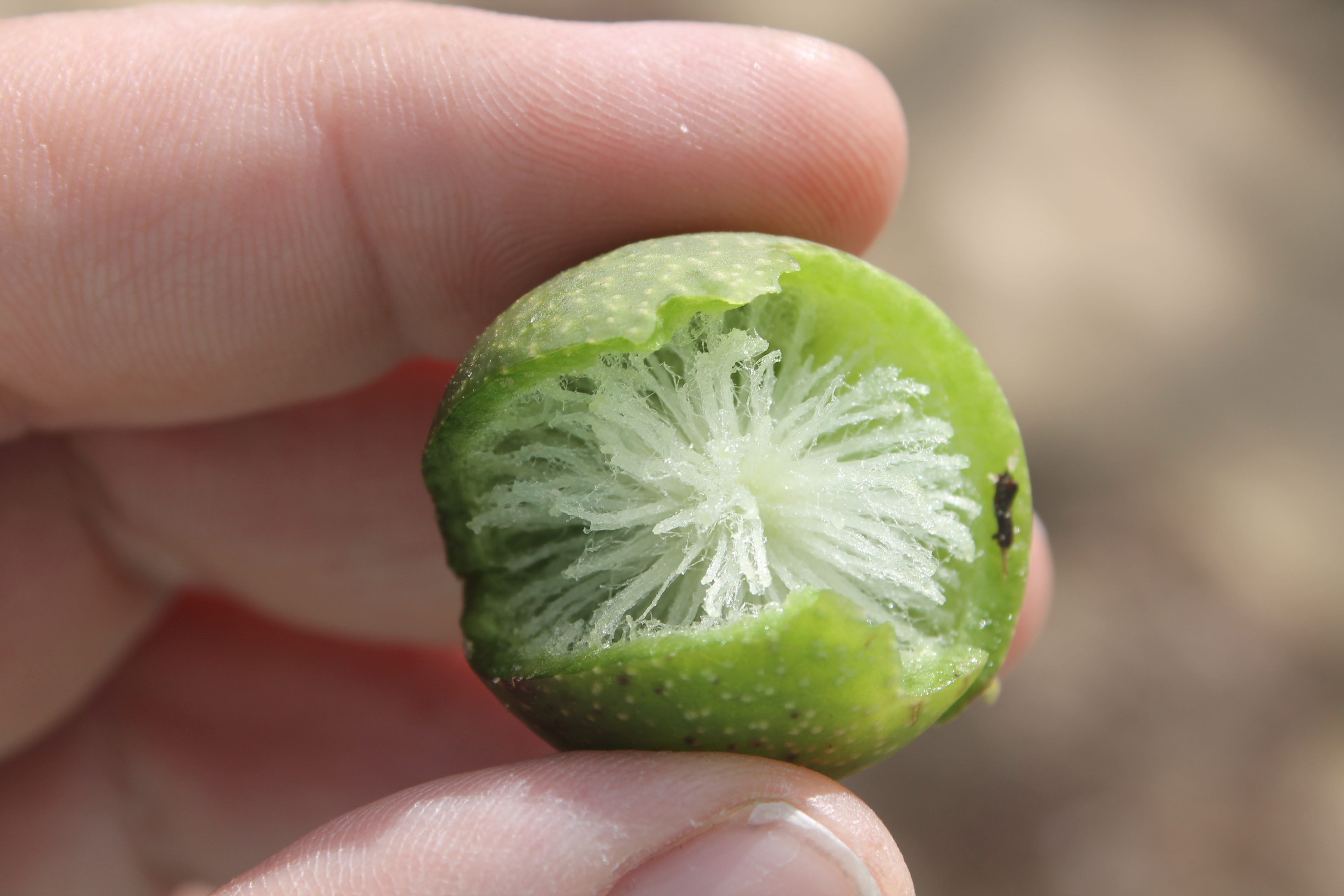
Several different species of wasps in the family Cynipidae (at least 50 different species in the continent of North America) produce fruit-like galls on various species of oaks, which are also known as oak apples. They are green or brown, depending on the species that created them, and largely hollow inside.
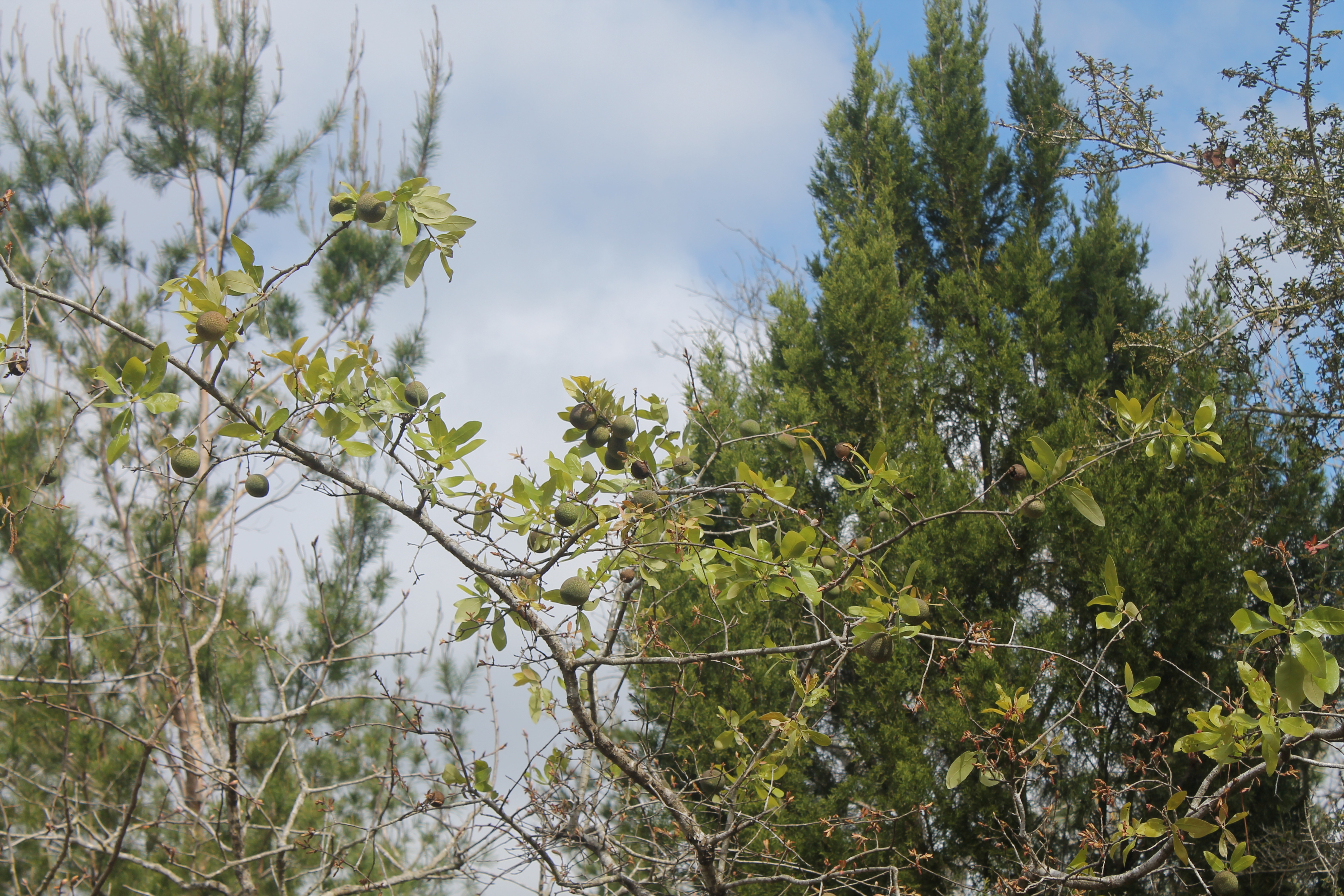
Galls on an immature Water Oak
When the wasp lays eggs on oak leaves, the eggs hatch and larvae cause the leaf tissue to be altered for their purposes. These galls provide shelter and nourishment for the developing larvae until they are ready to emerge and fly out of the center of the gall. It demonstrates a great survival strategy for an otherwise defenseless insect. The adult form of these wasps is no larger in diameter than the thickness of an old fashioned silver coin.
So, the next time you are out in nature and notice something unusual or out of place, it might be an insect gall!!
For additional information please read this excellent article “Oak Apples and the Gall Making Process”, by Joe Boggs at Ohio State University Extension