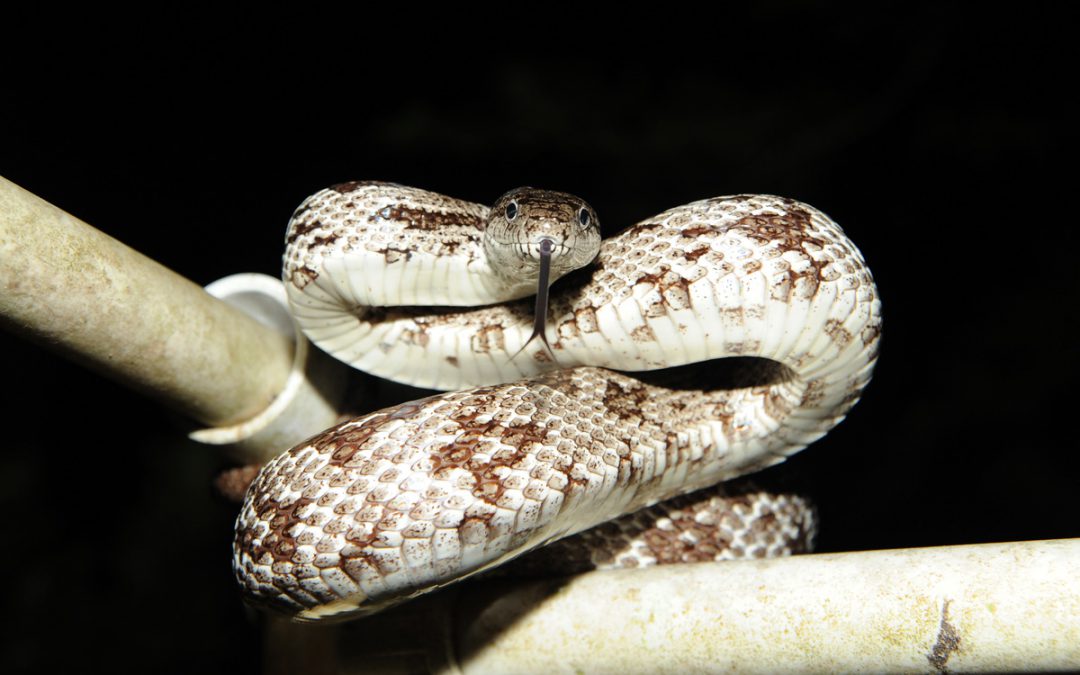
In the last few weeks we have received an increase in calls about snake encounters. Most of these have dealt with small juvenile snakes folks are finding on their property, or in their homes, but we are also hearing about large ones.
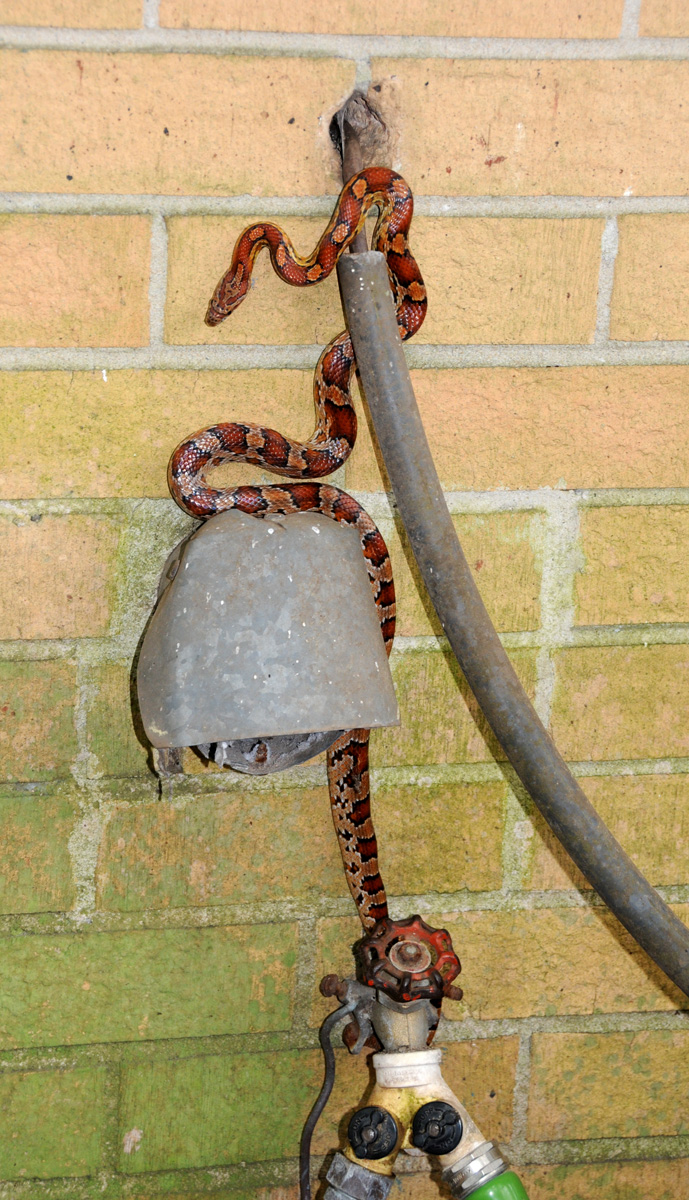
Corn snakes are excellent climbers and consume a lot of rodents. Photo: Nick Baldwin
Most of the 56 species of snakes found in the southeastern United States breed in spring or summer and this time of year people begin to encounter the juveniles from this year’s brood. The Southern Black Racer has been the most common encounter we have heard from and this is because the young do not resemble the adults at all. But panhandle residents should be aware that there are several species who do breed in the fall and the adults will be seeking each other this time of year increasing your chances of an encounter. Of those that do breed in the fall 16 can be found in the panhandle.
Three of these species are small terrestrial snakes. They would include the Florida Red-Bellied Snake, the Southeastern Crown Snake, and the Southern Ringneck Snake. These are typically less than 15” in length and move at night. They frequent the underbrush where they hunt for insects and small amphibians and are no threat to people or pets.
There are 4 species of local mid-sized snakes that are fall breeders. The Rough Green Snake, Eastern Garter Snake, Eastern Hognose Snake, and the Scarlet Snake are all very common and pose no threat to people and pets. The Green Snake and Scarlet Snake can be found in around trees this time of year and the Eastern Hognose is often confused with the Pygmy Rattlesnake. Hognose differ in that they have round pupils and an upturned nose; of course they lack a rattle as well. Scarlet snakeis confused with the Eastern Coral Snake but can be distinguished but their red head (instead of black).
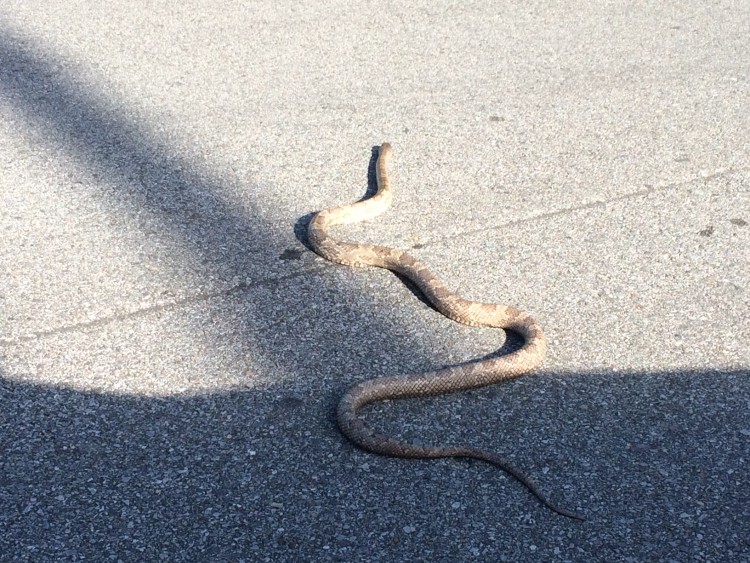
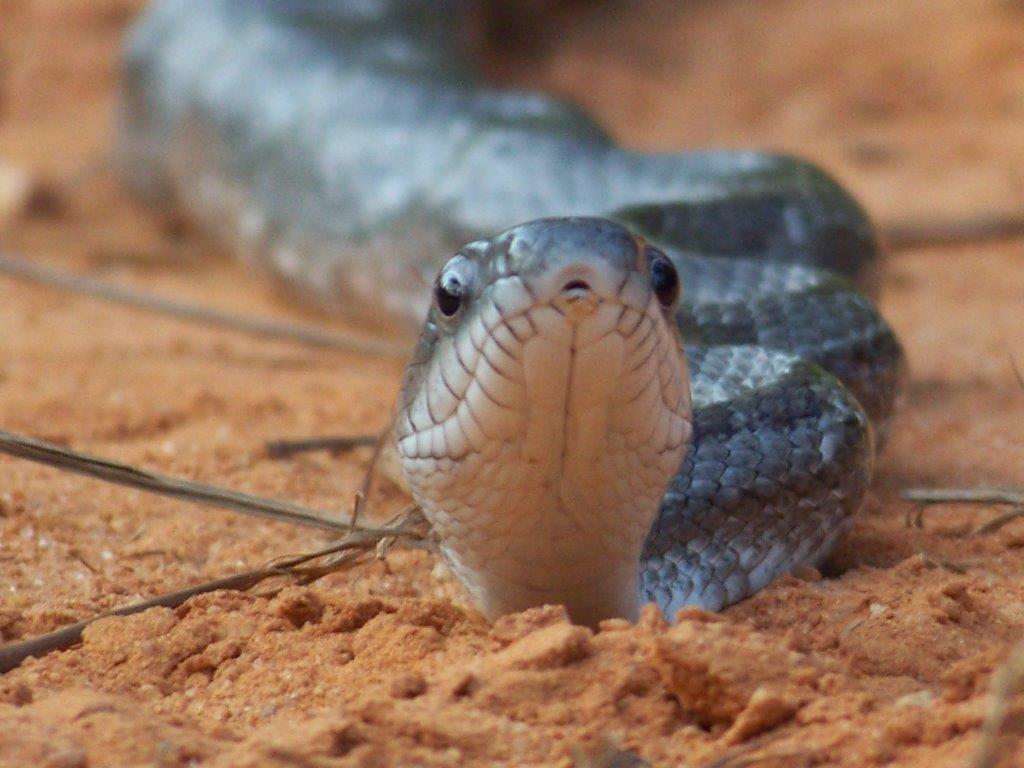
Gray rat snake crossing a driveway. Photo: Carrie Stevenson
Of the 8 species of large terrestrial snakes only 2 are known to breed in the fall locally. These would be the Gray Rat Snake and the Eastern Indigo. Both of these snakes can easily reach 6 ft. in length and tend to terrify people but in reality these are both rather docile and consume a significant number of disease carrying rodents; Indigos will actually feed on venomous snakes helping to control their populations. The Eastern Indigo Snakehas not been seen in the Florida panhandle since the late 1990’s and is current listed as an endangered species in our state.
We have 15 species of non-venomous water snakes in the southeastern U.S. but only 1 local is a fall breeder; the Queen Snake. This snake is found in all panhandle counties except those along the coastal portion of the Apalachicola River; Bay, Gulf, Franklin, and Wakulla counties. As a group water snakes tend to be aggressive, and some can be quite large, but they pose no danger to people and pets.
Finally the ones most are concerned with. There are 6 species of venomous snakes in the southeastern U.S. All 6 can be found in the panhandle and all 6 breed in the fall. This means that males will be out seeking females and encounters could occur. Copperheadsare rare in Florida but are most often encountered along the region of the Apalachicola River. These snakes tend to be cryptic and move very little. They will release a musk to warn that you are getting to close. There are 2 subspecies of Cottonmouths in the panhandle. The Florida Cottonmouthis found in the coastal counties of the Apalachicola River (mentioned) and the Eastern Cottonmouthis found elsewhere. They prefer water but will move upland during the cooler months. They have a reputation of being aggressive but are actually no more aggressive than other snakes. Like most, they are trying to avoid you. The Eastern Coral Snakeis the only neurotoxic snake in our state. This animal moves through the underbrush seeking prey, including other snakes. They are rarely encountered but are quite common.
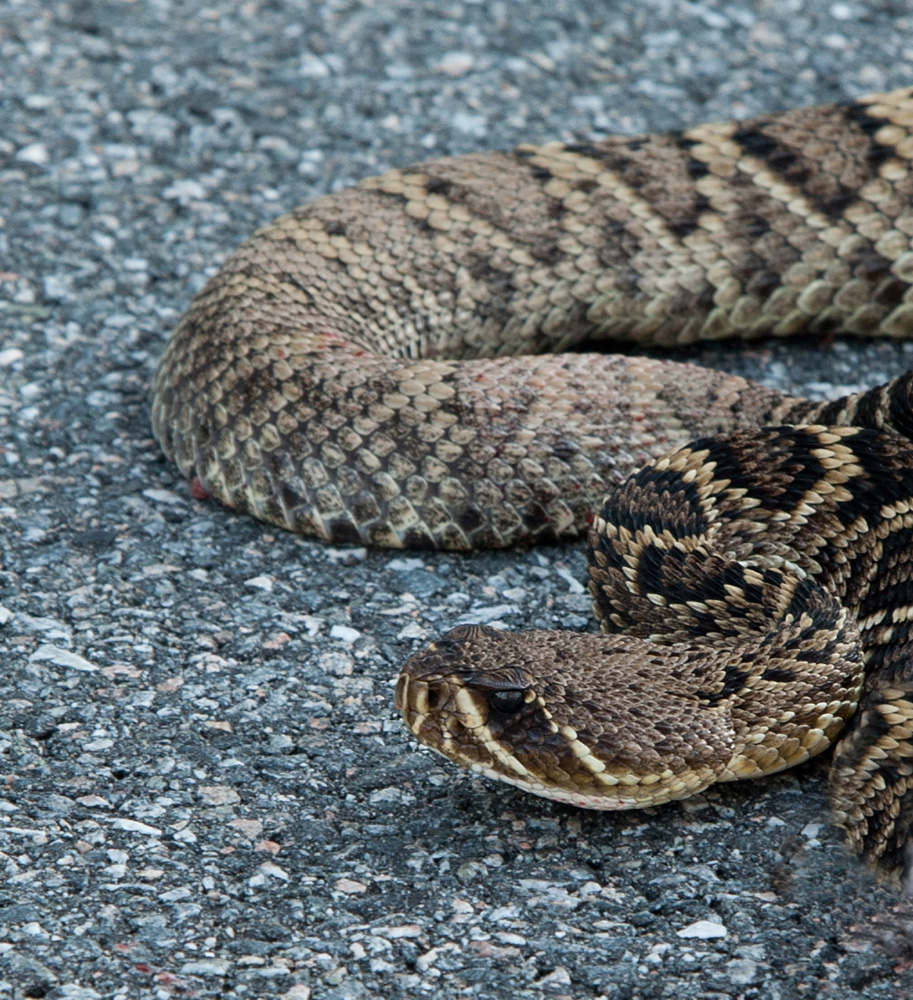
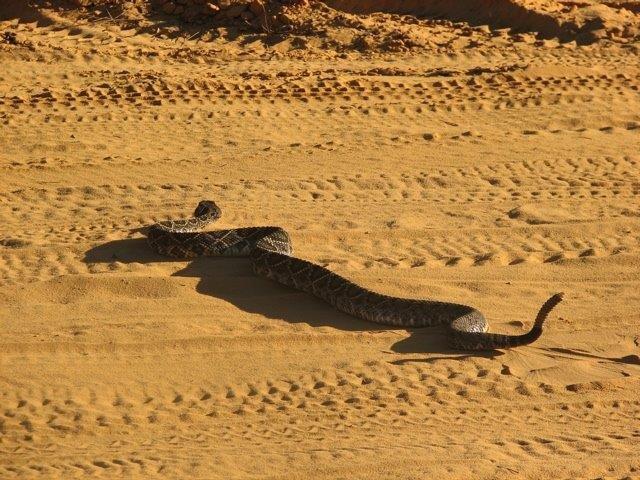
The familiar face of an Eastern Diamondback Rattlesnake. Photo: Nick Baldwin
Then there are the most feared of the group – the rattlesnakes. The Timber Rattlesnakeis actually not that common in Florida but many travel to Georgia and Alabama during deer season where they are common. The Eastern Diamondbackand the Dusky Pigmy Rattlesnakesare common here. All three species breed in the fall and could be encountered this time of year.
Many of our local snakes will den during these cooler months and some in groups. All should be aware of this when exploring stump holes and such while visiting the outdoors. Also know that on warm sunny days they may venture out to bask in the sun; another chance to encounter them.
For more information on how to handle an encounter or a snake bite visit the Escambia County Extension website ( http://escambia.ifas.ufl.edu ) or contact Rick O’Connor at 850-475-5230; roc1@ufl.edu .
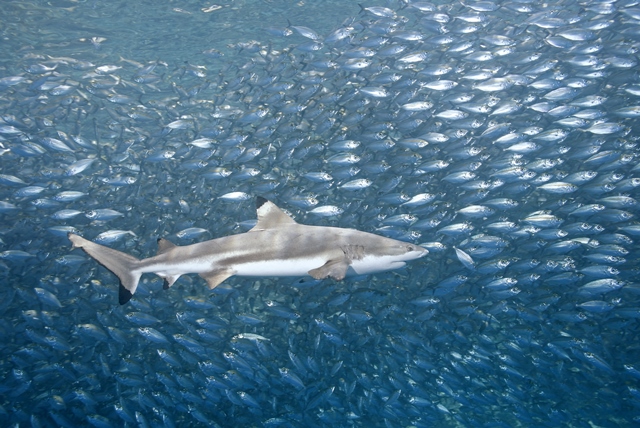
Since the beginning of the summer, panhandle residents and visitors have been reporting numerous sharks hanging out along the sandbars near the passes. , cruising between the 2nd sandbar and the beach. One visitor was even bitten; raising the question – WHAT’S UP WITH ALL THE SHARKS?
The Scalloped Hammerhead is one of five species of hammerheads in the Gulf. It is commonly found in the bays. Photo: Florida Sea Grant
Actually, over the years sharks have been feeding along on the sandbars. While tagging sharks at Dauphin Island Sea Labwe would send an ultralite aircraft up to spot their locations. The pilot often reported seeing sharks hanging out on the sandbars near the pass. The sharks generally moved slowly until the shadow of the aircraft would hit and spook them into swimming off. Surfers and fishermen alike know that sharks frequent the inshore waters near the beach during the warmer months. Some or the larger sharks certainly enter the bays where feeding and breeding probably occur. So, finding them in these locations is not that unusual.
What seems to be unusual this year are the numbers. Locals who have worked these waters for years say they have seen more sharks on the sandbars than they remember in the past. We do not have data on how many sharks typically are found on bars, so there’s no conclusive proof that the number seen this summer is significantly more. However, if the folks out there every day say they are seeing more, then there may be something to it.
The gathering of sharks may be due to feeding. Like any other animal, they gather where the food is. I have seen Jack Crevalle gather at the mouths of our bayous feeding after a fish kill. The big flood this summer dropped salinities below normal and many estuarine animals died; Big Lagoon was littered with dead clams. It is possible that the sharks are feeding on these with the outgoing tides. If there is more food there would be more sharks. Another possible explanation could be temperature control. Like all fish, sharks are ectothermic (cold-blooded) and need warm water to keep maintain their body temperature. Divers searching for lionfish this spring indicated that the bottom temperatures have been colder than normal this year; again, possibly due to the flood waters or an upwelling from the deeper Gulf. The sharks may be gathering where warmer water can be found: shallow water over bars. Outside of nurse and lemon shark species, breeding in sharks has rarely been observed. However, now is the time of year when this occurs and the National Marine Fisherieshas considered the estuaries of the northern Gulf potential breeding areas for some species of shark.
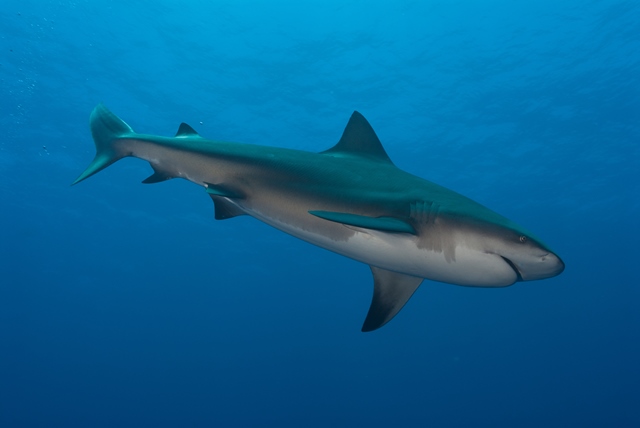
The Bull Shark is considered one of the more dangerous sharks in the Gulf. This fish can enter freshwater but rarely swims far upstream. Photo: Florida Sea Grant
As far as the threat of attacks are concerned, there is really not a high risk. Certainly sharks in feeding mode in shallow water could be a potential threat. But according to theInternational Shark Attack File at the Florida Museum of Natural History only 21 attacks have occurred in panhandle waters since 1882 and 2 were fatal; 1 in Bay County (1988) and 1 in Walton (2005) . Following some simple rules will reduce your risk of shark bite. Swimming in or near baitfish or where recreational fishing is going on could increase your chances; avoid these. Though shark attacks occur all hours of the day and night there seems to be more during dawn and dusk, as these are their primary feeding times. Lifeguards along the coast are constantly watching for these fish along with other hazards. Following these simple rules should allow you to enjoy the water without concern. If you have any questions about sharks contact your county Sea Grant Extension Agent.
Warming temperatures have awaken snakes that have been dormant during the winter months. As a result, they are more active during abnormal times of the day and move more than they typically do while searching for food. This also means more people are likely to encounter with them.
Even though most snakes are nonvenomous, many people fear them and will go out of their way to kill them if an encounter occurs. Interestingly, 95% of the humans bitten by snakes are either trying to catch or kill them; suggesting the best thing to do when encountering a snake is to leave it be.
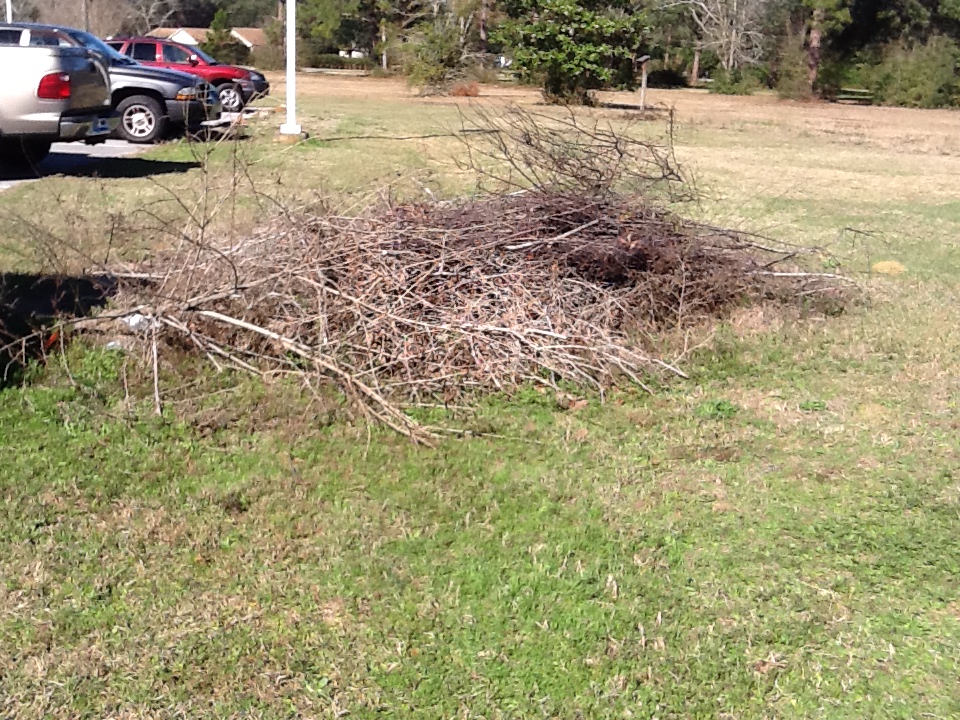
Brush piles such as these attract snakes. These should be kept away from where family members play. They can actually be used to move snakes away from areas where you do not want them. Photo: Rick O’Connor
How can you reduce your chance of encountering a snake?
Most snakes found around the house are either seeking suitable habitat or food. Anything that could attract rodents or amphibians could attract snakes. Overgrown landscaping, trash or brush piles, bird feeders, water features, garbage, and greenhouses are examples of snake attractants many people have. To reduce your chance of an encounter you should move such items away from the house, and for those that you cannot – keep as clean as you can. Snakes do not like to cross short grass, so a frequently mowed yard helps as well. If you live near good snake habitat you may have to invest in silt fencing, or a similar product, that has a slick surface which is difficult to crawl over. If placing silt fencing along the boundary you should have the wooden stakes on your side of the fence; snakes can climb these.
What do I do if I encounter a snake?
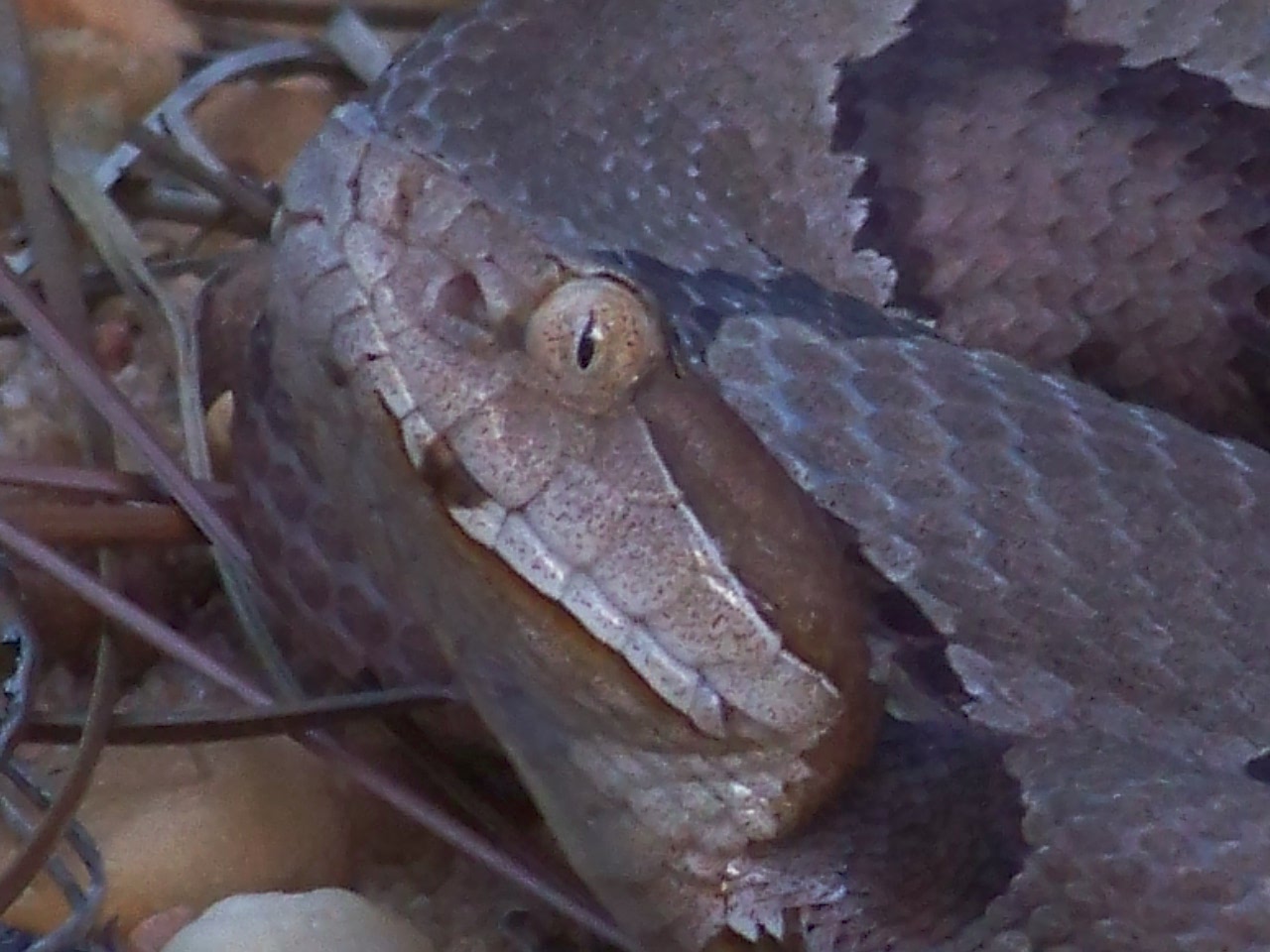
The first thing you should understand is that, like most animals, there is a zone around snakes in which they feel threatened. When they detect you, they react as if you are the predator. If you are outside their zone they will remain motionless. If you cross the line, they will try to move away to avoid being attacked. If they have nowhere to move they will turn and defend themselves; this could mean a strike. If a snake is encountered, try not to move towards the snake and if you are already close try to give the animal an escape route. Many will want to know if the snake is venomous. Of the 46 species and subspecies of snakes in our state only six are venomous. Of these, five belong to the family Viperidae and can be identified by the elliptical eye pupil, the triangle-shaped head, and the second set of nostrils (pits) on the snout. These include the three species of rattlesnakes, the moccasin, and the copperhead. One venomous snake, the Eastern Coral Snake, does not have the appearance of a viper. The coloration of this snake is red, yellow and black with red touching yellow. They also differ from their kingsnake mimics by having a black head.
This copperhead shows the elliptical pupil and pit commonly found in Florida’s pit vipers. Photo: Molly O’Connor
If the unfortunate happens and a snake bites you, the first thing you should do is not get bit twice. Many people react by trying to kill the snake and multiple bites can happen. Nonvenomous bites should be washed with warm water and soap. If the bite is from a viper, remember–do not get bit twice. With venomous snakes many feel the hospital will need the snake for identification of the proper antivenin. This is not necessary and, again, could lead to multiple bites. Viper bites can be extremely painful and, if venom is injected, can induce severe swelling. You should remove rings, watches, or any garment that may impede swelling. Many of the traditional first aid treatments for snake bites can cause more harm than the bite. It is recommended that you hold the bite below heart level if possible and calmly go to the hospital. Coral snake bites are often undetected but are very serious and medical attention is needed.
As we approach spring, locals should be aware that the Florida Fish and Wildlife Conservation Commission is trying to track three species of local snakes; the Eastern Diamondback Rattlesnake, the Florida Pine Snake, and the Southern Hognose. If you think you see one of these FWC would like to know. A GPS mark and photograph is needed. You can find the log site at FWC’s website: www.MyFWC.com. For more information on snakes, contact your local County Extension Office.
This nonvenmous gray rat snake has a head shaped more like your thumb and the round pupil. Photo: Molly O’Connor
This past October, the Florida Fish and Wildlife Conservation Commission held the first state lionfish summit in Cocoa Beach. Researchers, fishery managers, divers, fishermen, and the general public received research updates, discussed current issues, and provided input regarding future management needs. Here are a few of the interesting highlights from the summit.
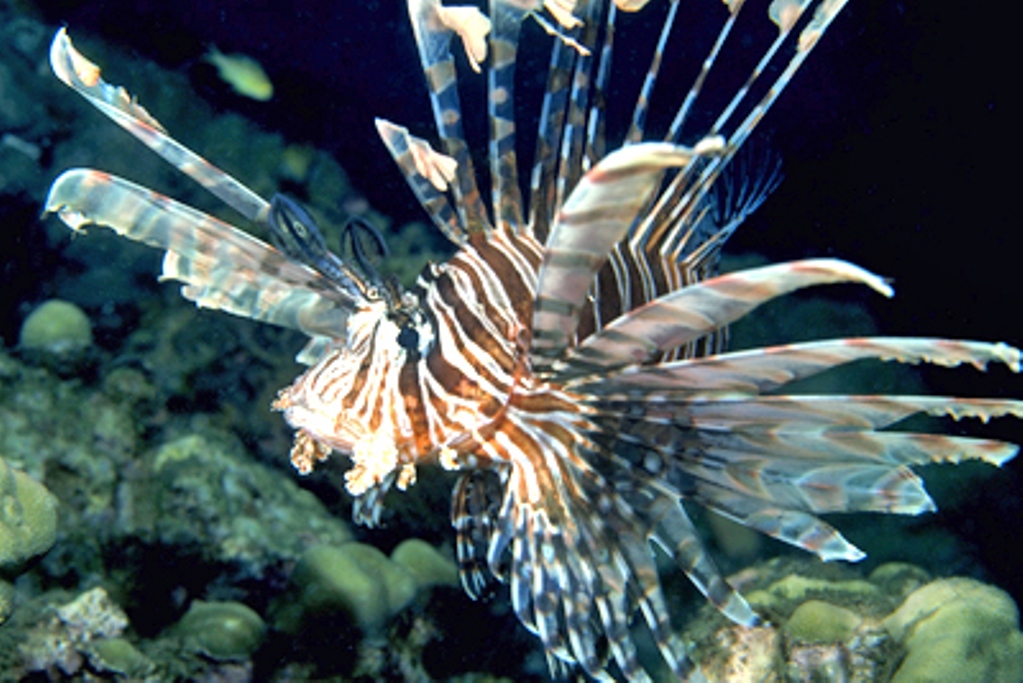
Red Lionfish Photo: Florida Sea Grant
What are the potential problems?
Several theories on how lionfish were initial released into state waters have been suggested. However, research results now indicate a single introduction of lionfish in Florida initiated the invasion into the Western Atlantic presumably from just a few aquarium specimens.
Sixty-thousand lionfish continue to be imported into the state each year.
Compared to native Pacific population, Florida densities of lionfish are much higher; 400 fish/hectare in Florida compared to 80 fish/hectare in the Pacific. On average, invasive Atlantic Lionfish individuals are larger than the native populations in the Pacific basin.
Studies from Pensacola showed that lionfish population has doubled annually since 2010 and lionfish densities are highest on artificial reefs.
Invasive lionfish have no natural predators and may spawn 30,000 – 40,000 eggs every 2 to 4 days.
Another potential problem reported are records of lionfish entering the Loxahatchee and Indian Rivers; indicating that they are able to move into brackish water.
What are the negative impacts?
Young lionfish feed primarily on crustaceans and when they are older they prey on reef fish. Research and stomach analysis indicate 70 different reef fish species as potential prey. Lobster fishermen in the Keys found lionfish are the leading by-catch species and have reduced lobster harvest by as much as 50%. Another study indicates lionfish on natural reefs they prefer blennies. However, on artificial reefs they feed on small snappers, sea bass, and groupers. Finally, an interesting study compared primary reef predators. Reefs with only grouper there was a 36% decrease of juvenile fish while reefs with lionfish the decrease was 94%.
What can be done?
Several reports indicate that collecting tournaments are effective; Lad Akins of Reef Environmental Education Foundation (www.reef.org) reported a 69% reduction of lionfish from one event in Key Largo. Another study had similar results but indicated that some spear fishermen were more successful than others, suggesting training may be required to increase efficiency.
Other reports indicate that work where native fish were introduced and conditioned to consume lionfish have led these native predators to follow and even bite divers thinking that “free food” may be available; it was suggested that this idea not be pursued.
Locally, lionfish rodeos sponsored by Emerald Coast Reef Association occur frequently in Okaloosa County. Escambia County Marine Resources hosted a pilot event this summer. Escambia will begin a full lionfish control program in 2014. If you have questions or comments, please contact your local UF/IFAS natural resource or Sea Grant Extension Agent.
Please note: UF/IFAS and Florida Sea Grant does not organize volunteers to participate in local lionfish control events; this is done by independent community groups. UF/IFAS and Florida Sea Grant provides this information about food safety concerns associated with eating lionfish. Click here for more information.
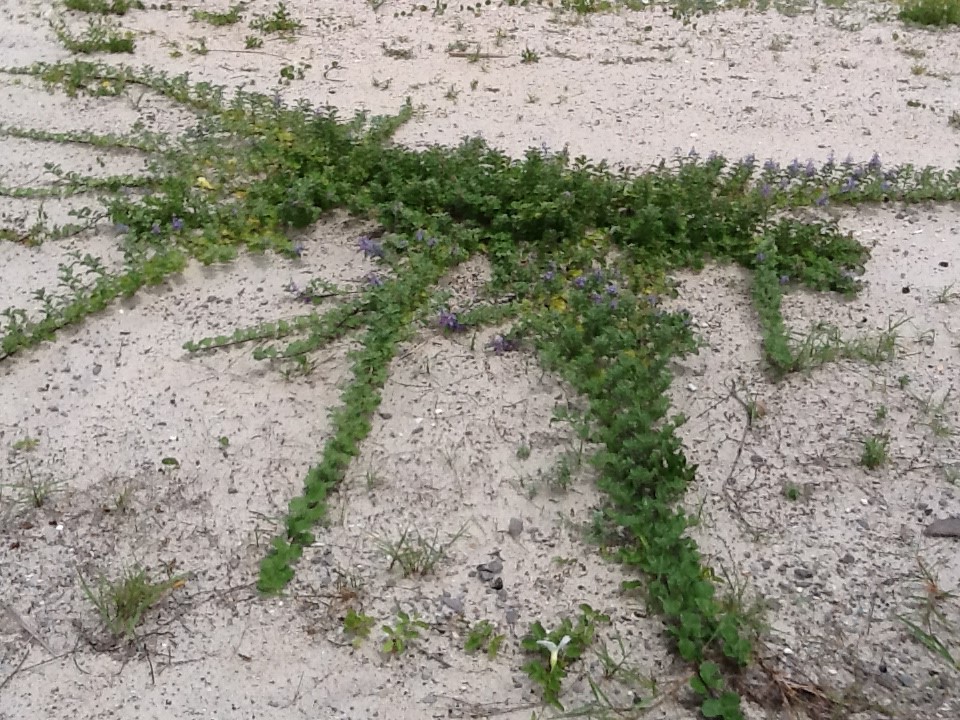
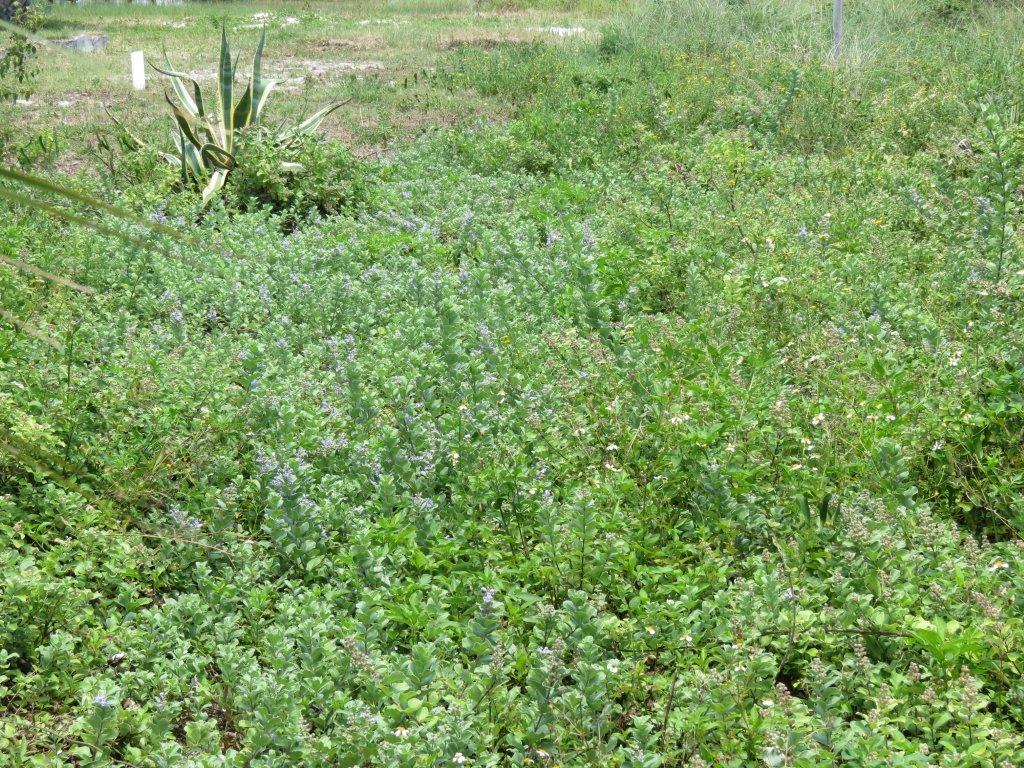
Beach vitex expands its woody rhizomes aggressively; it can actually grow over sidewalks and driveways.
It’s actually a pretty plant, this Beach Vitex (Vitex rotundifolia), and it is very good at stabilizing eroding dunes. In the 1990’s, the state of South Carolina planted this shrub to help restore dunes lost during hurricanes. It was selected because of salt tolerance, production of woody rhizomes (runners) that extend over 60 feet to trap sand, and the beautiful purple flowers that attract beneficial insects; it seemed perfect! However, folks along the Atlantic coast had no idea how invasive it would become a few years later. Residents discovered that it chokes out many of the native species such as sea rocket and sea oats producing an area of only this plant.
It is now causing problems for sea turtles. As you can see in some of these photos, the plant grows over the fore-dune, blocking access for nesting. Beach Vitex grows so aggressively that during the 60 day incubation time many turtle nests are overgrown, entrapping the hatchlings. Some have been found dead, entangled within the rhizome mats. The Beach Vitex “invasion” has become so bad that South Carolina developed a Vitex Task Force to deal with the problem.
This yard on Pensacola Beach has become overrun by vitex.
Is this a problem for Florida?
According to the records the Early Detection and Distribution Mapping System EDDmaps.com, Beach Vitex is distributed northward to the Chesapeake Bay area and south to Jacksonville. It is found in coastal Alabama and there is one record of the plant in Escambia County.
With so few records in Florida it is not currently listed as an invasive species in our state and there is no program set up to control it. However the Sea Grant Extension Agent in Escambia County, Rick O’Connor, was alerted in 2013 that vitex was in Gulf Breeze, Florida (Santa Rosa County) and possibly on Santa Rosa Island (Escambia County).
Please circulate to area residents to provide visual identification of Beach Vitex. Contact your Extension Office for control options and help reduce it’s impact on native species.
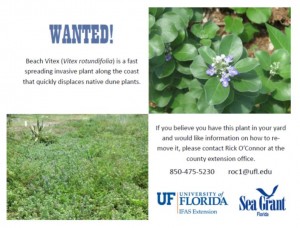
A “Wanted Poster” was developed by O’Connor to post in the coastal communities of Escambia and Santa Rosa counties to see if the plant was more common than the records indicated. At this time, six properties on Santa Rosa Island have confirmed records of Vitex and two more will be surveyed soon. The wanted poster program was published in the local newspaper which reached the east coast of Florida. Reports from that coast indicate that it has extended south into Volusia County. Okaloosa/Walton Sea Grant Agent Brooke Saari is posting the wanted poster in those counties to see if the plant has reached their coasts.
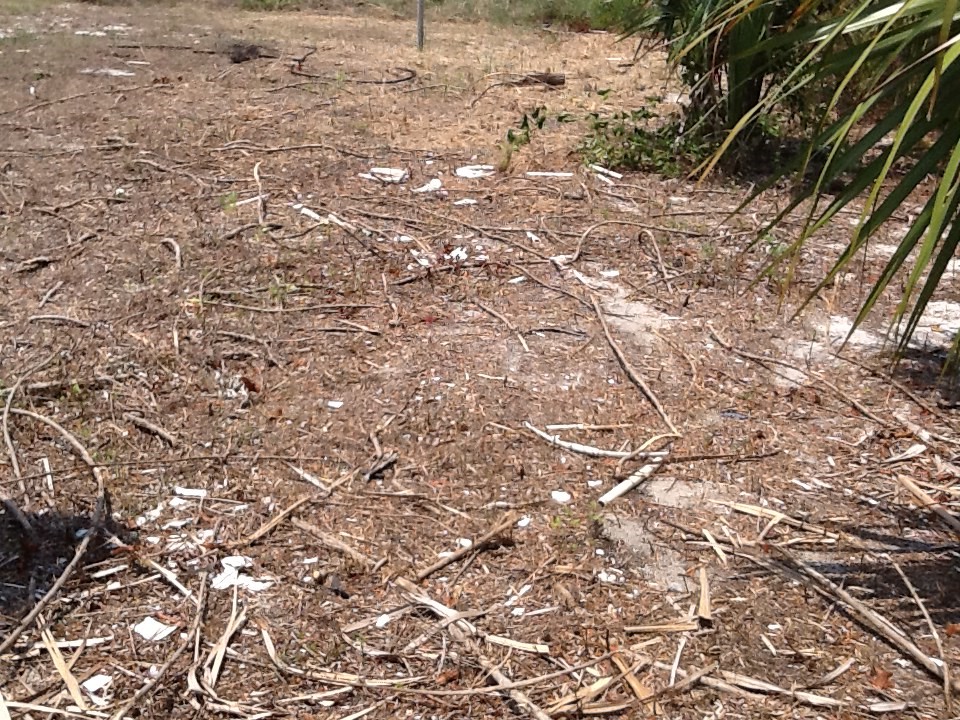
The owner of this yard mowed the vitex. However the woody rhizomes are still present. They will need to either dig this up or use multiple chemical applications to completely remove.
Anyone along the coast of the Florida Panhandle who feels they may have this plant can contact either Rick O’Connor (850-475-5230; roc1@ufl.edu) or Brooke Saari (850-689-5850; bsaari@ufl.edu) and we can confirm identification. The plant is not currently listed as invasive in our state and removal is not required. However, based on the experience in the Carolina’s and other invasive species, if you wish to eradicate this plant doing so early is important. It is much less labor intensive and less costly when there are few plants. If you do choose to remove it please contact your local Extension office first. We can provide methods of successful removal. We would also like to photograph and log the record on EDDmaps.
Editor’s note: Rick provided all the photos in this article.