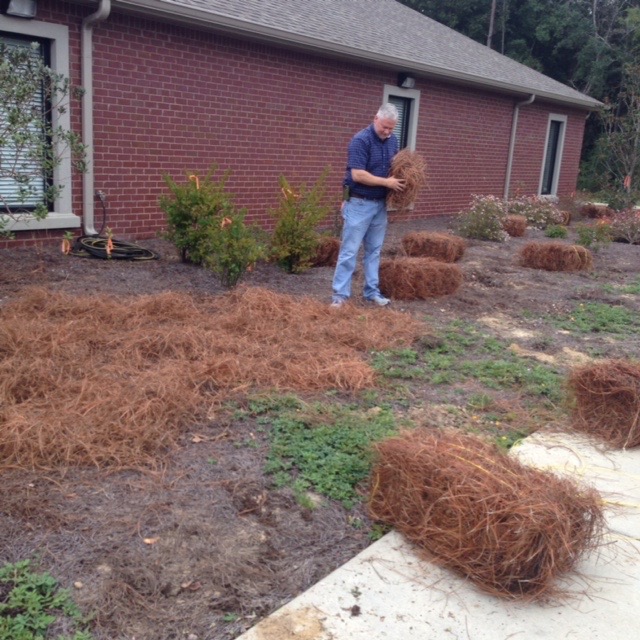
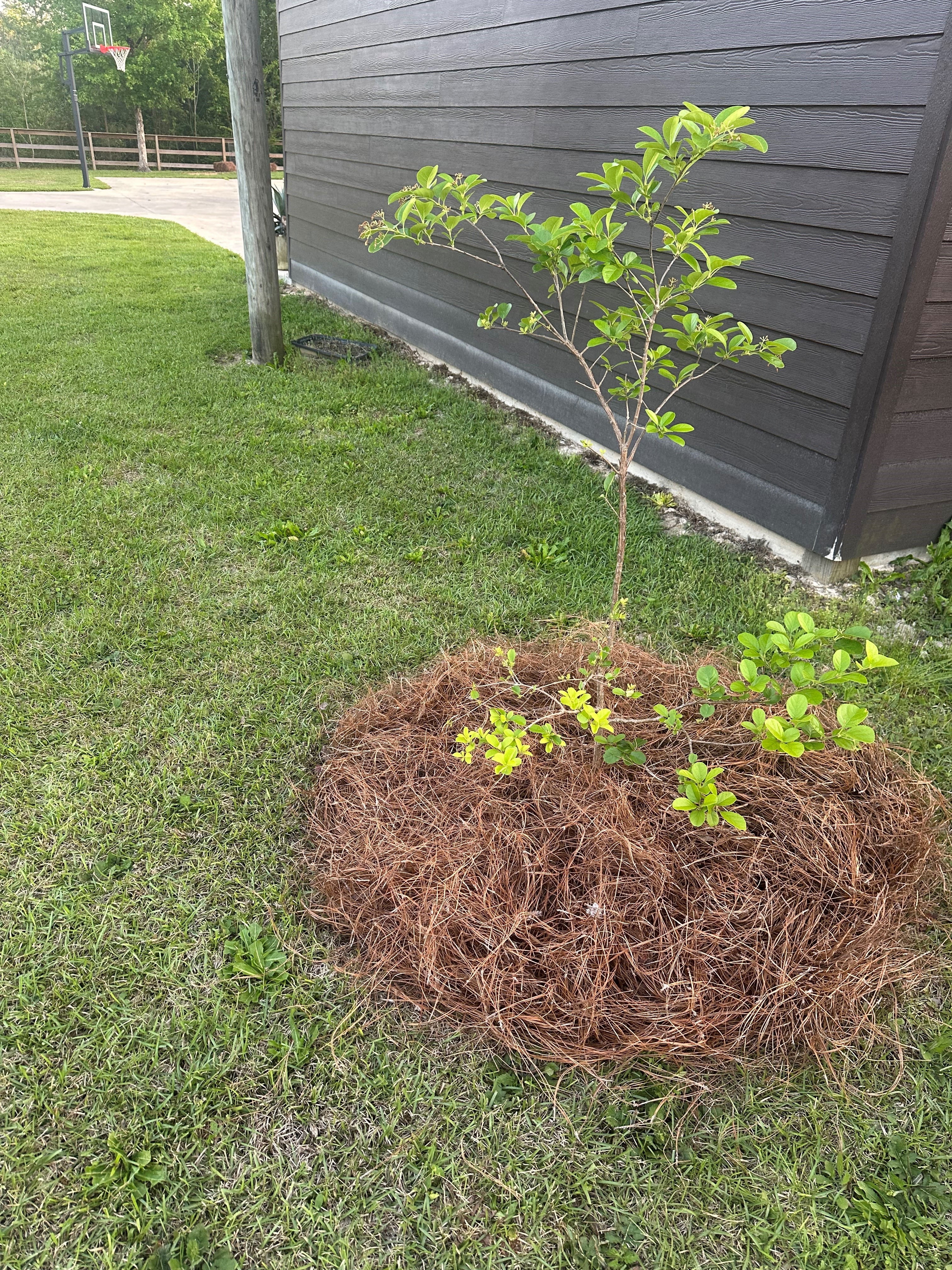
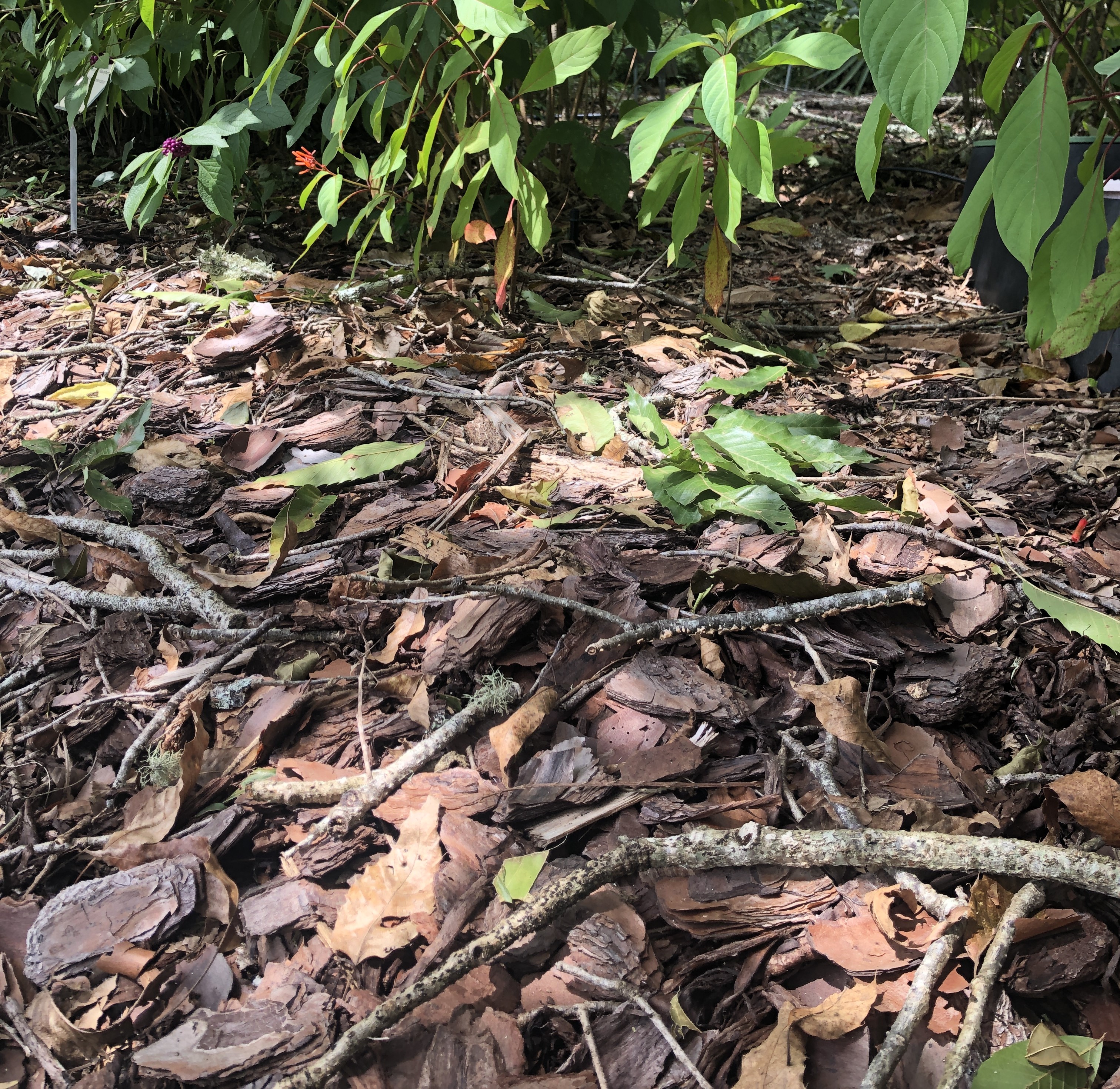
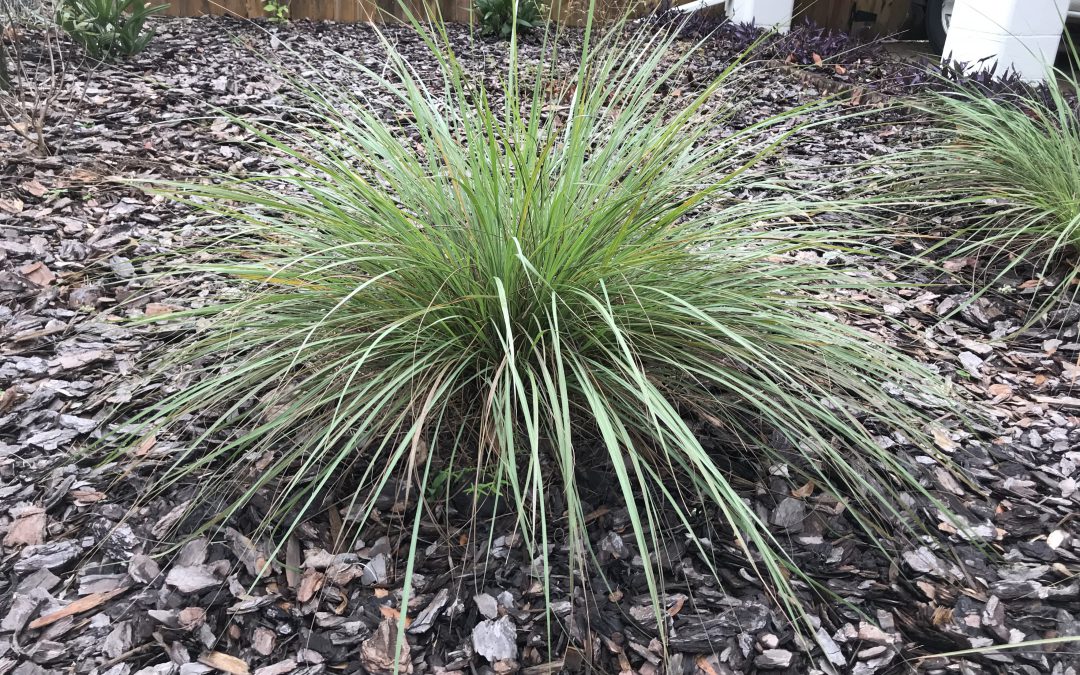
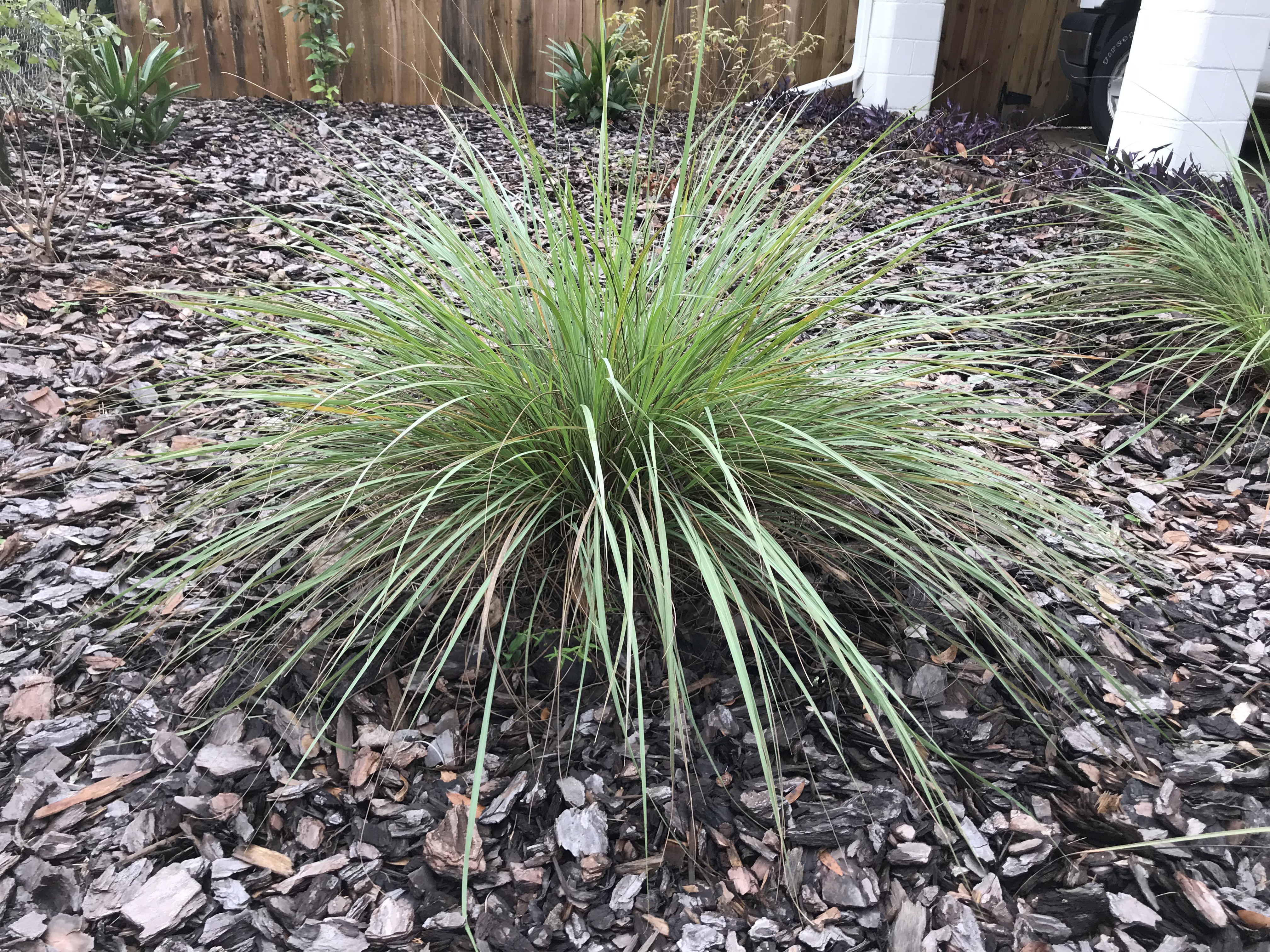
Pine straw being used as mulch in plant bed. Credit: Larry Williams
There is a difference between mulching and amending the soil. Mulching involves placing material such as pine straw, leaves or pine bark on top of the soil. Amending the soil is the incorporation of the material into the soil (in the root area).
Soil amendments and mulch can be organic or inorganic. Most soil amendments are organic (coming from a living organism) such as pine straw or peat moss. A few inorganic (non-living) soil amendments include sand, perlite and vermiculite.
Many common organic soil amendments don’t last long in our soils and climate. Materials such as peat moss decompose rapidly in our sandy soils, under our warm, moist conditions. Microorganisms break the “stuff” down rapidly, once it is in the soil. As a result, the benefits from the additional organic matter are quickly lost unless additional organic matter is repeatedly incorporated within the soil.
Slower decomposing materials such as sawdust or other wood products will last longer. But microorganisms that help decompose wood within the soil use or tie up some of the available plant nutrients such as nitrogen during the decomposition process. So additional nitrogen may need to be added to meet the nitrogen requirements for plants that are growing in the amended soil when wood is used as a soil amendment. Additional nitrogen may be needed until the wood is thoroughly decomposed. This may take months to years based on how well rotted the wood was when incorporated. It’s best to use well-rotted sawdust as a soil amendment. Nitrogen deficiency results in a general light green to yellow color in plant leaves.
Mushroom compost contains a high degree of lime. As a result, it will raise the soil pH, making the soil more alkaline or less acidic. It has its place as a soil amendment but should not be used where “acid loving” plants are to be grown. This would include plants such as centipedegrass, blueberries, azaleas, camellias and gardenias. It’s best to know the soil pH before using mushroom compost to avoid ending up with soil that’s too alkaline for the plants you intend to grow.
There needs to be a reason to amend the soil. Is the soil too heavy and poorly drained such as is the case with clay or muck type soils? Then, you may need to add something such as perlite or sand to “open” the soil to improve drainage. Is the soil sandy with a low pH? Then, you may want to use mushroom compost.
Amending soil for no good reason can be a time consuming and costly mistake.
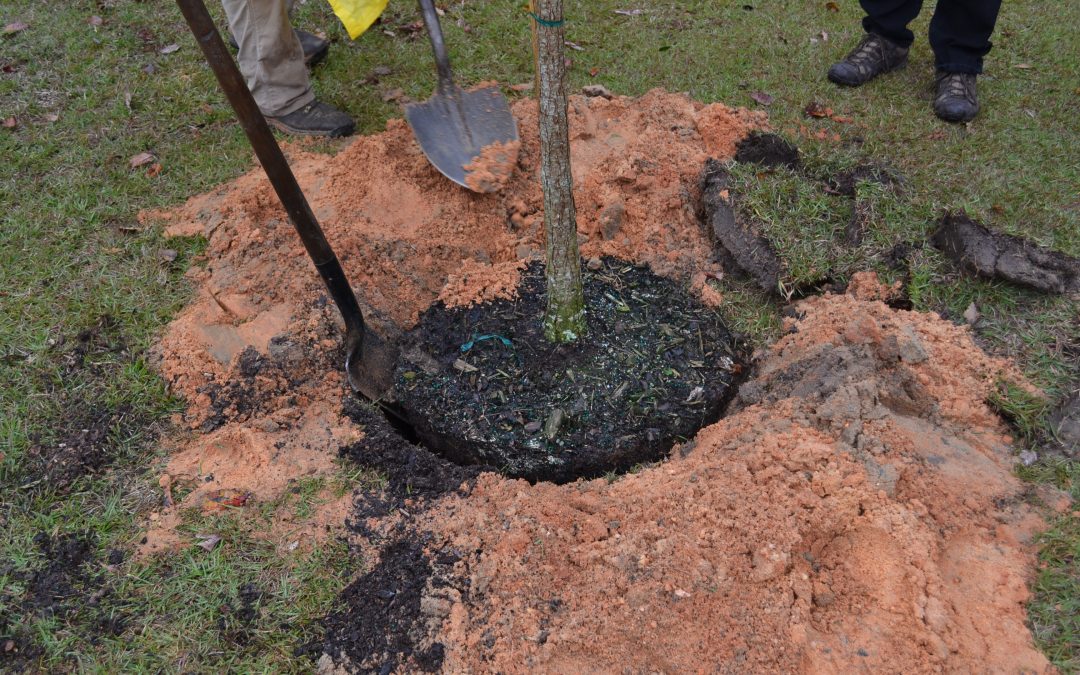
My previous article outlined the benefits of planting trees during the winter dormant season. Once planted, it’s then time to implement one of the best practices that helps ensure successful establishment of recently installed trees and shrubs – mulching.
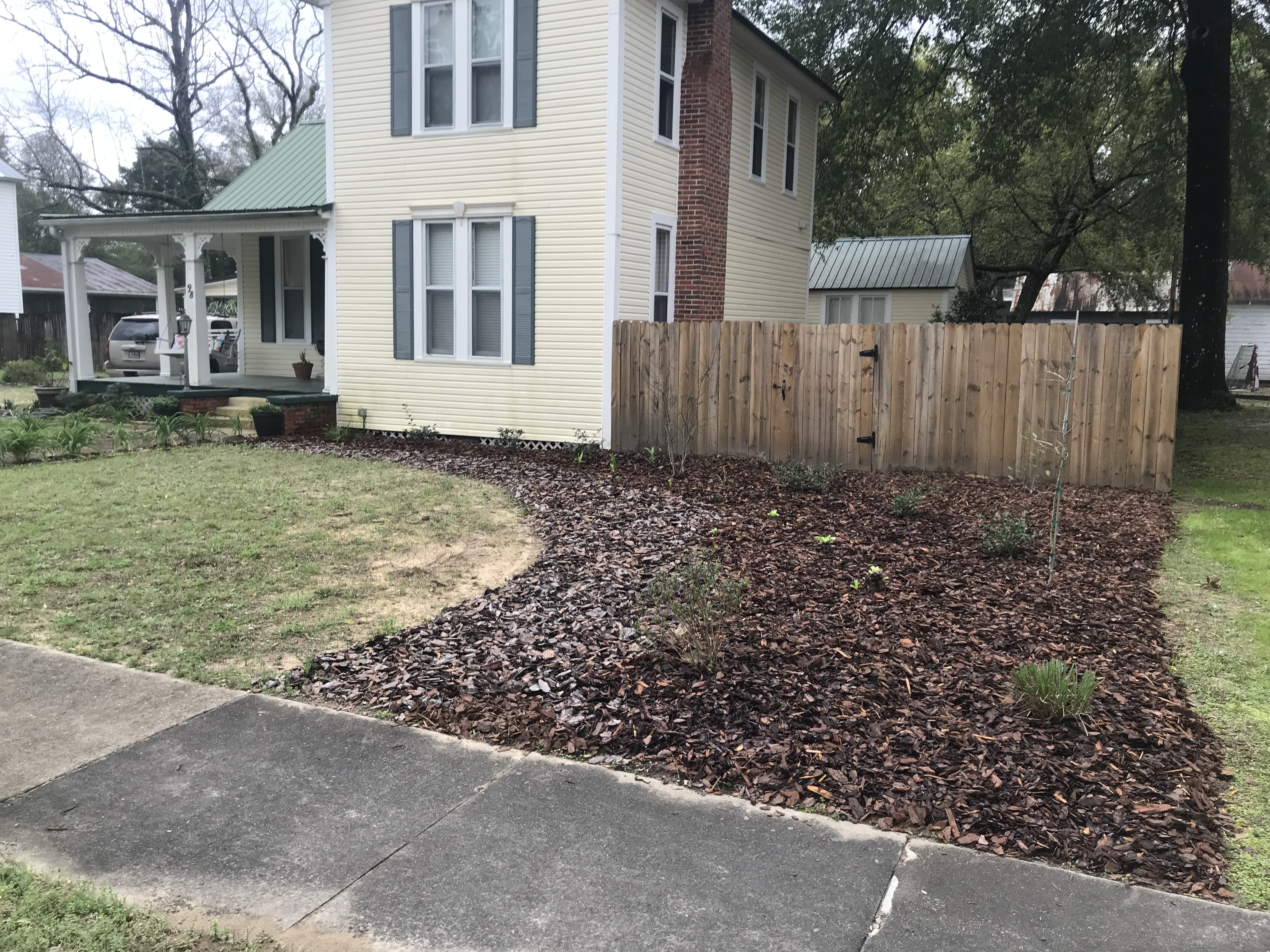
Mulching, by definition, is simply the process of adding a layer of material over the top of the soil. Like planting at the right time, mulching does many great things for your landscape. Mulching helps moderate temperatures; the soil stays warmer in the winter and cooler in the summer. Mulching increases water retention; when the sun isn’t blasting directly onto the soil, it dries out much more slowly. Mulching reduces weed pressure; most weed seeds require sunlight to germinate. Etc. Etc. The benefits of mulch abound. But what material you use and how you apply mulch figure heavily into whether your mulch helps or harms the plants whose roots it lies over.
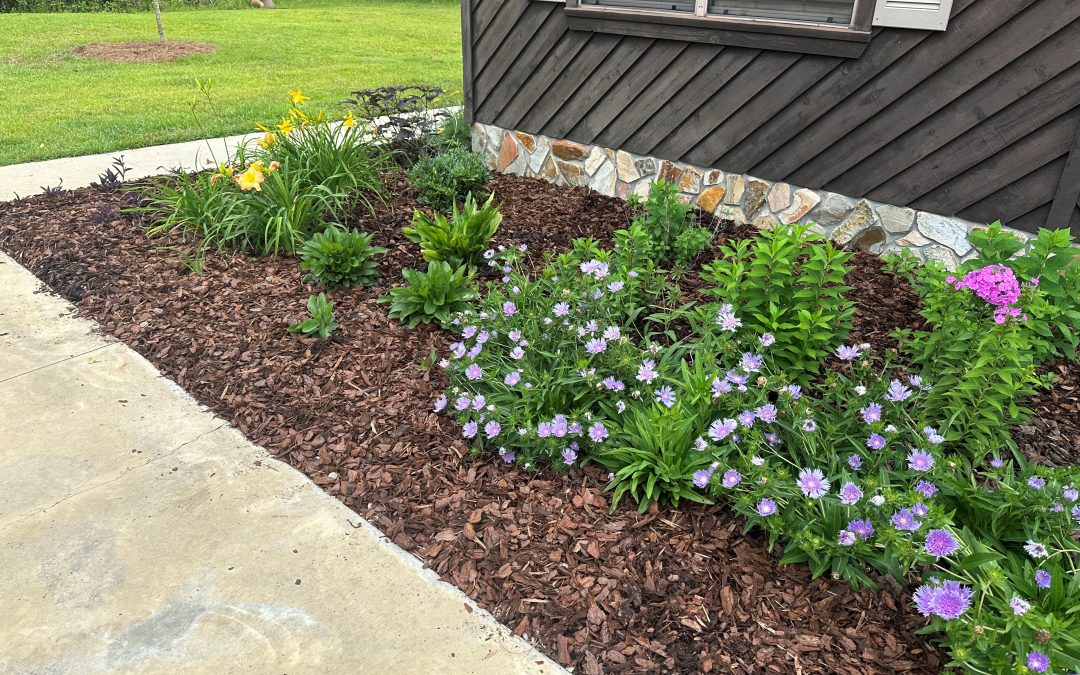
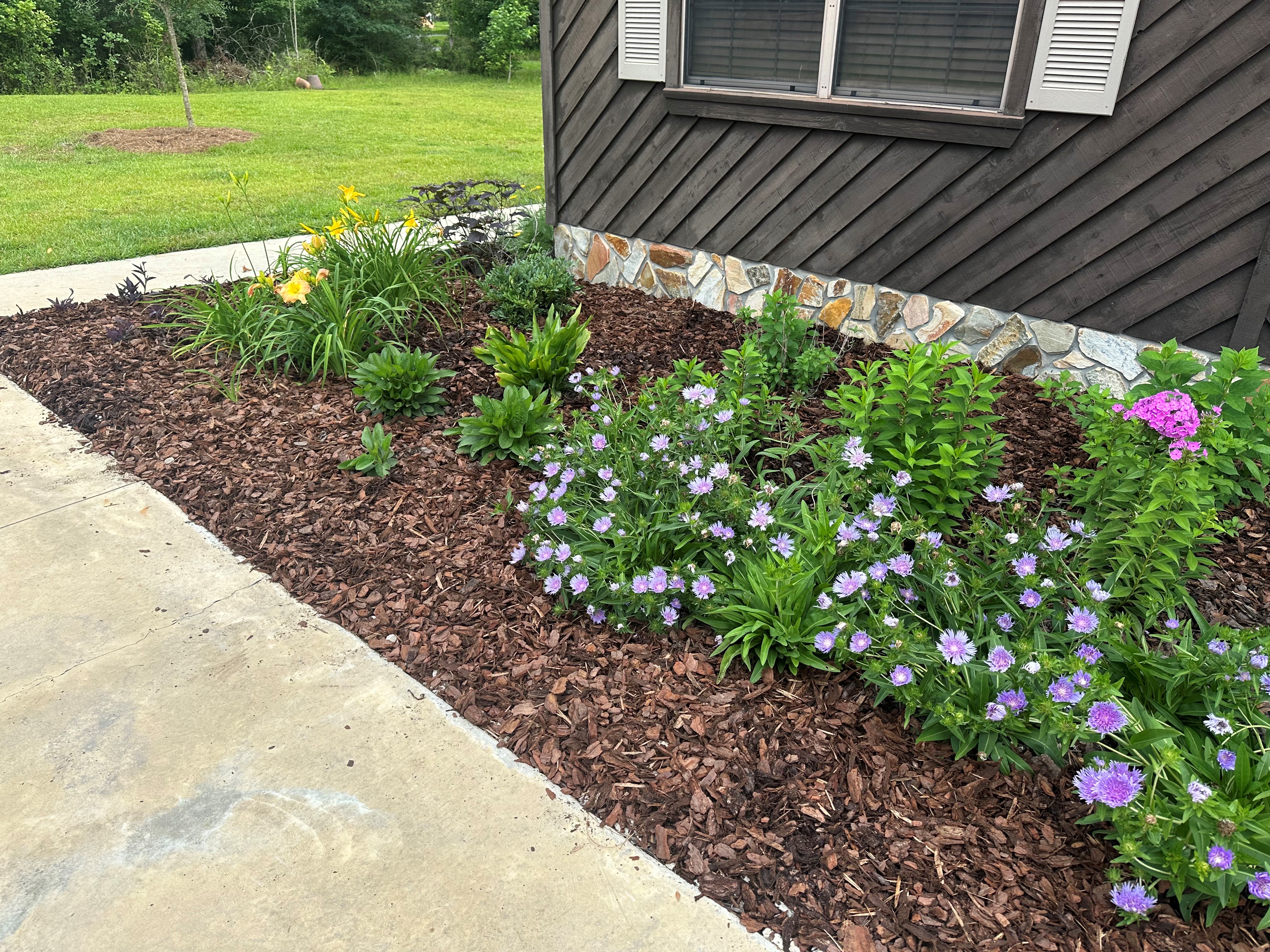
Pine bark mulch applied correctly in a landscape. Photo courtesy of Daniel Leonard.
There are two basic options when considering mulch: organic or inorganic sources. In general, you should always select an organic mulch that is derived from local sources. Organic mulches are mulches derived from natural materials like pine straw, leaves, tree bark, or shredded wood chips. These mulches break down over time and benefit soil health through bettering water holding capacity, increasing soil porosity and organic matter content, and drastically expanding the soil biome (beneficial worms, fungus, and bacteria that live in the soil). Organic mulches also allow landscapes to blend in with the natural areas surrounding homesites as they typically use materials found in local ecosystems. For example, in the coastal south, pine forests dominate, pine straw is plentiful, and purchasing usually supports local businesses that grow, harvest, and market the straw. So, unless you happen to live in a desert environment where rocks are natural, steer clear of rocks or other inorganic mulches.
Pinestraw mulch applied around a newly planted tree. Photo courtesy of Daniel Leonard.
As with most things, there is a Goldilocks zone for mulch. Too little isn’t enough to keep weeds from easily poking through and soil from quickly drying. Too much and you risk depriving plant roots from oxygen exchange with air above, trapping too much moisture and causing rot issues, or even creating a hydrophobic layer of dried mulch that repels rainfall and irrigation. Instead, just the right amount of mulch should be applied, enough to create a 2-3” layer of helpful mulch. With some mulches like straw, this may mean applying a 6-8” layer that will settle down to the magic 2-3” number with a good rain, interlocking the individual pieces of straw. With others like wood chips or bark nuggets, there will be little settling, and the applied amount should be 2-3” deep. A final tip is to always pull mulch back a little from the crowns of plants and the trunks of woody trees and shrubs to prevent potential disease issues.
So, after you install your new landscape plants this winter, remember to mulch well. Be sure to select an organic mulch that supports local industries, enhances the soil in your landscapes, protects your plants’ roots, prevents weeds, and looks natural! For more information about mulch or any other horticultural topic, contact your local UF/IFAS County Extension Office. Happy Gardening!
Our winter season is a good time to install many trees and shrubs. Here is a basic review of a few planting practices to make sure that your new plants get off to the good start.
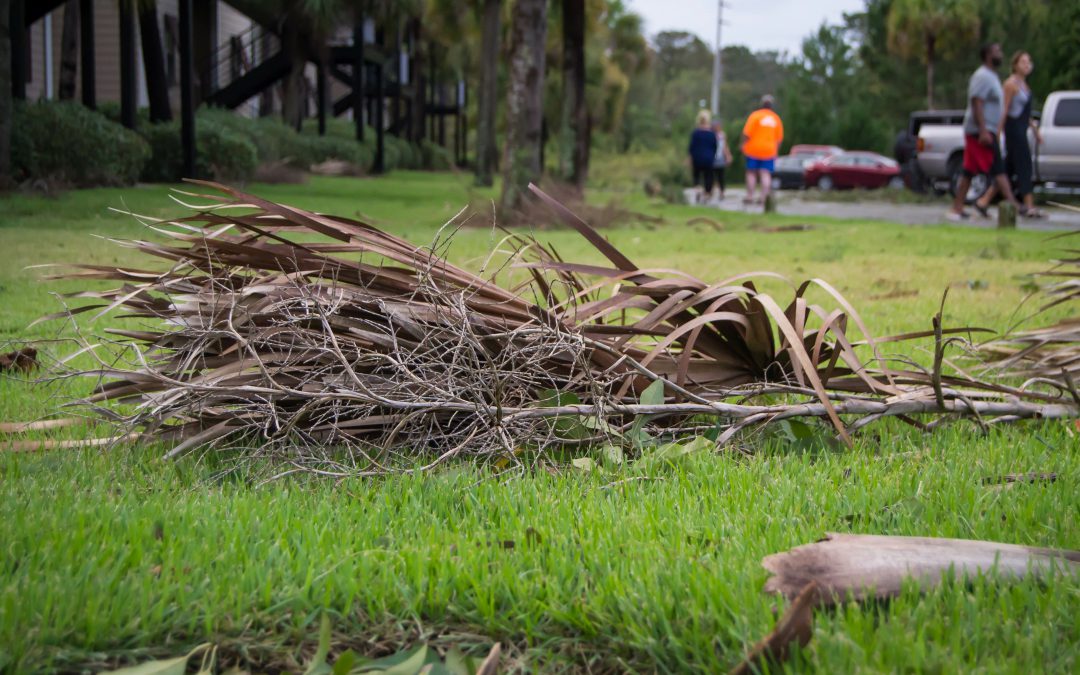
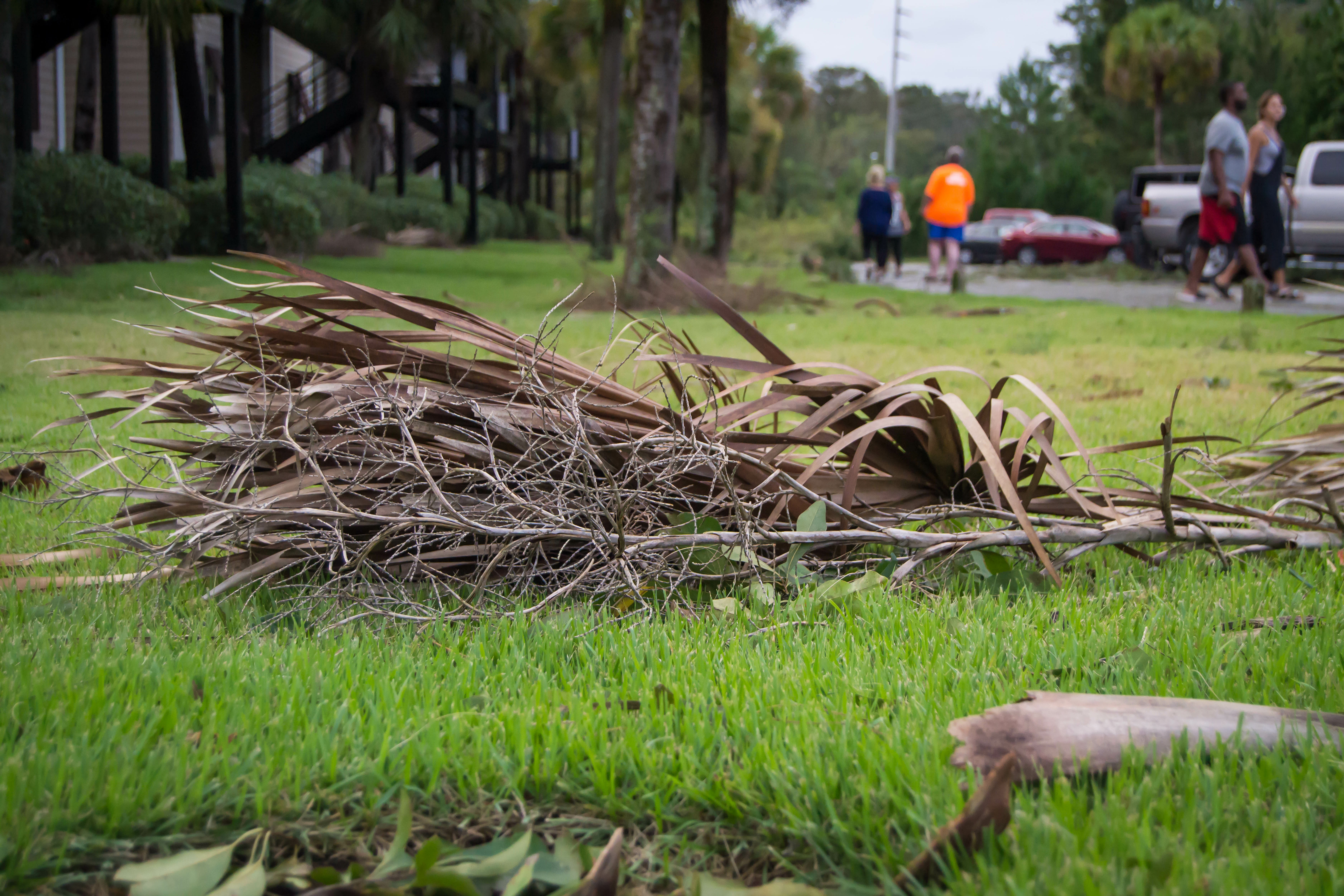
Small debris recently littered area lawns, but these materials are no “trash”. Credit: Adobe Stock
Hurricane Idalia recently tore through the Big Bend area, battering the coast and taking down trees, leaving thousands out of power. While much of the panhandle was safe from the strong winds and storm surge, we still got some gusty weather, and likely had some amount of cleanup to do following the storm. Fortunately for us, this time, it’s mostly a lot of small branches and leaves versus entire trees that our fellow gardeners are cleaning up to the east of us. In addition to being thankful that larger branches didn’t fall here, consider turning those small bits and pieces over to wildlife while collecting your wheelbarrow loads of debris. This is a great opportunity to practice sustainable landscape practices and a few Florida-Friendly Landscaping Principles.
The UF/IFAS Florida-Friendly Landscaping Program has nine principles that it encourages Florida homeowners to practice in their landscape to conserves Florida’s natural resources. Three of the nine principles can be practiced by choosing how you manage the debris that has fallen – #4 Mulch, #5 Attract Wildlife, and #7 Recycle Yard Waste.
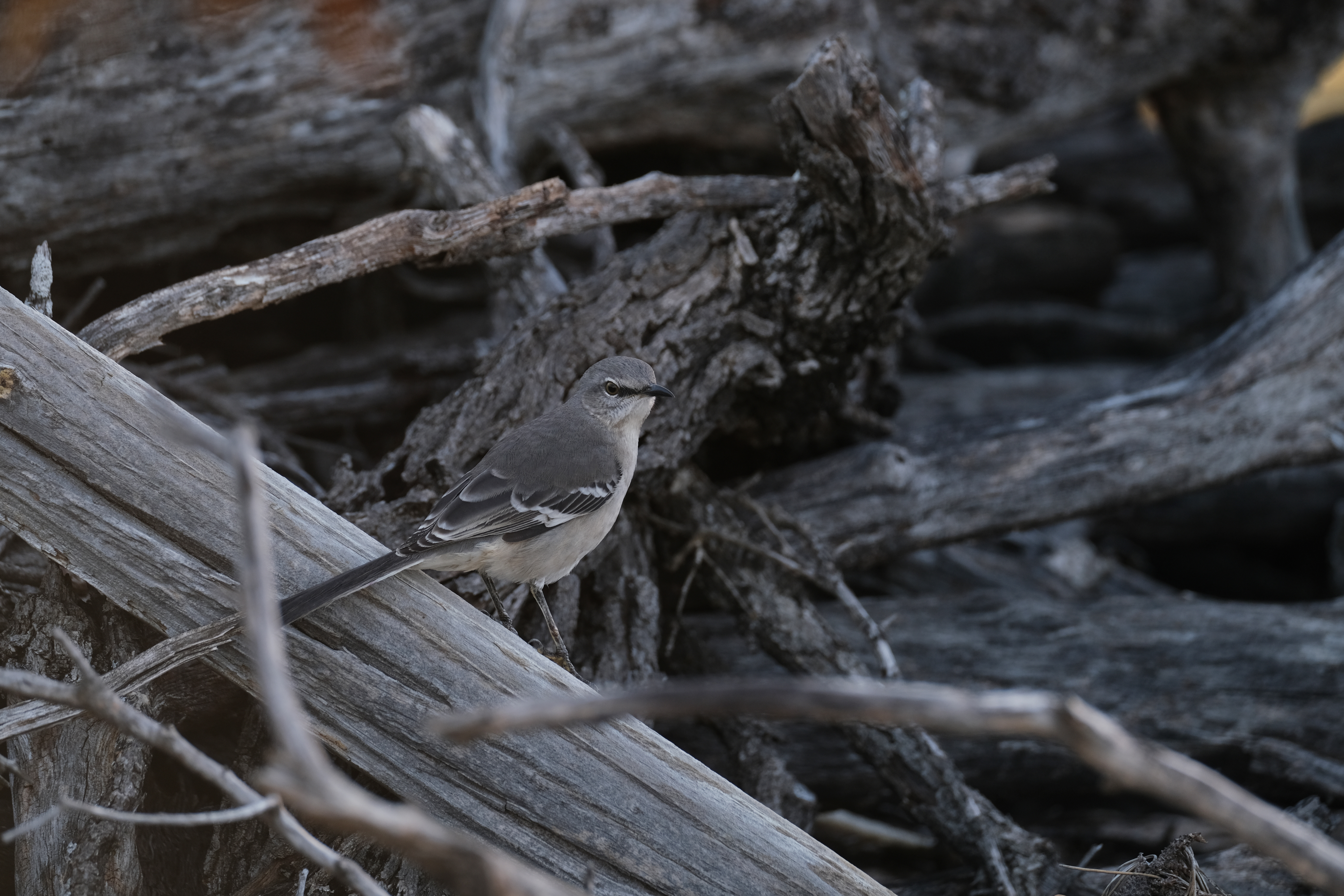
A mockingbird enjoys perching at the brushpile. Credit: Adobe Stock.
The first reaction when looking out at your landscape after a storm is typically “Ugh, there’s a lot of stuff to clean up.” We often want to “clean it up” and get it back to a sea of perfect cut grass, or at least sort of nice grass. However, the small branches and leaves that fall can be a great resource for wildlife, can provide mulch around a tree, and letting them rest reduces the need for you to haul all that stuff up to the road and all that goes into picking up, transporting, and processing the material.
The larger branches (four to six inches in diameter and larger) can be used for firewood or a naturalistic bed edging. Otherwise, they can go into a large brushpile. Smaller sticks and branches are perfect for one large brushpile, or, if a large pile doesn’t meet your aesthetic desires, a series of small piles scattered or hidden behind some shrubs is a good compromise. The leaves and really small stuff (branches no larger than a pencil) can be raked up for mulch, added to the brushpile(s), or just left in place to naturally rot away and/or get shredded up by the mower.
Many small, pencil size twigs, along with leaves, can be left in place as a mulch. Credit: Mark Tancig, UF/IFAS.
No matter how you leave the debris, consider how important this material is for all sorts of wildlife. Dead wood supports microbes, fungi, and animals up and down the food chain and even adds to your soil organic matter. While it may not look “clean” to us, those bits of “trash” are gold to many critters, especially small insects that bring birds to the yard. So, during cleanup, consider leaving little treats here and there for wildlife and spend less time hauling it to the road! For more information about the Florida-Friendly Landscaping Principles, visit the UF/IFAS Florida Friendly Landscaping Program website.
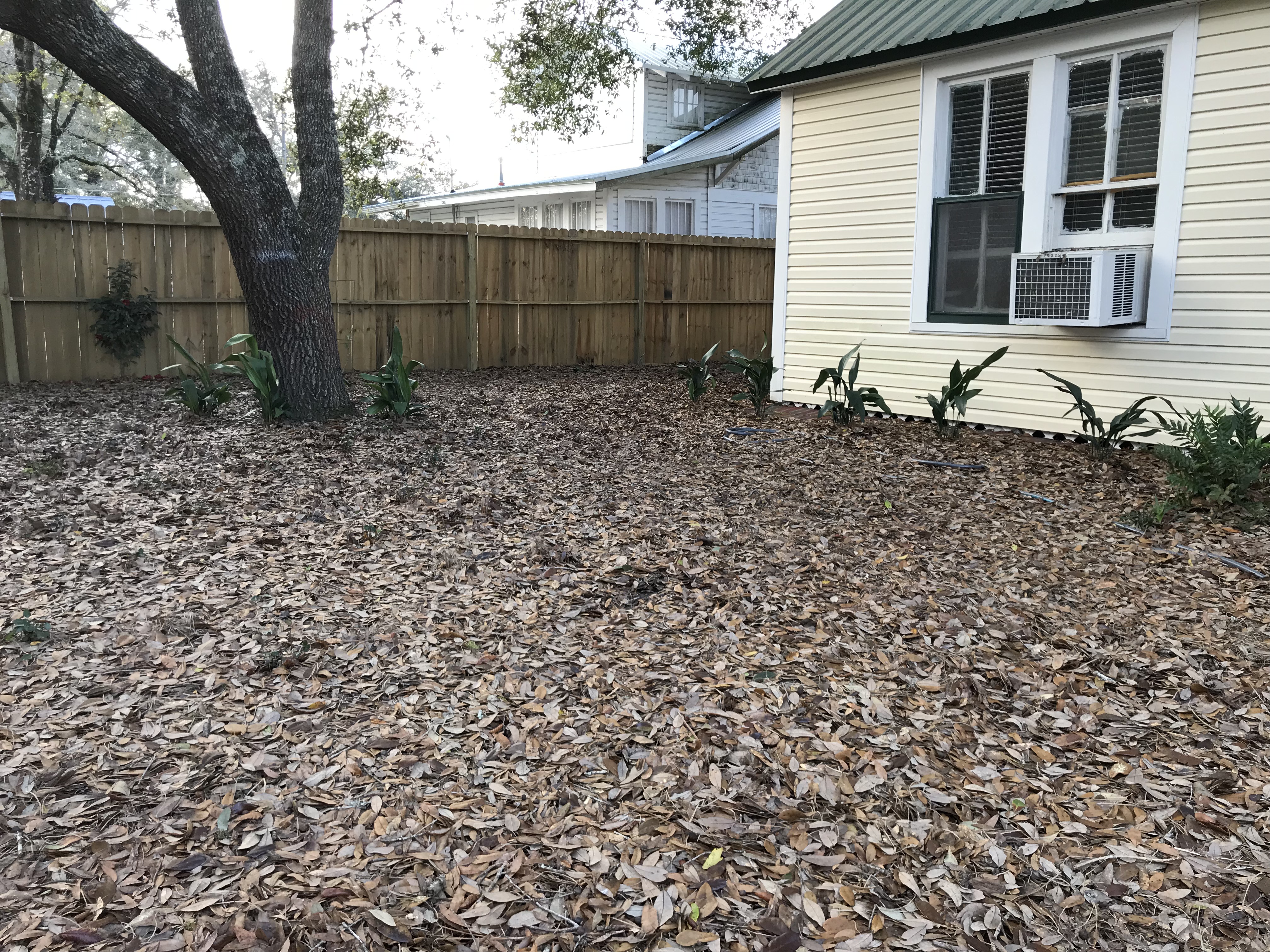
Mulch provides nutrients to soil and plants, reduces weed growth, controls soil temperature, and improves the look of lawns and gardens. It gives the landscape a neat, uniform appearance and is an excellent Florida-Friendly choice for hard-to-mow areas and shady spots. One should keep a 2- to 3-inch-deep layer of mulch on plant beds. Always leave at least 2 inches of space around tree trunks to prevent rot. Create self-mulching areas under your trees by allowing fallen leaves to stay in place. Though bark and wood chips are typically the most common mulch, other forms are just as beneficial. The following are the best overall mulches for Panhandle gardeners!
Bark and Wood Chips
Bark and wood chips are frequently used on flower beds and around small bushes and shrubs. As they decay, the material provides nutrients to the soil. Both materials are inexpensive and can be found at most gardening supply stores. Cedarwood chips are popular for their repellent properties, keeping fleas and other pests away.
Pebbles and Rocks
Pebbles and rocks are effective in retaining soil moisture and minimizing weed growth. They are excellent mulch alternatives for flower beds. Rocks are economical in cooler climates, where heat retained by rock mulch can extend the growing season. Since rocks do not decompose, they don’t provide nutrients to the soil. If you’re looking for a nutrient-rich mulch alternative, rocks are not a good choice. This can be easily remedied by fertilizing your landscape to provide more nutrients. If you decide to use pebbles or rocks, keep in mind that they can be difficult to remove if you switch to a different type of mulch a season or two.
Leaves and Pine Needles
Leaves and pine needles are an affordable nutrient-rich mulch alternative. Rake and gather fallen leaves each season and redistribute them above your soil. For the best results, one should shred the leaves. Let the shredded leaves dry before adding them to your garden to reduce bacteria growth and pest infestations. Pine needles decompose and add nutrients to the soil, just like other organic forms of mulch. They work best with plants that prefer acidic soil conditions, like holly gardenias, roses, and chrysanthemums. You can buy bundles of pine needles at your local gardening store or gather them from your own trees and spread them around your garden.
Pine bark in a Panhandle planting bed. Tree bark makes great mulch! Photo courtesy of Daniel Leonard.Pine bark is an excellent, regionally available mulch. Photo courtesy of Daniel Leonard.Pine straw is a popular mulch in the Panhandle. Photo courtesy of Daniel Leonard.Leaves make wonderful mulch! Photo courtesy of Daniel Leonard.
Grass Clippings
Grass clippings are a cost-efficient alternative to traditional mulch. However, they must be dried out or composted before use to prevent potentially damaging heat from affecting plants. If you treat your lawn with chemicals, don’t use grass clippings in your flower or garden bed.
Compost
Compost is an affordable mulch alternative and enriches the soil by adding essential nutrients. Apply compost above your garden or lawn in a thin layer. Compost improves the soil, adding nutrients such as phosphorus, potassium, and nitrogen to your garden. One can make it yourself with discarded vegetable scraps, coffee grounds, dead leaves, and water.
Newspaper
Newspapers effectively keep weeds at bay, retain moisture, and regulate soil temperatures. Newspaper is equally functional compared to traditional mulches, but is not as visually appealing as other options. Moisten the newspaper slightly before laying it above the soil so that it stays in place. Then, add a thin layer of organic mulch on top. Apply five to eight sheets of newspaper at a time. If using newspaper without another mulch on top, shred it before applying it to your garden. Newspaper is biodegradable and will deteriorate like other mulches.