by Mary Salinas | Aug 14, 2020
Mary is the Residential Horticulture Agent and Master Gardener Volunteer Coordinator for UF/IFAS Extension in Santa Rosa County. She earned a B.S. and M.S. in environmental horticulture at the University of Florida. She and her volunteers provide research-based solutions for residents with their lawns, landscapes, and gardens. Mary also oversees the educational programs, horticulture, butterflies, and volunteers at the Panhandle Butterfly House & Nature Center that has just relocated to Milton and should reopen in 2021.
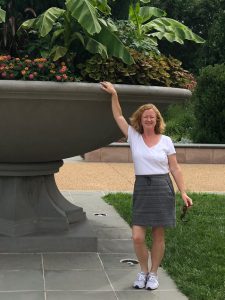
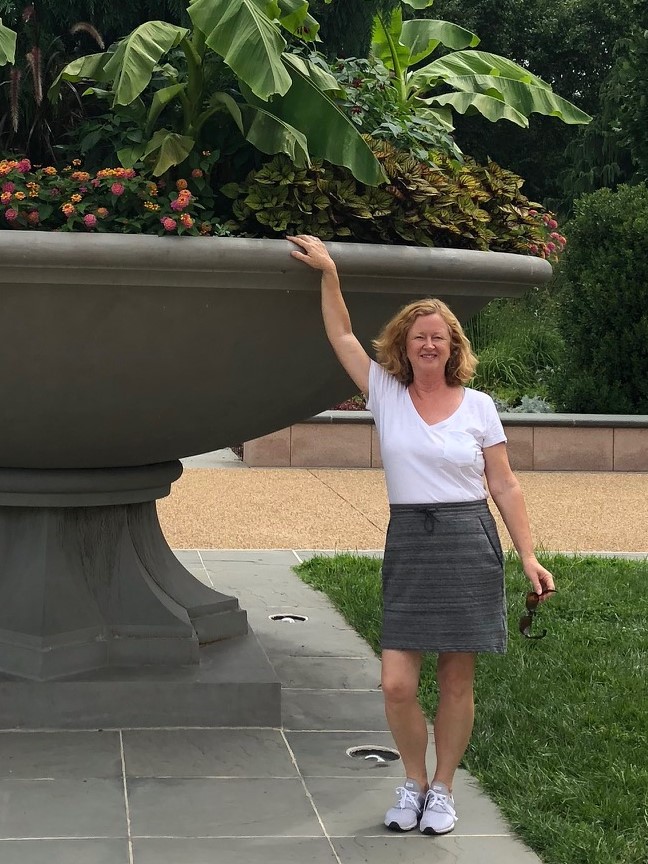
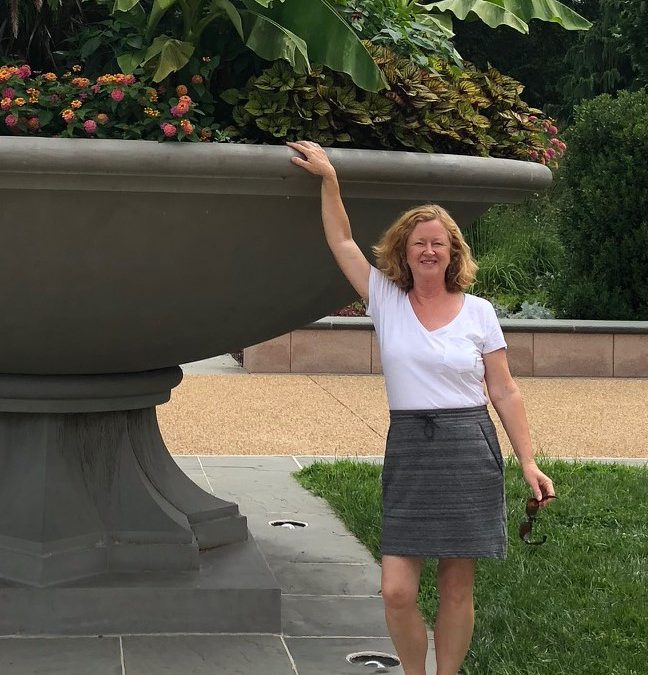
Mary Salinas at the US Botanic Garden in Washington, D.C. Photo credit: Allison Ngom.
Ever since she can remember, Mary has loved plants and nurturing them. She learned how from her mother and grandmother growing up with good rich soils in Michigan. A relocation to Tampa in 1991 meant learning a whole new way to garden – new plants, new soils, and new timetables. Nearly eight years ago she moved north to Santa Rosa County to take her current position and, again, had to tweak her garden skills.
Between she and her husband they have 6 children and 4 grandchildren and are hoping for more grandchildren real soon. Family and faith are a priority. At home, Mary loves to try new crops and varieties in her vegetable garden and is passionate about growing perennials, especially native milkweeds, and watching new generations of monarch butterflies take flight. And she is fascinated with huge container gardens. Gardening is not the only activity in her life; Mary loves to kayak, cruise in the pontoon boat, hike, and volunteer as a guardian ad litem for children in foster care.
by Matthew Orwat | Mar 17, 2020
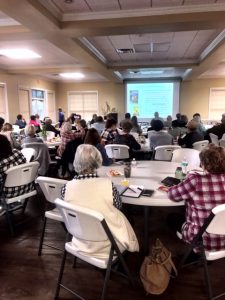 All classes postponed All classes postponed
All UF/IFAS Extension educational programs, events, and meetings scheduled through April 30 have been postponed due to direction from the University of Florida concerning COVID-19. This includes all field days, workshops, classes, meetings, master gardener meetings, and master gardener trainings through Extension Offices. This date or the activities included may change and we will update you as the situation evolves.
The UF/IFAS Extension Solutions for Your Life website and Gardening Solutions website offer online material, including pre-recorded webinars and videos, that can be accessed at your convenience.
In addition, we have our Master Gardener webinar page and our Gardening in the Panhandle web archives full of educational content
The disappointment and inconvenience this situation will cause is obvious, but the safety and well-being of our community, volunteers, faculty, and staff are paramount. Keep looking to our websites for new and interesting content. We will send out emails to you keeping you up to date on any new articles or virtual extension programs. Thank you for your cooperation and remember you can still contact your local Extension Office for guidance via email/phone. For a listing of local office visit https://sfyl.ifas.ufl.edu/find-your-local-office/
Follow us on Facebook for updates https://www.facebook.com/GardeningInThePanhandle/
For more information on COVID-19, please use reliable sources such as the CDC https://www.cdc.gov/coronavirus/2019-ncov/index.html and Florida Department of Health http://www.floridahealth.gov/diseases-and-conditions/COVID-19/index.html
Take care,
Matthew Orwat, Daniel Leonard and the Gardening in the Panhandle Team
UF/IFAS Extension, Northwest District
https://nwdistrict.ifas.ufl.edu/ |
by Sheila Dunning | Oct 2, 2018
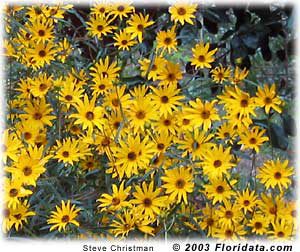 Each fall, nature puts on a brilliant show of color throughout the United States. As the temperatures drop, autumn encourages the “leaf peepers” to hit the road in search of the red-, yellow- and orange-colored leaves of the northern deciduous trees. In Northwest Florida the color of autumn isn’t just from trees. The reds, purples, yellow and white blooms and berries that appear on
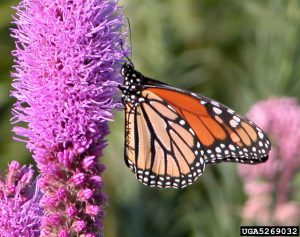
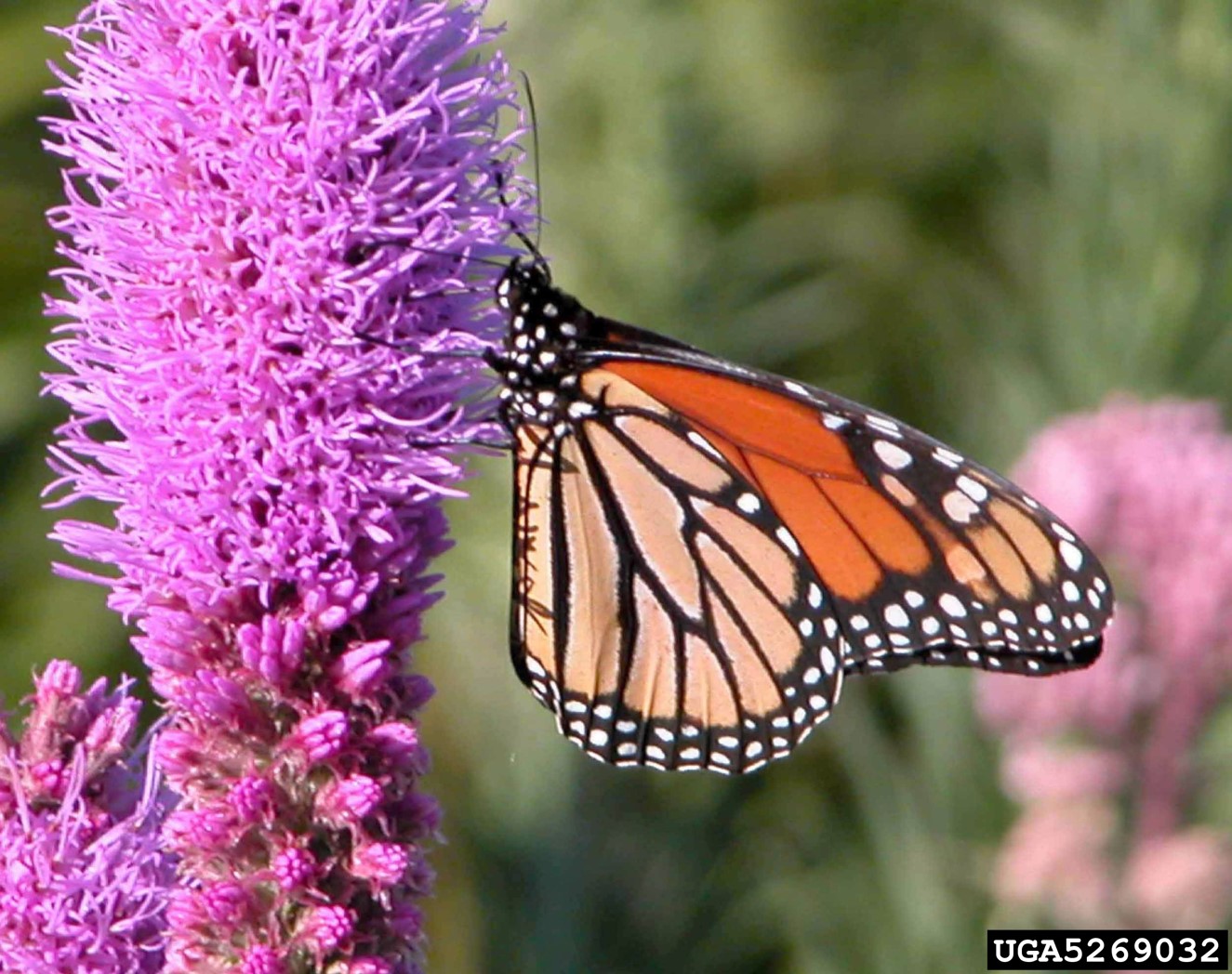
Monarch butterfly on dense blazing star (Liatris spicata var. spicata).
Beverly Turner, Jackson Minnesota, Bugwood.org
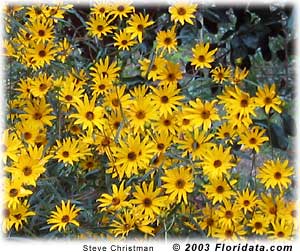
many native plants add spectacular color to the landscape. American Beautyberry, Callicarpa americana, is loaded with royal-colored fruit that will persist all winter long. Whispy pinkish-cream colored seedheads look like mist atop Purple Lovegrass, Eragrostis spectabilis and Muhlygrass, Muhlenbergia capillaris. The Monarchs and other butterfly species flock to the creamy white “fluff” that covers Saltbrush, Baccharis halimifolia. But, yellow is by far the dominant fall flower color. With all the Goldenrod, Solidago spp., Narrowleaf Sunflower, Helianthus angustifolius and Tickseed, Coreopsis spp., the roadsides are golden. When driving the roads it’s nearly impossible to not see the bright yellows in the ditches and along the wood’s edge. Golden Asters (Chrysopsis spp.), Tickseeds (Coreopsis spp.), Silkgrasses (Pityopsis spp.), Sunflowers (Helianthus spp.) and Goldenrods (Solidago spp.) are displaying their petals of gold at every turn. These wildflowers are all members of the Aster family, one of the largest plant families in the world. For most, envisioning an Aster means a flower that looks like a daisy. While many are daisy-like in structure, others lack the petals and appear more like cascading sprays. So if you are one of the many “hitting the road in search of fall color”, head to open areas. For wildflowers, that means rural locations with limited homes and businesses. Forested areas and non-grazed pastures typically have showy displays, especially when a spring burn was performed earlier in the year. Peeking out from the woods edge are the small red trumpet-shaped blooms of Red Basil, Calamintha coccinea and tall purple spikes of Gayfeather, Liatris spp.
Visit the Florida Wildflower Foundation website, www.flawildflowers.org/bloom.php, to see both what’s in bloom and the locations of the state’s prime viewing areas. These are all native wildflowers that can be obtained through seed companies. Many are also available as potted plants at the local nurseries. Read the name carefully though. There are cultivated varieties that may appear or perform differently than those that naturally occur in Northwest Florida. For more information on Common Native Wildflowers of North Florida go to http://edis.ifas.ufl.edu/ep061
by Beth Bolles | Dec 30, 2015
Information on gardening practices is freely shared between gardeners and many times the good advice is helpful in plant selection and improving plant growth. There are some passed along practices that are not always suitable for every situation and gardeners may need to investigate a little deeper before implementing the good advice.
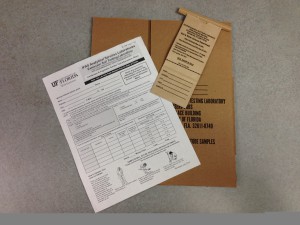
Soil test kit available form your local Extension office. Photo: Mary Derrick, UF/IFAS.
One common recommendation from gardeners is to apply Epsom salts to the soil to improve plant growth. Gardeners may have used Epsom salts for various plants in the garden and viewed plants that appear to grow better or have improved leaf color. Therefore a general recommendation to help others who have some general plant problems or off color leaves is to apply Epsom salts.
Before you apply Epsom salts to your garden, understand that it is an inorganic fertilizer, specifically magnesium sulfate. Plants make their own food but they derive most of their nutrients needed for important functions form the soil. Magnesium is one of the nutrients that is essential in photosynthesis. At times, our sandy soils may be lacking in nutrients but there may be plenty of nutrients available for plants.
The recommendation to apply Epsom salts may sound like a good idea but gardeners should always make sure that magnesium is needed before any applications. Too much magnesium in the soil can interfere with the uptake of other nutrients by plants. You could create more of a problem by indiscriminately applying Epsom salts when magnesium is not needed.
As you hear often from the University of Florida Extension, conduct a soil test before applying fertilizer to determine the major nutrient levels available in your soil. This $7.00 test will help you better manage plant nutrition. If you need assistance interpreting soil test results, contact your local county Extension office.