Select Page
Landscape  Q & A

Landscape Q & A

On August 12, 2021, our panel answered questions on a wide variety of landscape topics. Maybe you are asking the same questions, so read on!

Ideas on choosing plants

What are some perennials that can be planted this late in the summer but will still bloom through the cooler months into fall?

Duranta erecta ‘Sapphire Showers’ or ‘Gold Mound’, firespike, Senna bicapsularis, shrimp plant, lion’s ear

Where can native plants be obtained?

Dune sunflower, Helianthus debilis. Photo credit: Mary Salinas UF/IFAS Extension.

Gardening Solutions: Florida Native Plants  – see link to FANN: https://gardeningsolutions.ifas.ufl.edu/plants/ornamentals/native-plants.html

What are some evergreen groundcover options for our area?

Mondo grass, Japanese plum yew, shore juniper, ajuga, ferns such as autumn fern.

What are some ideas for partial morning sun butterfly attracting tall flowers to plant now?

Milkweed, salt and pepper plant, swamp sunflower, dune sunflower, ironweed, porterweed, and salt bush.

I’m interested in moving away from a monoculture lawn. What are some suggestions for alternatives?

Perennial peanut, powderpuff mimosa, and frogfruit.

We are new to Florida and have questions about everything in our landscape.

Florida-Friendly-Landscaping TM Program and FFL Web Apps: https://ffl.ifas.ufl.edu/

https://ffl.ifas.ufl.edu/resources/apps/

UF IFAS Gardening Solutions: https://gardeningsolutions.ifas.ufl.edu/

What are some of the top trends in landscaping today?

Houseplants, edible gardens, native plants, food forests, attracting wildlife, container gardening, and zoysiagrass lawns

Edibles
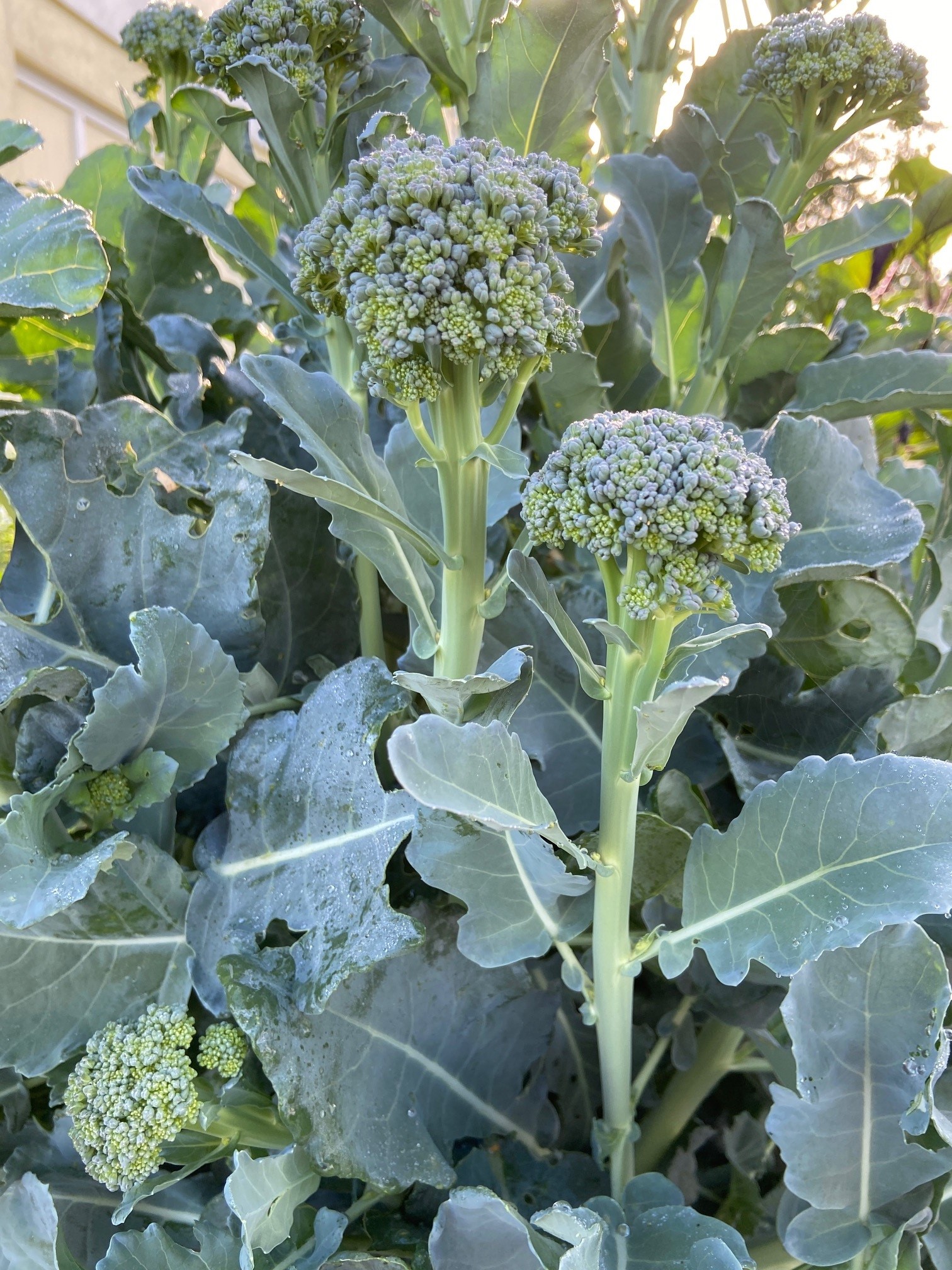
Artwork broccoli is a variety that produces small heads. Photo credit: Mary Salinas UF/IFAS Extension.

What vegetables are suitable for fall/winter gardening?

Cool Season Vegetables: https://gardeningsolutions.ifas.ufl.edu/plants/edibles/vegetables/cool-season-vegetables.html

North Florida Gardening Calendar: https://edis.ifas.ufl.edu/publication/EP451%20%20%20

Florida Vegetable Gardening Guide: https://edis.ifas.ufl.edu/publication/vh021

How can I add herbs to my landscape?

Herbs in the Florida Garden: https://gardeningsolutions.ifas.ufl.edu/plants/edibles/vegetables/herbs.html

My figs are green and hard. When do they ripen?

Why Won’t My Figs Ripen: https://www.lsuagcenter.com/profiles/rbogren/articles/page1597952870939

What is best soil for raised bed vegetable gardens?

Gardening in Raised Beds: https://edis.ifas.ufl.edu/publication/EP472

And there are always questions about weeds

How can I eradicate cogongrass?
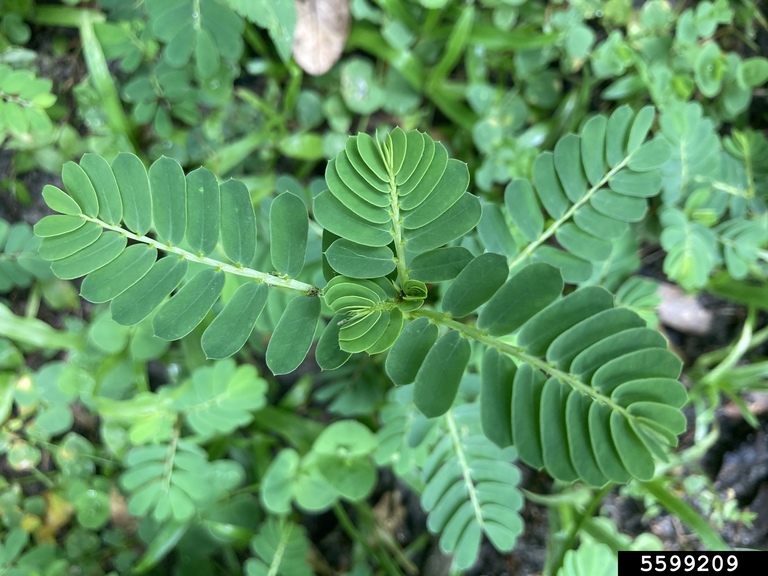
Chamber bitter is a troublesome warm season weed in our region. Photo credit: Brantlee Spakes Richter, University of Florida, Bugwood.org

Cogongrass: https://edis.ifas.ufl.edu/publication/WG202

Is it okay to use cardboard for weed control?

The Cardboard Controversy: https://gardenprofessors.com/the-cardboard-controversy/

What is the best way to control weeds in grass and landscape beds?

Weed Management Guide for Florida Lawns: https://edis.ifas.ufl.edu/publication/EP141

Improving Weed Control in Landscape Planting Beds: https://edis.ifas.ufl.edu/pdf/EP/EP52300.pdf

Landscape practices

Can ground water be brackish and stunt plants?

Reclaimed Water Use in the Landscape: https://edis.ifas.ufl.edu/publication/ss545

How can I prevent erosion from rainwater runoff? 

Stormwater Runoff Control – NRCS: https://www.nrcs.usda.gov/wps/portal/nrcs/detail/national/water/?cid=nrcs144p2_027171

Rain Gardens: https://gardeningsolutions.ifas.ufl.edu/design/types-of-gardens/rain-gardens.html

And https://gardeningsolutions.ifas.ufl.edu/pdf/articles/rain-garden-manual-hillsborough.pdf

What is the best time of the year to propagate flowering trees in zone 8B?

Landscape Plant Propagation Information Page – UF/IFAS Env. Hort: https://hort.ifas.ufl.edu/database/lppi/

Which type of mulch works best on slopes greater than 3 percent?

Landscape Mulches: How Quickly do they Settle?: https://edis.ifas.ufl.edu/publication/FR052

When should bulbs be fertilized?

Bulbs and More – UI Extension: https://web.extension.illinois.edu/bulbs/planting.cfm

Should I cut the spent blooms of agapanthus?

Agapanthus, extending the bloom time: https://gardeningsolutions.ifas.ufl.edu/plants/ornamentals/agapanthus.html

http://blogs.ifas.ufl.edu/wakullaco/2020/10/07/extending-bloom-time/

Plant questions
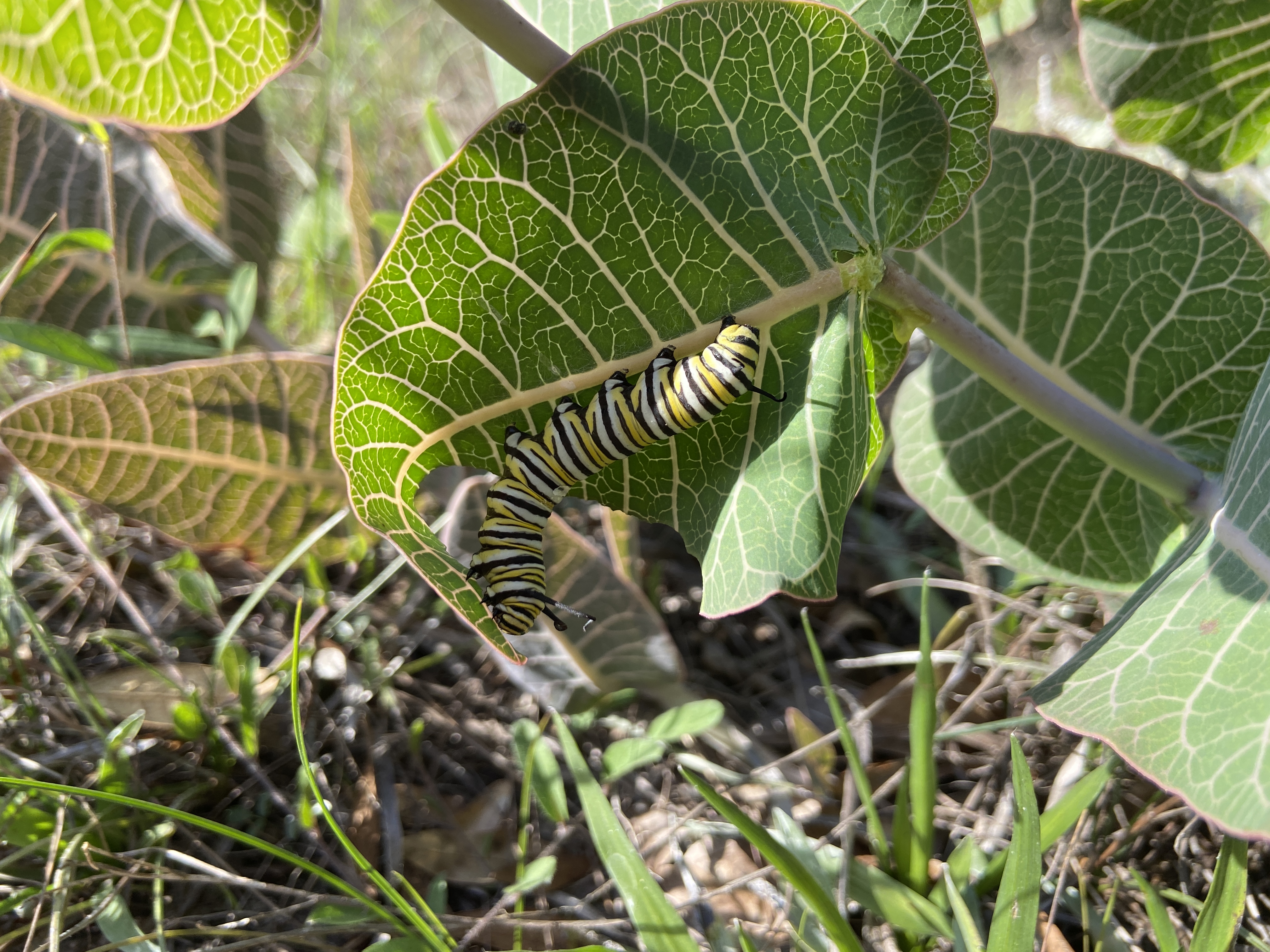
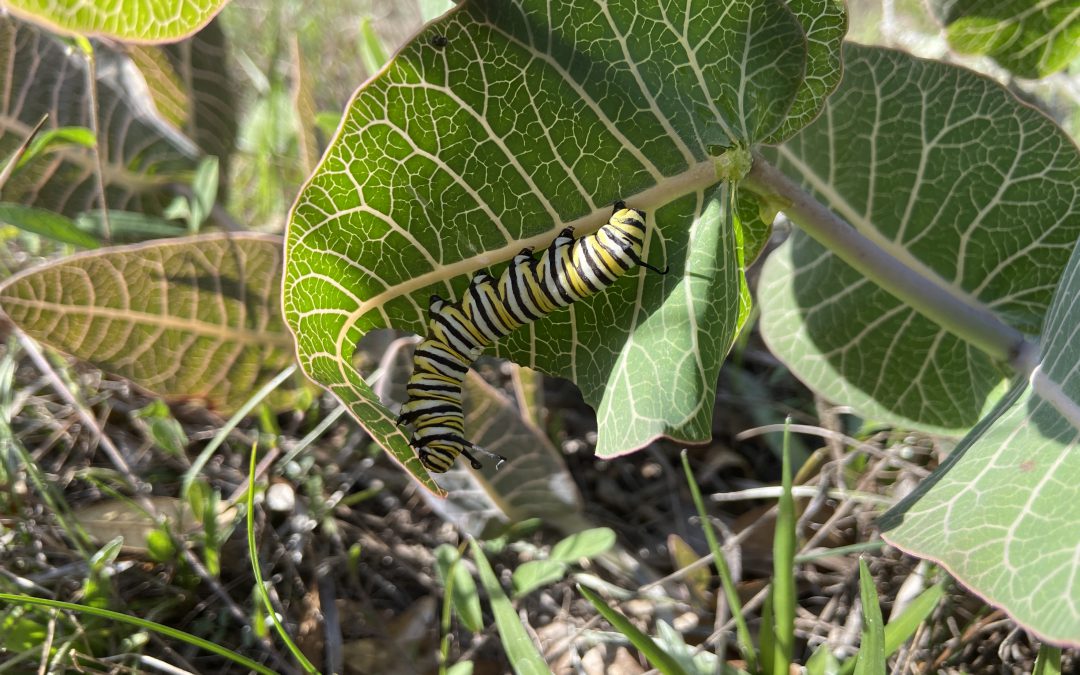
Monarch caterpillar munching on our native sandhill milkweed, Asclepias humistrata. Photo credit: Mary Salinas, UF IFAS Extension.

I planted native milkweed and have many monarch caterpillars. Should I protect them or leave them in nature?

It’s best to leave them in place. Featured Creatures: Monarch Butterfly: https://edis.ifas.ufl.edu/pdf/IN/IN780/IN780-Dxyup8sjiv.pdf

How does Vinca (periwinkle) do in direct sun? Will it make it through one of our panhandle summers? Can I plant in late August?

Periwinkles  and  No more fail with Cora series: https://gardeningsolutions.ifas.ufl.edu/plants/ornamentals/periwinkles.html#:~:text=Plant%20your%20periwinkles%20where%20they,rot%20if%20irrigated%20too%20frequently.

Insect and disease pests

What to do if you get termites in your raised bed?

The Facts About Termites and Mulch: https://edis.ifas.ufl.edu/publication/IN651

How to combat fungus?

Guidelines for ID and Management of Plant Disease Problems: https://edis.ifas.ufl.edu/publication/mg442

Are there preventative measures to prevent diseases when the humidity is very high and it is hot?

Fungi in Your Landscape by Maxine Hunter: http://blogs.ifas.ufl.edu/marionco/2020/01/16/fungi-in-your-landscape/


If you missed an episode, check out our playlist on YouTube https://www.youtube.com/watch?v=bp0HfdEkIQw&list=PLhgoAzWbtRXImdFE8Jdt0jsAOd-XldNCd
 

Bay Laurel: An Attractive Culinary Addition for Your Landscape

Bay Laurel: An Attractive Culinary Addition for Your Landscape

Escambia County Master Gardener Volunteer Carol Perryman shares information for you to consider growing your own Bay laurel tree.

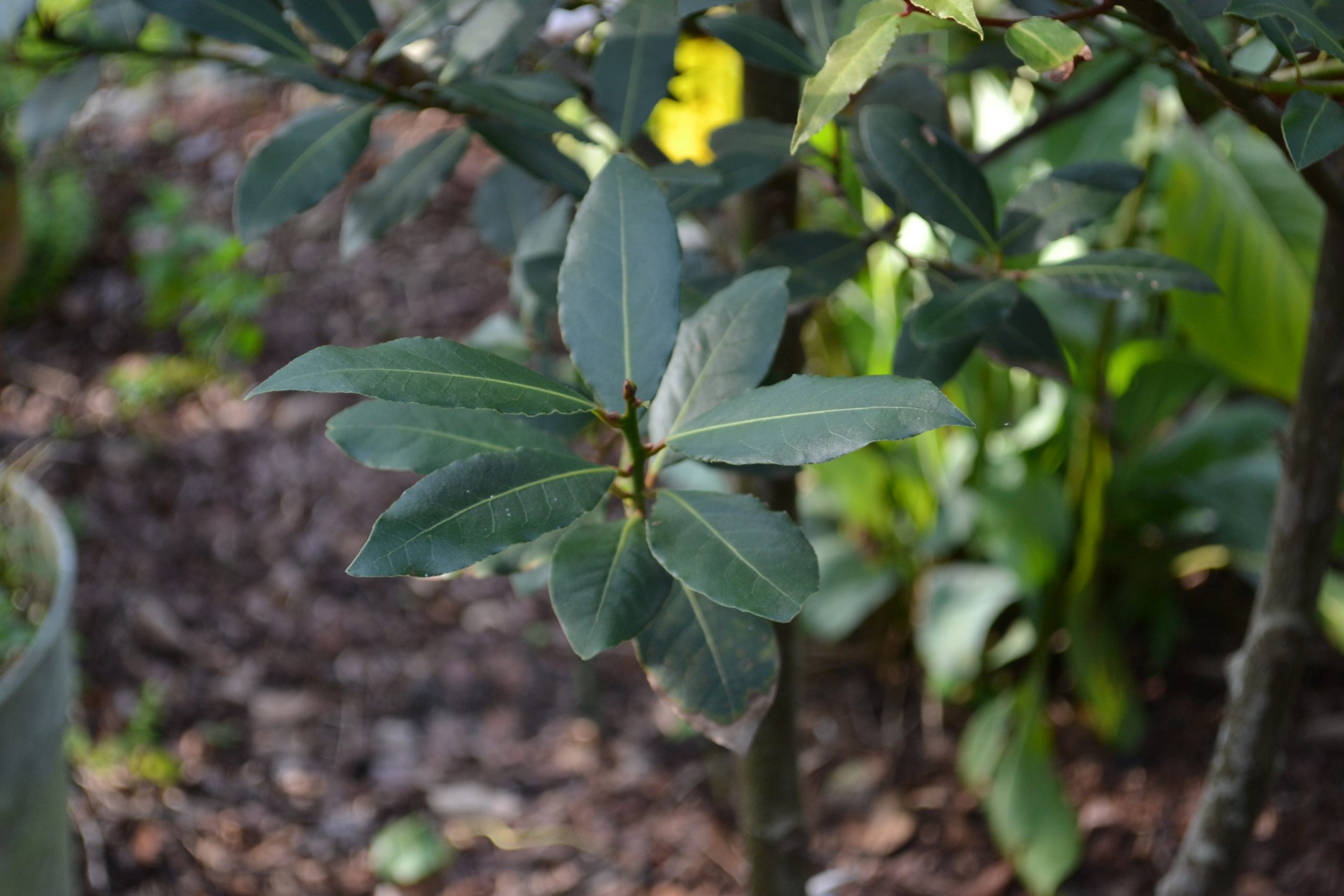
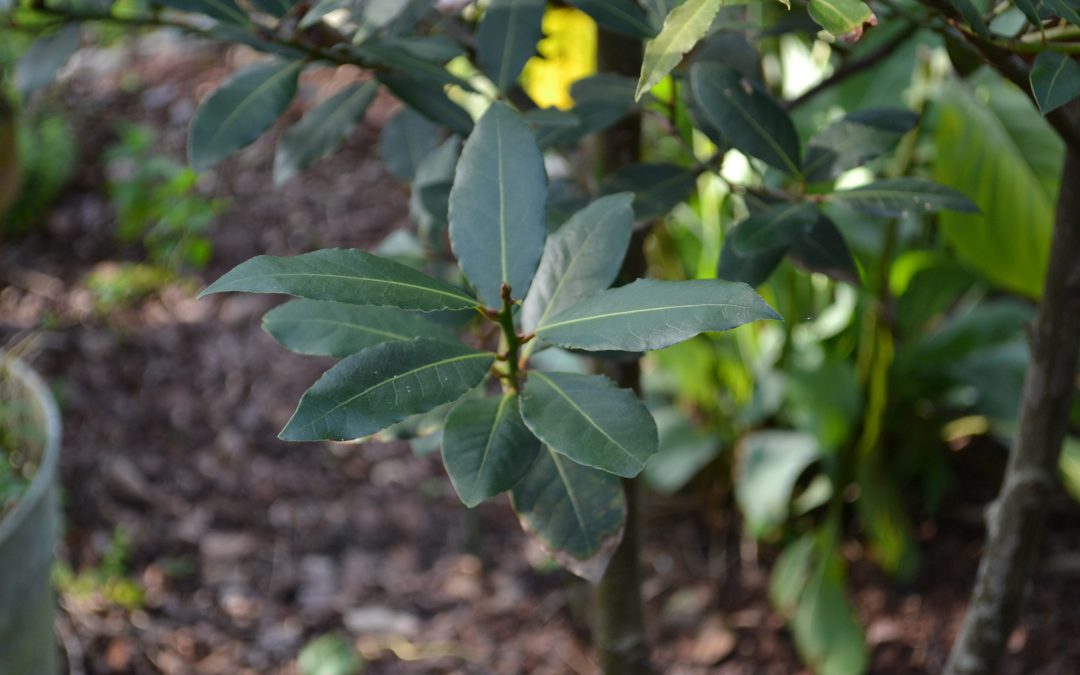
Laurus nobilis, commonly known as bay laurel, is an aromatic tree native to the western Mediterranean and it yields the bay leaves used in cooking. Mature leaves are leathery and dark green. Most are 3 to 4 inches in length with minute margin serrations. Small, inconspicuous yellowish-white blooms may appear in summer followed by a tiny fruit which turns black as it dries. Bay laurel is salt tolerant and can be grown on barrier islands.

Dark green bay leaves. Photo by Beth Bolles, UF IFAS Extension Escambia County.

The bay laurel tree is called daphne in Greece. Greek mythology says that Apollo, the sun god, fell in love with the nymph Daphne. Her father took action and turned her into a laurel tree. To remember Daphne, Apollo wore a laurel wreath and the tree came to represent honor and glory. Greek and Roman heroes and scholars were crowned with laurel wreaths. The earliest Olympic champions in 776 BC wore garlands of fragrant bay leaves. The tree was considered good luck, but the death of a bay tree was considered an omen of things to come.

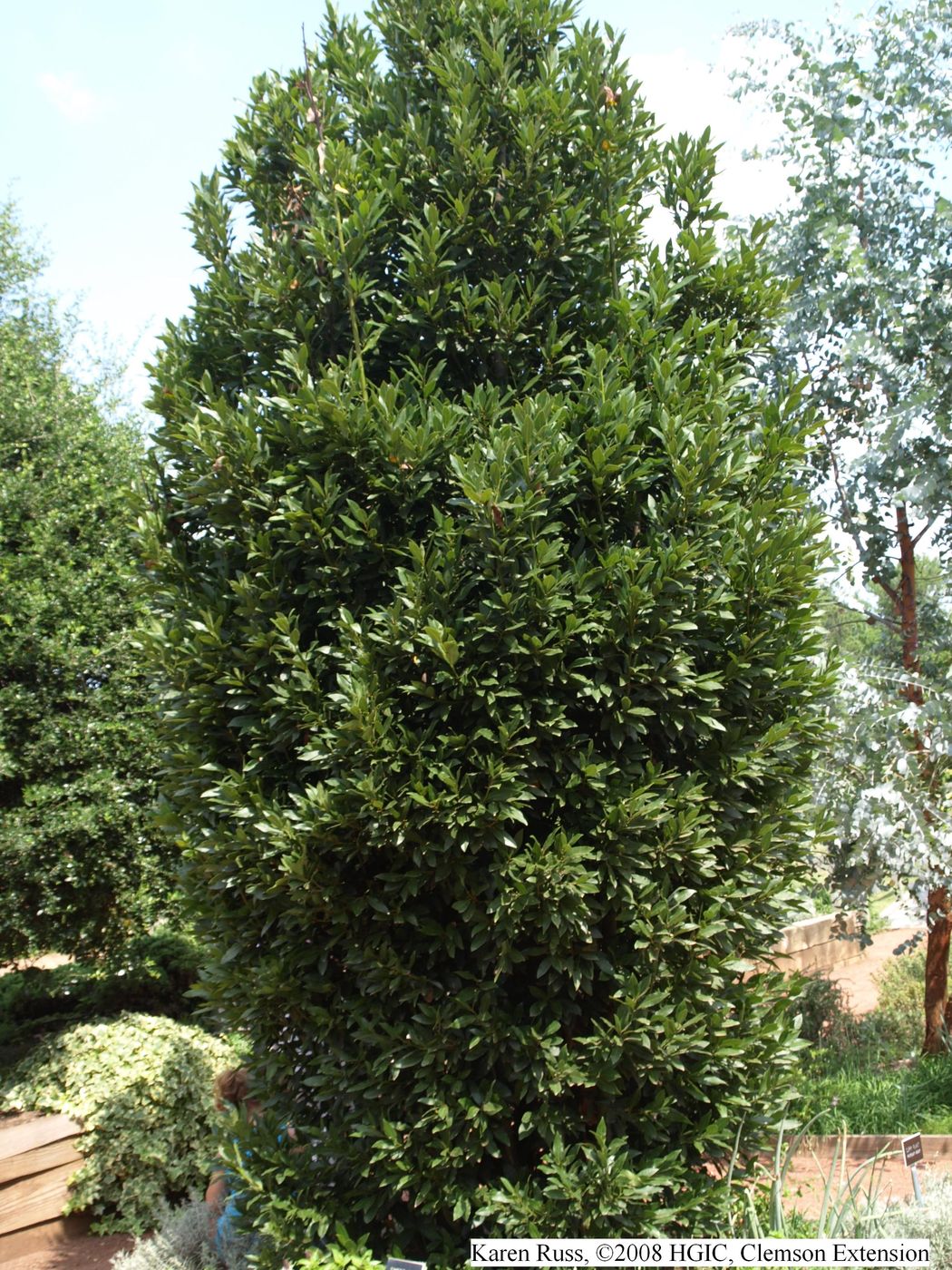
Bay laurels are slow-growing and show variation in growth habits. Most have a dense and shrubby appearance with multiple shoots from the base while some have a single trunk. Under ideal conditions, planted in the ground, the bay tree can reach 25 feet or higher, but most commonly grow to about 6 feet. In our zone, 8B, bay laurels can grow in the ground if planted in a sunny southern or eastern exposure location near a wall or building for cold protection.

Bay laurel plants like well-drained, rich soil. If the bed is properly prepared, additional fertilizer is rarely needed. Bay laurels will survive light frosts and the infrequent hard freeze if it is not for a prolonged period. More mature trees can also freeze to the ground and come back from the rootstock. Young trees should be protected from cold stress for several years until they are at least a foot tall before planting in the ground.

Sweet Bay Tree

A bay laurel trained as a tree. Photo Credit: Karen Russ, Clemson University Extension

Bay laurels can also be grown indoors in containers in areas with strong natural lighting. Clay or wooden containers with many drainage holes are preferred. Plants should be fertilized regularly with complete fertilizer. In the summer, time-release fertilizer works best due to frequent watering. However, fertilizers too high in nitrogen will produce lush foliage with little flavor.

Bay laurel is a favored container-grown street plant in Europe. It has historically been found in gardens as a tree, a hedge, a topiary, or a focal point in an herb garden. Bay trees are only now gaining popularity in the United States. It was awarded the herb of the year in 2009.

Bay laurel has a reputation of being frustrating and difficult to propagate which results in very high prices for starter plants. To propagate use semi-hard wood cuttings and snap from branches rather than clipping. Strip the lower leaves and dip cutting in a rooting hormone. Stick in small pots filled with a fine-textured medium. If a knob forms at the end in a few weeks, then roots may form within a few weeks to several months. In recent years, plants have been more readily available in nurseries and even at large box stores.

Bay laurel is one of the primary culinary herbs in the garden. The culinary history has been documented for thousands of years. The leaves are treasured and used in many cuisines. Fresh leaves are tough but dried leaves are hard and brittle. Leaves are added at the beginning of cooking. Both fresh or dried are usually removed after cooking before food is served to prevent the risk of choking. Much is said about fresh versus dried bay leaves. I usually use fresh leaves because I have them available. I think they have a wonderful flavor. I use equal amounts of fresh or dried. Soft fresh leaves (petioles and midribs removed) are great chopped in salad dressings. Chopped leaves are also good in butters and cheeses with other herbs. Cajun cuisines use bay leaves to flavor rice and seafood. Bay is a primary element of bouquet garni, a bouquet of herbs, used in French cuisine. Bay goes in meats, soups, stews, vegetables, pasta, potatoes, and sometimes in custards and dessert sauces. Like parsley and marjoram, bay laurel is called a “liaison” herb which helps contrasting herb flavors blend rather than fight each other.

There are many plants that look like and smell like the bay laurel. Red bay, Persea borbonia, is native throughout our region and a substitute for bay laurel. Red bay is best used fresh. Its fragrance and flavor dissipate quickly if dried. This is one of the only substitutes. Others are poisonous or have little to no flavor. Madalene Hill and Gwen Barclay, authors of Southern Herb Growing, wrote, “A word to the wise: Be wary of collecting and using any wild plant as flavoring or food unless you’re absolutely sure of its safety. Just because a plant is called some type of bay or laurel does not mean it is edible.” Some are highly poisonous.

If you enjoy good food, you have enjoyed bay laurel, Laurus nobilis, whether you knew it or not. It’s time to grow your own beautiful and fragrant bay laurel tree. This will be a wonderful addition to your garden and to your kitchen.


Video: Getting Started with Cilantro

Video: Getting Started with Cilantro

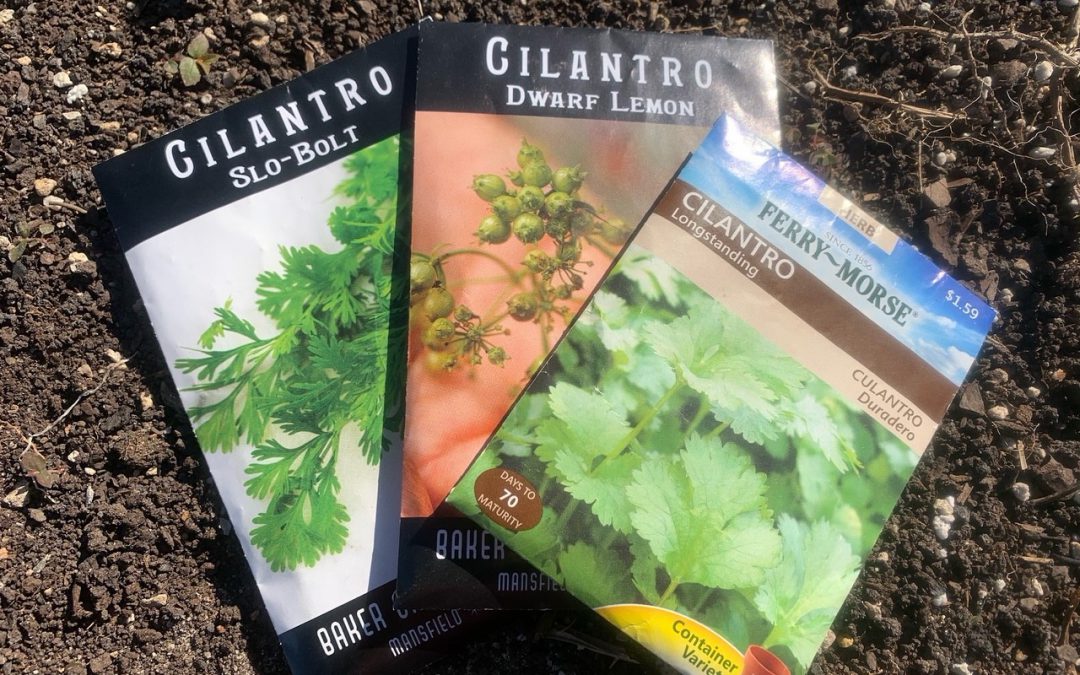
Cilantro is an herb that grows well in the cooler months of North Florida gardening. Beth Bolles will share how to grow and use cilantro in the latest Garden to Table feature from UF IFAS Extension Escambia County.