Yay, we are halfway through with August and our summer is winding down! This is the perfect time to start prepping for that fall garden. Growing a productive fall vegetable garden requires thoughtful planning and good cultural practices. This process consists of selecting a site, planning the garden, preparing the soil, choosing the seeds and plants, planting a crop, and nurturing the plants until harvest time. In the Florida Panhandle it can be a challenge to get cool season crops started; there is a balance in starting them early enough to allow them to mature (50-60 days) before a hard frost and getting them through the end of a hot summer.
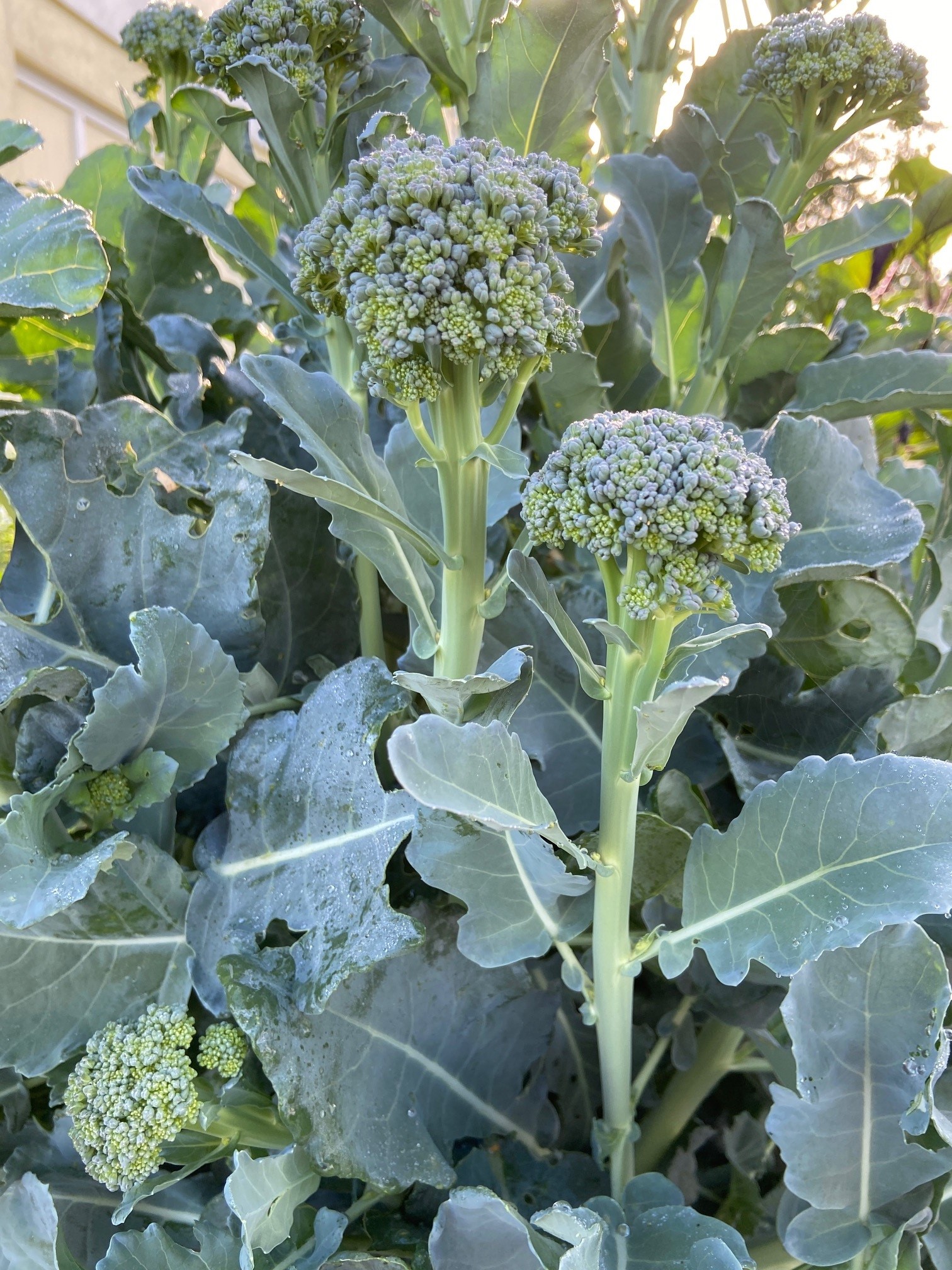
August and September are the main planting times for a fall garden. There are several cool-season crops and a final crop of warm-season vegetables that can be planted. Some good warm season crops are lima beans, cucumbers, eggplant, peppers, and tomatoes. Going into September it will be a good time to establish strawberry plants. Some good vegetables to start growing just around the corner are broccoli, carrots, cabbage, collards, mustard, and Swiss chard. https://edis.ifas.ufl.edu/NorthFloridaGardeningCalendar Herbs that do well are cilantro, parsley, and lemongrass. Mint, oregano, and thyme should be planted in containers as they tend to spread. Mexican tarragon, mint, rosemary, and basil will also do well in September. See Herbs: http://edis.ifas.ufl.edu/topic_herbs
Transplants from the local garden center will get the garden off to a fast start while seeds will offer more varieties to choose from. It is also important to think about your location. A vegetable garden can be in the ground, a raised bed, or even grown in containers. Your plants will need more than just a place to grow. They will also need sunlight, water, air, soil, fertilizer, and care. Most vegetables require at least 8 hours of sunlight. Keep an eye out for pest problems such as insects, diseases and weeds because they will continue to flourish in warm temperatures and high humidity. To help conserve soil moisture a layer of newspaper and mulch can be placed between the rows. Mulch also aids in weed control.
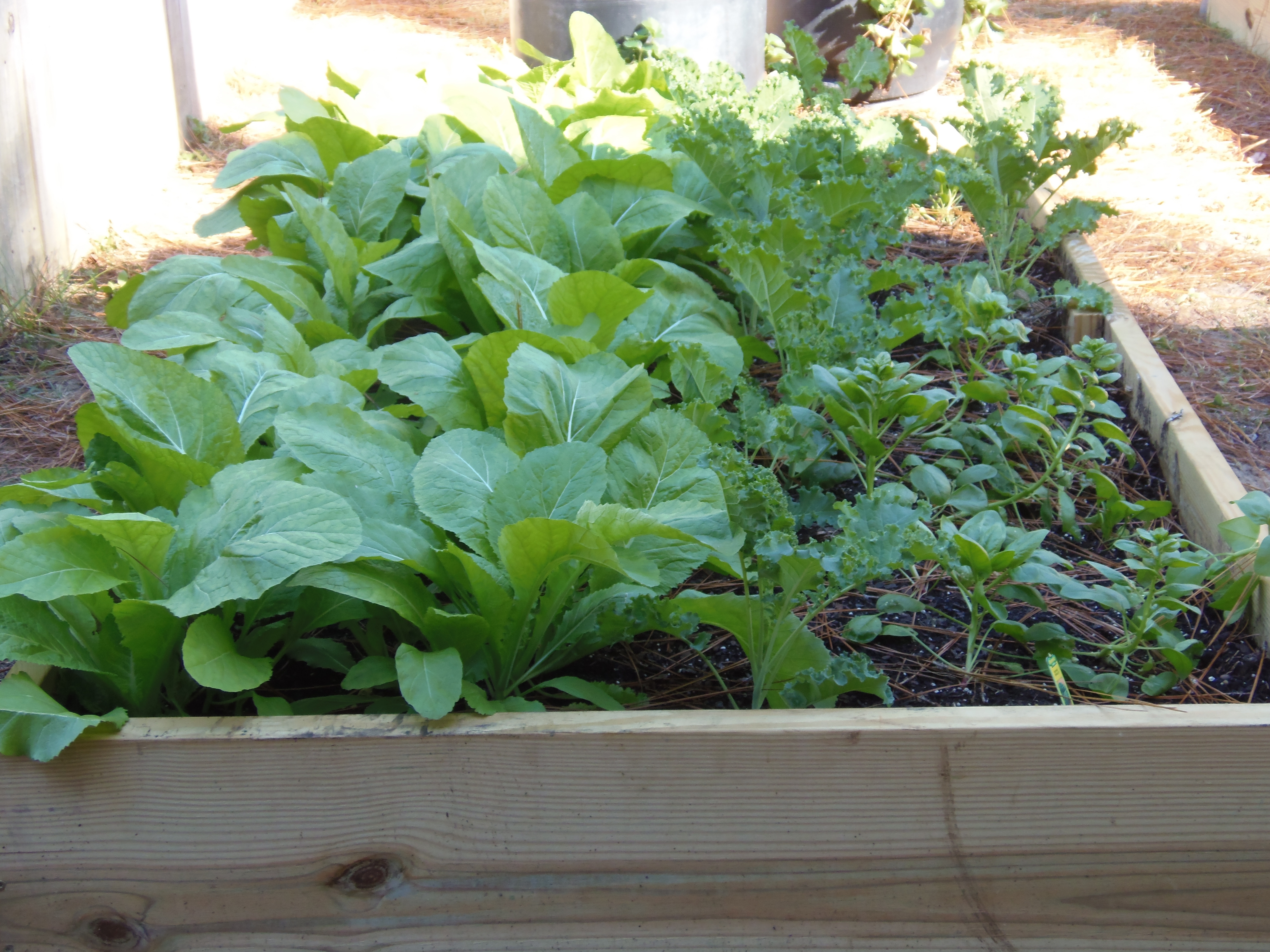
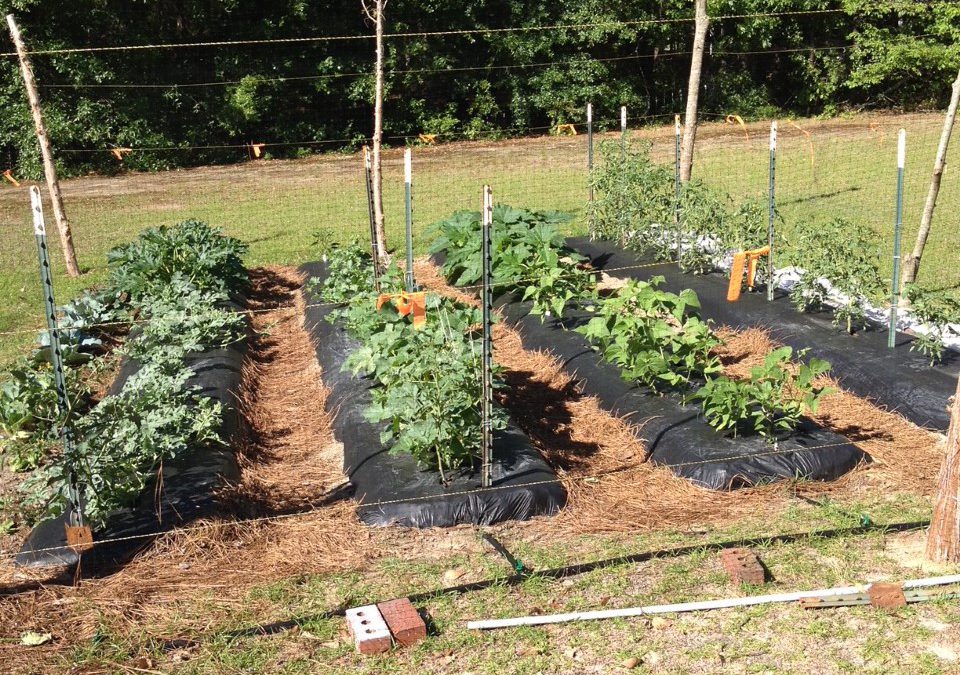
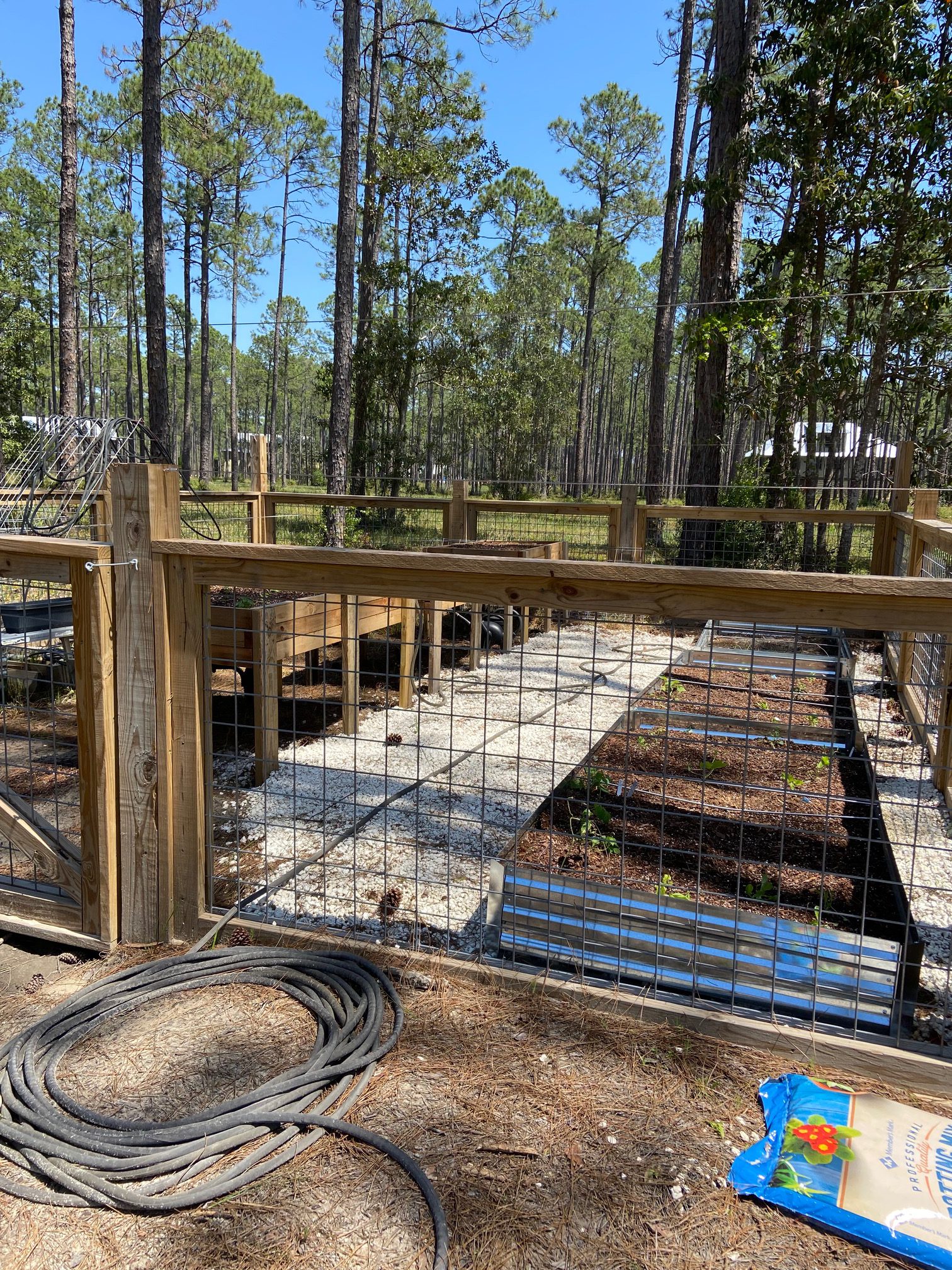
Raised beds are an excellent way to get started with gardening. Photo by Molly Jameson.
The result of a beautiful, successful vegetable garden is fresh produce to eat, share with neighbors, family, and friends and even the possibility to sell your harvest. With patience and practice your gardening skills will improve every year! Follow the above few tips and you will be well on your way to a great harvest! For more information about starting a fall garden or any other horticultural or agricultural topic, contact your local UF/IFAS County Extension Office. Happy Gardening
This article was written by Kacey Aukema, University of Florida/IFAS Extension – Walton County.
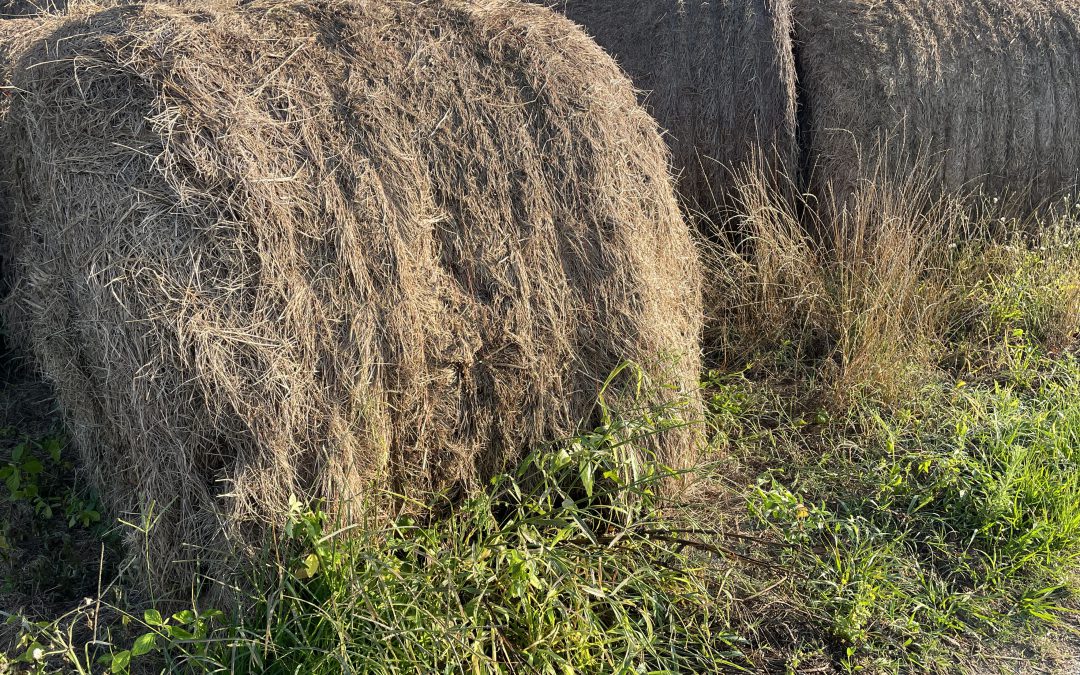
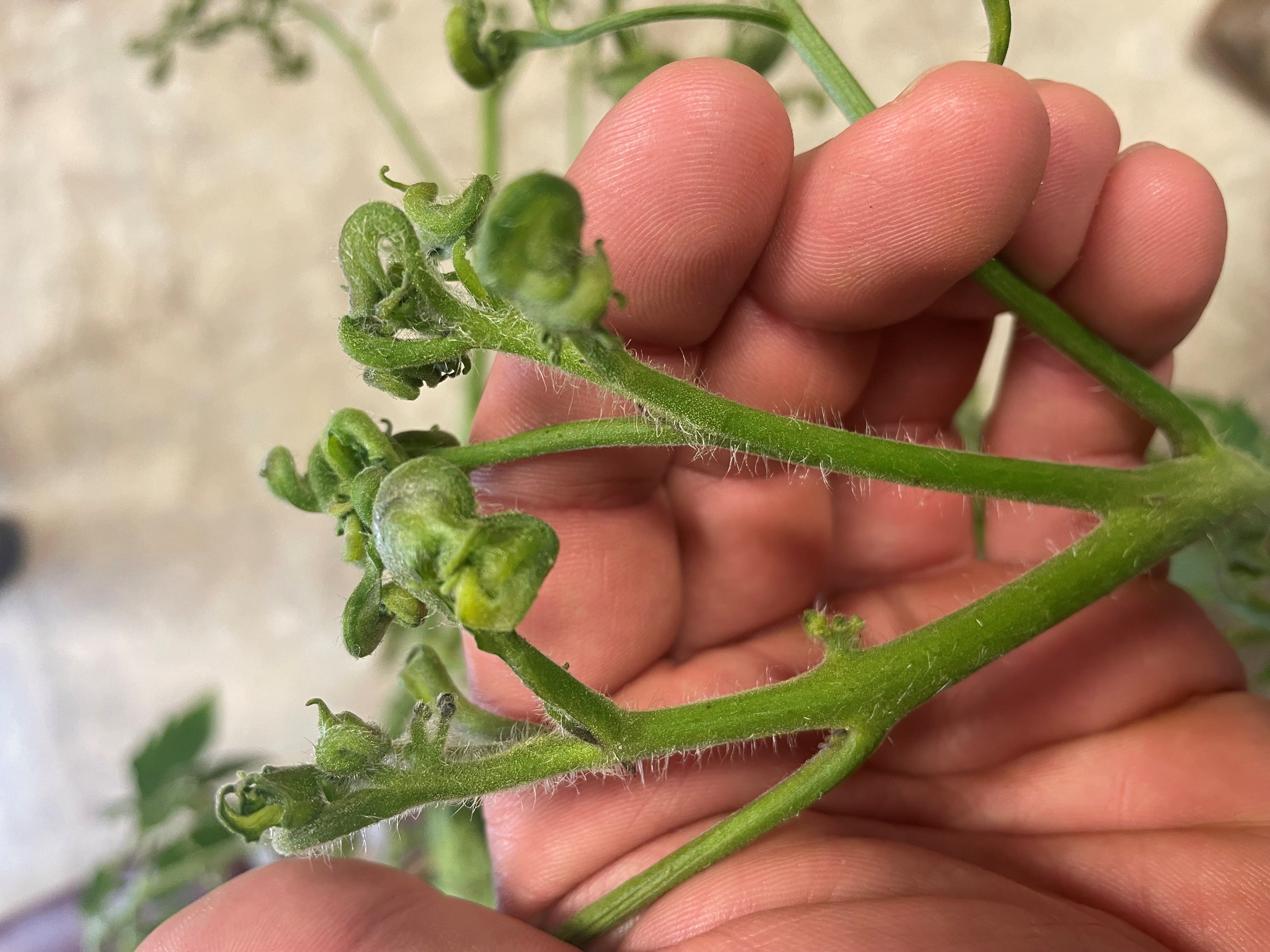
I recently met with a home gardener who brought in tomato plants showing strange symptoms on the leaves. Together we puzzled over the odd leaf-curling symptoms that were affecting their tomato beds, but not other areas of the garden. Upon further investigation it was revealed that hay, used as mulch, had recently been spread around the tomatoes, but not in other areas of the garden. It quickly became apparent that the symptoms were likely related to herbicide residual on the hay that was used. The herbicide aminopyralid was the potential culprit. In this case the residual herbicide was not enough to outright kill the growing tomato plants. However, it was interfering with their growth and development and is a cautionary tale reminding us how important careful sourcing of hay used in mulch or compost can be.
What is aminopyralid and how does residual herbicide affect non-target plants through mulch, compost, etc.?
Aminopyralid is a herbicide active ingredient found in several popular pasture products such as GrazonNext™, Milestone™, Chapparral™ and similar products. This and other similar chemicals have residual activity and can be retained in plant tissues, animal manure, and soil, which makes them a very useful for controlling certain troublesome broadleaf weeds in grass pastures for an extended period of time. Unfortunately, this residual activity increases the potential for causing trouble in vegetables or other crops when hay or animal manure from aminopyralid treated pastures is mistakenly used for mulch, compost, etc. In Florida, aminopyralid containing pasture herbicides are often used as the “go to” for control of hard to control weeds like horsenettle and tropical soda apple which are potentially toxic to livestock. Tomatoes, potatoes, and eggplant are in the same genus (Solanum) as those weeds and are therefore very susceptible to this herbicide as are many other vegetable and other broadleaf crops.
Residual aminopyralid damage on a tomato plant. Photo Credit: Kacey Aukema, University of Florida/IFAS Extension – Walton County
How can I know if hay is safe to be used for mulch or compost?
Before acquiring hay to be used as mulch or to compost for vegetable beds, be sure to ask if the hay is free of herbicides with residual activity. Find out what was sprayed on the field in the last two seasons before the hay was harvested. Given that hay destined to be used as mulch or compost is usually old and spoiled, management history of a particular hay bale is likely to be hard to pin down. Do not trust hay to be used for mulch or compost in vegetable beds if prior spray management details are unknown. Also consider that well-stored hay may retain residual herbicide better and for a longer period of time than weathered hay, as the active ingredient is less subject to weathering and biological breakdown.
Those who use broadleaf herbicide products with residual activity such as those containing aminopyralid are subject to follow herbicide label guidelines. For instance, supplemental labeling of GrazonNext HL™ (including FL, AL, and GA) indicates that hay/straw from fields sprayed in the past 18 months should not be used for compost, mulch, or mushroom spawn. When in doubt refer to the label of the particular herbicide product used on hay you purchase for any restrictions and/or reach out to your local county extension agent if you have questions about a specific herbicide product. Relevant use restrictions and considerations like in this example should be conveyed between hay producer and buyer.
Perhaps you already have some hay for mulch/compost with an unclear management history, or you would like to double-check and be sure that it is safe. How could one test it to see if it was safe to use? There is a test called a “bioassay”, conducted by growing susceptible plant seedlings like tomatoes or beans in small pots with the hay/compost/mulch in question incorporated into the potting soil. Then, the test plants can be observed to see if any herbicide symptoms develop to know whether the material is safe to use, before using the hay over a larger area or garden where there would be more risk. For more information on how to conduct a bioassay see: Herbicide Residues, in Manure, Compost, or Hay. Similar in-field bioassays are also recommended when rotating areas out of pasture and into other crops when pasture herbicides with residual activity were used. If susceptible crops like peanuts are grown in areas where such herbicides were used in the recent past they can be damaged, as in this case in an older Panhandle Agriculture Newsletter post.
When used according to label instructions, herbicides with residual activity are very useful for control of broad-leafed weeds in pasture and hay fields and may reduce the spread weeds through seed coming in on purchased hay. However, problems can emerge when hay from fields treated with these products change hands without the use restrictions and considerations being adequately explained. Therefore, caution should be taken by both producer and buyer to avoid damaging sensitive crops when hay or livestock manure are used for mulch or compost.
It’s the most asked question of Extension agents everywhere. “What is this weed and what herbicide should I buy to kill it?” The first part of that question is straightforward. Between personal field experience, formal plant identification training, and a team of weed science specialists to call on, Florida Extension Agents can get your weed accurately identified. The second part of the question is slightly more nuanced. Many weed problems can be avoided by following lawn and landscape Integrated Pest Management (IPM) practices, like not overwatering, mowing at the correct height, using mulch where you can, etc., but sometimes herbicides are required. For these situations, if you follow the “homeowners only need four post-emergent herbicides rule”, you’ll be ready for any weed challenge you face!*
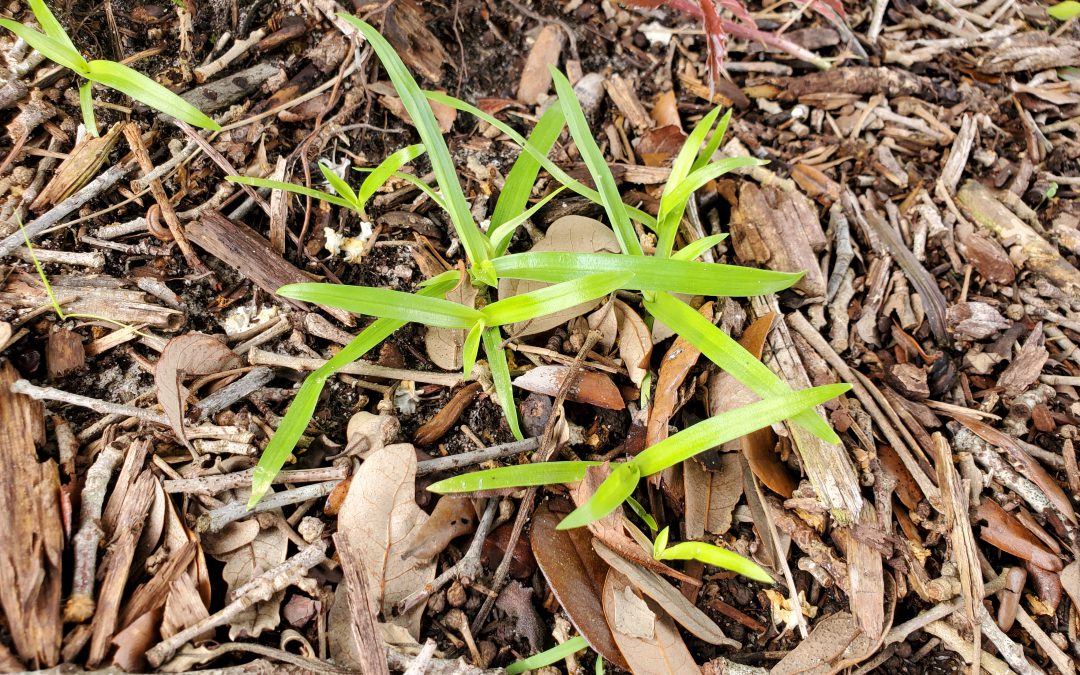
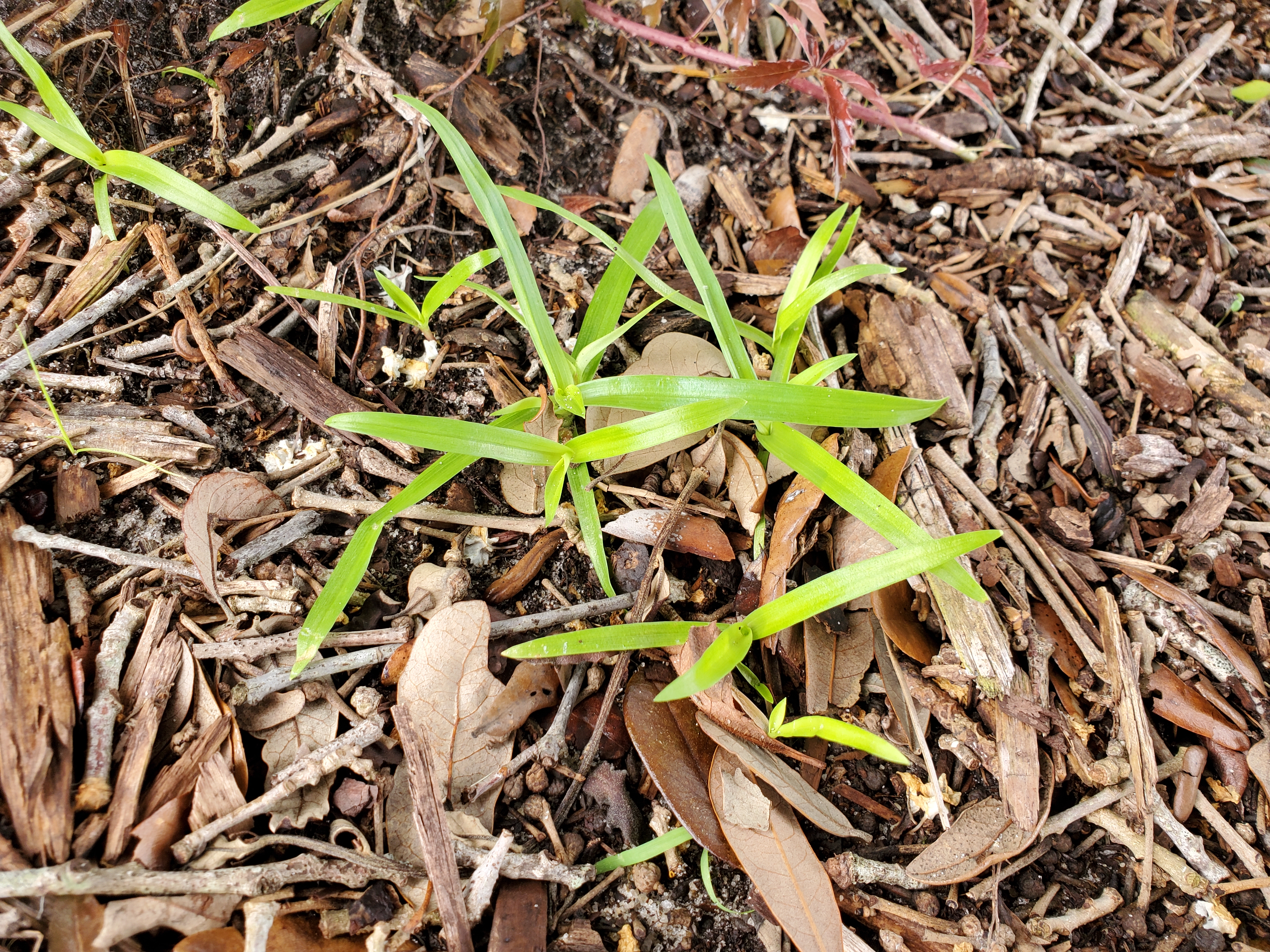
Doveweed seedlings just emerged on July 9, 2021. Photo courtesy of Daniel Leonard.
The first weed scenario you should be prepared for is spot spraying weeds in landscape beds and around hardscapes like concrete pads, sidewalks, pools, driveways, etc. For this situation, you’ll turn to the backbone of the four herbicides rule and a staple in any weed management program, glyphosate. Glyphosate is the active ingredient (AI) in many non-selective products ranging from the infamous Roundup brand to cheaper generics like Killzall and Cornerstone. Glyphostate is extremely cost-efficient and very effective on a huge range of emerged weeds including grassy weeds, broadleaf weeds, and even sedges (also called nutsedge or “nutgrass”). Just be sure not to get any overspray on desirable plants or they’ll be seriously damaged!
The second situation we face occurs when “bad” grassy weeds invade landscape beds, shrubs, and vegetable gardens. These cases call for a grass-selective herbicide that you can spray right over the top of your broadleaf annuals, perennials, and shrubs to take out the unwanted grasses. In this case, there are two options at your disposal: sethoxydim (AI in many products like Fertilome Over the Top, Hi-Yield Grass Killer, Poast, etc.) and fluazifop (AI in the product Fusilade). Both products work well in removing weeds like crabgrass, bermudagrass, goosegrass, and others and can be safely applied over the top of many ornamentals.
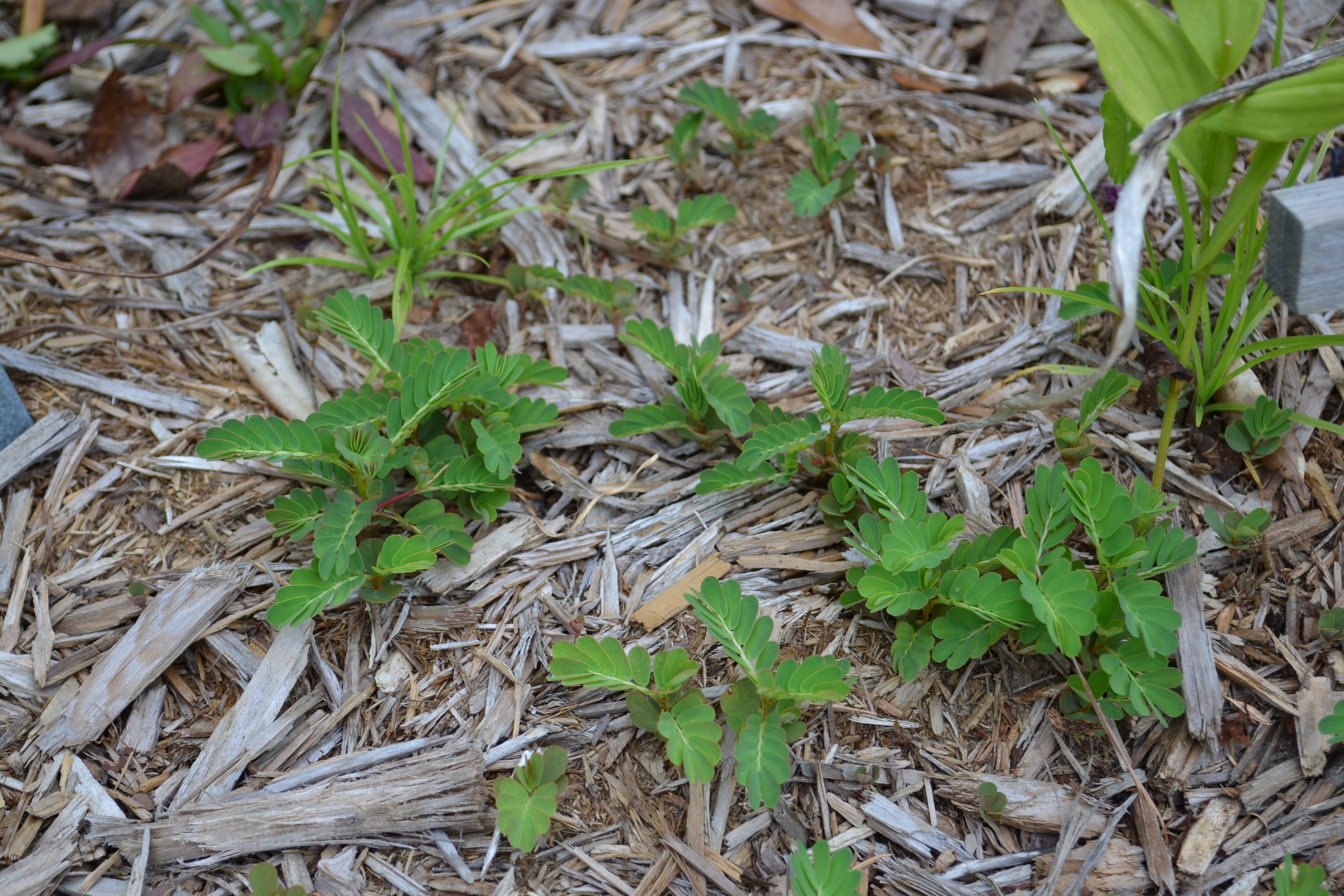
Seeds from annuals like Chamberbitter easily get into mulch and turfgrass from surrounding areas. Photo by Beth Bolles, UF Extension Escambia County
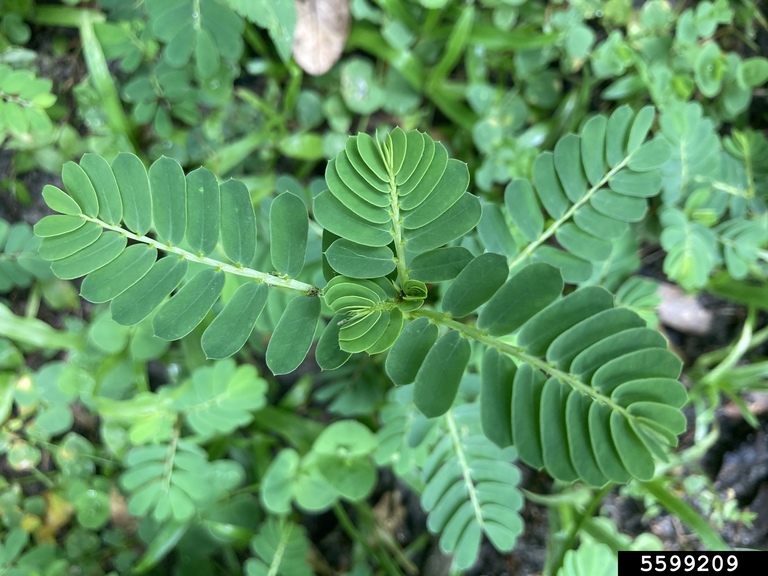
From time to time, we need to treat a broadleaf weed like dollarweed, doveweed, chamberbitter, or any number of others, that have invaded our lawn grass. Some of these weeds are tougher than others, but almost all of them can be managed with the proper rates of 2,4-D, Dicamba, other similar products, or a combination of several of them. These active ingredients have been on the market for decades so there are many generic options at your disposal. However, if you have a truly tough broadleaf weed problem, the newer product Celsius WG from Bayer (a combo of Dicamba and two newer AIs), while a little pricey and only available online or at specialty chemical dealers, is well worth the expense and knocks out the most gnarly of lawn weeds.
Finally, there is a category of weeds that aren’t broadleaves and aren’t quite grasses either. These are the sedges. Commonly known around the Panhandle as “nutgrass”, sedges are a serious pest of lawns, particularly those that stay a little on the damp side, and vegetable gardens. Sedges, with their glossy leaves and distinctive flowers, stand out in lawns and gardens, are very unsightly in an otherwise well-maintained area, and can outcompete the desirable plants they invade. Fortunately, there are several AIs that work very well on sedges and are safe to use around turfgrass and many other plants. The most effective sedge herbicide AI for homeowners is halosulfuron-methyl (AI in Sedgehammer in lawns and Sandea and Profine in vegetables). Sedgehammer works very slowly (results can take up to a month) but is very safe in turfgrass and ornamentals and highly effective! If Sedgehammer and other halosulfuron products are difficult to obtain, Imazaquin is a slightly less effective but more common substitute. This AI can be found in the product Image Kills Nutsedge and is safe for use in turfgrass and most ornamental plantings.
The challenge of controlling the many types of weeds in your lawn, landscape, and vegetable garden seems daunting, but having just four basic classes of herbicides on hand can greatly simplify things! Whether you need to control a broadleaf, grass, or sedge weed problem, putting together a weed control toolbox containing a non-selective herbicide like glyphosate, a broadleaf selective like 2-4,D, a grass selective like sethoxydim, and a sedge selective like halosulfuron-methyl can allow you to handle most any weed you come across at home. For more information on controlling weeds in home landscapes and gardens or any other horticultural topic, contact your local UF/IFAS Extension office. Happy gardening!
*Most homeowners discover weed problems after the weeds are already up and growing, making post-emergent products necessary. Pre-emergent products have a place in weed management programs but are not the focus of this article.
We all must begin somewhere in horticulture, including growing yummy vegetables of your own to enjoy and share. This activity, or is it passion, has a long colorful history while most of the time provides an exceptional food source. It can be a bit daunting the first time you try and maybe even the others to follow with determining what, when, where and how to plant for a future harvest.
Raised Bed Vegetable Garden with Drip and Black Plastic. Photo Credit: Stephen Greer, UF/IFAS Extension – Santa Rosa
Selecting that convenient site in full sun easy with access to check on the plants progress. Things you will need to consider are the number of hours of direct sun the garden area will receive. Most garden vegetables will need at least eight hours of sunlight. Many of the leafy greens can be grown with less than eight hours with the least amount of sun at six hours. All others will need eight or more hours of sunlight. Water is a critically important part of successful vegetable garden. Too little water and the plants will not survive well and produce little and too much will reduce or end plant production. A general rule is one inch of water a week during the growing season. This can come from rain or irrigation and likely is a combination.
Mid-Spring Production with Managed Irrigation. Photo Credit: Stephen Greer – UF/IFAS Extension – Santa Rosa
Planning your garden before doing anything else is critically important. Take out a paper and pencil and sketch out how you want to plant your garden and what you want to grow. Start by drawing rows and labeling each row. Think about spacings between plants in the rows and between rows. Do you plan to plant everything in the ground, raised beds or on a trellis? More effective space utilization can occur by planting two- or three-foot-wide beds to plant multiple narrow rows that can be managed and harvested from both sides of the bed. Some plants to think about growing this way are leafy greens such as lettuce, kale, onion and others.
Going vertical to grow vine type plants like beans, cucumbers, early spring peas and others can be a fun part of gardening. This type of gardening allows for more space use over the same ground area. Other plants can be grown in the same bed depending on the light.
Multiple Types of Raised Beds. Photo Credit: Stephen Greer, UF/IFAS Extension – Santa Rosa
If you have interest in growing with raised beds, there are a number of materials that are used to build the beds. First do not use old railroad ties as they will leach chemicals into the soil that the vegetables can possibly take up or contaminate your soil. I have seen all kinds of creative materials used including cedar wood, plastic boards or preformed beds, even old whiskey barrels with legs built under. Do not forget all kinds of planting containers are available in the marketplace. Make sure there are drain holes in the bottom to allow the water to properly move through.
This is just the beginning of vegetable gardening. Other things to plan involve when to plant, what to plant, what is the budget, use seeds or transplants, depth of planting, watching for plant pests, harvest, storage and so on. Enjoy your gardening adventure!