by Evan Anderson | Jul 1, 2020
A lot can go wrong in a garden or landscape, but proper preparation can help to avoid many of these problems from popping up in the first place. For some of these problems, a good preventative measure is mulch.
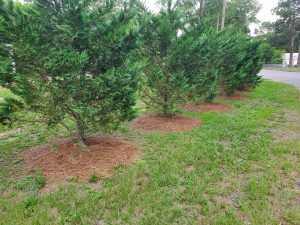
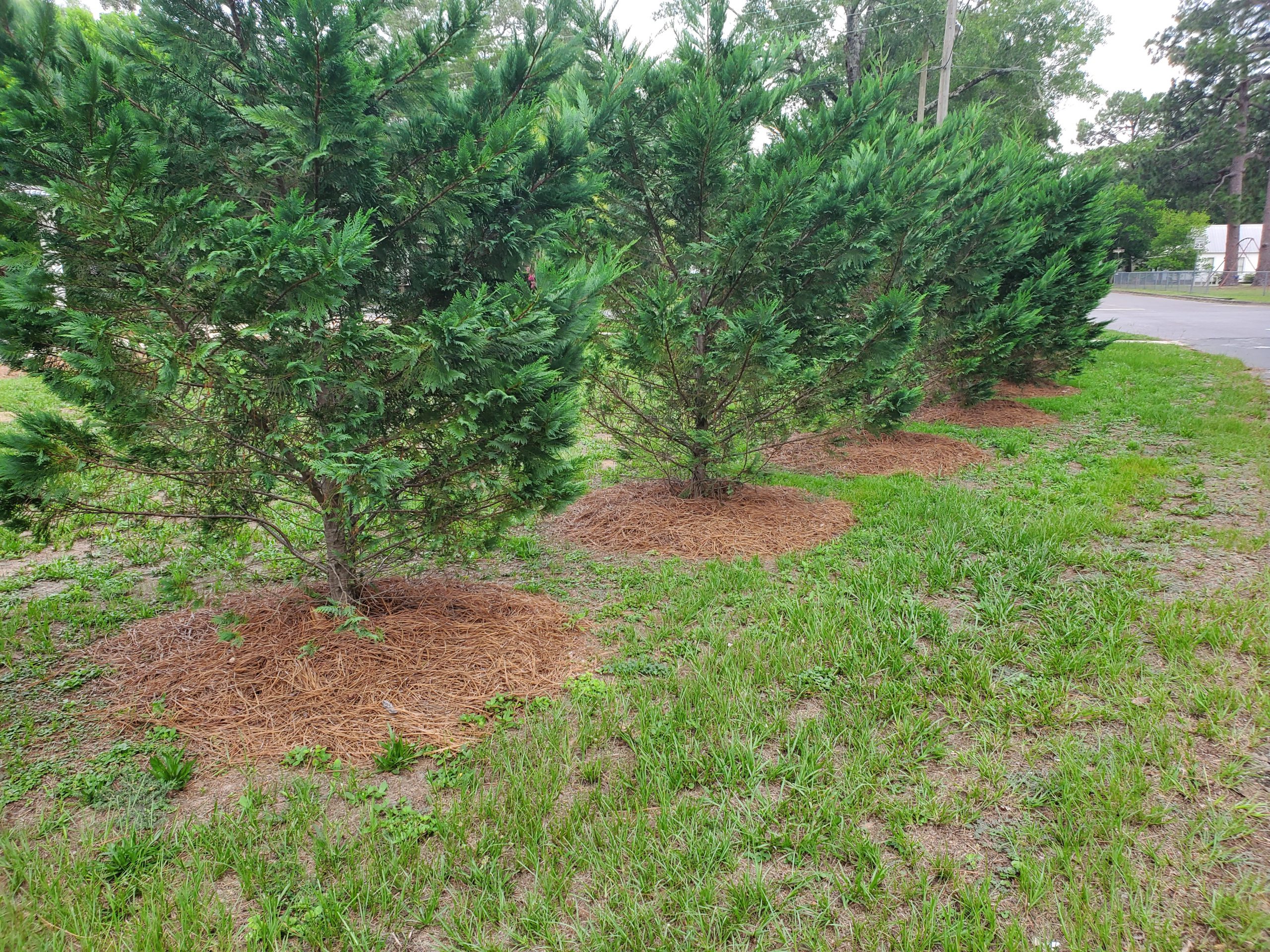
Pine straw is a common material used as mulch.
Mulch is any material that’s spread over the surface of the soil. One of the most common materials used in our area is pine straw, which is simply the needles of pine trees harvested from forested lands. Pine bark, another byproduct of the forestry industry, can be found easily as well. Both of these mulches will tend to have an acidifying effect on soils over time.
Other popular mulches include shredded or chipped wood. Melaleuca trees were originally planted in South Florida in an attempt to convert wetlands into farmable areas; to help remove this invasive species, the trees are now cut and ground into mulch. Eucalyptus mulch is also popular, as well as cypress, though it can be difficult to determine where cypress mulch originated from. Improperly harvested cypress can damage Florida’s natural wetlands. Hardwood mulch from other species may also be found.
Utility companies may sometimes give away mulch produced as they trim trees and bushes along their power lines, but this should be used only with the understanding that it may contain weed seeds or traces of herbicides or other chemicals. Homeowners may sometimes produce their own mulch in the form of raked leaves or grass clippings, but the same concerns about weed seeds and chemicals apply here as well.
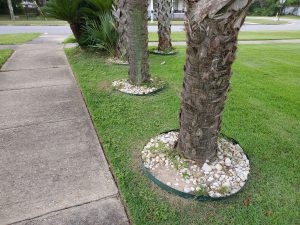
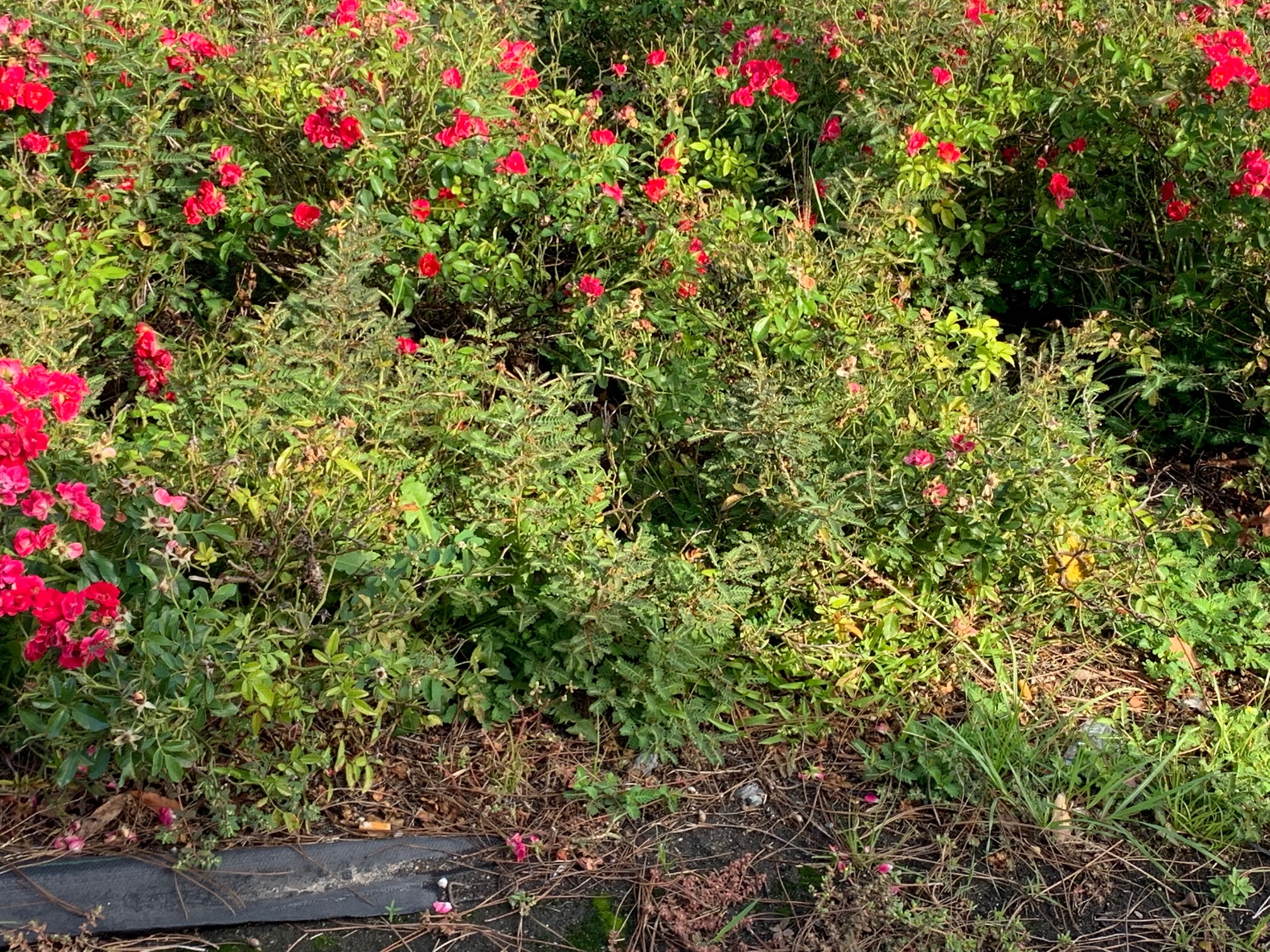
Mulch can be used to help avoid hitting plants with a mower or trimmer.
Gravel or pebbles may often be used, especially in wet areas, or close to houses where flammable materials may be ill advised. Lastly, garden mulches may include materials such as paper or plastic spread in sheets over the ground.
Choosing the proper mulch can depend on the reason for its use. There are a number of effects mulch can have on a garden or landscaping bed. Mulch can help to retain moisture in the soil, keep weed growth down, reduce erosion, and act as a temperature buffer for the soil and plant roots below. It may also add visual appeal and help to keep lawn mowers and trimmers from needing to get too close to plants which may be damaged by them.
Whatever the reasons for adding mulch, there are a few things to avoid. Do not mound mulch around the base of plants. Moisture held against the trunk or stem of a plant can lead to fungal problems. Try to maintain a layer two to four inches deep. Any less and weeds will grow through the material; more mulch will not allow water to filter properly to the ground. Finally, if mulch becomes clumped and matted over time, do not let these block air or moisture to areas below. Rake or stir the mulch to evenly spread it.
You can find more information on mulching at our EDIS site https://edis.ifas.ufl.edu/topic_mulch or in the Florida Friendly Landscaping site at https://ffl.ifas.ufl.edu/handbook/Mulch_vSept09.pdf.
by Larry Williams | Dec 4, 2019
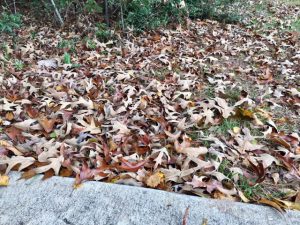
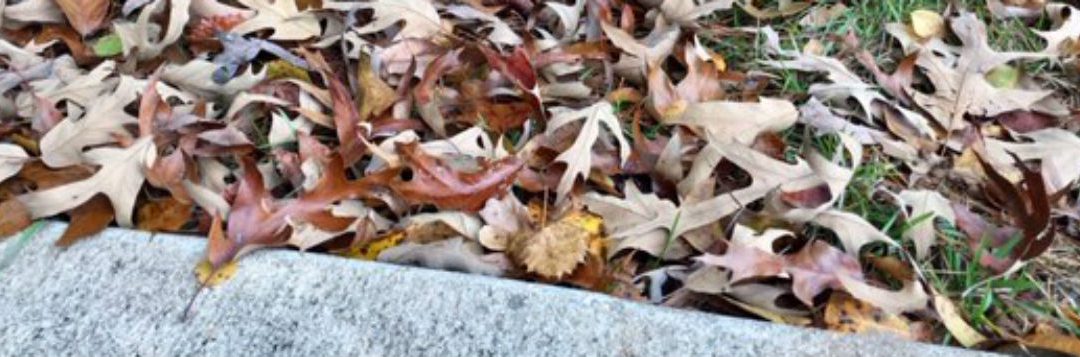
Fall oak tree leaves abound and can be recycled as landscape mulch. Photo credit: Larry Williams
Weed control is not top on my list as a reason to use mulch. There are weeds that can push through mulch such as nutsedge (nutgrass) or that can germinate and grow in the mulch. But done correctly, mulching plant beds and gardens can help inhibit some weeds. Tree leaves can be used as a mulch.
In addition to weed control, mulch provides other benefits. It can make landscapes look more attractive. It keeps roots evenly moist, acts to insulate roots from extreme heat and cold and can help decrease loss of soil from wind and water erosion. Mulch serves as a barrier to some soil-borne diseases, especially in the vegetable garden. And, as organic mulch breaks down, it improves the soil’s fertility, aeration, structure and drainage.
Tree leaves make good mulch. They can be placed on the soil surface beneath and around shrubs, trees, perennials, annuals and vegetables.
Fall leaves are abundant. Some people feel overwhelmed by the volume. One resident reported raking more than 100 large bags of leaves from his half-acre property. One large oak tree can contain over 250,000 leaves!
Tree leaves can be placed in landscape beds or around vegetables “as is” or chopped up with a shredder or mower into smaller pieces and then spread around vegetables, shrubs and trees. Mixing leaves from several different species of trees can make better leaf mulch. Leaves of the same size tend to mat together and produce a shingling effect that can shed water and reduce gas exchange in the soil. Shredded leaves stay seated better on the landscape than whole leaves.
A mulch layer three inches deep after settling is enough for most plants. If possible, extend the mulched areas out to the outermost leaves (called the drip line) and beyond. And be sure to pull the mulch back a few inches from the main trunk. Never pile mulch around the trunk.
Using those fallen tree leaves as mulch recycles a natural resource and saves you money, enriches your soil, fertilizes your plants and keeps them out of the local landfill.
So, instead of putting all those leaves curbside in plastic bags to be hauled off, use them to benefit your landscape, which may include less weeds.
For additional information on landscape/garden mulch, contact the UF/IFAS Extension Office in your County or access the following sites.
http://gardeningsolutions.ifas.ufl.edu/care/planting/mulch.html
http://edis.ifas.ufl.edu/topic_mulch
by Ray Bodrey | Oct 22, 2019
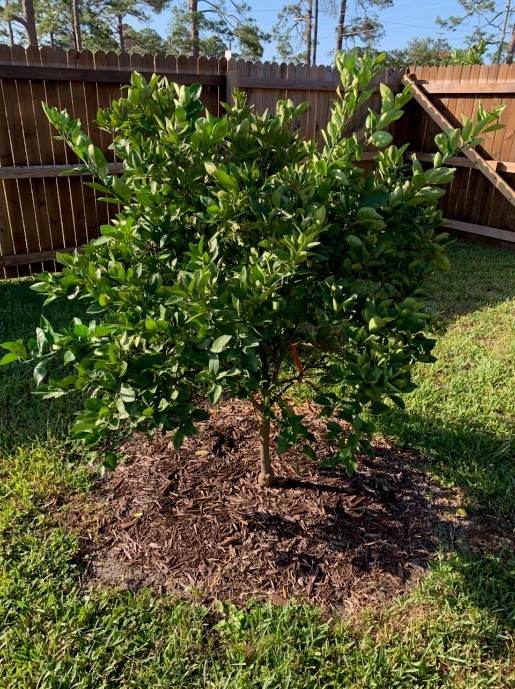
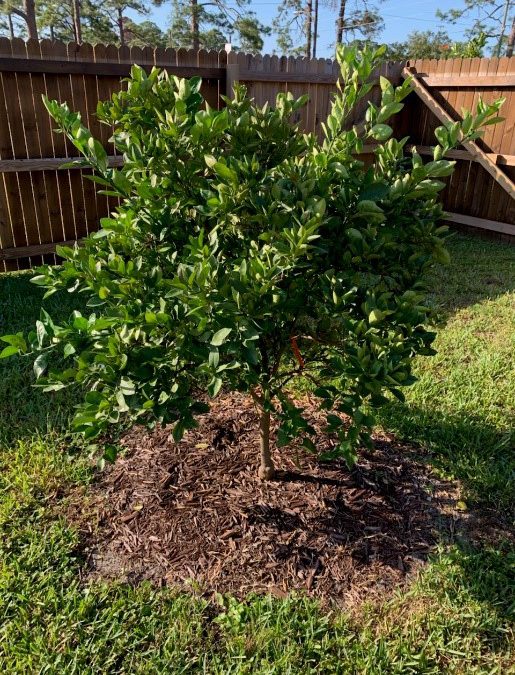
Root rot may develop if citrus trees are mulched closer than 12″ to the trunk
Thankfully, cooler temperatures have finally made it to the Florida Panhandle, but it took until the middle of October. The last two months surely taught us lessons about helping our gardens beat the heat. One strategy to help plants cope with extreme heat or drought is mulching.
Many of us either have or can easily find, piles of wood chip mulch from fallen trees, thanks to the hurricane. This material will come in handy now, as fall and winter mulching is a great gardening practice with many benefits.
Think of mulch as a blanket for plants. By acting as a cover to the root system, mulch can perform as both a cooling factor during warm months and can help warm the root system during cooler weather, as well as assist in retaining moisture. This is important, as regulated soil moisture will accept rain or irrigation water much easier than crusty, dry soil. Water will simply runoff and can cause erosion in dry soil conditions. Mulch is a great weed barrier and is also aesthetically pleasing in the landscape by helping define borders and gives depth. A 3-4” thick layer of mulch, in a 2-3’ diameter, is typically a sufficient amount of mulch for landscape plants and fruit trees.
There are two types of mulch material that you’ll find in our area, organic or inert. Components of organic mulch include compost, bark, leaves grass clippings, straw, wood chips and even saw dust. Straw, wood chips and saw dust contain very little nitrogen, however. If mulching with these materials, it’s a good idea to add some nitrogen fertilizer. One or two cups of a complete fertilizer like 10-10-10 should help you avoid nutrient issues. Organic mulch will need to be replenished yearly to some degree, as it breaks down into a soil amending compost. This breakdown into compost will improve soil water holding capacity and fertility.
Inert mulch can be made of shells, gravel, pebbles, plastic and rubber. However, inert options are not as easy to use in controlling moisture and temperature levels and of course provides no nutrient value. With Inert mulch, you should always fertilize the area first, especially vegetable gardening. Use approximately two pounds of 10-10-10 fertilizer for every 100 square feet of vegetable garden. This may not seem like much fertilizer, but since plastic mulch reduces the amount of fertilizer that leaches out of the root zone of your plants, you can apply less fertilizer to begin with. That’s a big reason why UF/IFAS researchers recommend plastic mulch to commercial vegetable and ornamental producers in Florida, but organic mulches are more appropriate for most home garden settings.
Mulching may be one of the most valuable and cost-effective garden practices. Mulch helps control weeds, conserves moisture, moderates soil temperatures, improves soil fertility and last, but not least, adds to the beauty of the landscape.
For more information contact your local county extension office.
Information for this article provided by Dr. Robert Black and Dr. Gary W. Knox of UF/IFAS Extension. More information can be found at this website: http://gardeningsolutions.ifas.ufl.edu/care/planting/mulch.html
UF/IFAS Extension is an Equal Opportunity Institution.
by Mary Salinas | Oct 22, 2019
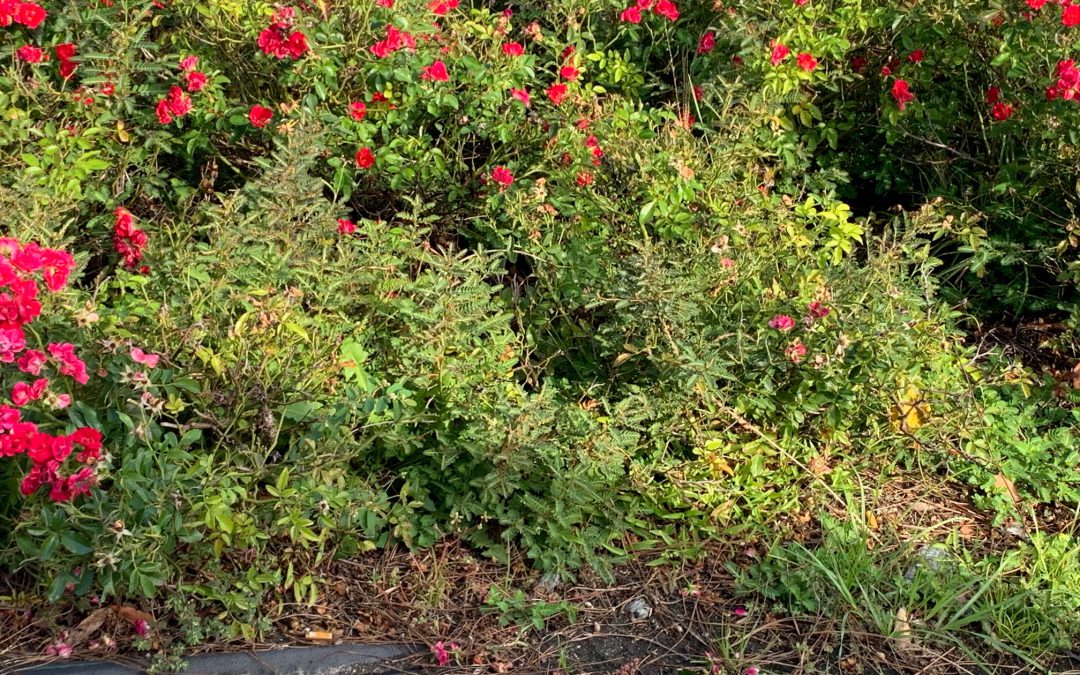
Gardeners are always fighting the endless weeds that pop up in landscape and flower beds. When homeowners put in a new landscape bed and want to prevent future weed invasions, many think that putting down landscape fabric is a great way to keep the weeds from emerging and protect the newly planted trees, shrubs or perennials.
An example of failure of landscape fabric to control weeds less than 2 years after planting. Note the peeking through at the edges. Photo credit: Mary Salinas, UF/IFAS Extension.
Is Landscape fabric a good choice? Why or why not?
If landscape fabric is not covered up, sunlight will degrade the fabric. When mulch is placed on top of the fabric (and we all do want to cover it up – the fabric is not very attractive) the mulch breaks down into soil. Inevitably, weed seeds blow in and settle and germinate and grow on top of landscape fabric. And here you are with a weed problem. Weeds also find their way into the openings cut for desirable plants and along the edge of the fabric.
Landscape fabric is porous when put in place to allow water to pass through, but as time passes, the pores can get clogged and water penetration is restricted – rain and irrigation runs off and the plants you meant to protect are not getting the water they need.
Maybe the worst effect is that the landscape fabric creates unfavorable soil conditions. A healthy soil is key to good plant health. One thing soil needs to have is an exchange of carbon dioxide and oxygen between the soil and the atmosphere. Recent studies from Washington State University demonstrated that gas movement between the soil and the atmosphere is restricted about 1,000 times more when landscape fabric is present than when areas have only wood mulch.
So, if landscape fabric is not a good choice, what is?
Mulch made from wood, bark, fallen leaves and pine needles. See Gardening Solutions: Mulch for sustainable ideas.
For more information:
Improving Weed Control in Landscape Planting Beds
by Sheila Dunning | May 17, 2019
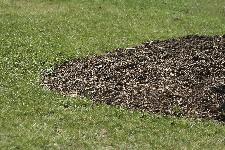
Natural bark mulch
There have been a lot of questions about the use of colored mulches in the landscapes. Many individuals are concerned about the possibility of negative environmental impact from the dyes used on wood chips and pine straw. According to the Center for Agriculture, Food and the Environment (https://ag.umass.edu) the primary concern with colored landscape mulches is not the dyes used for coloring. Rather, it is about the sources of wood chips and the possibility of contamination with toxic substances.
The dyes used in coloring wood mulch are primarily of two types: carbon-based dyes and iron oxide based dyes. Iron oxide, the most commonly used dye, is simply a compound of iron and oxygen. As the compound oxidizes, iron is released to the soil but is not considered to be toxic. Dyes that are not absorbed by or adsorbed to the wood would come off with contact, especially if the mulch is wet. There are also some carbon-based dyes used on mulch. These carbon-based colorants are similar to those used in ink and cosmetics. Other dyes for mulch are vegetable-based and therefore organic. At this time, there is no evidence that the dyes used to color wood chip mulch are toxic.
Most of the wood used for making colored mulch comes from recycled wood, i.e. wood scraps, wood pallets, and wood reclaimed from construction and demolition (C&D) waste. Besides the benefits of recycling waste wood materials, the reason why these wood materials are used for colored mulches is that they are very dry and readily absorb or adsorb coloring agents.
Unfortunately, some of the recycled waste wood used for making landscape mulch products is contaminated with various chemicals, such as creosote and CCA (chromated copper arsenate). CCA is the chemical that was used in the manufacturing of pressure-treated wood.
Even though arsenic-based wood preservatives were banned in 2003, there are still plenty of CCA preserved wood being re-purposed. Sometimes wood pallets that have been used in the transport of chemical agents can become contaminated by spills of these chemicals. CCA and other toxic chemicals have been found to be contaminating soil where colored mulch made from these wood products have been applied. CCA treated wood can kill beneficial soil bacteria, beneficial insects, earthworms and young plants. It can also be harmful to people spreading this mulch and animals who dig in it.
Additionally, dyed mulches break down much slower than natural mulches. The greatest advantage to using them is to reduce the expense and time required to replenish the mulch. When wood breaks down, it requires nitrogen to do so. Colored mulch can actually rob the plants of the nitrogen they need to survive. Natural mulches retain moisture and add organic material back to the soil enabling the plants to better utilize nitrogen. Avoiding the use of colored mulches reduces the risk of contamination better than any other practices. Colored pine straw may be an alternative.
It should not be assumed that all colored mulches are contaminated. However, anyone planning to use colored mulch should become familiar with the supplier and the source of the wood used in making it. If C&D waste wood is used, it should be a red flag that there is a possibility of CCA contaminated mulch.
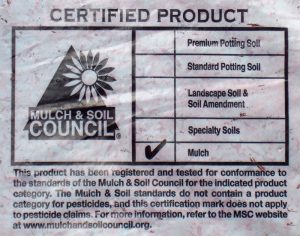
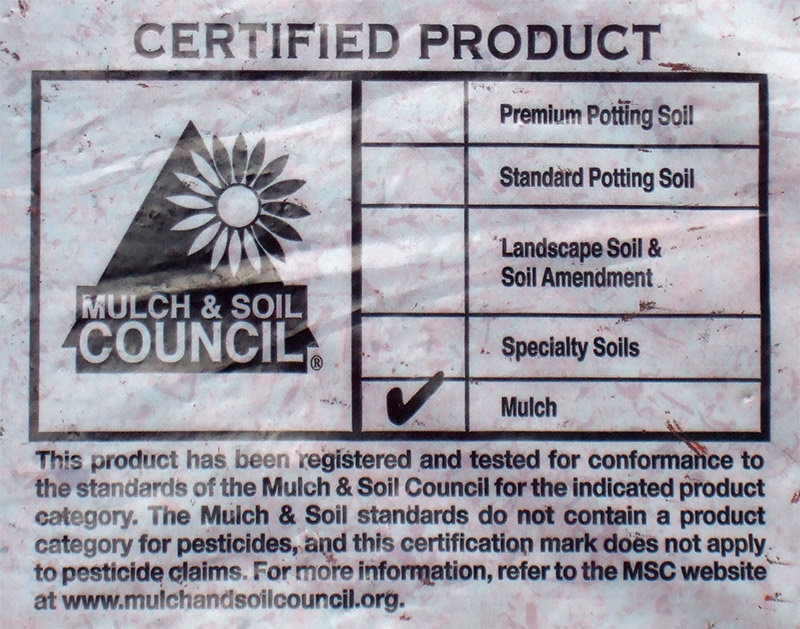
Certified Mulch Label
If you wish to improve the chances that the dyed mulch that you are buying is safe for humans to handle look for the MSC Certification Logo on the packaging. MSC stands for Mulch and Soil Council, whose responsibility is to certify that a mulch or soil product is free of CCA-treated wood. According to MSC’s Product Certification program, “Certified mulches and soils can be found at major retailers and garden centers across the country.” If you have concerns after contacting the supplier about the source of the wood used, contact a private environmental testing lab in your area.
While reading packaging, check the source of the product. If the supplier is a land management company rather than a processing mill it may be that mature trees are being removed and shredded. These mulches are sold as “long-lasting”, “no-float” products. They have the appearance of pine straw, but are actually finely shredded cypress from the heart of trees. These are coming from properties where the bald and white cypress trees are harvested for mulch. You can tell that it isn’t pine straw because the mulch pieces lack pine needle structures such as the fascicles and a revolute shape. While the use of these products is not contaminating, it is still depleting the environment. Mulches that are natural by-products are the most Eco-friendly.