by Daniel J. Leonard | Jul 3, 2018
Each time I travel to central and south Florida and observe the wonderfully flamboyant tropical flora, I am reminded of the unique and frustrating climatic characteristics of Northwest Florida. Our weather is tropical enough through the summer to sustain virtually everything our friends to the south grow, but winters north of the Big Bend are just cold enough to prevent long-term success with most tropical species. However, the genus that is maybe most synonymous with tropical color, the Hibiscus (it even has its own texting emoji!), contains several species that are hardy through our winters. The best landscape plant of these hardy Hibiscus species is creatively (sarcasm) called Hardy Hibiscus or Giant Rose Mallow (Hibiscus moscheutos) and is an absolute star in the Panhandle, bringing the beauty of the tropics to your yard!
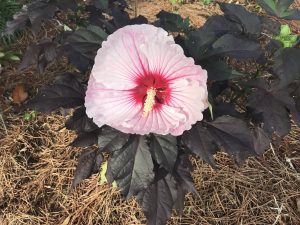
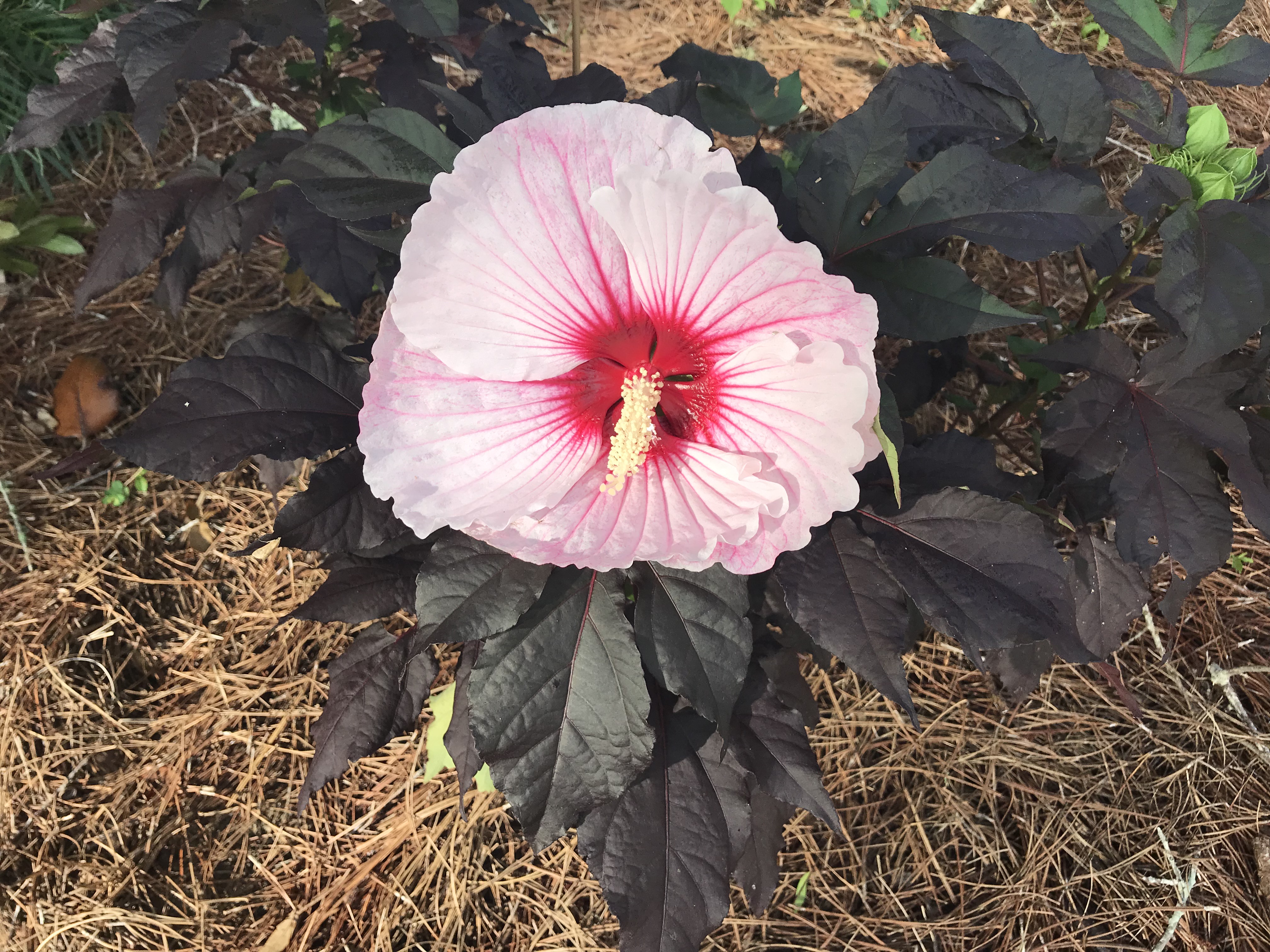
Hibiscus ‘Starry Starry Night’ – Photo courtesy Daniel Leonard
Rose Mallow is a native perennial species that occurs in sunny wetlands across the eastern U.S. This species can grow 7-8’ in height in its natural, unimproved state and possesses the largest flowers of any hardy perennial, some varieties easily eclipse 12” in diameter. Rose Mallows bloom through the heat of our long summers and return reliably each winter unfazed by frost. The flowers also happen to be a favorite of butterflies and hummingbirds and bring beneficial wildlife to the landscape. These characteristics and the trend towards the use of pollinator friendly, low-maintenance native perennials in landscapes quickly made Rose Mallow a jewel for plant breeders and now virtually all major horticultural brands have a line of Hardy Hibiscus available at garden centers, in varying sizes, flower color and leaf color/form. Recent breeding efforts have focused on introducing plants with enormous, richly colored flowers held on compact plants with attractive foliage. The results have yielded two series and three individual cultivars that I consider superior selections and are more than worthy of inclusion in your garden:
- Summerific® Series by Proven Winners. This series is comprised of four robust (up to 5’ in height) cultivars, ‘Cherry Cheesecake’ (bicolor magenta and white flowers), ‘Berry Awesome’ (purplish lavender flowers), ‘Cranberry Crush’ (a red you really have to see to believe), and ‘Perfect Storm’ (notable for its deep purple foliage).
- Luna Series by Monrovia. This series is notable for its ultra-compact (3’ in height or less) size and characteristically large flowers. It is also composed of four cultivars, ‘Luna Red’ (deep red), ‘Luna Blush’ (white, fading to pink near flower margins), ‘Luna Pink Swirl’ (pictured and my favorite, bicolor swirly flowers), and ‘Luna White’ (white with a red center).
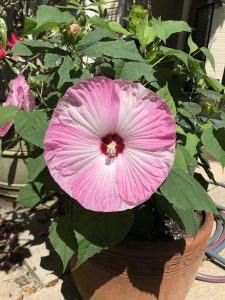
Hibiscus ‘Luna Pink Swirl’ – Photo courtesy Daniel Leonard
- ‘Starry Starry Night’ by Walter’s Gardens. (Pictured) This cultivar combines dark purple to black leaves with swirled pale and dark pink flowers. It has performed very well in my landscape and if I could only grow one, this might be it.
- ‘Lord Baltimore.’ The classic, large growing cultivar with bright red flowers that is widely available and easily found. An oldie (introduced in 1955) but a goodie.
- ‘Midnight Marvel’ by Walter’s Gardens. A “hot off the press” new cultivar that is currently difficult to find due to popularity, though some online outlets have them available in small sizes. This one is worth your patience. Sporting deep red blooms on near black foliage, there’s nothing else like it in the landscape.
In addition to being gorgeous plants, Rose Mallows are extremely versatile in the landscape and could not be easier to grow. Because the size varies so greatly (from the diminutive 30” tall ‘Luna’ series to the 8’ tall unimproved species), there really is a place for one in every garden. I like to use the smaller cultivars in large containers to facilitate moving them around where their floral display has the greatest impact or to create a tropical effect where in ground plantings are not an option (pool decks, patios, etc). The larger cultivars make spectacular specimen plantings in perennial and shrub beds and even make a really dense, striking hedge (just know they disappear in the winter). Be sure to give them as much sun as possible, as this will enhance the number of flowers on each plant and darken the foliage on the cultivars with purplish/black leaves. Too little sun will result in fewer flowers and lighter green foliage. As wetland plants, Rose Mallows enjoy regular water, either from rainfall or irrigation; they will let you know when they need it – their large leaves readily wilt under drought stress, somewhat like Hydrangea.
For low-maintenance, native, pollinator friendly, cold-hardy tropical color, you need look no further than Rose Mallow. These perennial shrubs come in all sizes and colors and fit any landscape! Look for the above listed series and cultivars at better garden centers and online retailers and enjoy the oohs and ahhs elicited when people first get a glimpse of Hardy Hibiscus in your landscape! Happy Gardening!
by Daniel J. Leonard | May 4, 2018
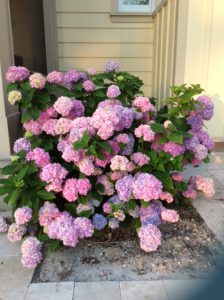
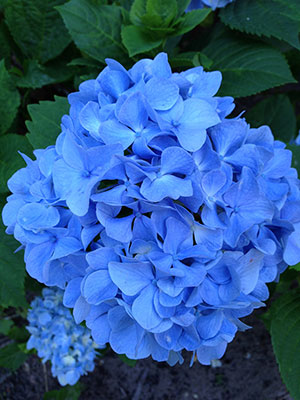
H. macrophylla ‘Bloomstruck’
Photo courtesy of Andrea Schnapp
Generally, when folks find out what I do for a living, among the first questions asked is “What is your favorite plant?” Being somewhat of a plant nerd, that can be a tough question to answer! However, I usually circle back to the same answer, “Hydrangea”. There are many reasons my fellow gardeners and I love hydrangeas. It’s undeniable that few plants conjure more fond memories of summers gone by or cause more impulse purchasing at nurseries than a hydrangea in full, billowy bloom. Additionally, few specimen shrubs give more floral firepower and ask so little of the gardener in return. My own love affair with hydrangea stems from my first propagation experience, a softwood cutting of Hydrangea macrophylla ‘Nikko Blue’ (taken with the help of someone who knew a lot more about what they were doing than I did) that, seemingly magically, sprouted roots in a makeshift greenhouse, a cypress box with an old, crusty, sliding glass door. Hydrangeas hooked me. However, even with all of those attributes to its name, Hydrangea, as a genus, remains underappreciated and underutilized in modern landscapes. Let’s shed some light on the two primary reasons for gardeners’ failure and frustration with hydrangeas in the landscape and highlight some of the best Hydrangea species and cultivars to look for at the nursery!
First, hydrangea has a reputation as being a high water user. As the name (hydrangea comes from “hydor”, which is Greek for water) might suggest, hydrangeas are indeed water sensitive. However, this does not necessarily mean they require more or less water than other plants, rather they simply betray drought quicker than most other plants. This feature makes hydrangea particularly useful in the landscape as an indicator plant. As a general rule, hydrangeas (particularly those planted in too much sun) wilt in the afternoon heat; this is totally normal. However, if the plants remain wilted the next morning, it is an indicator to the gardener that irrigation is required! If they don’t get irrigation soon after telling you they need it, the plants may begin to decline. Rather than being viewed as a drawback, think of this feature as an early warning system. Name another plant that looks out for us gardeners like that!
The second primary reason people fail with hydrandea is improper site selection. Attempting to grow hydrangea in full sun in Florida leads to less than spectacular results. All species of hydrangeas are most happy when sited to receive at least some afternoon shade, if not filtered shade throughout the entire day. Exposure to blistering afternoon sun is problematic and results in increased wilting from heat stress, increased irrigation requirements and “bleached” flower coloration. Remember, there are fewer frustrating things than growing the right plant in the wrong place!
Now that you know how not to fail with hydrangeas, it’s time to select the proper plant for your property! Three primary species perform noticeably better here than the rest of their kin and deserve the gardener’s consideration in Northwest Florida: H. macrophylla (Bigleaf Hydrangea), H. quercifolia (Oakleaf Hydrangea), and H. paniculata (Panicle Hydrangea).
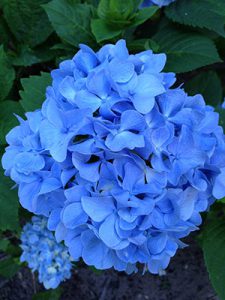
H. macrophylla
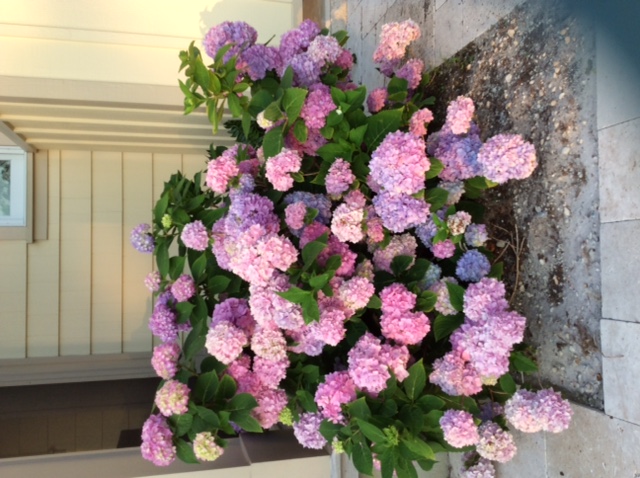
H. macrophylla, the old-fashioned hydrangea everyone’s grandmother grew, is truly one of the standouts in the shady, Southern landscape and commands attention when in flower. Sporting giant “mopheads” of inflorescences in gorgeous hues of blue (or pink, depending on soil pH), H. macrophylla is an extremely low maintenance plant, requiring only periodic irrigation and infrequent fertilizer; H. macrophylla even tolerates salt spray and can be grown on the Gulf Coast! By far, the greatest percentage of questions I receive concerning H. macrophylla involve plants not flowering because of pruning at the wrong time of year. For best flowering results, time pruning of once-blooming traditional cultivars like ‘Nikko Blue’ soon after flowering is finished in late summer. These plants set flower buds on the previous season’s wood; pruning older cultivars in the fall or winter may rejuvenate the plant but will prevent flowering the next year! Fortunately, over the last twenty years, advances in Hydrangea breeding have given gardeners the option of planting remontant cultivars that bloom on current season’s wood. Commonly sold remontant cultivars like ‘Endless Summer’, ‘Penny Mac’, ‘Bloomstruck’, and ‘All Summer Beauty’ have an early summer flower display like the traditional types but then continue to flower periodically throughout the rest of the summer! Even better, they may be pruned at any time without worry of damaging the next season’s flower show!
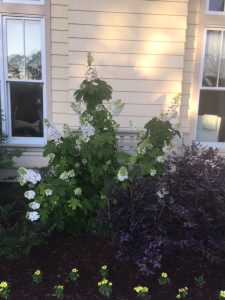
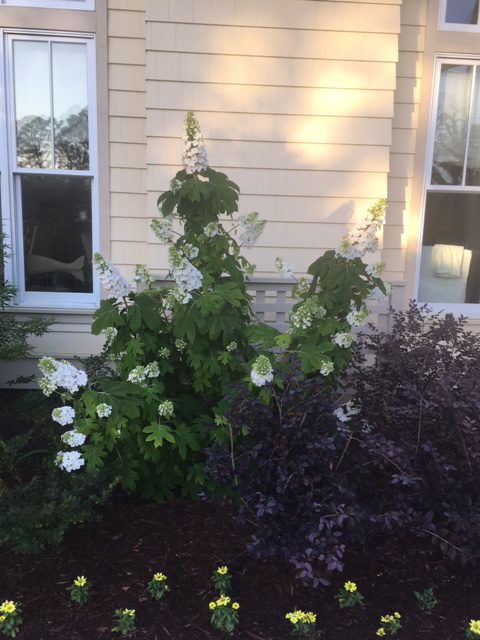
H. quercifolia (Oakleaf Hydrangea) Photo Courtesty of Andrea Schnapp
Those looking to diversify their hydrangea collection should next look to the native Oakleaf Hydrangea (H. quercifolia). The Oakleaf Hydrangea is a Florida native, growing wild on the steep, shady ravines along the northern end of the Apalachicola River. If the plants never flowered, the Oakleaf would be worth planting; its massive leaves, oak-shaped as the name suggests, can grow up to a foot in length and provide some of the best fall foliage color available to Floridians. However, the real show, as with all hydrangea species, are the flowers. This species flaunts 8”-10” white, panicle shaped flowers that are held elegantly above the coarsely textured foliage. In addition to these features, Oakleaf Hydrangeas couldn’t be easier to grow; obtaining heights up to 10’ and asking very little of the gardener other than adequate irrigation and some shade in the heat of the day! Look for the author’s favorite cultivars: ‘Alice’, ‘Semmes Beauty’, and ‘Snowflake’. Each of these cultivars and selections of the common species H. quercifolia perform very well in Northwest Florida.
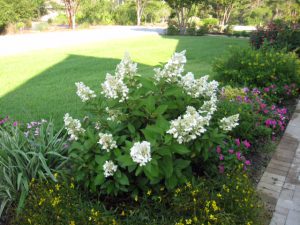
H. paniculata ‘Quickfire’
Photo courtesy of Andrea Schnapp.
Finally, the newest hydrangea species introduced to Florida gardens, H. paniculata, has made significant inroads in the landscape industry over the last decade. Primarily grown as the cultivar ‘Limelight’, H. paniculata overcomes some of the weaknesses of the two aforementioned species, namely it tolerates full-sun and persists on much less water, making it a potentially more sustainable plant for many landscapes. This plant, like the remontant H. macrophylla cultivars, blooms on new wood and even seems to enjoy a hard pruning each winter; plants pruned this way seem to be more vigorous the next season and produce larger greenish-white flower panicles than unpruned specimens. Though it is a relative newcomer, H. paniculata, particularly ‘Limelight’, is a worthy addition to any landscape.
As you can see, there is a hydrangea for every yard and no true Southern landscape is complete without a few. When perusing your local garden center this summer, look for the selections and species mentioned above, plant properly, and enjoy the ensuing annual flower show for many years into the future! Who knows, you may be hooked by hydrangeas as I once was!
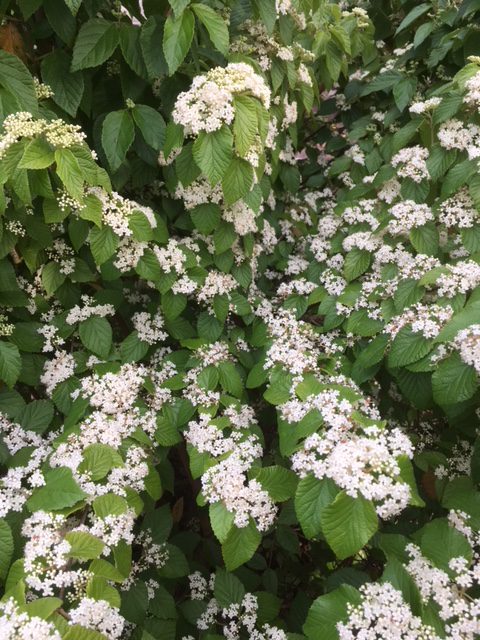
by Julie McConnell | Apr 16, 2018
I’m hard pressed to tell you my favorite song, movie, or place to eat, but when we start talking plants I can come up with whole categories of favorites. I won’t commit to just one species, but when it comes to woody shrubs I am a huge fan of viburnums. We have small ones, tall ones, evergreen, deciduous, smooth leaves, textured leaves, berry producers and sterile types. There are so many different types there must be one for every gardener.
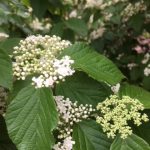
Buds and flowers of Viburnum luzonicum. Photo: J_McConnell, UF/IFAS
I thought I knew a lot of viburnums after spending ten years in the nursery industry, but had not seen Luzon Viburnum, Viburnum luzonicum, until Dr. Gary Knox gave one to me in the fall of 2014. The plant was little more than a couple of stems and light green leaves, but he assured me it would get large and would perform well in the Florida panhandle.
That scrap of a plant went into a large, non-irrigated, full-sun bed in my yard and was hand-watered through the first summer, but after that has been left to fend for itself. My Luzon viburnum is currently over 6 feet tall by 4 feet wide and covered in flowers. It gets no TLC in my landscape, but has yet to be plagued by any pests. The foliage emerges with a slightly pink tone then settles into a light green usually starting in February or March. By late March clusters of small white flowers cover the shrub. It is reported to have the potential to produce berries that transition from red to black, but I have not yet observed that in my garden.
This is not a plant you are likely to stumble across in most garden centers, but is worth keeping a lookout for in case you see it. It is on display with many other wonderful plants in the Gardens of the Big Bend at the UF/IFAS North Florida Research and Education Center (NFREC) in Quincy and in the past has been available at Gardening Friends of the Big Bend plant sales.
For more information about this plant see Missouri Botanical Garden webpage.
by Sheila Dunning | Feb 5, 2018
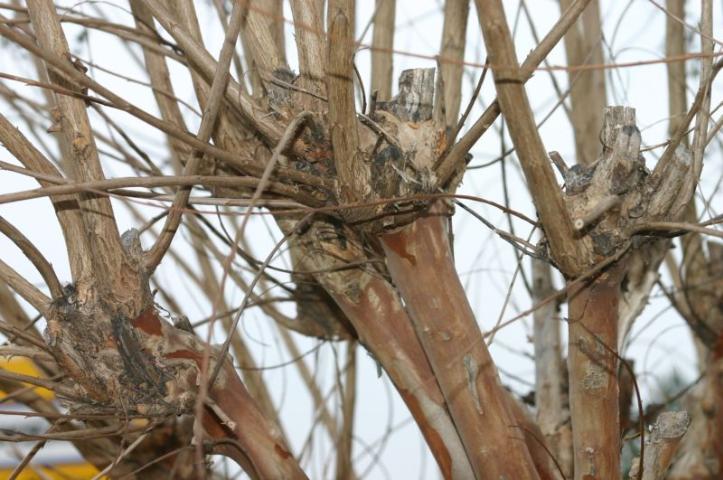
 Pruning is one of the most controversial aspects of maintaining crapemyrtle. Traditionally, many crapemyrtles are routinely topped, leaving large branch and stem stubs. This practice has been called “crape murder” because of the potential impacts on the crapemyrtle health and structural integrity. Topping is the drastic removal of large-diameter wood (typically several years old), with the end result of shortening all stems and branches.
Hard pruning (topping) stimulates crapemyrtle sprouting from roots, upper stems, or the base of main stems. If basal and root sprouts are not removed, one or more may form woody stems that eventually compete with existing main stems. These additional or competing stems may result in poor form and structure, such as stems that rub against each other.
Topping typically delays flowering up to one month compared to unpruned crapemyrtle. On some cultivars, topping also shorten the season of bloom. Long-stem sprouts emerge just below large-diameter cuts that result from topping. These sprouts usually develop into upright, unbranched stems that eventually flower, often bending under their own weight. Rain or wind storms can cause extreme bending and some will break because they are weakly attached to the main stem.
Topping removes large amounts of starches and other food reserves stored within branches. Topping dramatically reduces the size of the plant canopy, ultimately decreasing the plant’s ability to produce food (starches) through photosynthesis. The large branch stubs caused by topping result in large areas of exposed wood that allow access by insects and wood-rotting organisms, weakening the plant’s structure. Finally, topping results in many dead stubs throughout the tree.
Proper pruning may be needed, just like any other tree. Lower limbs of crapemyrtle are removed to increase clearance for pedestrians or vehicles. Stems are cut to increase branching. Other pruning may be conducted to direct growth away from structures, stimulate flowering, and remove spent flowers, seed capsules, and dead or damaged branches and twigs.
Properly placed, crapemyrtle is a low-maintenance plant needing little or no pruning. Problems with overgrown, misshapen, or misplaced crapemyrtle can be greatly reduced with proper selection of crapemyrtle cultivars, proper plant selection at the nursery, and proper placement in the landscape. For more information on cultivar selection go to: http://edis.ifas.ufl.edu/mg266.
If pruning is necessary, use the following recommendations:
- Pruning for safety may be done anytime. This may involve removing damaged or weak branches or pruning lower limbs for pedestrian and vehicle clearance and visibility.
- Pruning to improve plant structure, redirect growth, or alter plant shape and appearance should occur when plants are leafless and dormant–typically December through February. Although this can be accomplished at any time, without leaves, the branching structure is clearly visible to more easily determine appropriate branches for pruning.
- Prune to remove crossing or rubbing branches.
- Prune dead, damaged, or diseased branches at the branch collar.
- Remove vigorous branches growing toward the center of the canopy.
- Severe pruning should be performed late in the dormant period. Pruning too early might stimulate new growth that could be damaged by low temperatures.
by Beth Bolles | Dec 1, 2017
There are plants that gardeners may know and love from other regions that just do not perform well in the heat, humidity, and soils of our area. One example is the Japanese pieris, an attractive evergreen shrub with showy white blooms in spring. This shrub has a few specific environmental requirements that make it unsuitable for most gardens along the Panhandle, including the need for rich organic soil that holds some moisture but is well drained.
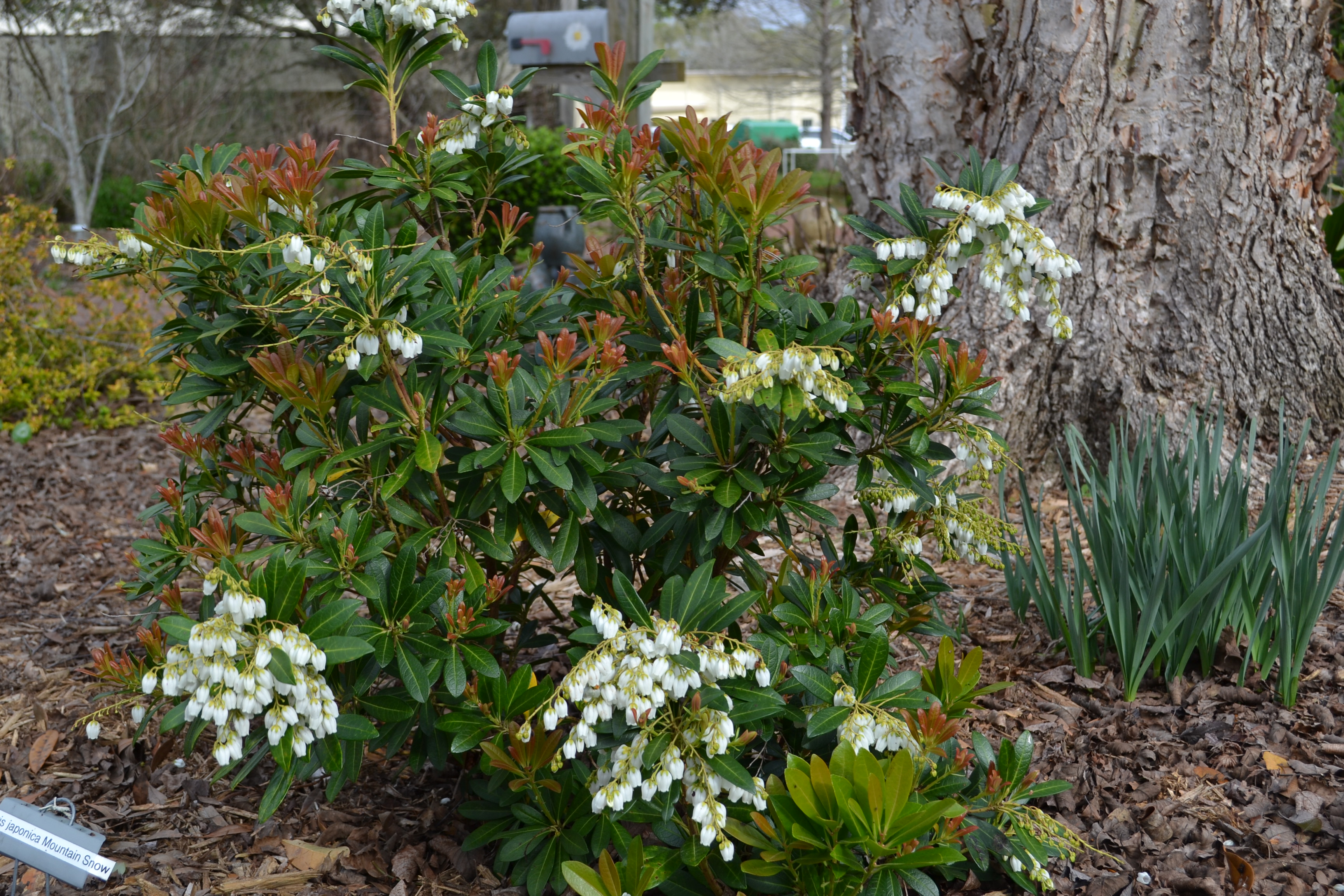
Late winter/early spring flowers on the Mountain Snow. New foliage also emerges reddish. Photo by Beth Bolles, UF IFAS Extension Escambia County.
For those of you who thought that a garden with Japanese pieris is only a dream, the nursery industry has now made your dream a reality. Part of the Southern Living plant collection is a more heat tolerant Japanese pieris called Mountain Snow™ that is showing promise. Site selection is still very important. Mountain Snow™ will grow best with summer shade and in beds that are amended with organic material. Water must be applied when rainfall is lacking and soil must be well drained.
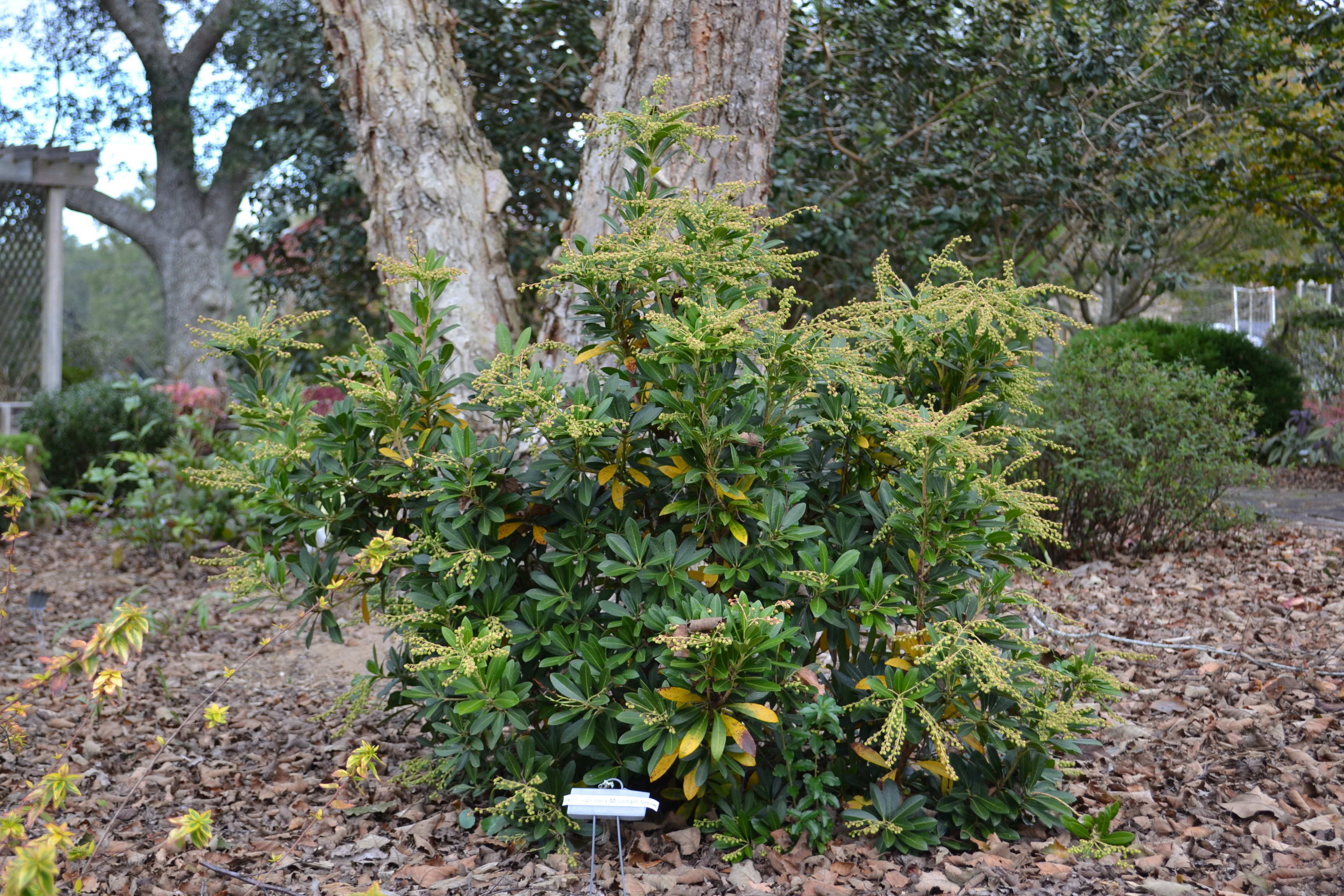
Shrubs will grow about 4 feet by 3 feet. Flower buds cover this established plant. Photo by Beth Bolles, UF IFAS Extension Escambia County.
Although those requirements can not be met in all landscapes, there are gardens like the Escambia County Demonstration Garden where a Mountain Snow™ plant will grow well. Our shrub is planted in an irrigated ornamental bed with organic mulch on top and receives summer shade from a deciduous tree. At two years old, it appears to be doing well in our area. If you have a garden spot with the conditions appropriate, consider trying this shrub for early season interest.