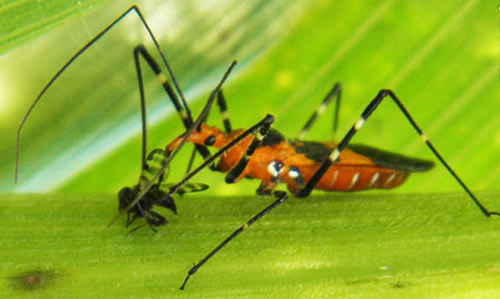
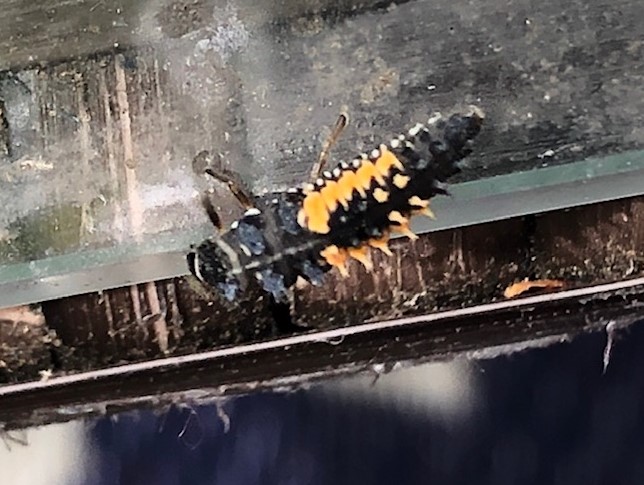
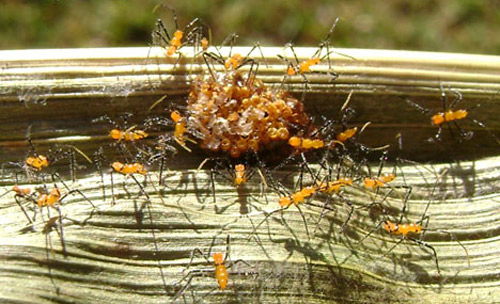
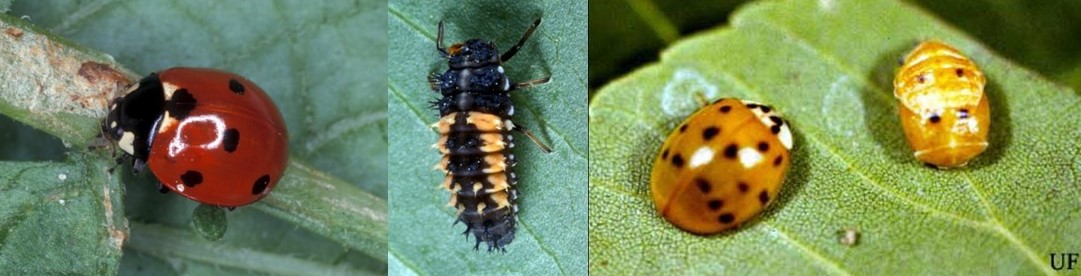
Beneficial juvenile ladybugs bear almost no resemblance to their adult form. Photo credit: Carrie Stevenson, UF IFAS Extension
When maintaining a garden, knowing the difference between your enemies and the “good guys” is half the battle. Once, I was teaching a group of landscape maintenance folks about beneficial insects, and quizzed them on their bug identification skills. I flashed up an image of a larval ladybug and asked if they knew what it was. No one in the class could identify it. I followed up with, “If you saw this in a client’s landscape, would you use a pesticide?” All but one responded that they would.
Thankfully, I was able to teach them something useful that day and avoid the unnecessary slaughter of baby ladybugs. But the larger issue to address was this “shoot first, ask questions later,” attitude. In reality, the beneficial—often predatory—insects are larger and fewer in number. It’s analogous to the smaller numbers of any apex predator in comparison to its prey; think about the dozens of lions vs thousands of antelope in the savanna, or hundreds of sharks vs hundreds of thousands of fish in swaths of ocean. The proportions are similar in the insect world. When predator insects are indiscriminately killed off, prey insects that harm plants can multiply in rapid numbers. The reproductive cycles of beneficial insects are often slower than smaller prey insects, so it becomes nearly impossible to restore a healthy balance.
Adult assassin bug feeding on a cornsilk fly. Photo credit: Megha Kalsi, UF
One such beneficial common to northwest Florida gardens is the milkweed assassin bug. Leggy and intimidating with black highlights and bright orange warning coloration, it is a daunting figure to prey insects and humans alike. The milkweed assassin bug, (Zelus longipes) is named for its similarity in appearance to the (unrelated) milkweed bug.
Nearly everything eats a juicy tomato, pepper, or leafy green vegetable, but the assassin bug leaves the plants alone. As suggested by its name, the assassin bug is a killer—a top predator among insects. An assassin bug does not go easy on its prey, which typically consists of beetles, flies, tomato hornworms, and even roaches and mosquitoes. Once the prey is ambushed, the bug uses its rostrum to “impale them, inject venom, and suck the body contents.”
While considered a beneficial species that protects the food we’ve worked so hard to grow, don’t assume the assassin bug is particularly friendly. It does not deliberately attack humans, but will defend itself if threatened. The bite of an assassin bug is said to be quite painful, and will result in a small itchy lump. There are no toxins present, though, and the bite will resolve itself fairly quickly.
So, if you see one of these fascinating little creatures crawling in your garden, leave it be. It is no doubt doing its job, hunting down pest insects one by one and slurping their guts out.
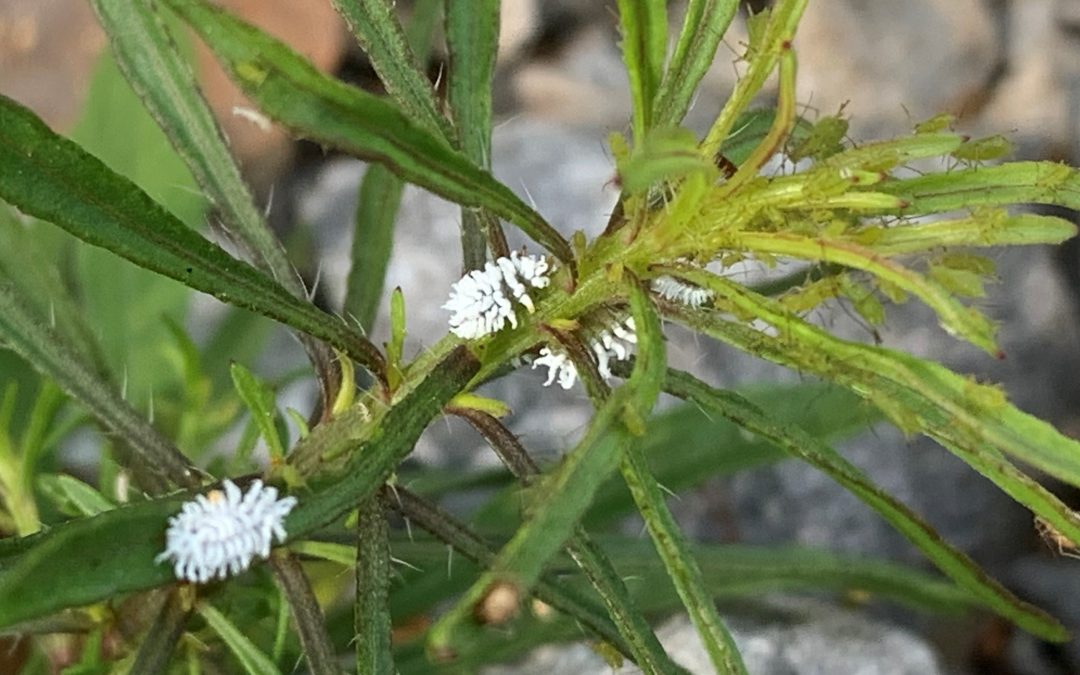
Scouting is an important part of keeping pests in check and gardeners are often up to the task. As you routinely enjoy the beauty of your ornamental and edible plants, you are likely to catch a pest sighting before it gets out of control. One insect that may trick us upon first glance into thinking we have a pest is an interesting lady beetle called the Mealybug destroyer.
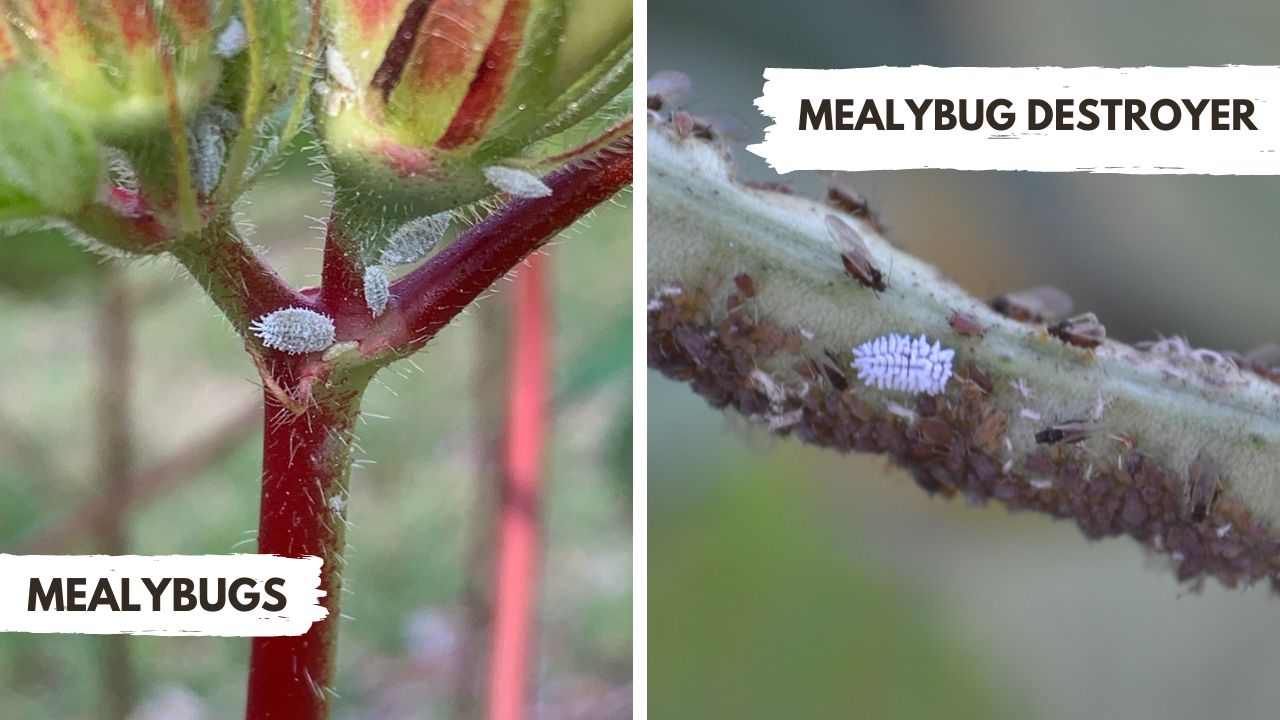
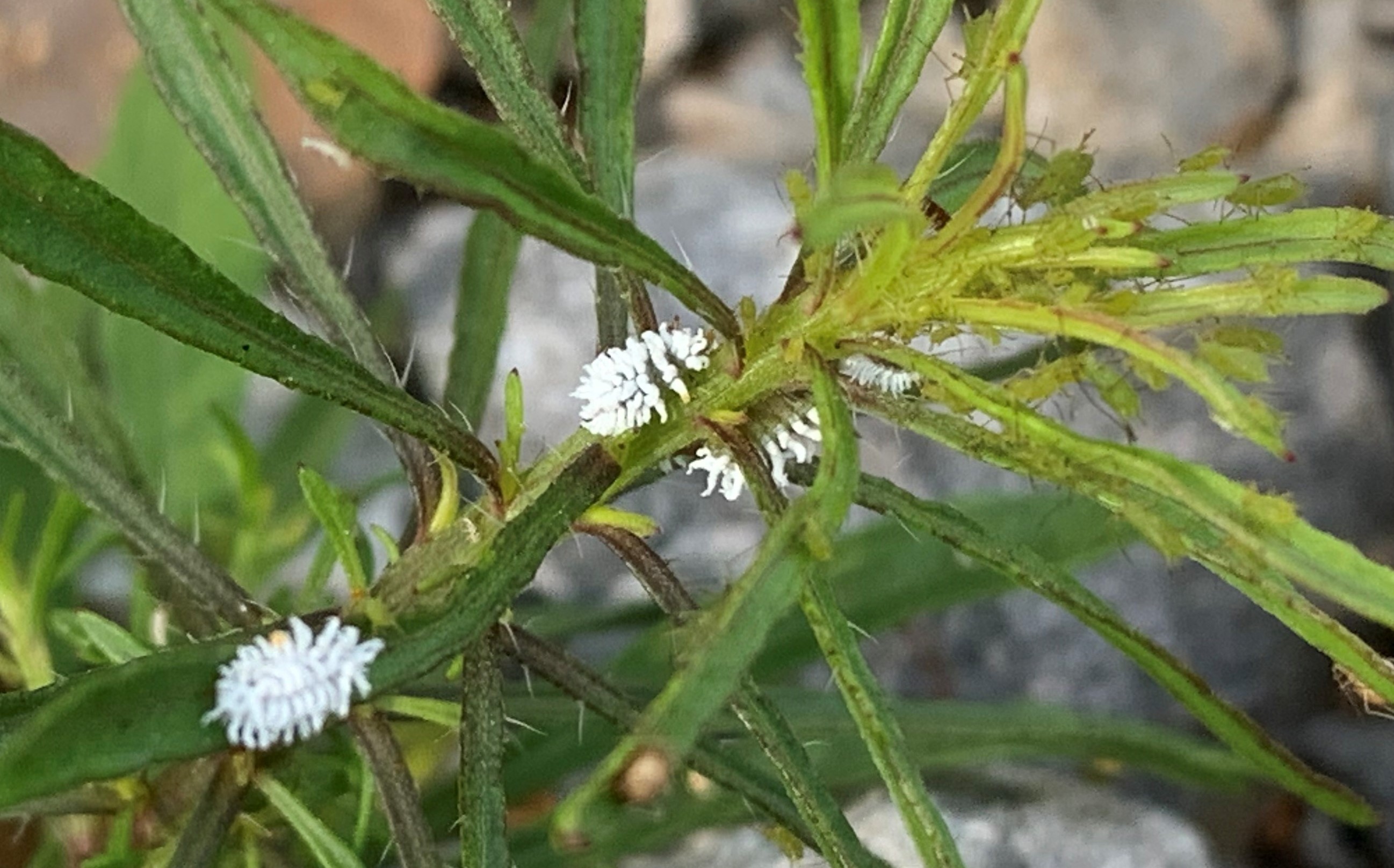
Lady beetles are one of the most recognizable insects in the garden with their rounded shiny bodies and often bright colors and spots. The adult mealybug destroyer is smaller than a typical lady beetle, about 1/8 of an inch long, with a dark brownish black body and dull orangish head. They move quickly over flowers and leaves in search of food. The larval stage can be confusing because immatures look very similar to mealybugs, one of their favorite prey. Larva have white, woolly protuberances on the body. Whereas pest mealybugs look flatter, the mealybug destroyer immatures have parts that look like soft white spikes.
Pest mealybug compared to beneficial mealybug destroyer. Photos by Beth Bolles, UF IFAS Extension Escambia County.
Why not learn to recognize an insect that eats lots of soft bodied pests on your plants? Once you see one, you will be able to spot these beneficials more often on your favorite garden flowers.
Mealybug destroyer immatures feeding on aphids. Photo by Beth Bolles, UF IFAS Extension Escambia County
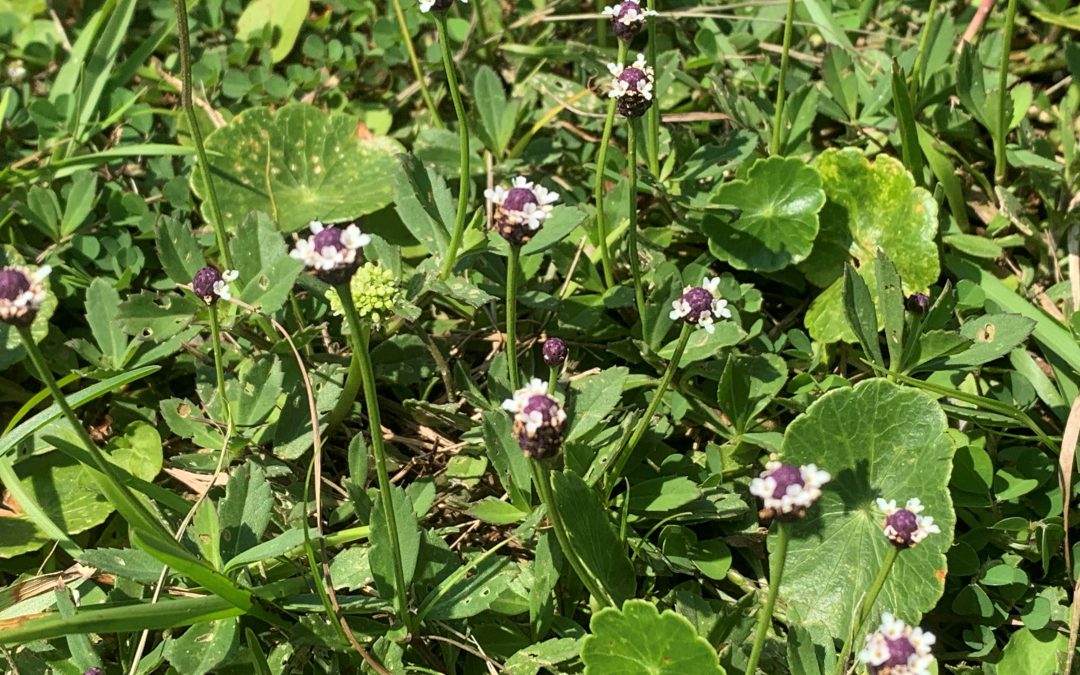
Homeowners may consider growing Frogfruit, Phyla nodiflora as a companion plant in turf areas. Learn the qualities of this groundcover with UF IFAS Extension Escambia County.
The Multicolored Asian lady beetle (Harmonia axyridis) was introduced from Asia and intentionally and quickly established itself over the entire United States.
A Comparison
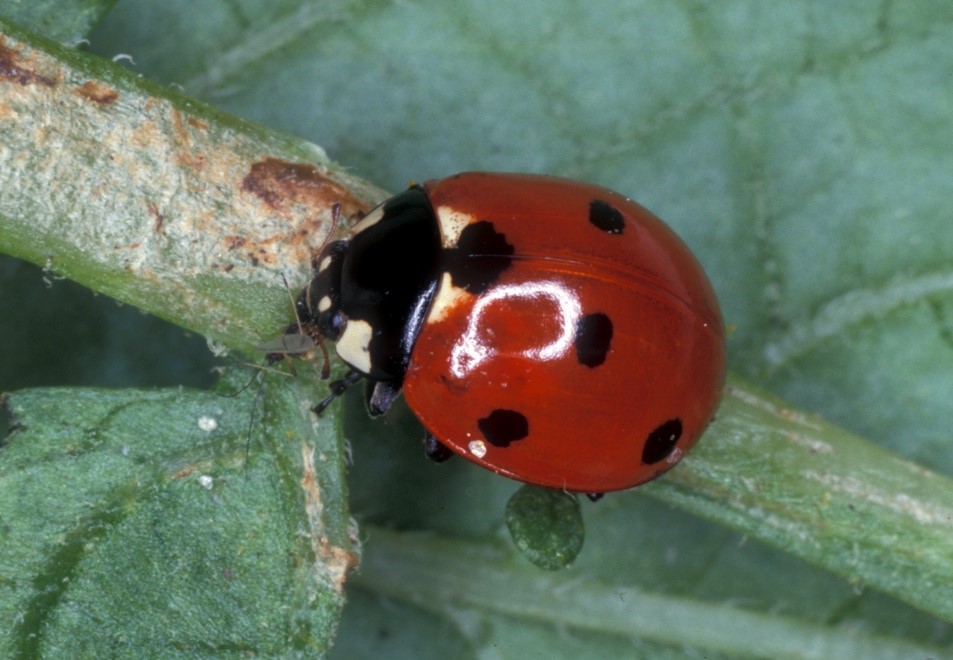
The Multicolored Asian Lady Beetle (MALB) adults can be distinguished from other lady beetle species by a pair of white, oval markings behind the head that form a black M-shaped pattern. Most adults have nineteen black spots on their forewings, but variability is common and spots may be missing. Adult MALBs consist of several color patterns (morphs), varying from solid orange to red with black spots.
This species is often mistaken for the seven spotted lady beetle (Coccinella septempunctata), which was introduced from Europe. Both species are usually found feeding on the same insect host and plants.
Photographer: James Castner, University of FloridaPhotographer: Russell F. Mizell, University of Florida
Both species tend to overwinter in large numbers. However, the Seven Spotted Lady Beetle overwinters under rocks, abandoned shrubs and forest edges. In contrast, the MALB is attracted to light and often aggregate and overwinter in dwellings, entering through cracks or crevices.
Due to the onset of winter and scarcity of food, MALB is more noticeable November to January in north Florida. As a result, they are a nuisance during the flight period, aggregating in walls and other parts of dwellings.
Once they enter your dwelling and experience warmth, they fly around and annoyance progresses. They produce a yellow, viscous, foul-smelling defensive substance when disturbed. The defensive substance usually leaves spots on furniture and the foul odor lingers in the air.
The solution
Seal building or caulked entry point to prevent infestation.
If beetles get inside your dwelling, a black light trap can be used.
Vacuum cleaners can be used to remove them, though, while effective, it will result in some spotting and foul odor.
In conclusion, though a nuisance, lady beetles are considered to be valuable natural enemies and should be tolerated and conserved when possible.
Supporting information for this article can be found in the UF/IFAS EDIS publications:
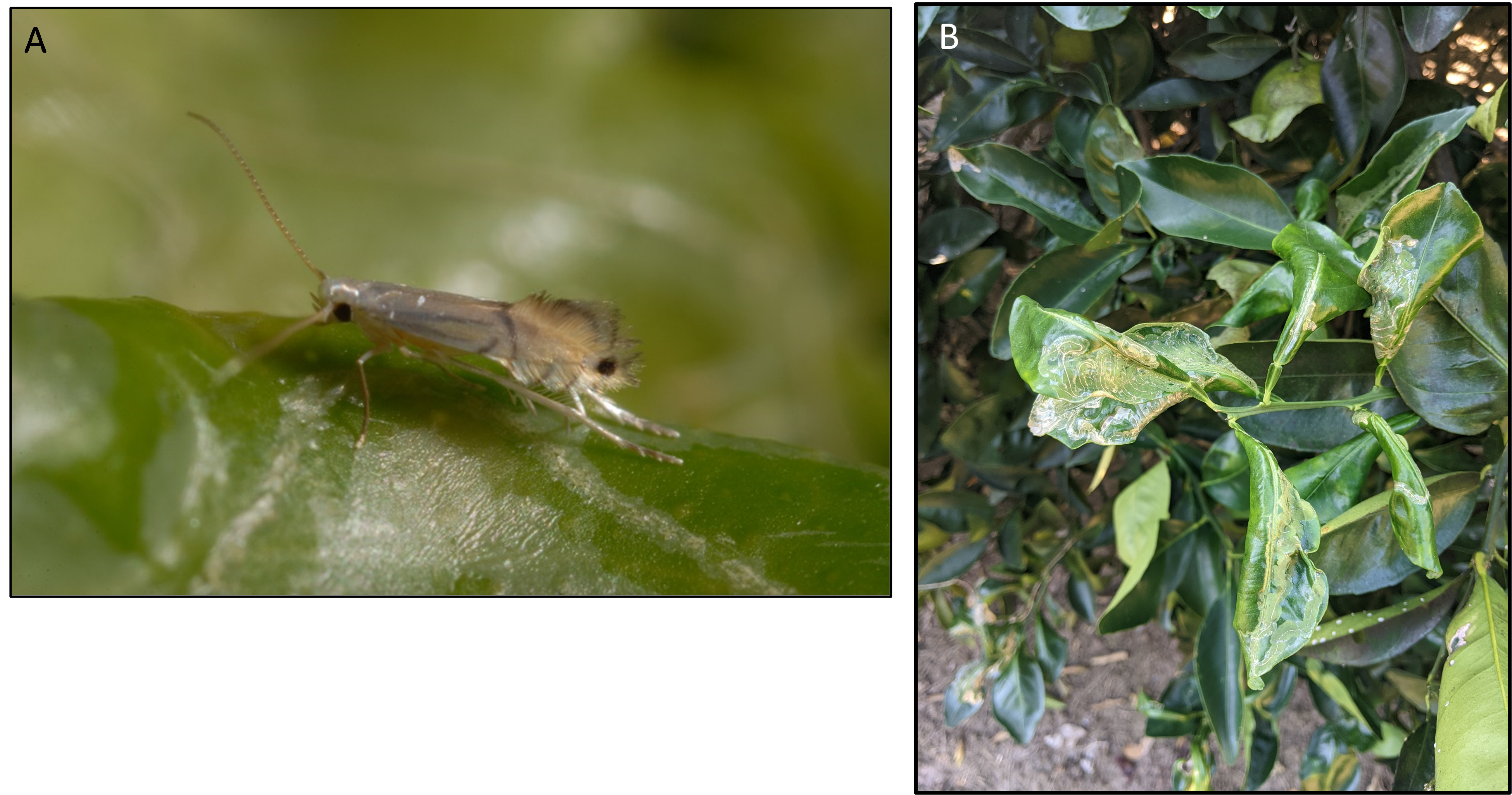
Citrus is one of the most cherished fruit trees in the Panhandle. Citrus owners are well aware that every year the main damage to their trees come from citrus leafminer (CLM). CLM is a small moth and its larvae feeds between the tissue layers of new leaf growth, causing serpentine mines to form under the leaf cuticle (Fig. 1). The feeding damage results in leaf curling and distortion, and severe infestations of CLM on young trees can retard the growth of trees. Another threat concerning CLM in Florida is that the mines provide an open wound for citrus canker to enter, a bacterial disease that has been found recently in the Florida Panhandle, Georgia, and Alabama.
Most commercial growers deal with CLM in young trees by a soil application of systemic insecticide before the flush season, followed by a foliar insecticide when the systemic drench’s toxicity is declining. Homeowners, however, have limited access to these chemistries. Garden systemic insecticides that include imidacloprid (Bayer’s Tree & Shrub Insect Control™, Merit®, etc.) and dinotefuran (Greenlight Tree and Shrub Insect Control™, Safari®, etc.) are among the few options for CLM control. For the best efficacy, those insecticides should be applied two weeks before the start of the flushing season to allow time for the insecticide to move from the roots into the canopy. To avoid leaching of insecticide away from the root zone, soil applications should be made within a 24-hour period without rain. Citrus trees usually have several flushes per year, depending upon cultivar, climate, and crop load. However, in the Florida Panhandle, most citrus cultivars have two major flushes in May and September.
Importantly, systemic insecticides are only efficient against CLM for small immature trees; therefore, the only products labeled for use against CLM on mature trees are foliar sprays. Horticultural oils or insecticides with spinosad (such as Monterey® Garden Insect Spray) are some options available for homeowners. However, achieving leafminer control with foliar applications on mature trees is challenging due to unsynchronized flushing of trees. Foliar applications should be timed with the appearance of the first visible leaf mines. In any case, be sure to READ THE LABEL and follow all the label directions.
Cultural practices, and non-insecticidal methods.
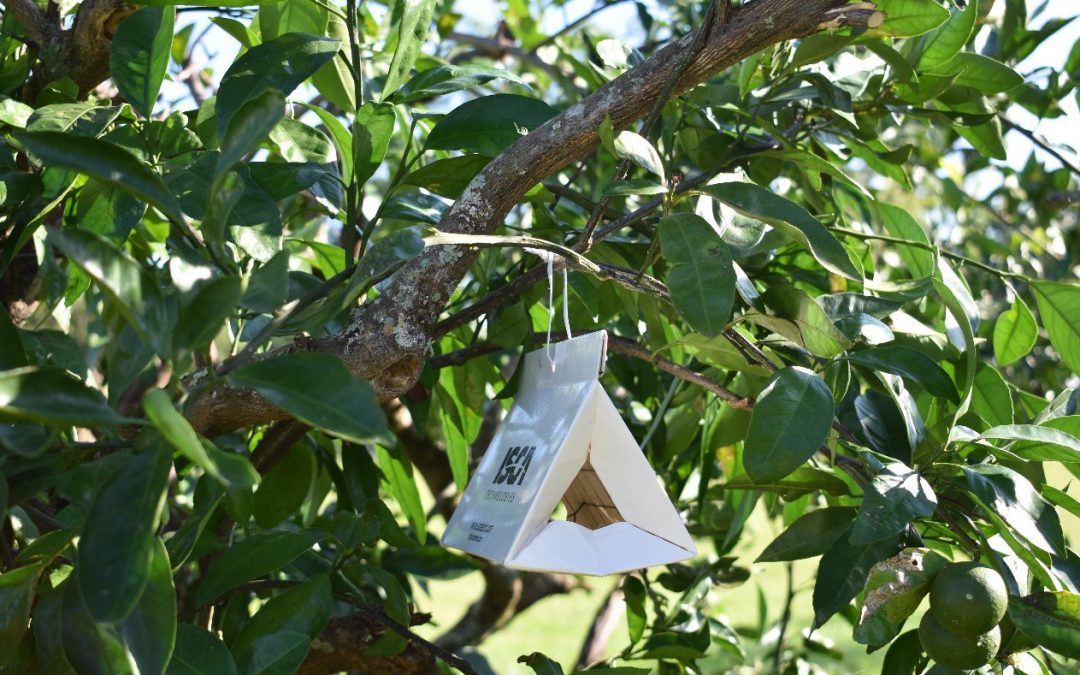
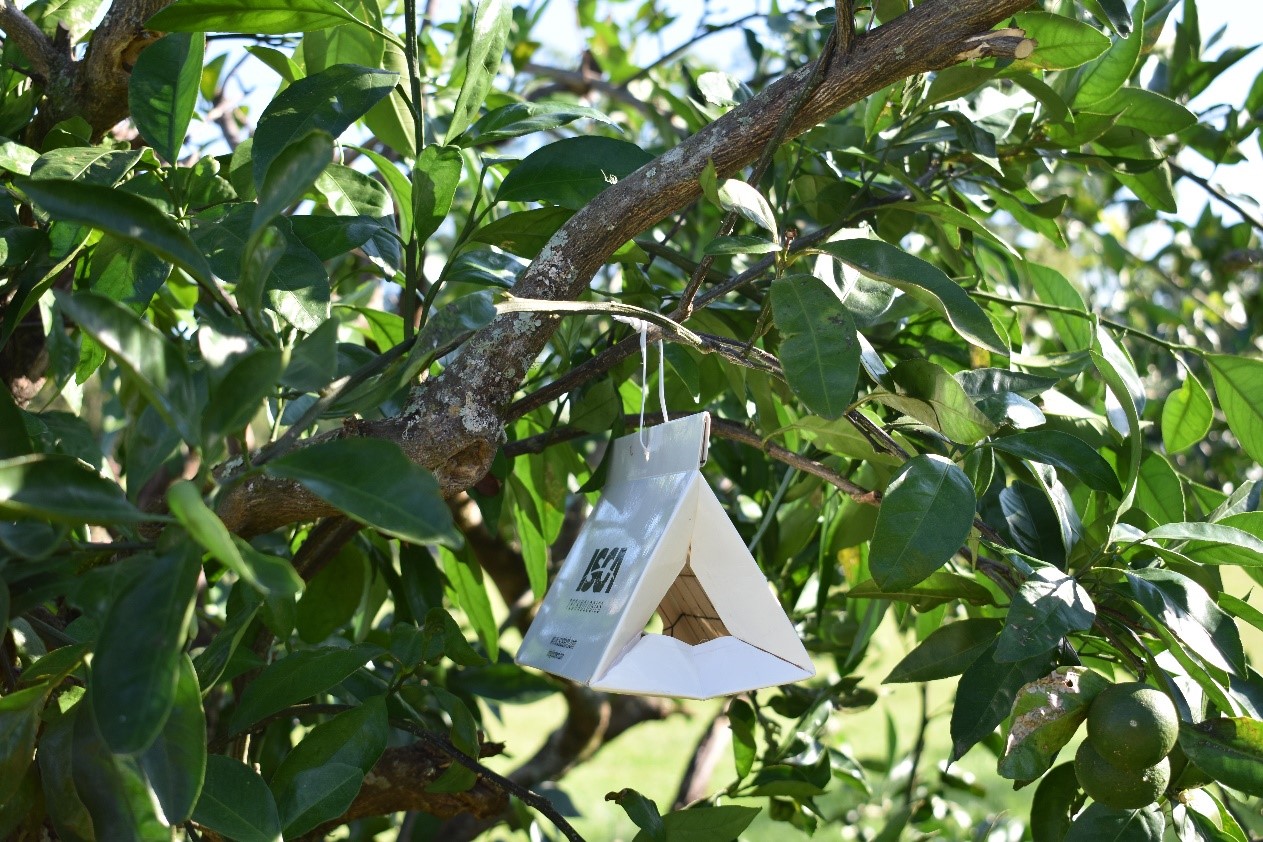
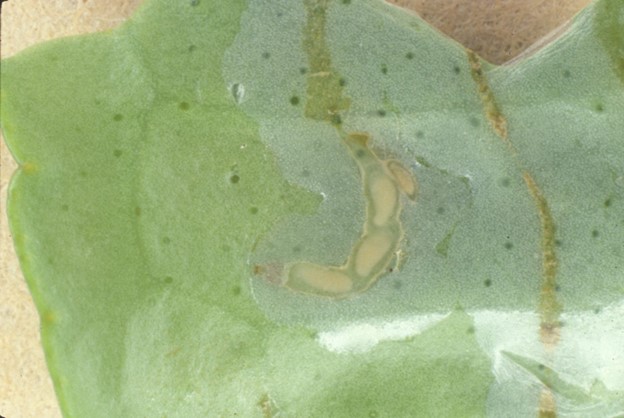
For isolated trees in a backyard, cultural practices and control through mass trapping are usually sufficient to control CLM and insecticide use is not recommended, especially for mature trees. One of the basic cultural practices is to remove any stems that grow below the bud union or from the rootstock, also called ‘suckers’ (Fig. 2). Those rootstock shoots compete with the scion shoots and are great reservoirs for CLM; removing them will help reducing CLM population. On isolated trees, mass trapping using CLM pheromone provide good results (Fig. 3). The mass trapping method is constituted of a delta trap baited with a lure that emits a large quantity of CLM sex pheromone. CLM males are attracted by the odor and are captured in the delta trap’s sticky liner. Those traps are commonly used by growers to monitor CLM populations, but for homeowners they are sufficient to control CLM on a single tree. This trap and a lure method should protect a single tree for approximately 3 months. Finally, the last option is the use of biological control. Several natural enemies are predators or parasitize CLM. In some case, biological control can reduce CLM populations by 90%. Primary predators of CLM include ants, lacewings, and spiders, as well as a parasitic wasp, Ageniaspis citricola that was introduced into Florida and has become established (Fig. 4).
New growth from the rootstock (called ‘suckers’, red arrow) are a source for CLM infestation and should be removed.
Baited pheromone trap for citrus leafminer (picture Danielle Sprague).