Pecans are a flavorful and nutritious nut and an essential component of a southerner’s diet. The trees also provide nice shade and intense fall color to landscapes throughout the south. However, not all pecan tree varieties are suited for the Florida panhandle. There are a number of things you should consider before planting a pecan tree.
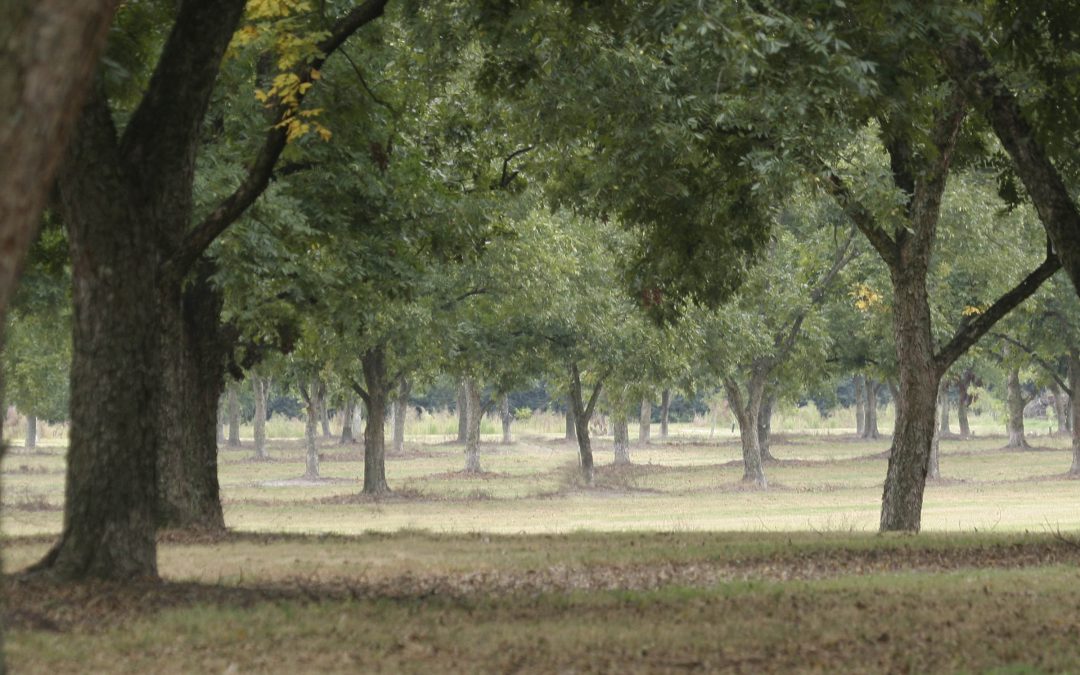
Pecan tree grove in North Florida. UF/IFAS Photo: Thomas Wright.
Site Selection – Pecan trees are native to the river valleys of North America. They perform best in deep, fertile, well-drained soils. The key is that the soil is well-drained. Pecan trees will not do well in soils that hold a lot of water and do not drain quickly. Pecan trees also need space to grow. Trees should be planted at least sixty feet apart and at least sixty feet from other large trees and structures. This will allow adequate light for the trees produce a good crop.
Disease Resistance – Pecan scab is the most detrimental pecan disease in the southeast. Trees advertised as scab resistant in the past may have become more susceptible over time. A few varieties that seem to be available at tree farms and have maintained their scab resistance are ‘Caddo’, ‘Elliot’, ‘Lakota’, and ‘Gafford’. Newer varieties that currently have good scab resistance are ‘Avalon’, ‘Huffman’, and ‘Whiddon’. However, these newer varieties may be more difficult to find at nurseries and farm stores.
Pollination – Pecan trees produce both female and male flowers on the same tree. Trees are split into two pollination groups. Type I pollinators produce mature pollen before their female flowers are receptive and Type II trees produce receptive female flowers before their pollen is mature. Timing of flower maturity may change with tree age, but it is a good practice to plant a Type I tree along with a Type II tree to ensure a good crop in each tree. A pollination compatibility chart can be found at UGA Pecan Compatibility Chart.
Planting – Commercially, pecan trees are most commonly planted as bare-root transplants, but container-grown trees can also be used. Bare-root trees are usually cheaper and more readily available. They should be planted while dormant, between December and March and should be planted the day they are delivered. If the root system looks dry, soak the trees in water for a few hours before planting. Container-grown trees can be planted any time of the year, but they have the best chance of survival if planted during dormancy. Trees should be planted at the depth they stood at the nursery or the depth they were planted in a container. Planting holes should be at least 18 inches wide and only native soil should be used to fill in the hole. The main causes of death in young trees are planting too deep and inadequate moisture during the first two years following planting.
Pecan trees provide focal points in the landscape and a tasty treat for the belly. For more information on growing pecans and the benefits of pecans please see these Pecan Publications from the University of Georgia.
Are you a homeowner in Florida? Do you have citrus on your property? Consider helping the University of Florida/IFAS Extension by taking a survey!
This survey is part of a research project carried out by the UF/IFAS to gather information on citrus pests in residential settings in Florida. This survey is designated for Florida residentswho have citrus on their property that are not intended for commercial use. The outcomes of this survey will serve to develop appropriate control methods against critical citrus pests for dooryard citrus. We kindly ask that you complete all questions on this survey which will take approximately 20 minutes.
The University of Florida is conducting a survey among Florida homeowners that have citrus on their property. This survey is supported by USDA-NIFA and is about pests that might be found on citrus and how to manage them. The survey should take only 10 min and will help the University of Florida to develop an Extension program adapted to residential areas.
Thank you for your help!
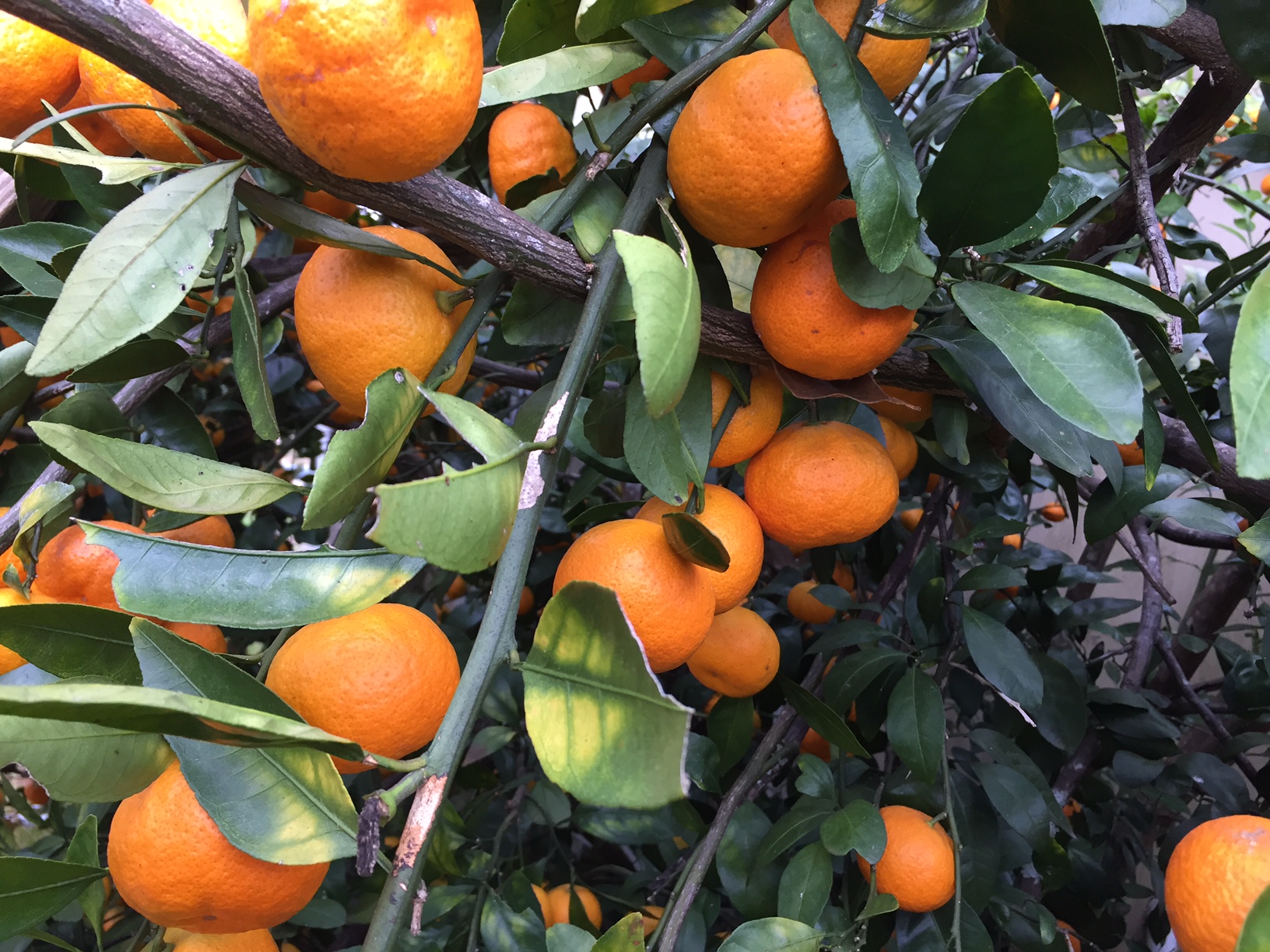
Citrus: Bearing Branches. Image Credit Matthew Orwat, UF/IFAS
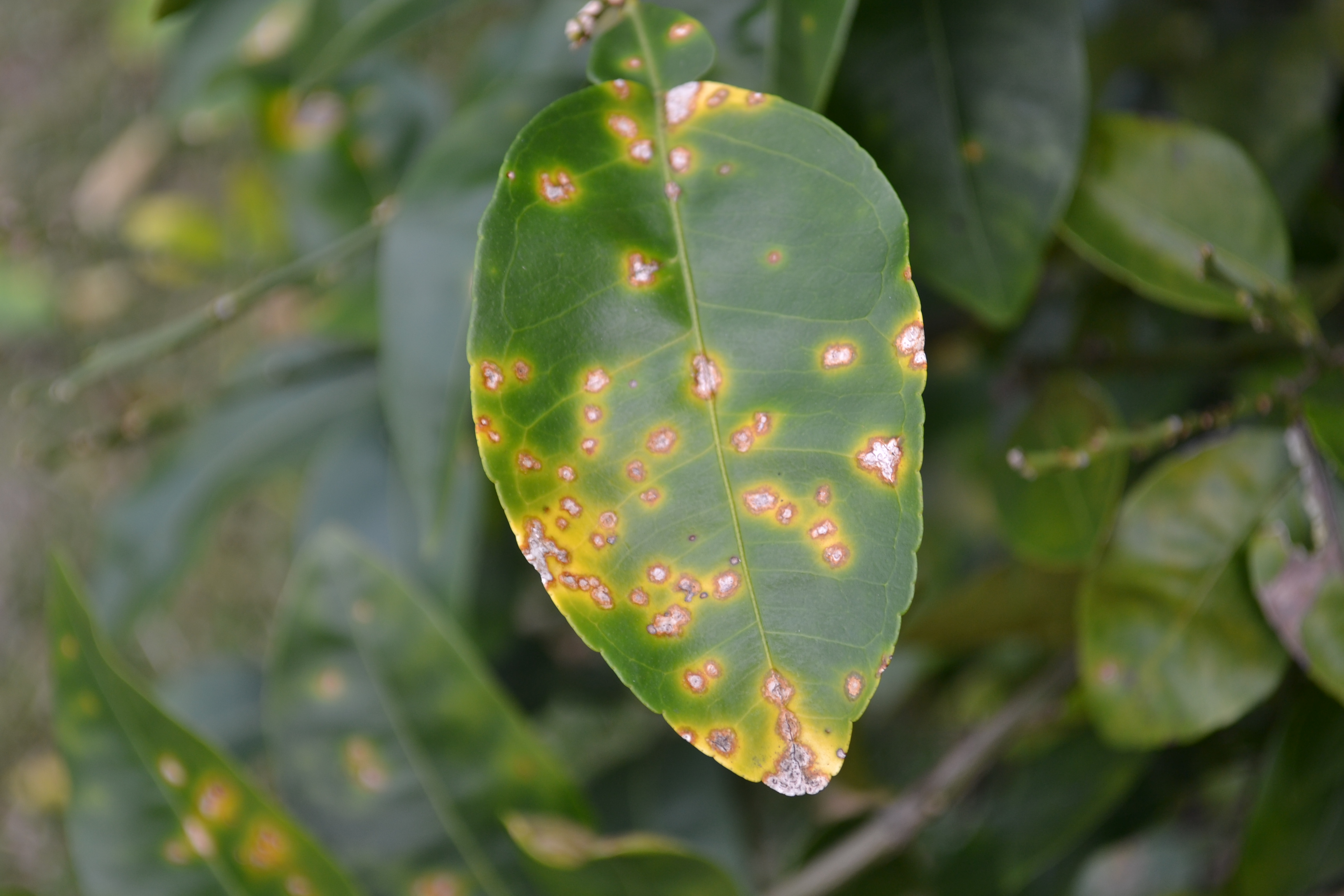
Citrus canker has made its way to Escambia County and may be more widespread that we realize. This bacterial disease was first seen in Northwest Florida almost 10 years ago in Gulf Breeze. Given time and the ease of transmission of this disease, we are now seeing affected citrus trees in both the east and west portions of Escambia County.
This disease is specific to citrus with grapefruit, lemon, and lime being the most susceptible to infection. The disease can infect all above ground tissues and often enters through natural openings and wounds of leaves, stems, and fruit. If you find an infection early in an isolated area of the tree, you can prune out and double bag the affected tissue for disposal. Often times, the disease is noticed only after a considerable amount of tissue and fruit are affected making it difficult to keep the disease in check.
Since the bacteria is so easily transmitted through rain and wind, it is difficult to prevent movement during our frequent storm events. People can also spread the disease by movement of unregulated citrus trees, on equipment, and even on clothing.
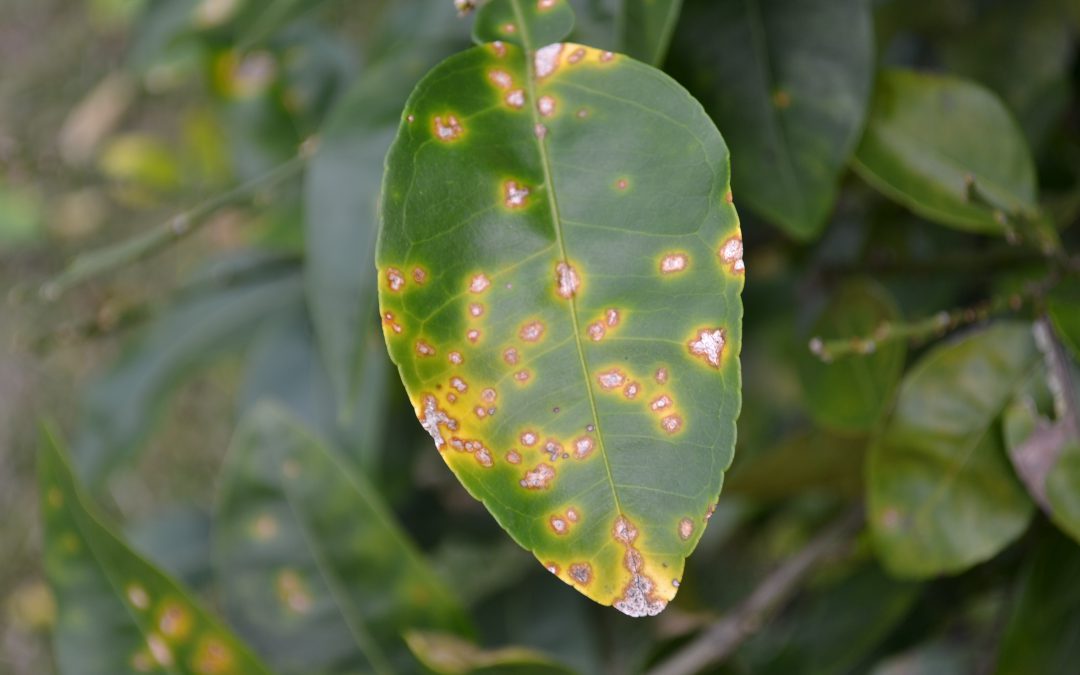
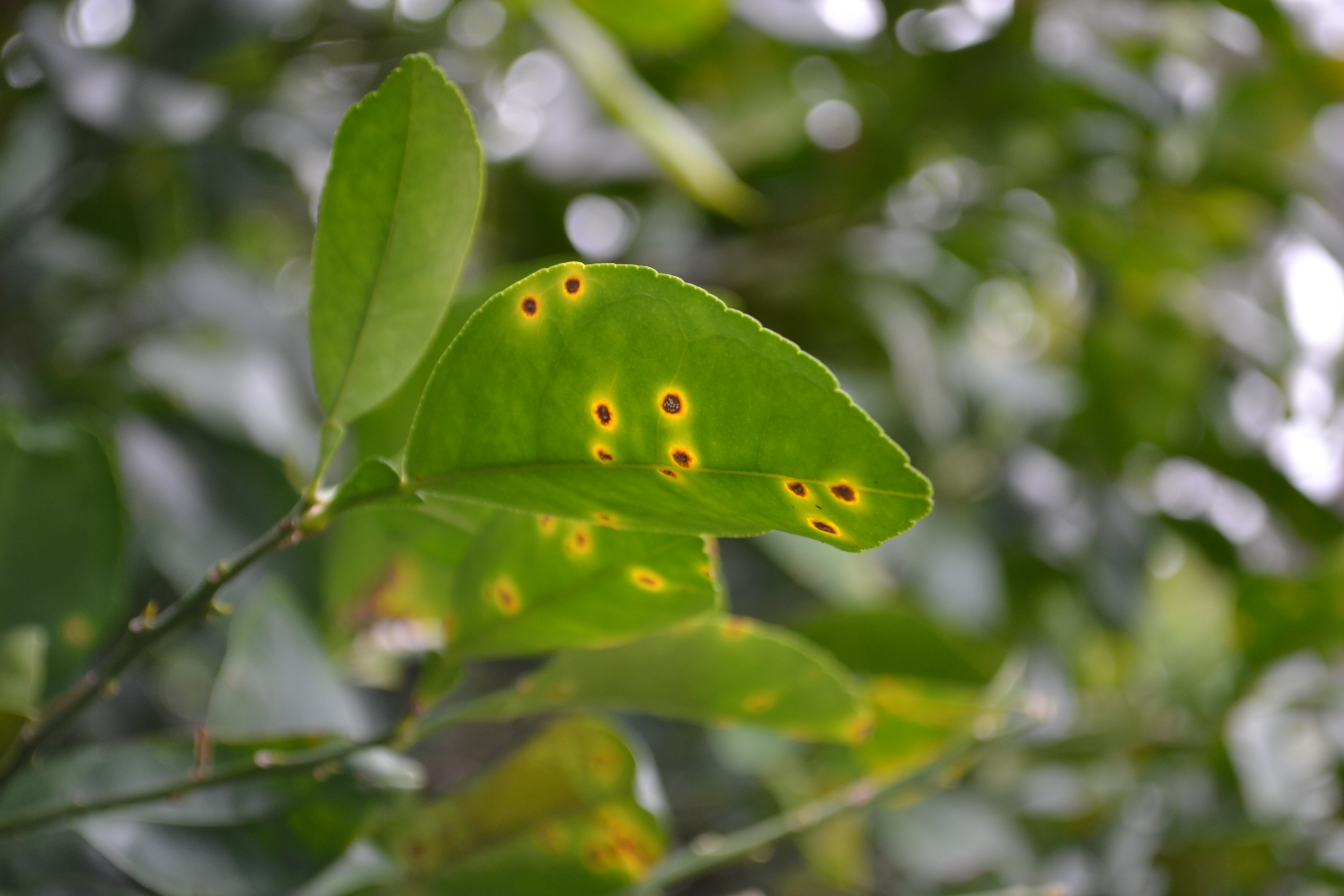
Citrus canker lesions appear on both the upper and lower surfaces of the leaves. Photo by Beth Bolles, UF IFAS Extension Escambia County
Lower surface with citrus canker. Photo by Beth Bolles, UF IFAS Extension Escambia County
If you suspect a citrus in your landscape has canker, do not bring a sample to your Extension office for identification. Take a photo of plant symptoms of upper and lower leaves, fruits, and stems so that your local Extension educators can assist with identification. The University of Florida publication https://edis.ifas.ufl.edu/publication/PP323 has quality photos and descriptions of the different stages of citrus canker, along with photos of other citrus issues.
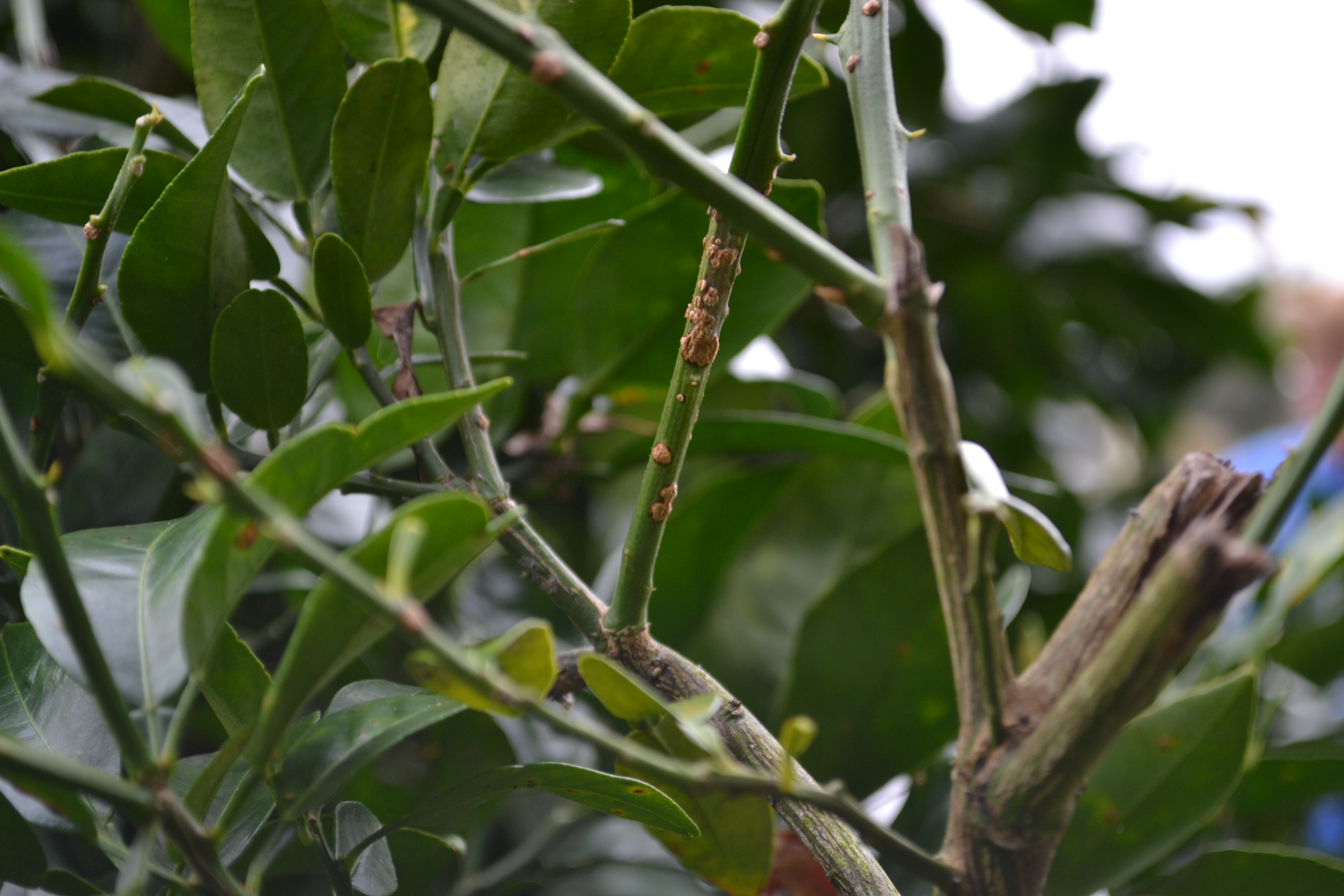
Stem lesions on grapefruit. Photo by Beth Bolles, UF IFAS Extension Escambia County.
The bad new for homeowners is that there is not a treatment to cure citrus canker. If the infection is small (a few leaves or a branch), it may be possible to remove and dispose of the material, following proper sanitation guidelines. Homeowners may also suppress a small infection on fruit by using copper-based fungicides, applied at appropriate intervals. These fungicides only protect plant tissue for a short time by acting as a barrier to infection. See this UF publication for timing of copper sprays for fruit.
Once susceptible citrus are heavily infected, trees will have fruit and leaf drop, along with general decline and dieback. At this stage of the disease, homeowners should strongly consider removing the tree. If it can be burned on site in accordance with local burn laws, that keeps the material contained and may reduce disease transmission. Otherwise, all material should be double bagged and sent to a landfill. Do not compost any material onsite or at local composting facilities. Be sure to follow disinfecting techniques outlined in the University of Florida publication https://edis.ifas.ufl.edu/publication/PP323 for tools, hands, and clothing.
Since management of citrus canker is so difficult, prevention is the best method to protect your tree. If you are considering a citrus, choose a more resistant selection outlined in the UF publication, Table 2. Always purchase a citrus from a certified nursery and follow state guidelines which prohibits all propagation of citrus, unless registered to do so.
The Q&A on Subtropical Fruits offered valuable information on many types of subtropical and temperate fruits of interest to homeowners. Below are the reference materials related to specific questions that were asked along with notes from the panel discussions.
Papayas are grown from a seed, not from air layering or grafts. There are some disease issues from Papaya ringspot virus. May have to start new plants. Less than a year from seed to fruit. Seed can be all male, all female, or have both male and female flowers. Need to get rid of the males. Male flowers hang off the tree where females stick to the stem more.
What are the best varieties of limes to grow in the Panhandle? Growing “Tahiti” Limes in the Home Landscape: https://edis.ifas.ufl.edu/publication/CH093
Tahita and Persian limes are in retail nurseries. These are cold sensitive so plant in protected areas. Key limes would need to be in a container for most people.
Rangpur lime is a lemon and mandarin cross.
Bananas continually produce nice foliage but do not form fruit in 5 years. What to do? Maybe not spend any more time trying to get fruit. If the bananas are in a large clump, you don’t want to have a large clump. Cut them back so that you have 3 bananas, one large, one medium, and one small so that you get lots of light. That is the key to fruit. Remove brown leaves.
Can we grow a Barbados cherry successfully? Malpighia glabra, Barbados Cherry: https://edis.ifas.ufl.edu/pdf/FP/FP39000.pdf Small tree to about 6 feet x 6 feet. Mild flavor. Not really suitable for North Florida. Needs sunlight for fruit.
Can we get the transgenic papaya that is immune to the Ringspot virus? TREC Fruit Specialist has the papaya but it is not legal to introduce them into Florida at this time.
Advice on growing kiwi vine. Growing Kiwis in FL: https://nwdistrict.ifas.ufl.edu/hort/2019/04/09/kiwis-a-golden-opportunity/ Temperate fruit that requires chill hours. Golden varieties developed by Auburn University. AU Golden Dragon and AU Golden Sunshine. Need a substantial trellis. Male and female vines so male vine for every 2-3 females.
Papayas do not like the cold. Probably not likely to produce a fruit but can give it a try.
What about pineapples? Good option in a container. Bromeliad that is terrestrial that is watered through the roots.
I planted an arbequina olive tree and it’s struggling. Keeping in pot and protected from freezing but not thriving. Olives for Your FL Landscape: https://edis.ifas.ufl.edu/publication/EP515
Olives like a more consistent temperature than the Panhandle offers. Needs excellent drainage.
Mexican avocado has survived freeze and flooding but still not thriving. Why? Avocado IPM: https://trec.ifas.ufl.edu/tropical-entomology/index.php Hass avocado, smaller ones from CA and Mexico. South Florida is too warm to grow Hass but it may work in North Florida. Green skinned avocado is grown in South Florida. More tasty. Florida avocados need a little cool weather to initiate flower and then fruit.
Avocados will not like wet soils.
Will lychee and avocado grow in Pensacola? Red fruit, white inside, similar to a grape but sweeter. Needs chill hours. 2018 lychee mite came into Florida and now in 13 counties. Difficult to manage.
Shade-tolerant subtropical fruits? Fruit needs sun. Monstera deliciosa, Swiss cheese plant, produces an edible fruit grows in shade. Definitely needs protection. DO NOT eat fruit early or you will have mouth pain. Fruit should be falling apart.
What subtropical fruits are garnering the most interest in the panhandle right now? Loquat Growing in the Florida Home Landscape: https://edis.ifas.ufl.edu/publication/MG050
Mangos are of most interest in South Florida
What about akee? Caribbean fruit related to lychee. Do not eat before ripe or you will die.
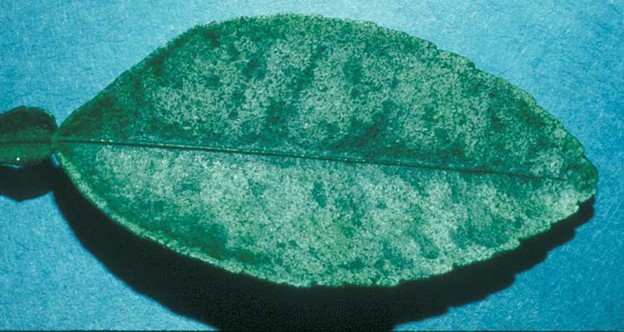
Citrus red mite leaf damage, red mites may overwinter, but are susceptible to control by dormant oil. Image UF / IFAS HS-806
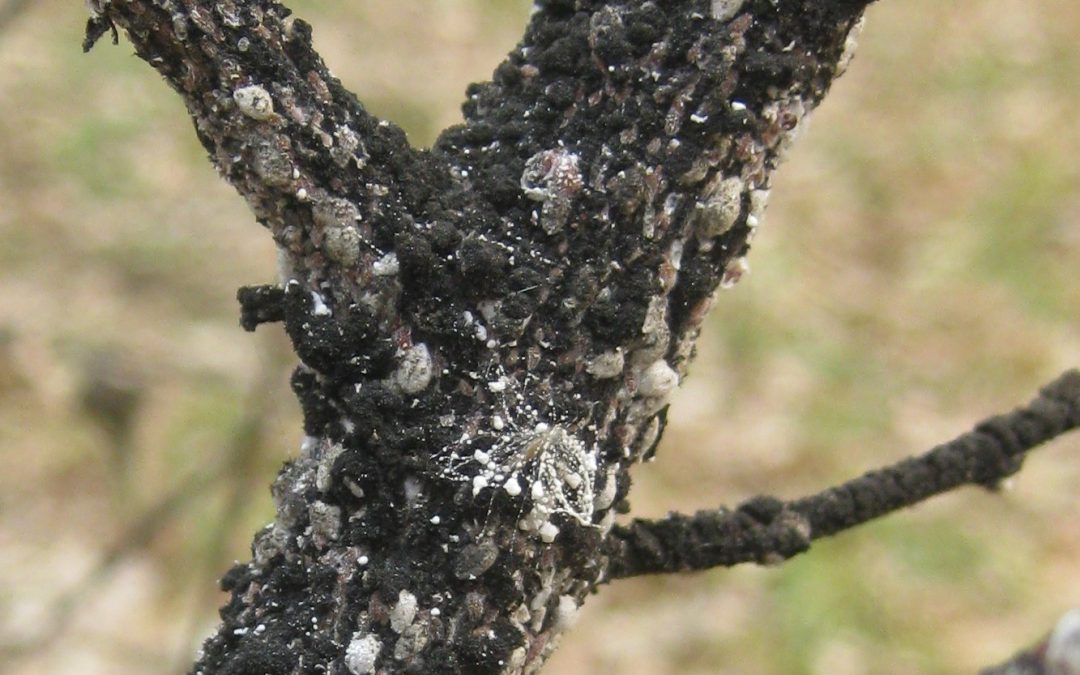
During cold winter weather, one doesn’t often think about spraying fruit trees and ornamental shrubs for spring insects and diseases. It’s just not on the radar, but it turns out that January and February are the best time to apply dormant sprays to combat insect and disease issues. Many ask, “What are dormant sprays”?
Dormant sprays act on insects or disease pathogens differently. Many insects overwinter on trees and shrubs, either as eggs or immobilized in a protective shell (scale insects). Horticultural oils applied during cool dormant conditions work by smothering the eggs of some insect species or encapsulated scale insects. Since they cannot breathe, they die.
On the other hand, dormant sprays containing copper or sulfur actually kill latent fungal spores that are ready to infect the moment weather warms. They also burn tender young plant tissue, so can only be used when the plant is not actively growing. These preventative sprays can delay disease incidence in early spring and allow for reduction or elimination of regular fungicide applications. The old adage “an ounce of prevention is worth a pound of cure” surely applies to these situations.
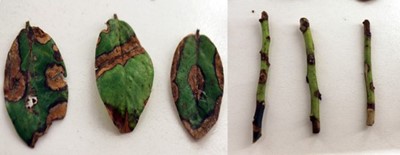
Phomopsis leaf and stem symptoms. Dormant fungicide sprays may lessen the severity of this disease. Credit: N. Flor, UF/IFAS
There are several products on the market for dormant applications.
Dormant oil is a type of horticultural oil, made of refined petroleum products, for application on trees or shrubs when the trees are not actively growing. It has been in use for over 100 years. They are effective in the suppression of scale insects and mites. Care must be used to not apply them when daytime temperatures are above 75 degrees or night temperatures below 28 degrees. Other horticultural oils exist that may be applied during the growing season to control soft-bodied insects, but not during extremely hot weather. Many different brands exist, some are certified organic. They can be purchased at most garden centers, but the best selection is usually found at your independent nursery or farm store.
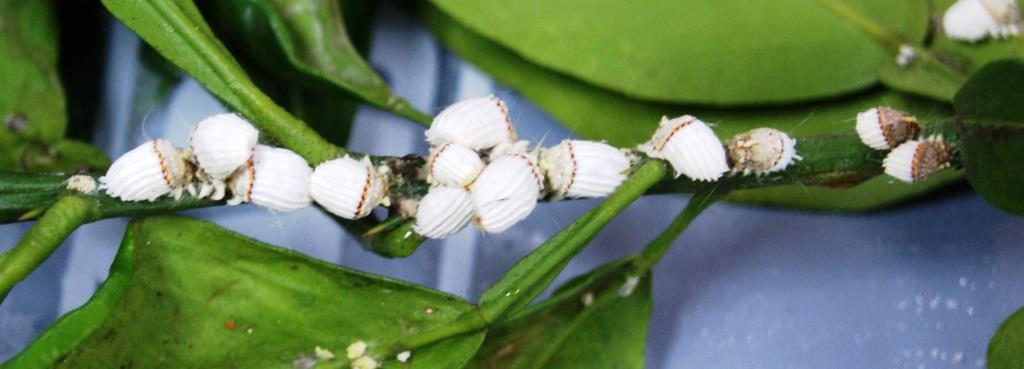
Cottony Cushion Scale, often controlled by Dormant Horticultural Oil. Image Credit, Matthew Orwat, UF / IFAS Extension
Dormant fungicides can be classified into two groups. Those that contain copper and those that contain sulfur. The most common preventative remedy for fungal disease had been lime-sulfur. It is no longer available in small home garden quantities due to shipping container restrictions, it can be purchased online in larger quantities for use in Florida. When applied to dormant plants, lime sulfur actually works by sanitizing the stem, killing all fungal spores. It cannot be used during the growing season since it burns leafy tissue. Caution must be taken when mixing and loading since, being an acidic product, can burn the skin. Wear chemical resistant gloves when applying (bought at your local hardware store for $4.00-$10.00), safety goggles and follow all label directions carefully since it is caustic and labeled DANGER. Also, never apply lime-sulfur within one month of horticultural oil applications. It should be applied in early to mid February, avoiding hard freezes for the 24 hours around application time. Sulfur based fungicide sprays may also be used instead of Lime-Sulfur as a dormant application.
Dormant copper sprays are effective on both bacterial and fungal pathogens and used primarily on fruit crops for the suppression of many fruit diseases including fire blight, bacterial leaf spot, powdery mildew, downey mildew and anthracnose. There are several different brands of copper fungicide preparations on the market, most nurseries and garden supply centers will have some in stock. Always read the label for proper personal protective equipment and dosage rates, to avoid copper buildup in the soil over time.