When you hear about oyster farming, you typically hear the word “seed” and how it is highly important to the future of the farm. While it might not be a typical seed that produces agricultural crops like corn, this seed is a living, breathing (albeit in the water) organism that produces a beautiful, cupped oyster. Depending on market size demand and requirements, it could take anywhere from 8 to 24 months to reach “shucking ready” size. Let’s take a dive into the timeline of an oyster, from seed to shuck.
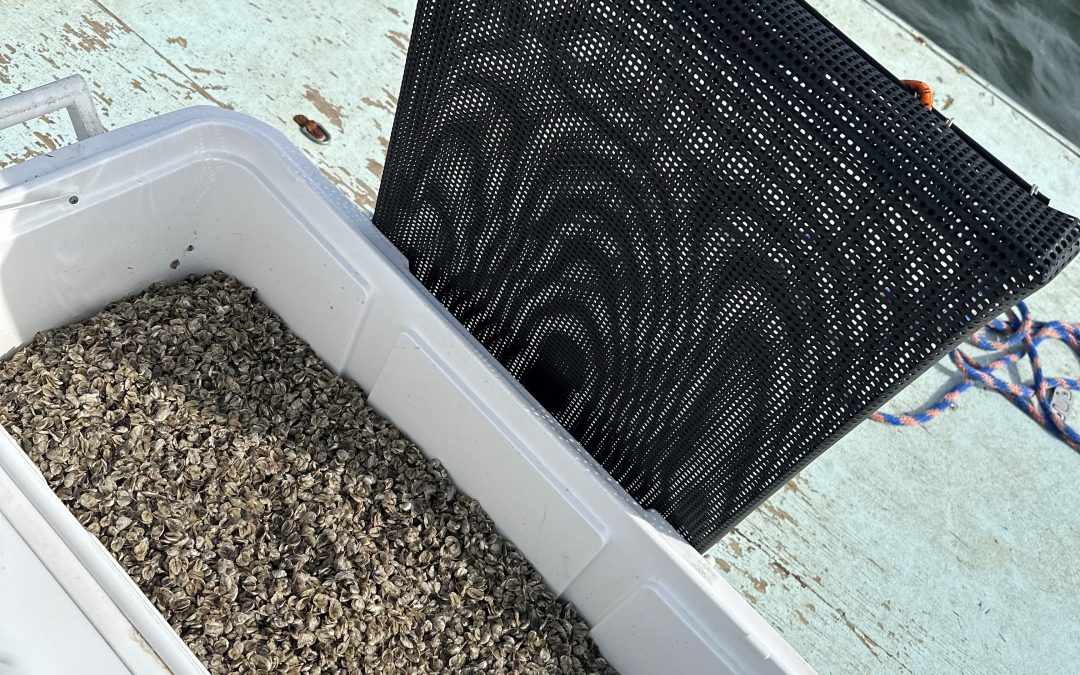
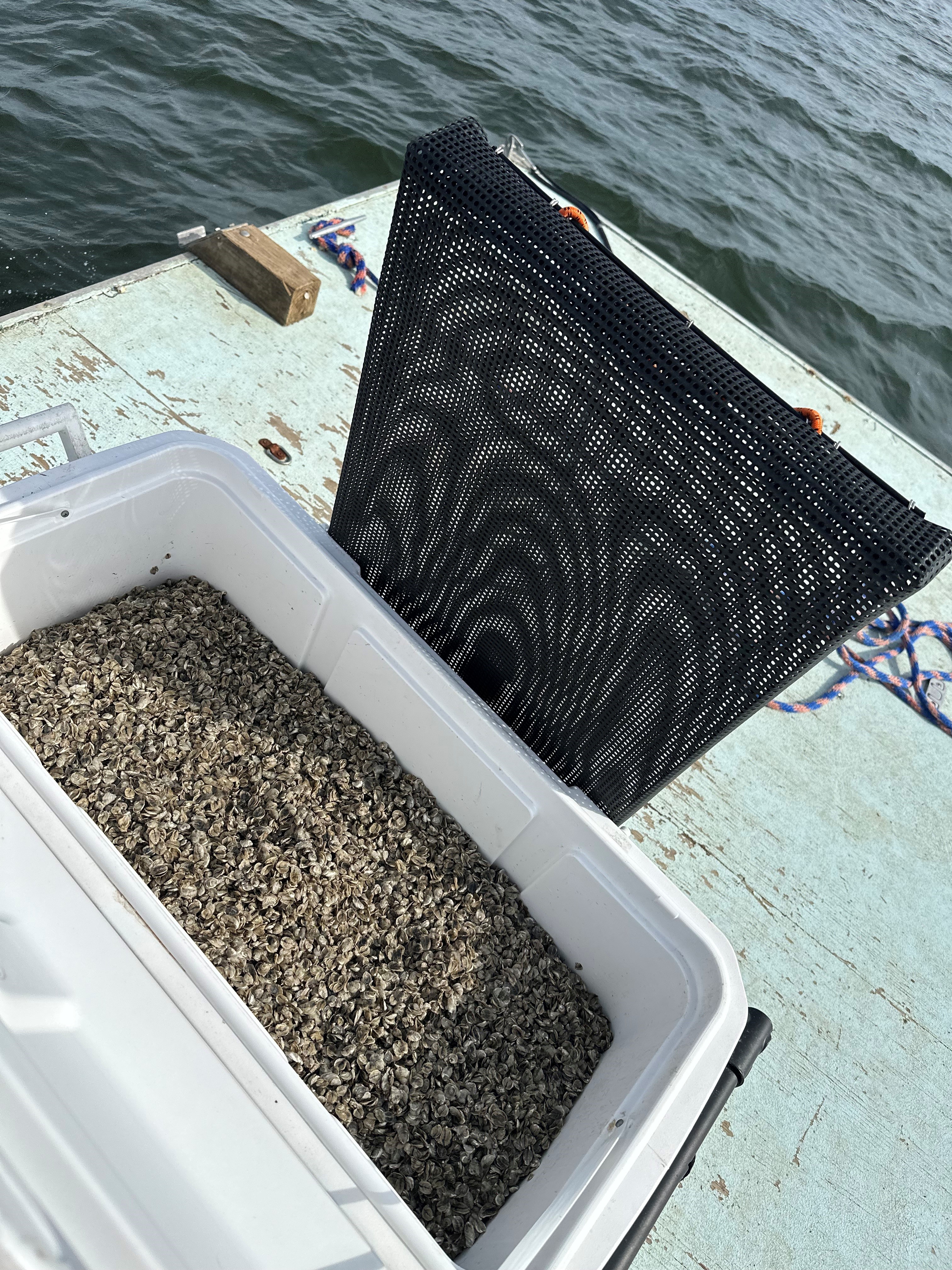
A cooler full of R6 oyster seed headed out to the farm – Grayson Bay Oyster Company
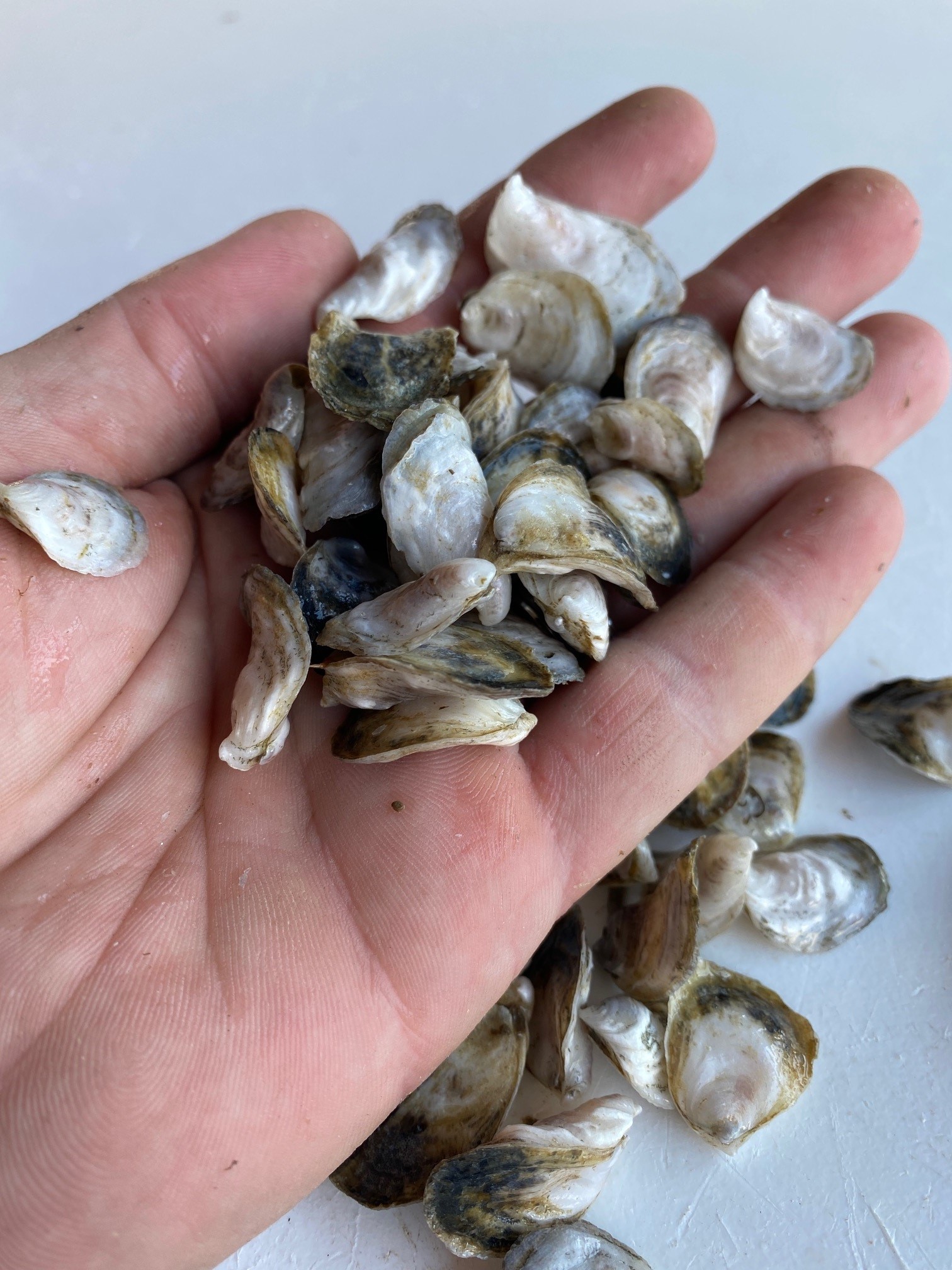
Oyster farmers typically buy seed from an oyster nursery or hatchery, where they carefully spawn male and female oysters together in individual spawning chambers. Depending on the farmer’s needs, they can produce either diploid or triploid oyster larvae (more on triploids next week). These larvae are free-swimming for the first 2-3 weeks of their life until they develop into pediveligers (Oyster 101). Hatcheries will, for lack of better terms, mix the pediveligers with very tiny grains of ground-up oyster shells. These pediveligers will then attach to a single grain and begin to form into a “seed” oyster. Seed costs range and vary from year to year, and this cost is usually one of the biggest financial purchases oyster farmers can make. Seed is sold by size, starting at 6 millimeters (typically called size R6), and by increments of 1,000. Hatcheries and nurseries are located all along the Gulf Coast, but Florida law requires seed put in the Gulf of Mexico waters and estuaries must come from Gulf of Mexico hatcheries, and the same rules apply to Atlantic waters.
Oyster Seed (>R16) – Thomas Derbes II
Once purchased, these seed oysters make it to their homes in beautiful nutrient-rich waters and grow at a steady rate, and can reach an overall size of 2 inches in 4 to 9 months. During those months, the seed are filtering gallons of water per oyster per day, helping sequester carbon in their shells and consuming large amounts of plankton and algae that could contribute to the eutrophication of the bays. Oyster farmers will check on the seed almost weekly, changing bag mesh sizes and sorting the seed by size. Farmers will also take this opportunity to check for any oyster predators and swiftly evict them from their all-you-can-eat buffet. Sorting is done by using a “tumbler” that has a long drum with holes of varying sizes. This tumbler also helps clean the oyster and chip away at the lip of an oyster shell, causing the oyster to grow deeper and create a beautiful cup.
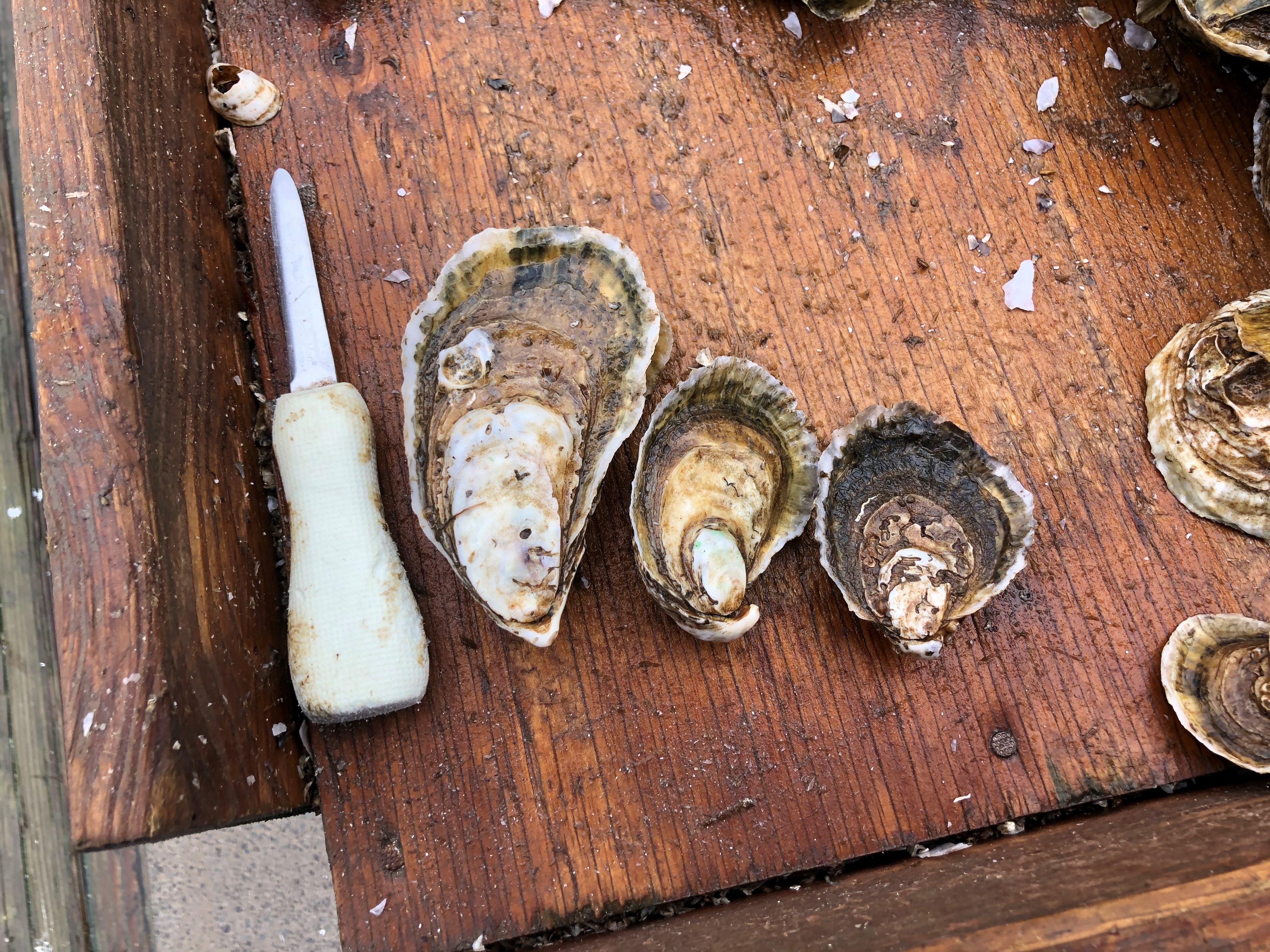
Farmed oysters do not have a size limit, but most farmers stick to a 2.5 to 3-inch size oyster. These oysters have filtered over 7,000 gallons of estuary water individually and sequestered a very generous amount of carbon, in the form of calcium carbonite (more here), in their shells in their first year of life. Once deemed ready for harvest, farmers will pull them out of the water and get them quickly in the fridge, following strict biosecurity guidelines and regulations to provide a safe product year-round.
Some oysters are fast growers! These were apart of the same spawn. – Thomas Derbes II
And there you have it, from seed to shuck. With the holidays coming up, and seafood sometimes being a part of the holiday plans, reach out to the local oyster farmers in your area to reserve a dozen or two for your favorite uncle. You can also wow the crowd with this very fancy mignonette recipe below!
Lemon Champagne Mignonette
Juice From 2 Local Meyer Lemons (They’re in Season!)
1 Shallot Chopped Finely
½ cup Champagne Vinegar
¼ cup Red Vinegar
1 tbsp each of Green and Pink Peppercorns
24 Local Farm Raised Oysters (For the Environment!)
1. In a bowl, add the juice of Meyer lemons and shallots. Let it marinate for 10 minutes.
2. Add champagne vinegar, red vinegar, and peppercorns to the lemons and shallots.
3. Chill for at least 30 minutes in the fridge.
4. Shuck oysters and top with freshly made mignonette. Enjoy!
I began this project in 2022 wanting to know which of the 40 species of snakes known to inhabit the Pensacola Bay area were encountered by people. I also wanted to know where they were encountering them and what time of year. This information would be used in my Living with Snakes program and provide better information than field guides and publications that covered a broader area. The 40 local species were divided into six categories: small snakes (<12”), mid-sized snakes (12-24”), large snakes (> 24”), water snakes, venomous snakes, and non-native snakes.
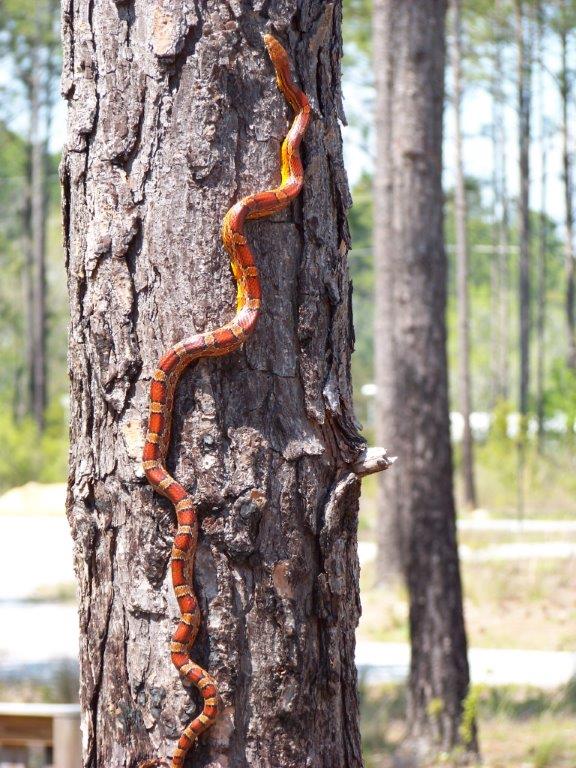
The red rat snake, or corn snake.
Photo: Molly O’Connor
Which snakes did people encounter?
In 2023 there were 215 snake encounters between Jan 1 and Dec 10. This is a 136% increase over 2022. This is probably not because of more snakes but rather more residents participating in the project.
Of the 40 species possible, 24 (60%) were encountered. This is a 13% increase over 2022. Again, I feel this is due more to increasing participation.
The most frequently encountered species were:
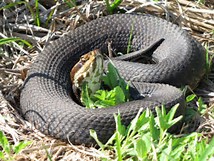
Cottonmouth – 49 records (23%)
Southern Black Racer – 35 records (16%)
Banded Water Snake – 26 records (12%)
Eastern Garter Snake – 17 records (8%)
Eastern Coachwhip – 11 records (5%)
The Southern Black Racer was the most frequently encountered snake in 2022 (23%), followed by the cottonmouth (16%). As you can see, the frequency of encounters remained the same this year, but the species flipped. The Eastern Ribbon Snake, which was third at (14%) in 2022 did not make the top five this year.
The rarest snakes – those encountered only once or not at all – included:
Encountered once:
Rough Green Snake
Eastern Kingsnake
Eastern Coral Snake
NOT Encountered at all:
Smooth Earth Snake
Marsh Brown Snake
Southern Hognose Snake
Mole Kingsnake
Scarlet Kingsnake
Eastern Indigo Snake
Black Swamp Snake
Glossy Crayfish Snake
Queen Snake
Midland Watersnake
Yellow Bellied Water Snake
Diamondback Water Snake
Western Green Water Snake
Western/Eastern Mud Snake
Rainbow Snake
Of the four species only encountered once, each is considered quite rare for encounters. The Eastern Kingsnake was once common but has declined over the years. The Eastern Coral Snake is quite common, but its behavior and activity make it rare to encounter. Some snake experts have never seen one in the wild.
Of the 16 species not encountered at all, three are small snakes whose size and habits make them difficult to detect. Two are mid-sized but their habits also make them hard to detect. Nine are water snakes who live in swampy environments along our rivers. You would have to be out there to encounter them, and few people are. Two species, the Southern Hognose and the Eastern Indigo Snake, are state and federal listed and are extremely rare.
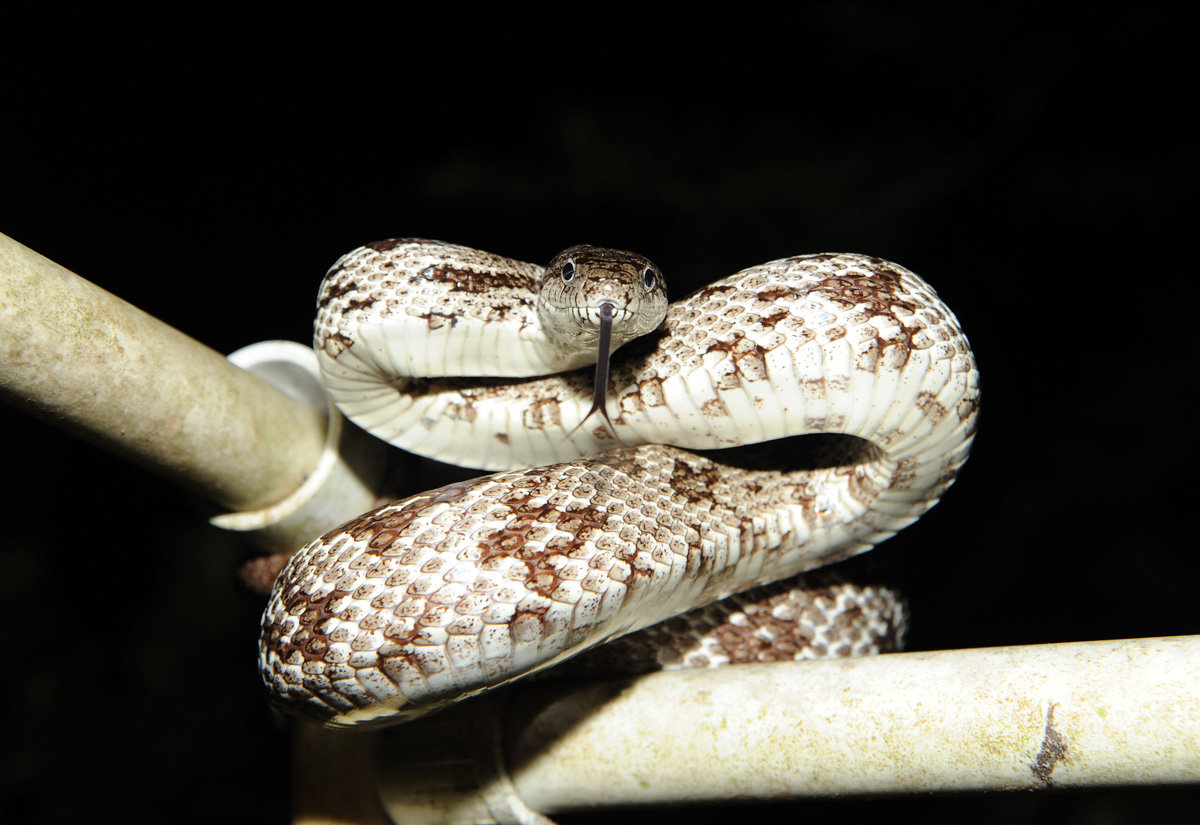
The gray rat snake, also known as the oak snake.
Photo: Nick Baldwin
Where did people encounter these snakes?
I divided the bay area into four regions: North Escambia, South Escambia, North Santa Rosa, and South Santa Rosa.
North Escambia – 13 species (54% of the total 24 species found this year).
South Escambia – 16 species (67% of the total).
North Santa Rosa – 17 species (71% of the total).
South Santa Rosa – 11 species (46% of the total).
There is not much difference between these. In Escambia County more encounters occurred in the southern portion of the county. For Santa Rosa County it was the opposite. Whether this is because there are more snakes in these locations, or more participants in the project cannot be said. We will pay more attention to this next year.
Species that were found in ALL four regions included:
Eastern Garter Snake
Gray Rat Snake
Corn Snake
Southern Black Racer
Coachwhip
Cottonmouth
Species only found on one of the four regions included:
Eastern Kingsnake
Florida Pine Snake
Brahminy Blind Snake
Rough Earth Snake
Pinewoods Snake
Eastern Coral Snake
What time of year were these snakes encountered?
Winter – 57 encounters; 13 species
Spring – 80 encounters; 20 species
Summer – 52 encounters; 18 species
Fall – 17 encounters; 10 species
There was an obvious decline in encounters in the fall. Many species are beginning to settle in for the winter this time of year, but many others breed, and thus should be moving (at least the males). I know some volunteers ceased looking, but others I know who search weekly, or daily, did not encounter as many snakes.
Only one species was encountered every month of the year. This was the cottonmouth.
The Eastern Garter Snake was seen every month except June and October; it seems to be active year-round.
The Southern Black Racer was missing in January, November, and December – suggesting a dislike for the cold.
NOTE: many of these hibernating snakes will emerge on warmer sunny days during winter and can be encountered.
SPRING was the time of year with the highest encounter rate and species encountered. This would make sense in two parts; (1) they are emerging seeking food after non-feeding during winter, (2) they are emerging looking for mates because it is breeding season for many. Five species were only encountered in the early part of the year. Two species were only found in winter and one species was only found in the spring.
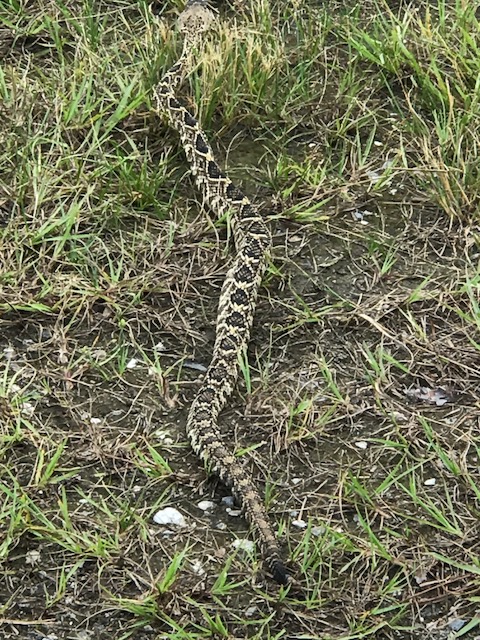
Eastern diamondback rattlesnake crawling near Ft. Pickens Campground.
Photo: Shelley Johnson
What about the venomous snakes?
As expected, most are concerned more about the encounters with venomous snakes. There are six venomous species listed in the state of Florida, four inhabit the Pensacola Bay area. All four were encountered in 2023.
Cottonmouth – was encountered in all regions, each month of the year, it was the most commonly encountered snake in our area this year.
Eastern Diamondback Rattlesnake – was encountered seven times, only during the spring and summer, and in three of the four regions in our area. This snake is pretty common but not commonly encountered where people most often reside and play. Though encounters do occur in residential neighborhoods, they are rare.
Dusky Pygmy Rattlesnake – was encountered six times, during spring, summer, and fall, and two of the four regions in the bay area.
Eastern Coral Snake – was encountered once, during the spring, and in only one of the four regions in the bay area. Again, this snake is actually quite common, but its behavior makes it difficult to encounter. So, encounters with this species are rare.
Summary
In 2023 60% of the known species of snakes that inhabit the Pensacola Bay area were encountered by residents at some time during the year. Most encounters occurred in the spring and summer and encounters occurred throughout the entire region. The cottonmouth was the most frequently encountered species this year but rare species, such as the Eastern hognose, Eastern kingsnake, and the Florida pine snake were seen – and that is pretty exciting. The snake diversity in the Pensacola Bay area seems good. There is concern that a non-native parasite decreasing the populations of some species in central and south Florida may make its way to the panhandle. We are participating in a project entitled Snake Lungworm Alliance Monitoring (SLAM) that collects deceased snakes for examination by researchers. If you find a deceased snake in good enough condition to be dissected, place it in a plastic Ziplock bag, label with the date, location (GPS preferred), and your contact information. You can then bring it to the Escambia County Extension office or freeze it and call me – (850-475-5230) or email roc1@ufl.edu and we will arrange pick up.
We plan to continue the Snake Watch Project in 2024 and encourage all who see snakes to contact me at the above email address. We will also be offering the Living with Snakes presentation. If your community group is interested in this talk, contact me.