by Larry Williams | Mar 25, 2021
As a boy in a small town in Georgia we had a St. Augustinegrass lawn. My dad started the lawn before I was born. That lawn was still doing fine when I left for college at age seventeen. I don’t remember weeds in the lawn during summer months. I do fondly remember winter “weeds” in that lawn.
To see clumps of winter annuals in our yard and in neighbors’ yards was a natural part of the transition from winter to spring. They added interest to what
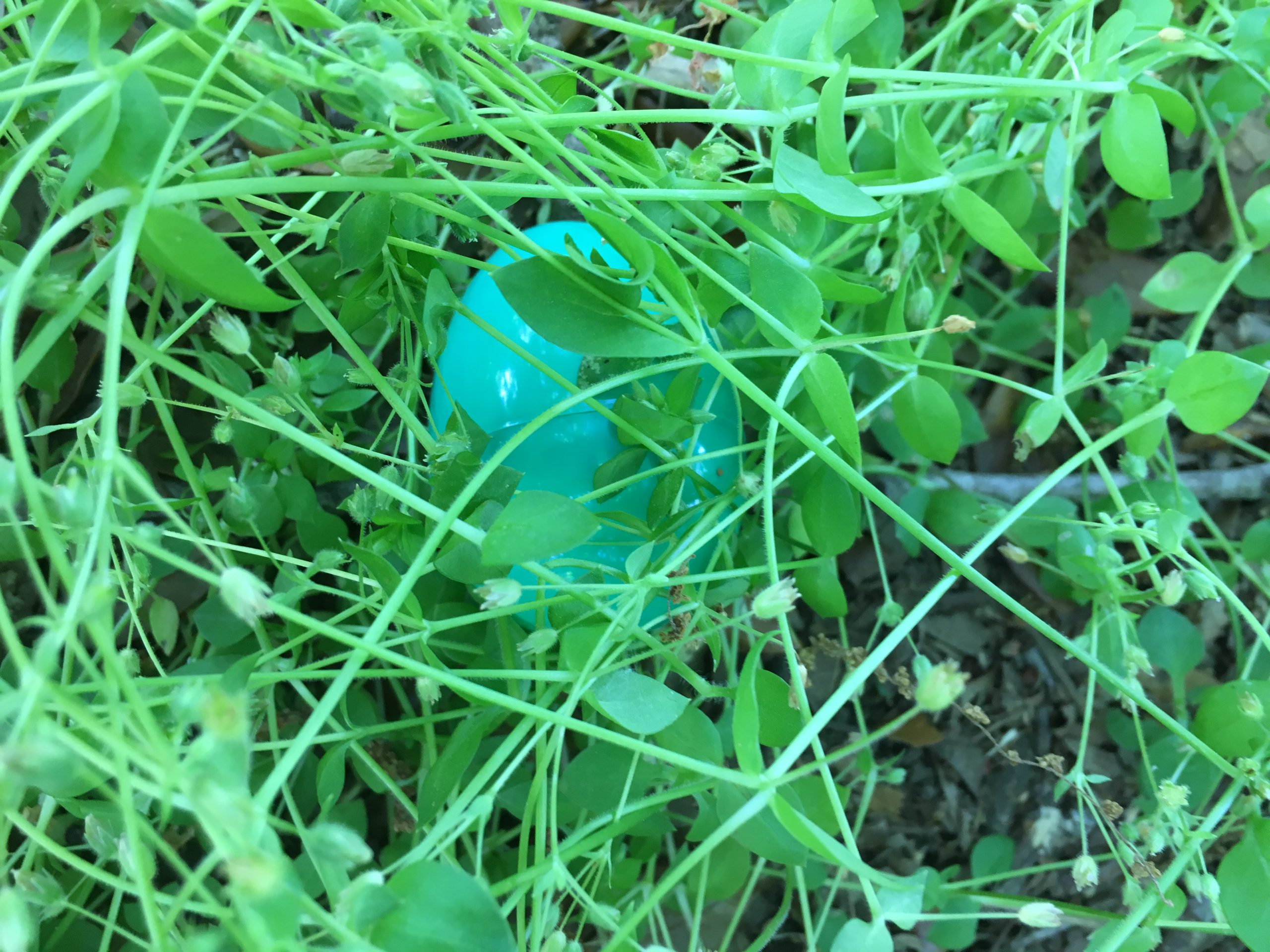
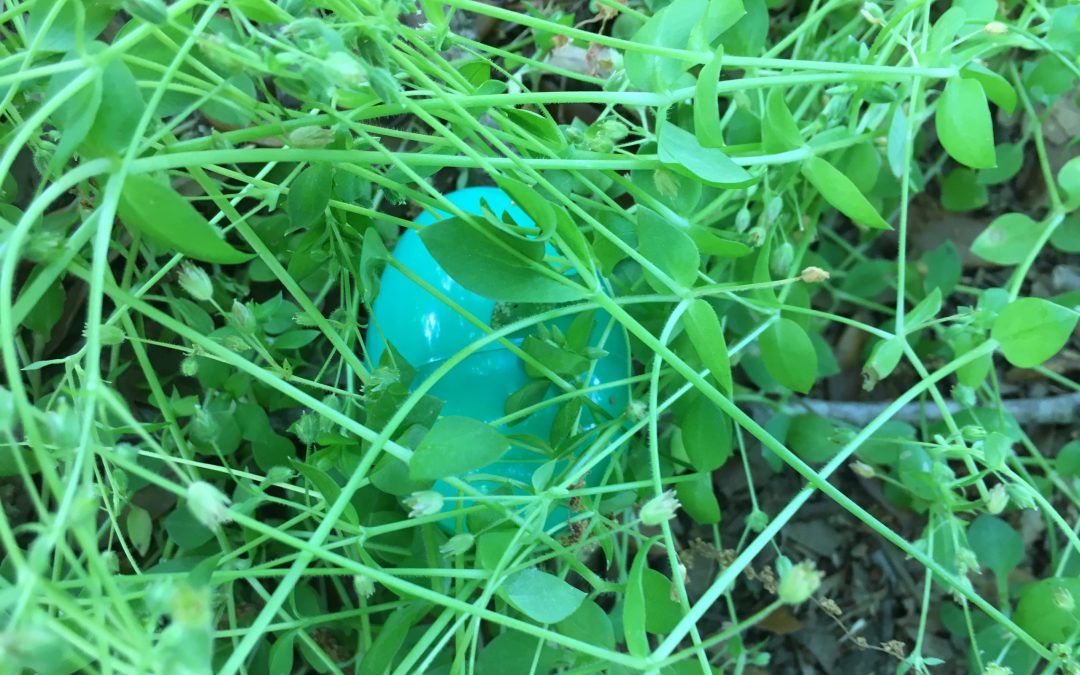
Blue Easter egg hidden in chickweed. Photo credit: Larry Williams
would have been a plain palette of green. It was expected to see henbit with its square stiff stems holding up a display of small pinkish purple flowers in late winter and early spring. A clump of henbit was a great place to hide an Easter egg, especially a pink or purple one.
Wild geranium, another common winter annual, offered another good hiding place for Easter eggs with its pink to purple flowers. Large clumps of annual chickweed would nicely hide whole eggs. Green colored eggs would blend with chickweed’s green leaves.
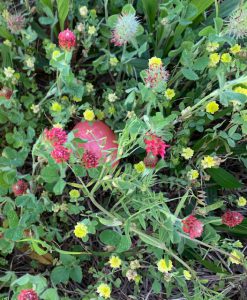
Pink Easter egg hidden in crimson clover & hop clover mix. Photo credit: Larry Williams
Crimson clover with its reddish flowers, hop clover and black medic with their bright yellow flowers were good hiding places for Easter eggs. Plus clovers add nitrogen back to our soils.
I never remember my dad using any weed killer, he rarely watered. The lawn was healthy and thick enough to be a deterrent to summer weeds. But during fall and winter as the lawn would naturally thin and go dormant, winter annual weeds would run their course.
I’ve heard that the sense of smell provides our strongest memories. I remember the first mowing of the season with the clean smell of chlorophyll in the spring air. It was refreshing. Once mowed and as the heat took its toll, by late April or mid-May, these winter annual weeds were gone. What was left was a green lawn to help cool the landscape as the weather warmed. The lawn was mowed high as St. Augustine should be, played on and typically not worried with.
Most people have winter weeds in their lawns that let us know spring is near. Perhaps we worry too much with these seasonal, temporary plants that may have wrongly been labeled as weeds. Besides, how long have we been doing battle with these weeds and they are still here. Most lawns have countless numbers of winter annual seeds awaiting the cooler temperatures and shorter days of early winter to begin yet another generation. By May they are gone.
by Matthew Orwat | Mar 25, 2021
Stinkbugs and their relatives are not always problematic in the flower or vegetable garden, but when they become so, they can suck the life out of our fruits and vegetables, create ugly abrasions, and destroy flowers such as roses.
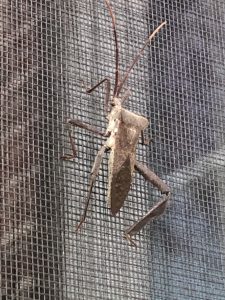
Over-wintering adult leaffooted bug emerging from hibernation . Image Credit Matthew Orwat, UF / IFAS Extension
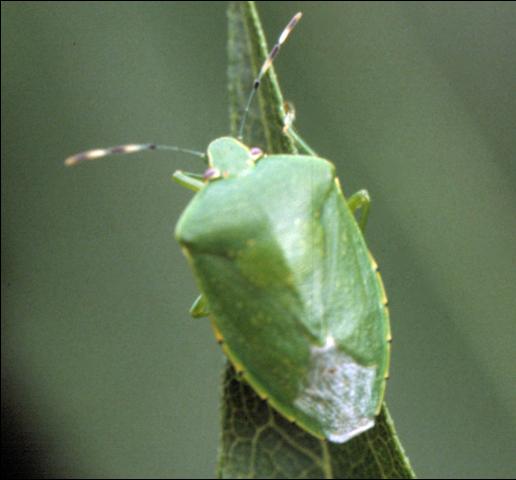
The green stink bug Acrosternum hilare (Say). Image and caption credit EDIS, Dr. Russ Mizell
What is a Stink Bug?
The stink bug (Pentatomidae family) is a major garden pest of a variety of fruits and vegetables including squash, peppers, tomatoes, peaches, plums, pecans and a variety of other edibles. They are known as a “piercing and sucking” insect because that’s the way they feed, by using their mouth, or proboscis, just like a needle to pierce the fruit and suck out the juices. This feeding leaves a damaged area of the fruit which may develop discoloration, rot or fungal disease and render the fruit unsaleable or inedible.
Who are “their relatives”
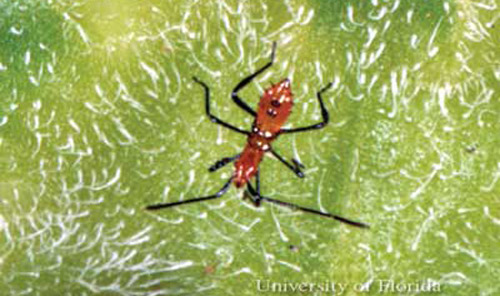
The leaf footed bug, Leptoglossus phyllopus (L), is a relative of the stinkbug and feeds in the same way, has a similar lifecycle and causes similar damage. They are usually slightly larger and have “leaf like” appendages on their legs which are their namesake.
What is their lifecycle?
In Florida, overwintering adult stink bugs will place a clutch, or tight group of eggs, on a host plant early in the growing season. If their preferred plant is not available, they use a variety of weeds and grasses to lay eggs upon and provide food for their young. After eggs hatch, they go through several nymph stages before they finally reach the adult stage. Stink bugs have multiple generations in a year, often four to five. They readily move to find preferable food sources and might appear in a garden without warning to feed and cause destruction.
Nymph of the leaffooted bug, Leptoglossus phyllopus (L.). Photograph by Lyle J. Buss, University of Florida.
How are they best controlled?
First of all, many stink bugs use weeds as host plants to gather and feed upon, so controlling weedy plants around vegetable and fruit gardens might limit their numbers. If stink bugs are a major problem, planting trap crops, such as sunflowers, is beneficial. Stink bugs prefer to feed on sunflowers more than some other vegetables. This situation can be used to the gardener’s advantage by mechanically killing or spraying stink bugs on trap crops while avoiding treating food crops with pesticides. More information on trap cropping can be found here.
Additionally, stink bug traps are available. These mechanically trap stink bugs, thus reducing their numbers in the garden, but need to be monitored and serviced regularly. Several species of parasitic Tachinid flies are also predators of stink bugs. These flies lay their eggs on adult stink bugs. The fly larva use the bug as a buffet, slowly killing the bug.
Stink bugs are difficult to control with insecticides, but some measure of control can be achieved at their nymph stage with various approved fruit and vegetable insecticides containing pyrethrins. These products are readily available at local garden centers and feed & seed stores.
For more information, please check out the following resources:
by Beth Bolles | Mar 18, 2021
Plants with variegated foliage are very popular landscape selections. As flowers fade on other plants, the colors of variegated foliage continue to add interest through multiple seasons.
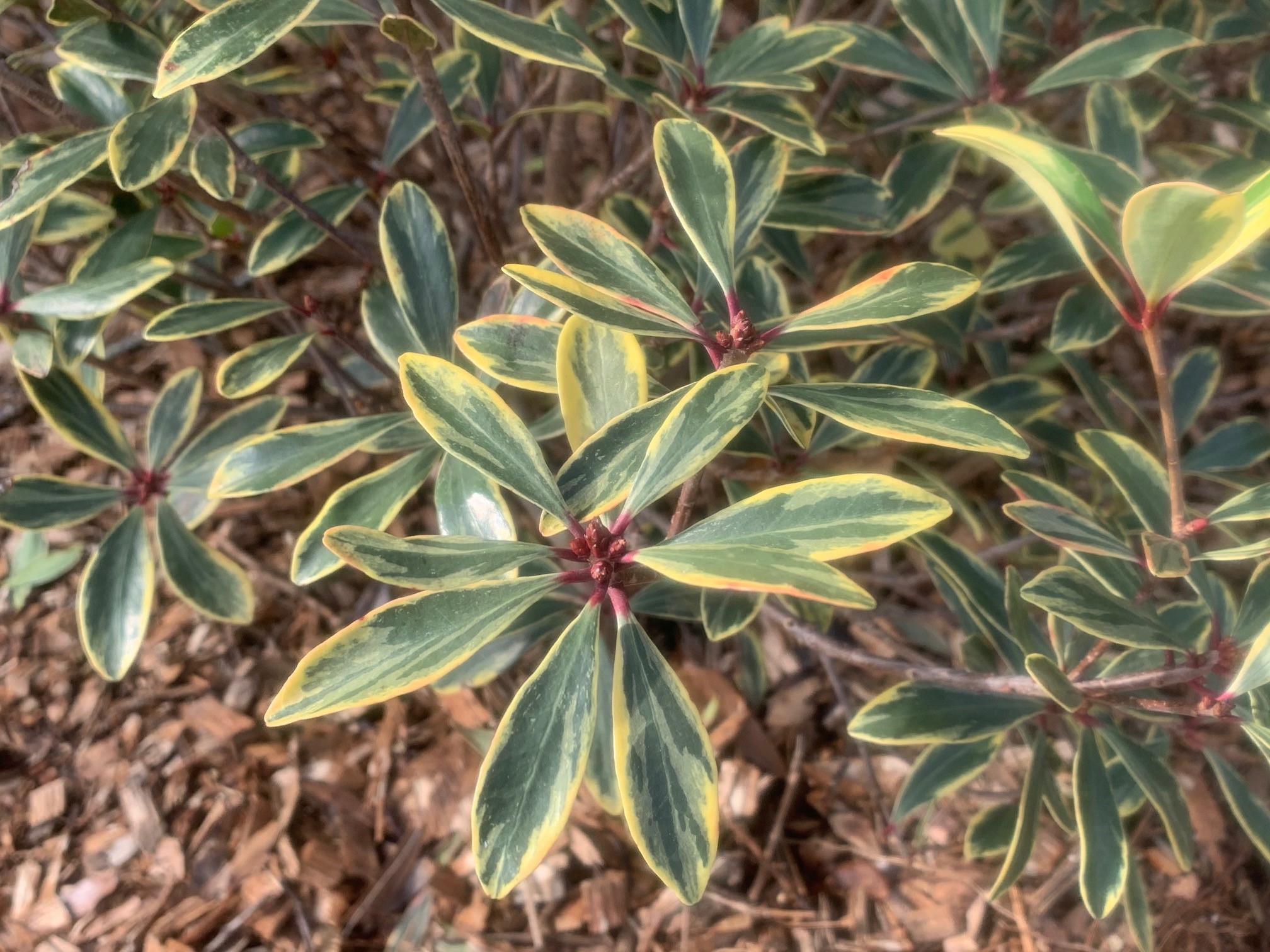
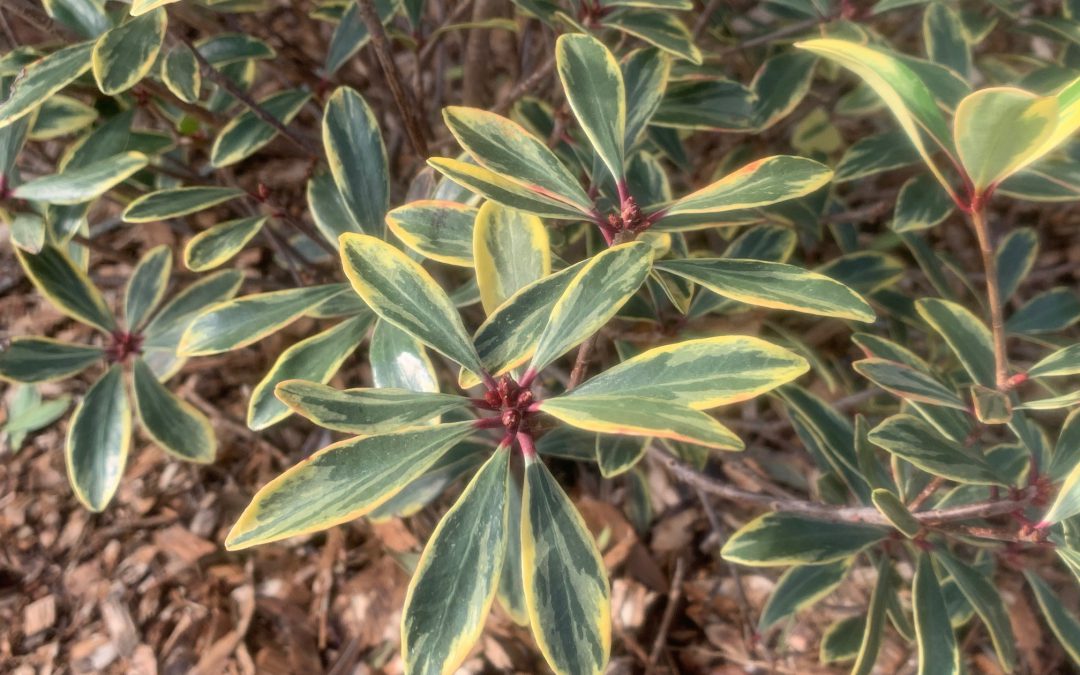
A very adaptable shrub that has been around for a long time, now has a selection with beautiful variegated foliage. Juliet™ cleyera offers green and white evergreen foliage that can brighten up a garden year around. New foliage adds additional interest with a maroon tinge.
Variegated foliage of Juliet™ cleyera. Photo by Beth Bolles, UF IFAS Extension Escambia County
Like other selections of Cleyera, Juliet™ needs to be matched to an appropriate spot to accommodate its mature size. Shrubs will reach about 8 feet in height with a spread of about 5 feet. Plants may look best when left to grow in a more natural form with light selective pruning. This shrub is probably not suited for planting in front of home windows but used as a specimen or as a nice screen plant.
Once established, cleyera is a low maintenance plant and is adapted to grow well without routine irrigation. My home landscape has very well drained soil and I have not needed to apply supplemental irrigation to two cleyera shrubs in over 20 years. Consider a spot that receives full sun or partial shade for your plants.
An added advantage of cleyera shrubs in general is that bees are attracted to the flowers so it makes an additional nectar source for pollinators in the spring.
by Molly Jameson | Mar 18, 2021
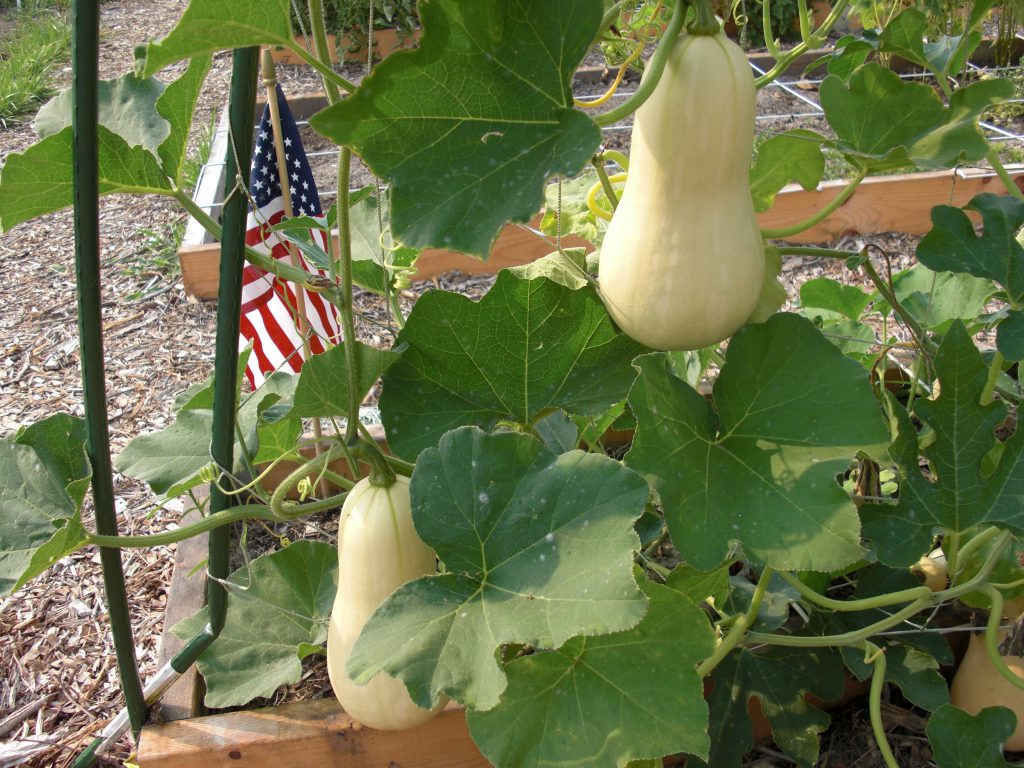
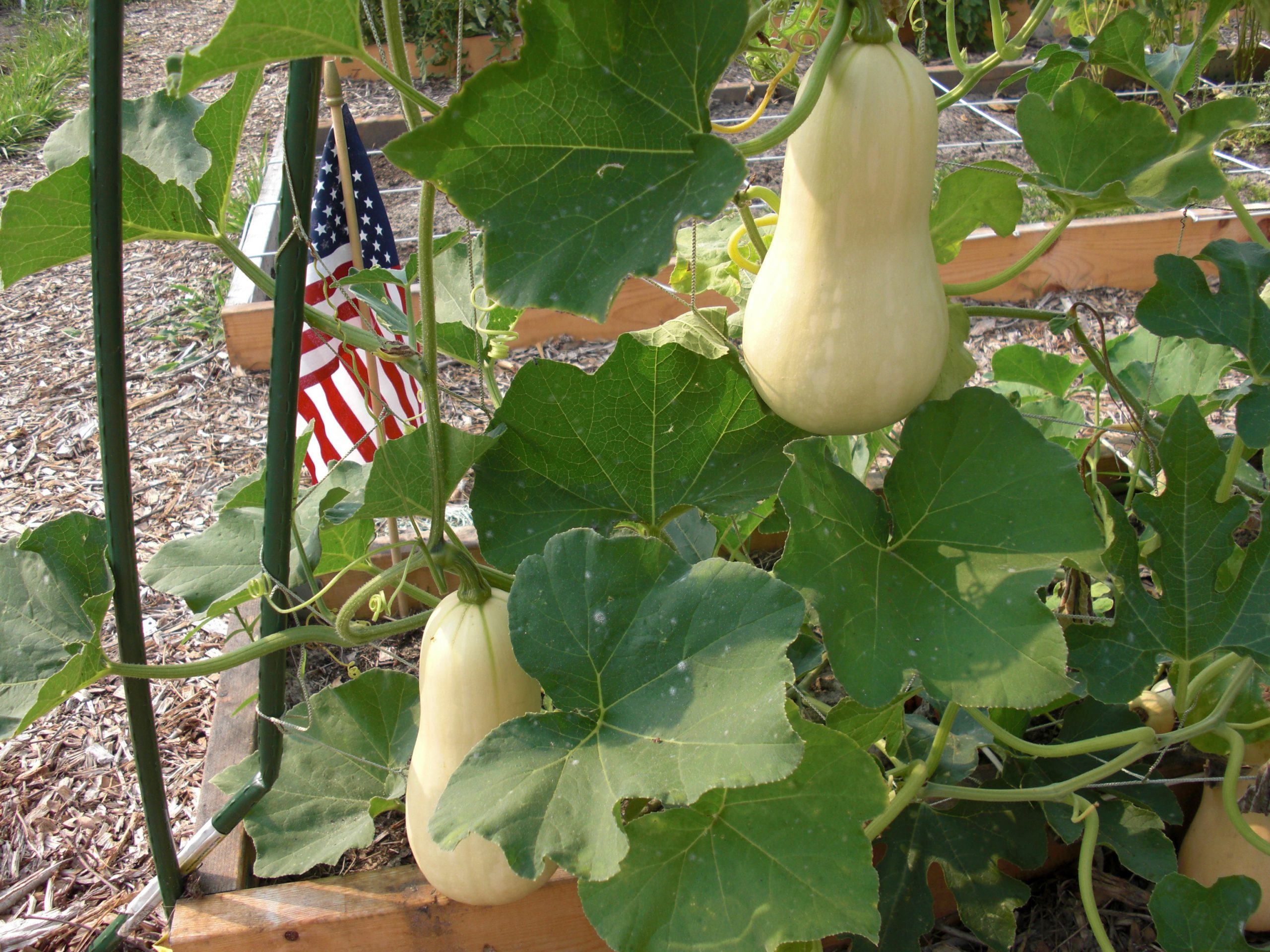
Butternut squash is more resistant to squash vine borers and it has a vining growth habit, perfect for growing on a trellis. Photo by Janis Piotrowski.
Last spring, I fought the good fight against a very pesky garden pest. As the pandemic ramped up, I started working remotely from home, which I figured would at least afford me the ability to scout my patch of summer squash a bit more diligently.
I was able to successfully remove a few tiny eggs that had been deposited individually on the base of the squash’s elongating bright green stems. And, since I planted early in the season, I was able to harvest a few beautiful looking – and very delicious tasting – summer squash for the dinner table. But alas, most of my hard work succumbed to my biggest garden foe: Melittia cucurbitae. Aka, the squash vine borer.
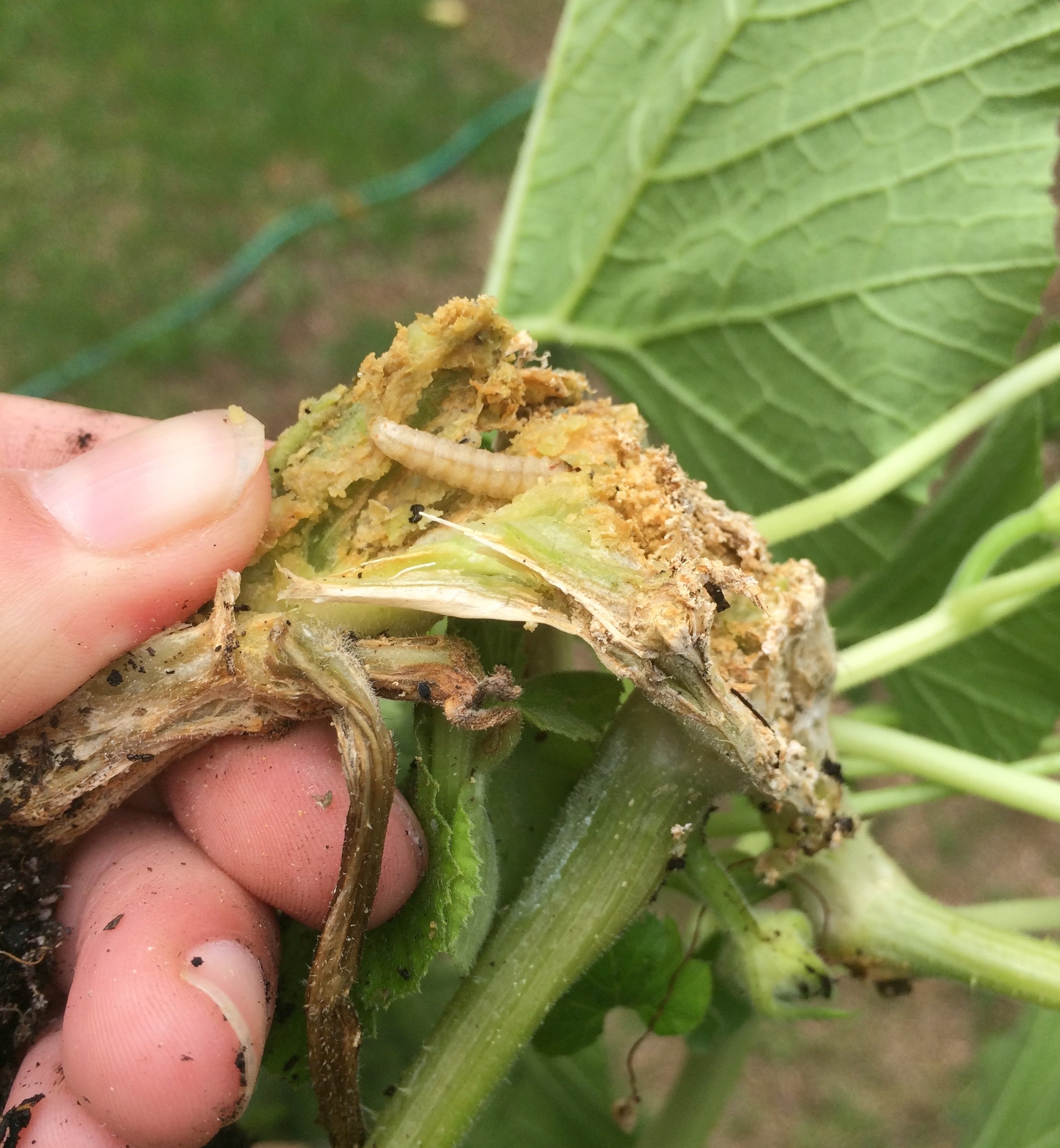
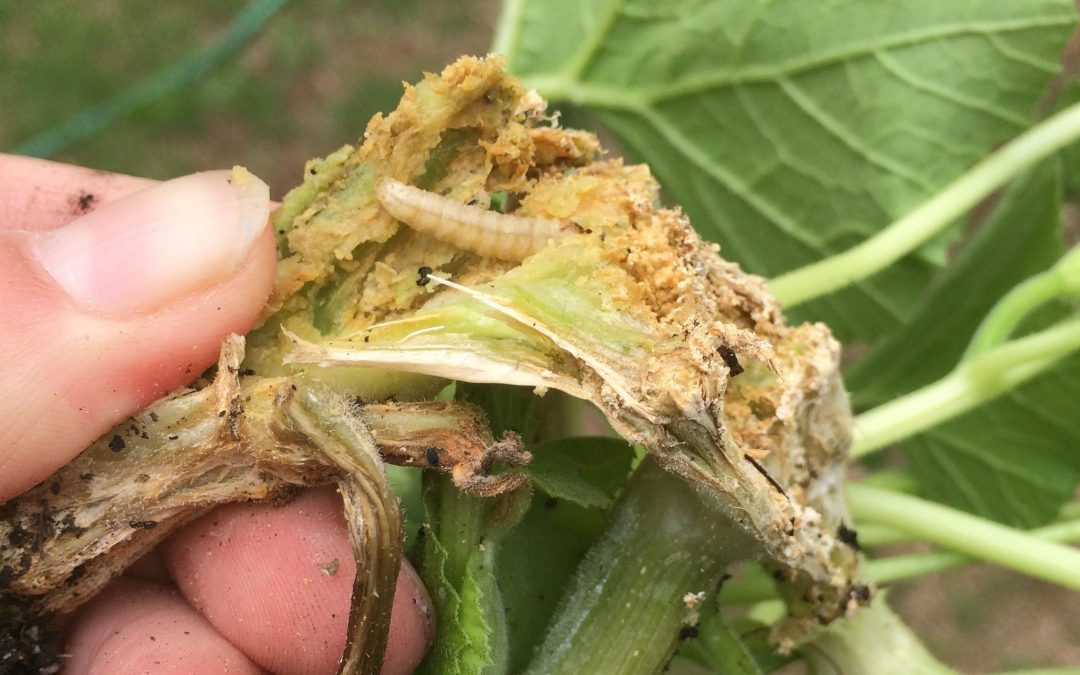
Squash vine borer larvae can most easily navigate the stems of summer squash varieties. Photo by Molly Jameson.
This year, I am trying a new approach. Instead of marching through my garden morning and night swatting wildly at borer moths – or repeatedly coating Baccillus thuringiensis biological insecticide spray over the squash stems every week – I am switching it up. This year, it is all about Cucurbita moschata. Aka, butternut squash.
How can this cucurbit avoid the mighty squash vine borer, you ask? Well typically, after hatching, squash vine borer larvae will quickly chew into the succulent stem of a summer squash variety. These large, hollow stems then act as an open highway for the borers, and they easily work their way up. The stems of butternut squash, on the other hand, are less palatable for the larvae. Their vining habit produces stems that are harder to navigate, thicker, and tougher than summer squash stems. Although not completely resistant, they are certainly not the borers’ preferred host plant.
And thankfully, butternut squash is quite delicious. It can be roasted to accompany just about anything, including spaghetti, lasagna, salads, chilis, and stews. It can also be blended into soups or purees to be paired with herbs and spices, such as turmeric, sage, garlic, and thyme. Or, it can be used as a filling in pies or frittatas, brushed with brown butter to sweeten up the plate as a delicious side dish, or be paired with goat cheese and crackers to be served as an appetizer.
Sometimes, simply omitting your toughest garden foe’s favorite host plant is the best path to both garden and dinner plate success.
by Matt Lollar | Mar 4, 2021
Plant with Purpose: Written by Rachel Mathes
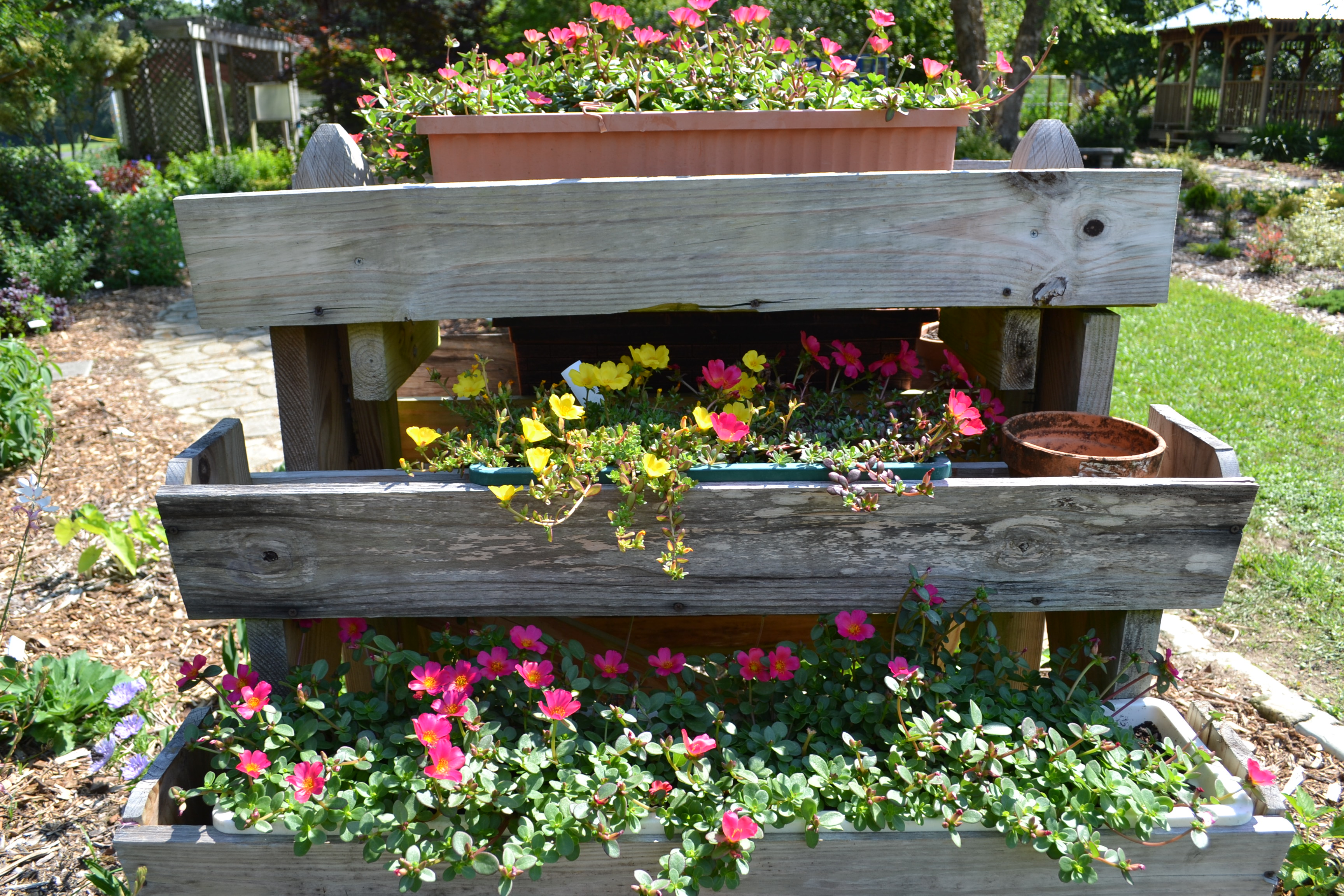
Last spring, we were all ready to host another Open House and Plant Sale on Mother’s Day weekend. When the realities of the pandemic became clear, we canceled the event for the safety of everyone involved. We typically have more than 500 visitors and dozens of volunteers on site. This year we are happy to announce we have adapted our annual fundraiser to a monthly learning and growing opportunity for the whole community.
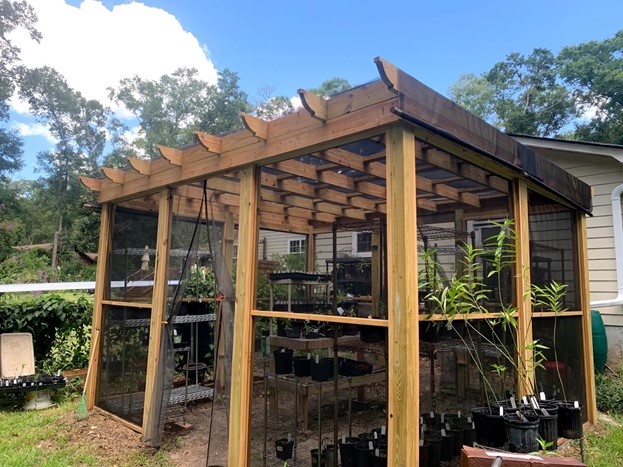
Master Gardener Volunteer Jeanne Breland is growing native milkweed in her monarch exclusion fortress for a Plant with Purpose talk and sale in the spring. Previous years’ milkweed have been eaten by monarch caterpillars before the sale so Jeanne has built her fortress to get the best results. Photo by Rachel Mathes
Our Master Gardener Volunteers will be teaching Thursday evening classes on particular plant groups throughout the year in our new series: Plant with Purpose. Topics will range from milkweed to shade plants to vegetables and herbs for different seasons. Attendees can attend the talks for free and grow along with us with the purchase of a box. These boxes are modeled after community supported agriculture (CSA) boxes you can purchase from local farms. Buyers will get a variety of the plants discussed in the plant lesson that week. For example, in our first event, Growing a Pizza Garden, we will have two tomato plants, two pepper plants, and one basil plant available for $20. Throughout the year, prices and number of plants will vary depending on the topic.
We hope with this new model of presentations and plant sales will enable us to remain Covid-safe while still bringing horticulture education to the community. Classes will be held on Thursday evenings from 6-7 pm via Zoom. Register on our Eventbrite to get the Zoom link emailed to you before each talk. Plant pick up will be the following Saturday from 10 am to noon. Master Gardener Volunteers will load up your plant box in a contact-free drive thru at the UF/IFAS Leon County Extension Office at 615 Paul Russell Rd.
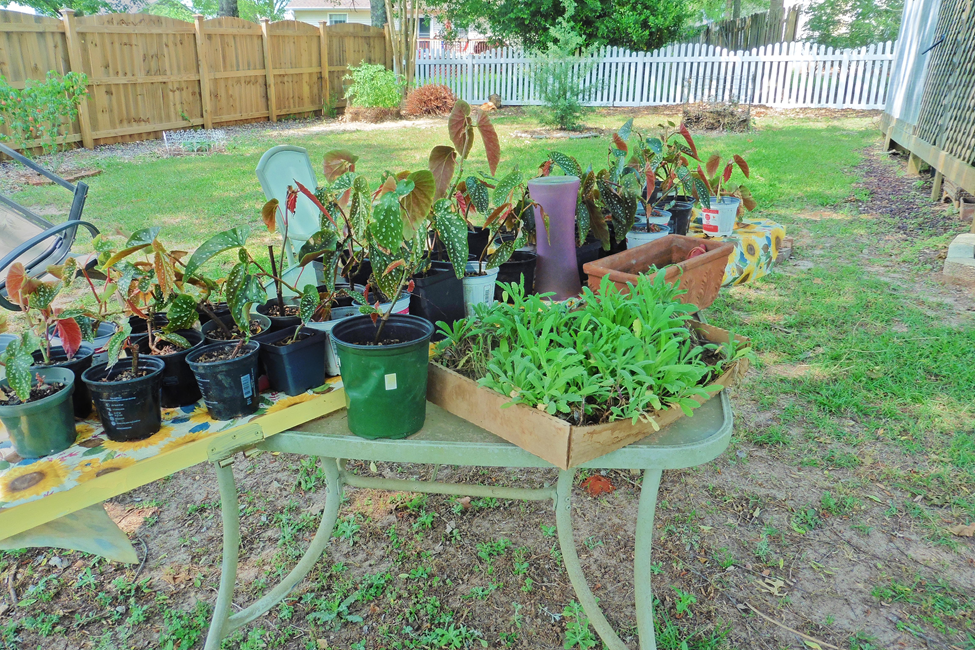
Propagation of angel wing begonia and other plants by Joan Peloso, Master Gardener Volunteer.
Master Gardener Volunteers are already growing plants for you to purchase throughout the year. Landscape plants, herbs, vegetables, shrubs and even trees will be available later in the year. Funds raised from this series help fund our Horticulture programming. Some notable programs that will benefit from Plant with Purpose include our Demonstration Garden, 4-H Horticulture Club, the Veterans’ Garden Group at the VA Tallahassee Outpatient Clinic, and various school gardens we help support throughout Leon County.
In the last year, we have adapted many of our programs to meet virtually, and even created new ones like our Wednesday Webinar series where we explore different horticulture topics twice a month with guest speakers from around the Panhandle. While we still can’t meet in person to get down in the dirt with all of our community programs, we hope that the Plant with Purpose series will help fill the hole left by our cancelled Open House and Plant Sale. Join us for the first installment of Plant with Purpose on Thursday March 18th from 6-7pm. Pick up for purchased plant boxes will be Saturday March 20th from 10am-noon.
To register for this event and other events at the Leon County Extension Office, please visit the Leon County Extension Office Events Registration Page.